
Certifications and Safety Standards for Well Pumps
Predicament Measures is reader-supported: some links on this page are affiliate links, and as an Amazon Associate Predicament Measures earns from qualifying purchases at no extra cost to you. Learn more.
Well pump safety marks are a mix of required electrical approvals, useful voluntary listings, and a few labels that add little beyond packaging. A pump that uses mains power usually needs a recognized electrical safety listing, and any built-in motor control or pressure switch should be covered too. Before you buy, measure your well casing diameter and confirm the pump’s electrical rating matches your supply.
Which electrical safety marks matter on a well pump?
Electrical safety marks matter because a well pump runs on mains power and can place live parts in a damp location. In North America, the main marks are UL listing and CSA certification, both issued by recognized testing and certification bodies for electrical products. They show the pump was evaluated for shock, fire, and construction hazards. They do not guarantee the pump fits your well, delivers the needed head, or matches your pressure tank.
Submersible well pumps need wet-location listing
For a submersible well pump, the useful question is whether the whole assembly is listed for wet-location service, not whether the box carries a generic safety logo. If the motor, control box, or pressure switch is separate, each part needs its own listing or certification where the local code requires it. A label on the carton does not replace a listing on the nameplate or the product itself.
Where these choices show up in our reviews
From $109.99 to $259.99: 3 of the 15 in this category we have reviewed in full.

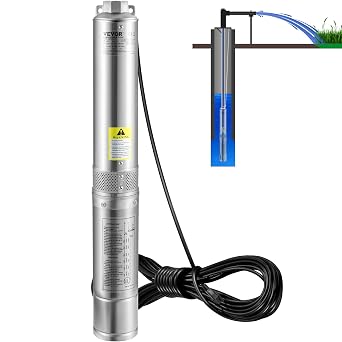
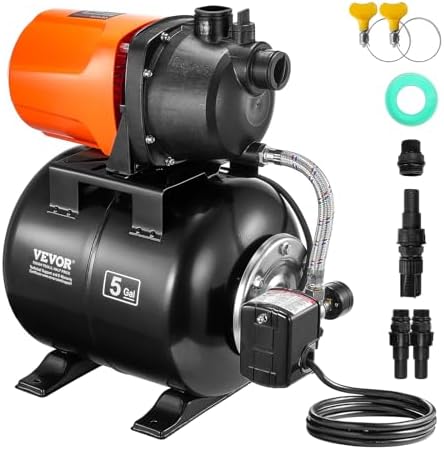
What do motor and control standards cover?
Motor and control standards cover the electrical parts that start, protect, and run the well pump. A 2-wire submersible motor has the start components built into the motor; a 3-wire motor uses an external control box, so the control box becomes part of the safety review. These standards help prove the motor insulation, overload protection, and conductor ratings are suitable for the stated electrical load. They do not tell you whether the pump can supply enough flow at your depth.
Deep-well control boxes need their own electrical listing
For a deep-well setup with a separate control box, the control box should carry its own electrical listing or certification. That matters because the box is part of the energized system, even though it is not the pump body itself. If the pump is sold as a complete package, the listing should cover the pump and the control gear together.
What does a wet-location rating guarantee?
A wet-location rating guarantees that the pump is intended for contact with water or prolonged damp conditions. That rating is especially important for submersible well pumps, because the motor sits below the waterline. It does not guarantee dry-running protection, and it does not guarantee the well will stay above the intake during seasonal drawdown.
If your well level drops during heavy use, the wet-location rating is not the same thing as low-water protection. You still need to confirm the pump’s intake depth, the static water level, and any cutoff device the system uses. A wet-location mark answers “can it live in water?”; it does not answer “will it survive a dry well?”
Do efficiency labels matter for well pumps?
Efficiency labels matter only when the pump or motor is sold with a defined efficiency standard. For some motor systems, the relevant mark is an energy-efficiency class from the motor maker or a regional efficiency program. That label tells you how much electrical input is turned into pumping work under the stated standard. It does not tell you whether the pump is sized correctly for your well depth or fixture demand.
Well pump efficiency labels matter after sizing
In a farm house with a long run to a storage tank, efficiency can matter after the pump has already been sized for head and flow. If the pump is undersized, a better efficiency label does not fix the pressure problem. If you are choosing between two pumps with the same output rating, then the efficiency mark helps separate operating cost from purchase cost.
Which safety failures do these standards address?
Well pump standards mainly address shock, fire, water ingress, and overheating. A listing for electrical safety addresses exposed live parts and insulation failure. A wet-location mark addresses water exposure. A motor protection standard addresses overload and thermal shutdown. None of those marks guarantees the pump will avoid dry running, which is a system problem tied to water level and protection controls.
Shock and fire risks need electrical listing
Shock and fire risks are the reason electrical listing matters most on a well pump. UL or CSA certification speaks to insulation, grounding, and enclosure construction. It does not guarantee the pump will match your well casing, discharge size, or pressure switch setting. If those match poorly, the pump can still be safe on paper and wrong for the job.
Water ingress needs wet-location coverage
Water ingress is the failure mode that wet-location ratings are meant to address. That rating matters most for submersible pumps and for any control gear mounted where condensation or splash is likely. It does not protect against a broken seal, a flooded pit, or a well that runs low enough to uncover the intake.
Motor protection standards address overheating failures
Overheating is the failure mode that motor protection standards and overload devices address. A pump motor can overheat when the system is mis-sized, when the head is too high, or when the water level falls too low. The protection mark helps with the electrical side of that risk. It does not replace a correct total dynamic head calculation or a low-water cutoff where one is needed.
How do you verify a mark is real?
How do you verify a mark is real? Check the nameplate first, because a real listing or certification is usually printed on the pump, motor, or control box itself. Then match the file number, standard number, or certification mark against the issuer’s public directory. A box sticker alone is weak evidence.
- Look for a mark on the pump nameplate, not only on the carton.
- Find the issuer’s file number or listing number and confirm it in the public directory.
- Check that the listing names the pump, motor, or control box you are buying.
- Confirm the electrical rating on the label matches your supply voltage and phase.
- Confirm the wet-location or submersible wording is present when the pump will sit in water.
- Ask for the installation manual if the listing depends on a specific control box or protector.
Which marks are non-negotiable for a well pump?
For a well pump, electrical safety listing is the non-negotiable mark. If the pump is submersible, a wet-location or submersible rating is also essential. If the motor uses a separate control box, that box needs its own approval. Those marks protect against the failures that can damage property or create a shock hazard.
Well pump efficiency labels matter after safety approvals
Voluntary efficiency labels are worth weighing only after the safety marks are in place. They can help with operating cost, but they do not fix a wrong casing diameter, an undersized pressure tank, or insufficient total dynamic head. If two pumps both carry the required safety approvals, then you can compare output, motor type, and control setup with more confidence.
More well pump explainers and comparisons
Related posts:
 Well Pump Explained: What It Is and How It Works
The Types of Well Pumps, Explained
Well Pump Terms and Specs, Explained in Plain English
Horsepower for Well Pumps: How Much You Actually Need
Maximum Head for Well Pumps: How Much You Actually Need
Maximum Flow Rate for Well Pumps: How Much You Actually Need
Discharge Size for Well Pumps: How to Choose Yours
Well Casing Diameter for Well Pumps: How to Choose Yours