Emergency power is a secondary energy source designed to provide electricity during a primary utility outage. It functions as a backup system that activates when the main power grid fails, ensuring that essential devices, lights, and appliances remain operational.
The problem this category solves is the sudden loss of power, which can occur due to severe weather, infrastructure failure, or local maintenance. Without a dedicated backup source, a household or business faces immediate loss of climate control, refrigeration, and communication. Emergency power systems bridge the gap between the moment the grid goes down and the moment it is restored, providing a controlled environment for critical needs.
How Does Emergency Power Work?
The mechanism of an emergency power system follows a specific sequence to transition from grid power to backup power without damaging electronics.
- Monitoring: The system constantly monitors the incoming voltage from the main utility line.
- Interruption Detection: When the system detects a drop in voltage or a total loss of current, it triggers a disconnect from the main grid.
- Source Activation: The system switches the power source to either a chemical battery or an internal combustion engine.
- Inversion: If using a battery, the system converts the Direct Current (DC) stored in the cells into Alternating Current (AC) that matches standard household outlets.
- Distribution: The electricity flows through a distribution panel or a series of outlets to power the connected loads.
- Reconnection: Once the system detects stable utility power again, it synchronizes the phases and switches the load back to the main grid.
Emergency Powers we have reviewed in detail
Prices across these 3 run from $175.99 to $799.99; each one has a full review here.

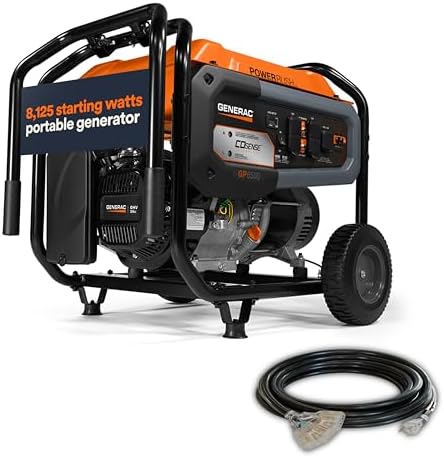
Generac 8,125 Watt Portable Gas Generator
$799.99 price checked August 2026
If you are planning an outdoor trip, find the best solar generator for camping and fishing to keep your gear charged.

Components That Matter in Emergency Power
Several technical components determine how much power a system can provide and how long it can maintain that output.
Battery Chemistry and Cycle Life
The chemistry of the battery determines the lifespan and stability of the unit. Lithium Iron Phosphate (LiFePO4) is a standard that offers high cycle life, often rated for 3000+ cycles, and high thermal stability. In contrast, Nickel Manganese Cobalt (NMC) chemistry provides higher energy density but typically has a shorter cycle life of 500 to 800 cycles.
Waveform Quality
The type of output wave determines which devices can be safely plugged in. A Pure Sine Wave produces a smooth, consistent wave identical to the utility grid, which is required for sensitive electronics like laptops, medical equipment, and high-end power tools. A Modified Sine Wave produces a stepped wave that can cause interference or damage to sensitive motors and electronics.
Capacity and Output Thresholds
Capacity is measured in Watt-hours (Wh), which dictates how long a system can run a specific load. For example, a 2000Wh capacity is a common threshold for providing 12 to 24 hours of power for critical loads like refrigerators and medical devices. Power output is measured in Watts (W), which dictates the maximum size of the appliance you can start at any given moment.
To better understand technical specifications, view our guide to emergency power supply terms for a clearer explanation.
Inverter Peak and Continuous Ratings
The inverter is the component that manages the flow of electricity. It must have a continuous output rating that covers your regular usage, such as 2000W for a kitchen suite. However, many appliances have a high surge—a brief spike in power when a motor starts—that can exceed the continuous rating and cause an inverter overload, where the unit shuts down instantly to protect its internal circuitry.
What Having Emergency Power Changes in Practice
Having an emergency power source changes the functionality of a space by allowing for “load shedding,” where you choose to power only what is necessary. In a practical sense, this means a refrigerator stays cold to prevent food spoilage, and a sump pump continues to operate to prevent basement flooding. It changes a situation of total helplessness into one of managed consumption.
The difference shows up most clearly in high-draw situations. If you need to run a central air conditioning unit, the system must meet a 2000W continuous output threshold. If the system lacks this capacity, you cannot run the AC, even if the battery has plenty of energy left. Conversely, for low-draw needs like charging mobile phones or running LED lights, even a small portable unit provides a significant advantage.
The difference does not show up in scenarios where the required power exceeds the system’s maximum capacity. If a user attempts to run a high-surge tool on a low-peak-wattage unit, the impedance mismatch causes the internal breaker to trip. In these cases, the emergency power system acts as a circuit breaker rather than a power source.
Who Needs Emergency Power?
The need for an emergency power system is determined by the criticality of the loads and the frequency of local outages.
Users with Critical Load Requirements
Individuals who rely on home medical equipment, such as oxygen concentrators or specialized cooling for medication, require a system with a high capacity and a Pure Sine Wave output to ensure continuous, safe operation.
Users in Remote or High-Risk Areas
People living in areas prone to frequent severe weather or those in remote locations with less reliable infrastructure need a system with high cycle life, such as LiFePO4, to ensure the hardware remains reliable over years of use.
Users with Low-Power Needs
Those who only need to maintain communication and basic lighting during short outages can rely on smaller, portable units that prioritize portability over high-wattage output.
Situations Where It Is Not Needed
Users who do not have any time-sensitive electronics, do not require climate control for perishables, and live in areas with highly reliable infrastructure may find that the cost of a backup system does not align with their practical needs.
The other Emergency Power guides we have published
- Mid-size Portable Power Stations for Home Backup Compared
- Choosing the Best Solar Generator for Camping and Fishing
- The Portable Power Stations That Work Best for Running a Refrigerator
- Which Portable Power Station Is Best for Wifi and Security Systems?
- Best Portable Power Stations for RV Use
- Gas Generators for Home Emergency Power Compared
Related posts:
 The Types of Emergency Power Supplies, Explained
Emergency Power Supply Terms and Specs, Explained in Plain English
Emergency Power Supply Warranties: What to Check Before You Buy
Certifications and Safety Standards for Emergency Power Supplies
Capacity for Emergency Power Supplies: How Much You Actually Need
Peak Power for Emergency Power Supplies: How Much You Actually Need
Battery Chemistry for Emergency Power Supplies: How to Choose Yours
Pass-through Charging for Emergency Power Supplies: How to Choose Yours
The Types of Emergency Power Supplies, Explained
Emergency Power Supply Terms and Specs, Explained in Plain English
Emergency Power Supply Warranties: What to Check Before You Buy
Certifications and Safety Standards for Emergency Power Supplies
Capacity for Emergency Power Supplies: How Much You Actually Need
Peak Power for Emergency Power Supplies: How Much You Actually Need
Battery Chemistry for Emergency Power Supplies: How to Choose Yours
Pass-through Charging for Emergency Power Supplies: How to Choose Yours