Battery chemistry refers to the specific chemical composition of the internal cells that store and release electricity for emergency power. Your choice depends on whether you prioritize a long hardware lifespan, high energy density for portability, or a specific cost-per-watt requirement for your household.
Which Battery Chemistry Suits Your Situation?
| If this is you | The Battery Chemistry that suits you | Why |
|---|---|---|
| You want a permanent home backup system that stays in one place for years. | LiFePO4 (Lithium Iron Phosphate) | These cells offer 3,000+ cycles, allowing the unit to remain in service for a decade or more without significant capacity loss. |
| You need to carry your power source frequently or store it in a small vehicle. | NMC (Nickel Manganese Cobalt) | NMC chemistry has a higher energy density, meaning it provides more power for its physical size and weight compared to other lithium types. |
| You are operating on a strict entry-level budget for a very basic backup. | Lead-Acid (AGM or Gel) | While heavier and shorter-lived, these systems have a lower upfront cost for basic, non-portable emergency needs. |
| You require a system for extreme temperature fluctuations or high-heat environments. | LiFePO4 (Lithium Iron Phosphate) | LiFePO4 is chemically more stable at high temperatures, reducing the risk of thermal runaway compared to high-density chemistries. |
| You need to recharge the unit daily or multiple times a day. | LiFePO4 (Lithium Iron Phosphate) | The high cycle life of LiFePO4 ensures that frequent daily recharging does not degrade the battery as quickly as other chemistries. |
Emergency Powers we have reviewed in detail
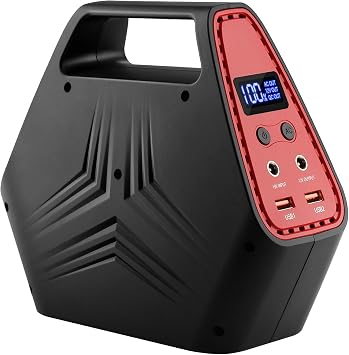
These 3 have their own full review on this site, and run from $109.99 to $119.99.
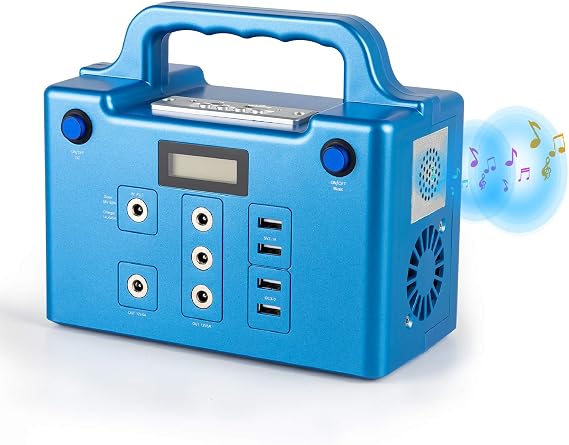
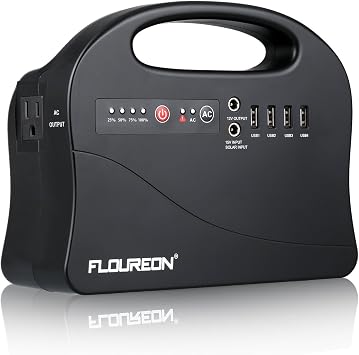
floureon Portable Power Station 146Wh
$119.99 price checked August 2026
Read our full floureon Power Station review
If you need constant connectivity, see the best portable power station for wifi and security systems.
How Do I Check the Battery Chemistry Before Ordering?
To identify the battery chemistry, look for the specific chemical acronym or standard listed in the “Technical Specifications” or “Battery Specs” section of the product documentation.
Locating the Chemistry Label
Manufacturers typically list the chemistry clearly as LiFePO4, NMC, or LFP. If the documentation only lists “Lithium-ion” without a further qualifier, it often implies NMC chemistry due to its common use in portable consumer electronics.
Verifying the Cycle Life Rating
The cycle life is a primary indicator of the chemistry type. You can verify the intended longevity by looking for a “Cycle Life” number; a rating of 3,000 to 5,000 cycles usually confirms LiFePO4, while 500 to 1,000 cycles typically indicates NMC.
Comparing Weight to Capacity
You can determine the chemistry by comparing the weight of the unit to its stated Watt-hour (Wh) capacity. If a unit provides 1,000Wh but weighs significantly less than a lead-acid equivalent, it uses a high-density lithium chemistry like NMC.
You can also learn more about how pass-through charging works for emergency power supplies.
What Happens if I Choose the Wrong Chemistry?
Choosing a chemistry that does not match your usage profile leads to premature hardware failure or insufficient portability.
The Risk of Over-Cycling NMC
If you choose NMC for a setup that requires daily heavy use, the battery will experience faster capacity degradation. Because NMC has a lower cycle life, the internal chemistry breaks down faster under constant high-depth-of-discharge cycles, eventually leaving you with a unit that holds significantly less charge than when it was new.
The Risk of Under-Sized Lead-Acid
Selecting a lead-acid system for a situation where you need to move the unit frequently results in a logistical failure. Lead-acid batteries are heavy; a system with enough capacity to run your needs for several hours may be too heavy to safely transport or maneuver in an emergency.
The Cost of Over-Specifying
Choosing LiFePO4 for a one-time, low-frequency use case where you never intend to recharge the unit often results in paying a premium for a lifespan you will never use. While the chemistry is durable, the initial cost is higher than NMC or lead-acid for the same amount of immediate power.
What Should I Do if I Fall Between Two Chemistries?
When your requirements sit between the high-density benefits of NMC and the long-life benefits of LiFePO4, your decision should be based on the frequency of use.
The Frequency of Use Rule
If you plan to use the emergency power source more than once a month, choose LiFePO4. The higher upfront cost is offset by the fact that the battery will survive hundreds of recharge cycles without losing its ability to hold a charge.
The Portability Rule
If the primary requirement is that the unit must be moved frequently or stored in a compact space, choose NMC. The weight savings and smaller footprint are the priority, and the shorter cycle life is an acceptable trade-off for the ability to transport the power source.
Professional Installation Requirements
Regardless of the chemistry chosen, if you are installing a large-scale system into your home’s electrical infrastructure, you must hire a qualified electrician. Local regulations often require permits and professional wiring for permanent power installations to ensure the safety of the home’s electrical system.
Browse our other Emergency Power pages
- Choosing the Best Small Portable Power Station for Travel
- The Solar Generators That Work Best for Fast Charging
- Mid-size Portable Power Stations for Home Backup Compared
- Choosing the Best Solar Generator for Camping and Fishing
- The Portable Power Stations That Work Best for Running a Refrigerator
- Which Portable Power Station Is Best for Wifi and Security Systems?
Related posts:
 Emergency Power Supply Explained: What It Is and How It Works
The Types of Emergency Power Supplies, Explained
Emergency Power Supply Terms and Specs, Explained in Plain English
Emergency Power Supply Warranties: What to Check Before You Buy
Continuous Output for Emergency Power Supplies: How Much You Actually Need
Capacity for Emergency Power Supplies: How Much You Actually Need
Peak Power for Emergency Power Supplies: How Much You Actually Need
Pass-through Charging for Emergency Power Supplies: How to Choose Yours
Emergency Power Supply Explained: What It Is and How It Works
The Types of Emergency Power Supplies, Explained
Emergency Power Supply Terms and Specs, Explained in Plain English
Emergency Power Supply Warranties: What to Check Before You Buy
Continuous Output for Emergency Power Supplies: How Much You Actually Need
Capacity for Emergency Power Supplies: How Much You Actually Need
Peak Power for Emergency Power Supplies: How Much You Actually Need
Pass-through Charging for Emergency Power Supplies: How to Choose Yours