Most users require between 1,000W and 3,000W of peak power for standard home backup needs. Your specific requirement depends entirely on the high-draw appliances you intend to run during a power outage.
Recommended Peak Power for Emergency Power Use Cases
| Use Case | Recommended Peak Power | Why this number |
|---|---|---|
| Small Electronics & Lighting | 500W – 1,000W | Covers phones, laptops, and LED lights with a small buffer for simultaneous use. |
| Kitchen & Refrigeration | 1,500W – 2,500W | Required to handle the high startup surge of a refrigerator compressor and microwave. |
| Power Tools & Workshop | 3,000W – 5,000W | Necessary for heavy-duty motors like table saws or large air compressors. |
| Whole-Home Backup | 7,000W+ | Required to power central air conditioning or large electric heating systems. |
Reviewed examples from this category
3 reviewed options, $109.99 to $799, with the full write-up behind each name.

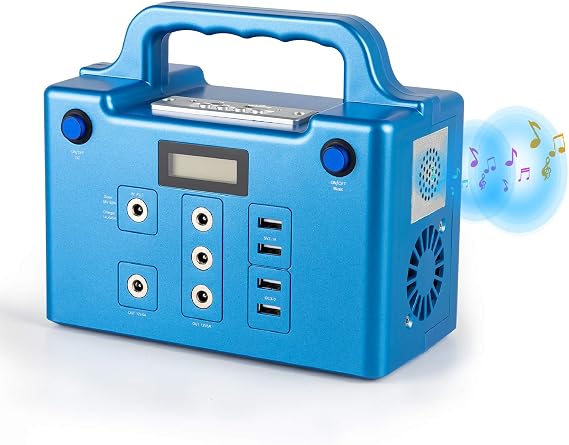
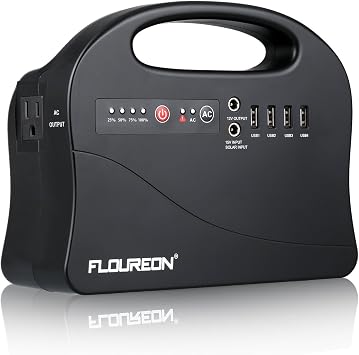
floureon Portable Power Station 146Wh
$119.99 price checked August 2026
Read our full floureon Power Station review
If you plan on heading off-grid, view our guide to the best solar generator for camping and fishing for reliable outdoor power.
What Happens if You Under-Provision or Over-Buy Peak Power?
Under-provisioning occurs when the peak power of your emergency power source is lower than the surge requirements of your appliances.
The Risk of Inverter Overload
If an appliance attempts to draw more watts than the unit can provide, the inverter will typically shut down instantly to protect its internal circuitry. This failure mode means that even if you only need the power for a few seconds to start a motor, a lack of peak capacity will leave you with no power at all. You must ensure the peak wattage exceeds the “starting watts” of your highest-draw device.
The Cost of Over-Buying Peak Power
Over-buying peak power involves paying for a high-wattage inverter that you will rarely, if ever, utilize during a typical emergency. Because peak power capacity is tied to the size of the internal components, a unit capable of 5,000W will cost significantly more than a 2,000W unit.
If your needs only involve charging phones and running a small fridge, the extra capacity provides no functional benefit but results in a higher upfront cost. You are essentially paying for hardware that sits idle, which can be a significant waste of budget for a budget-first shopper.
What Is the Most Common Mistake with Peak Power?
Many buyers mistakenly assume that peak power is the only metric that determines how long they can stay powered. This leads to purchasing a high-wattage unit that runs out of energy in minutes because the capacity is too low.
Capacity vs. Peak Power
Peak power (measured in W) is the “speed” of the power—how much can be pulled at any single millisecond. Capacity (measured in Wh) is the “fuel tank”—how much total energy is available for use.
You should optimize for capacity first to ensure you can run your devices for the desired duration, then select the minimum peak power required to start those devices. For example, a 2,000Wh battery with 3,000W peak power is often a better investment for home use than a 1,000Wh battery with 5,000W peak power.
How Peak Power Interacts with Other Deciding Specs
Peak power is often a secondary constraint because the actual duration of use is limited by the battery’s capacity and the inverter’s efficiency.
Battery Chemistry and Cycle Life
The chemistry of the battery, such as LiFePO4 versus NMC, dictates how many times you can discharge the unit before the capacity degrades. LiFePO4 systems typically offer 3,000+ cycles, making them a more durable choice for frequent emergency use compared to NMC alternatives.
Pure Sine Wave vs. Modified Sine Wave
The type of wave the inverter produces determines which electronics you can safely plug in. A Pure Sine Wave inverter is necessary for sensitive electronics like laptops, medical equipment, and modern refrigerator compressors.
While a modified sine wave inverter might offer higher peak power for less money, it can cause audible noise, overheating, or permanent damage to sensitive power supplies. If you plan to run anything with a digital display or a precision motor, Pure Sine Wave is a non-negotiable requirement regardless of the peak wattage.
Limits of Our Research
We do not have data on the specific internal thermal management of every consumer-grade inverter. Because internal heat dissipation varies by manufacturer, we cannot provide a specific maximum continuous runtime for any given peak power rating without a specific load profile.
Browse our other Emergency Power pages
- Choosing the Best Solar Generator for Camping and Fishing
- The Portable Power Stations That Work Best for Running a Refrigerator
- Which Portable Power Station Is Best for Wifi and Security Systems?
- Best Portable Power Stations for RV Use
- Gas Generators for Home Emergency Power Compared
- Choosing the Best Small Portable Power Station for Travel
Related posts:
 Emergency Power Supply Explained: What It Is and How It Works
The Types of Emergency Power Supplies, Explained
Emergency Power Supply Terms and Specs, Explained in Plain English
Emergency Power Supply Warranties: What to Check Before You Buy
Continuous Output for Emergency Power Supplies: How Much You Actually Need
Capacity for Emergency Power Supplies: How Much You Actually Need
Battery Chemistry for Emergency Power Supplies: How to Choose Yours
Pass-through Charging for Emergency Power Supplies: How to Choose Yours
Emergency Power Supply Explained: What It Is and How It Works
The Types of Emergency Power Supplies, Explained
Emergency Power Supply Terms and Specs, Explained in Plain English
Emergency Power Supply Warranties: What to Check Before You Buy
Continuous Output for Emergency Power Supplies: How Much You Actually Need
Capacity for Emergency Power Supplies: How Much You Actually Need
Battery Chemistry for Emergency Power Supplies: How to Choose Yours
Pass-through Charging for Emergency Power Supplies: How to Choose Yours