There are four primary types of radio scanners defined by their hardware capabilities and the specific communication standards they can decode. The fundamental distinction between these types is whether the hardware supports trunking and digital protocols like P25 Phase II or DMR, which determines if a user can monitor large-scale public safety networks or is limited to local, analog-only frequencies.
What are Handheld Radio Scanners?
Handheld radio scanners are portable units designed to be operated with one hand, typically featuring a compact form factor and a built-in speaker. These devices are for users who need to monitor communications while moving, such as during a commute or at a remote site where a stationary setup is impractical.
Handheld scanners excel in mobility and portability. They provide the ability to receive audio in a compact footprint, making them the standard choice for personal use or monitoring while on the move. However, because of their size, these units often have smaller displays and smaller internal antennas compared to desktop models.
Handheld scanners typically sit in the lower to mid-range price band relative to other scanner types, as the cost of miniaturizing the hardware and battery systems is lower than that of high-powered stationary units.
Where these choices show up in our reviews
Prices across these 3 run from $129.99 to $699.99; each one has a full review here.
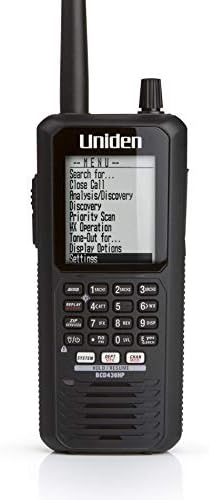

Uniden Bearcat BC75XLT Handheld Scanner
If you are looking for a dedicated setup, view the best police scanner for home use to find the right model.
$129.99 price checked August 2026

What are Mobile Radio Scanners?
Mobile radio scanners are designed to be permanently mounted in a vehicle, such as a car or a truck, and are powered by the vehicle’s electrical system. These are for users who need a high-performance scanner while traveling, such as emergency responders or transport professionals who require a constant feed of information while driving.
Mobile scanners provide a superior balance of power and portability compared to handhelds. Because they are powered by a vehicle, they can run high-draw components like large external speakers and high-gain antennas without draining a battery. They give up the ability to be used away from a vehicle, as they require a constant 12V or 24V power source.
Mobile scanners generally occupy a mid-range price point, often costing more than handhelds due to the inclusion of specialized mounting hardware and higher-output internal components.
For those prioritizing high-tech reliability, see the best digital scanner for emergency alerts for a detailed comparison.
What are Desktop Radio Scanners?
Desktop radio scanners are stationary units intended to sit on a table or shelf, often featuring large displays and high-quality internal speakers. These are for users who want a dedicated monitoring station in a home or office to track multiple systems simultaneously without the need for mobility.
Desktop scanners offer the highest level of convenience for stationary monitoring. They often feature larger screens for easier navigation of complex systems and more robust internal hardware for processing complex digital signals. They give up any form of portability, as they are designed to stay in one location and are often heavy enough to require a stable surface.
Desktop scanners typically sit in the mid-to-high price band, as they prioritize display real estate and signal processing power over compact engineering.
What are Professional Radio Scanners?
Trunking and Digital Support
Professional radio scanners are high-end units capable of decoding complex trunking systems and advanced digital standards like P25 Phase II and DMR. These are for users who need to monitor large metropolitan public safety networks where frequencies are dynamically assigned by a controller.
Professional scanners provide the most comprehensive coverage of modern infrastructure. They can track every active talkgroup in a large metropolitan trunking system, which is the threshold for tracking all active communications in a major city. They give up simplicity and lower costs, as the hardware required to decode these signals is significantly more complex.
Price Range
Professional scanners sit at the highest price point of the category. The cost is driven by the advanced processors and specialized memory required to manage thousands of system IDs and complex digital decoding protocols.
Comparison of Radio Scanner Types
| Scanner Type | Best-Fit Buyer | Main Advantage | Main Compromise |
|---|---|---|---|
| Handheld | Users needing mobility | Portability | Limited display/size |
| Mobile | Vehicle-based users | Vehicle power/speakers | Tethered to vehicle |
| Desktop | Stationary monitoring | Large display/ease of use | No mobility |
| Professional | Large-scale network monitoring | Trunking/Digital decoding | High cost |
How to Choose the Right Radio Scanner Type?
You belong in the handheld category if you need to listen to communications while walking or if you want to keep the device in a pocket or bag. If your primary use case involves staying in a vehicle for long periods, you should choose a mobile scanner to take advantage of the vehicle’s power supply and external antenna options.
You should choose a desktop scanner if you want to set up a dedicated station in a room and prefer a large screen for scrolling through lists of channels. If you need to monitor large cities or complex public safety networks that use trunking, you must choose a professional scanner capable of decoding P25 Phase II and other modern digital standards.
Before ordering, you should confirm the specific communication standards used by the agencies you wish to monitor in your local area to ensure your chosen scanner type supports those protocols.
Browse our other Radio Scanner pages
Related posts:
 Radio Scanner Explained: What It Is and How It Works
Radio Scanner Terms and Specs, Explained in Plain English
Radio Scanner Warranties: What to Check Before You Buy
Radio Scanner Alternatives: Other Ways to Get the Same Result
Dynamically Allocated Channels for Radio Scanners: How Much You Actually Need
P25 Phase Support for Radio Scanners: How Much You Actually Need
Weight for Radio Scanners: How Much You Actually Need
Continuous Output for Emergency Power Supplies: How Much You Actually Need
Radio Scanner Explained: What It Is and How It Works
Radio Scanner Terms and Specs, Explained in Plain English
Radio Scanner Warranties: What to Check Before You Buy
Radio Scanner Alternatives: Other Ways to Get the Same Result
Dynamically Allocated Channels for Radio Scanners: How Much You Actually Need
P25 Phase Support for Radio Scanners: How Much You Actually Need
Weight for Radio Scanners: How Much You Actually Need
Continuous Output for Emergency Power Supplies: How Much You Actually Need