
Well Pump Terms and Specs, Explained in Plain English
Predicament Measures is reader-supported: some links on this page are affiliate links, and as an Amazon Associate Predicament Measures earns from qualifying purchases at no extra cost to you. Learn more.
Well pumps move water from a well to a pressure system. Horsepower, maximum head, flow rate, and discharge size are the load-bearing terms; marketing words are not. Measure your casing diameter and the lift your well needs before you compare listings.
Well Pump Capability Terms Buyers Need
- Horsepower – This is the motor power rating. It appears in 102 of the 107 listings we screened, usually as 0.33 to 2HP, and a larger number usually means more work capacity, not guaranteed pressure.
- Maximum head – This is the greatest vertical lift the pump can overcome while moving water. It appears in 86 listings, from 16.2 to 548ft, and a larger number is better when your well or system needs more lift.
- Maximum flow rate – This is the most water the pump can move in a stated time under stated conditions. It appears in 39 listings, from 4 to 35 GPM, and a larger number helps when you want more fixtures supplied at once.
- Discharge size – This is the diameter of the outlet where water leaves the pump. It appears in 59 listings, from 0.5 to 1.25in, and the right size matters more than a bigger one; mismatch can block fit or force adapters.
Where these choices show up in our reviews
Each of the 3 shown here has its own full review on this site; they run from $109.99 to $259.99.
If you are on a strict budget, you can find the best well pump under $300 to suit your needs.


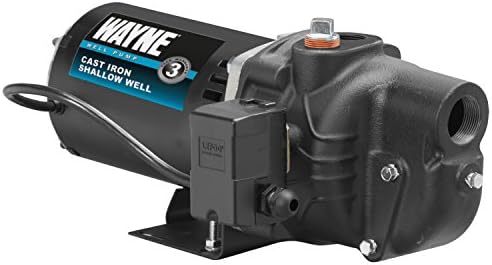
Well Pump Physical Parts and Flow Path
- Impeller – The impeller determines flow and pressure by moving water through the pump. More impeller stages usually mean more lift or pressure, but the listing needs to state that count before you can use it as a comparison.
- Check valve – The check valve prevents backflow and loss of prime. A built-in valve can reduce the parts you need, but some systems still need an external one, so the listing should state whether it is included.
- Motor lead wire – The motor lead wire connects the pump to power. A longer stated wire can help with reach, and 39 listings give a length from 5 to 131ft, but the needed length depends on your well setup.
- Pump discharge pipe – The pump discharge pipe carries water to the system. Its size must match the discharge size and the rest of your plumbing, so a larger pipe is not automatically better.
- Stainless steel construction – This describes the material of the housing or major parts. It is stated in 73 listings, and the term matters when you want a material callout instead of a vague finish claim.
Well Pump Fit and Wiring Terms
- 4-inch well casing – This is the dominant submersible-pump fit standard buyers must match. If your casing is not 4 inches, you need to confirm the actual diameter before you order, because fit depends on the well, not the pump label.
- 2-wire vs 3-wire submersible motor – This is the wiring and control-box choice that changes installation and serviceability. A 2-wire motor usually simplifies the parts count, while a 3-wire motor uses a control box and gives you more separate components to match.
- Motor type – This listing term tells you whether the motor is 2-wire, 3-wire, or another wiring form. It is stated in 15 listings, and the smaller number of extra parts usually makes the system simpler to match.
- Power cord length – This is the stated length of the cord attached to the pump. It appears in 39 listings, from 5 to 131ft, and a longer cord helps only if your setup needs that reach.
Well Pump Accessories and Matching Parts
- Pressure tank – The pressure tank reduces short cycling by storing water under pressure. If your system cycles too often, tank size and switch settings need to work together, and an undersized tank can wear the system faster.
- Pressure switch – The pressure switch controls pump start and stop. It must match the pressure tank and the system pressure range, because a mismatch can cause short cycling.
- Pitless adapter – The pitless adapter provides a sanitary well connection. It must match the well casing and the discharge plumbing, so the fit is a property-specific check, not a generic one.
- Control box – The control box starts and protects the motor. It is needed for many 3-wire systems, and it must match the motor type and electrical rating to work correctly.
Which Well Pump Terms Buyers Confuse Most
Horsepower and maximum flow rate are not the same thing. Horsepower is motor power, while flow rate is water volume per time, so a higher horsepower figure does not automatically mean more GPM.
Maximum head and discharge size also get mixed up. Head is lift, while discharge size is the outlet diameter, so one number tells you how high water can move and the other tells you the pipe opening.
Different setups require different hardware, so compare the various types of well pumps to find a match.
2-wire vs 3-wire submersible motor is another common split. The wiring choice changes whether a control box is part of the system, while the motor itself still does the pumping work.
New homeowners should first learn how a well pump works and functions before making a purchase.
Pressure tank and pressure switch are paired terms, but they do different jobs. The tank stores pressurized water, and the switch tells the pump when to start and stop.
Related posts:
 Well Pump Explained: What It Is and How It Works
The Types of Well Pumps, Explained
Well Pump Warranties: What to Check Before You Buy
Horsepower for Well Pumps: How Much You Actually Need
Maximum Head for Well Pumps: How Much You Actually Need
Maximum Flow Rate for Well Pumps: How Much You Actually Need
Discharge Size for Well Pumps: How to Choose Yours
Well Casing Diameter for Well Pumps: How to Choose Yours