
Well Pump Warranties: What to Check Before You Buy
Predicament Measures is reader-supported: some links on this page are affiliate links, and as an Amazon Associate Predicament Measures earns from qualifying purchases at no extra cost to you. Learn more.
Well pump warranties usually run from 1 year to 5 years. Claims are most often refused for installation or operating conditions that do not match the warranty document. Before you buy, measure your well depth, casing diameter, discharge size, and pressure-tank match against the product papers.
What a well pump warranty usually covers and excludes
A well pump warranty usually covers defects in materials, defects in workmanship, and motor or wet-end failures listed in the warranty document. It usually excludes wear parts, dry running, sand damage, voltage problems, freezing, corrosion from water chemistry, and damage from incorrect sizing or installation.
- Defects in materials or workmanship.
- Motor failure that is named in the warranty terms.
- Seal or impeller failure when the document includes those parts.
- Factory faults that appear during the stated coverage period.
- Dry running from a low water level.
- Damage from sand, grit, or sediment.
- Freeze damage or burst plumbing.
- Voltage spikes, wiring faults, or control-box problems outside the stated terms.
- Corrosion tied to water quality or chemical content.
- Problems caused by the wrong casing diameter, discharge size, or pressure-tank match.
The warranty is like a receipt for a factory fault, not insurance for every failure in the water system. If your well has sand, low water, or unstable power, the claim often turns on the condition that caused the failure, not the failed part itself.
Examples from this category, each with its own review here
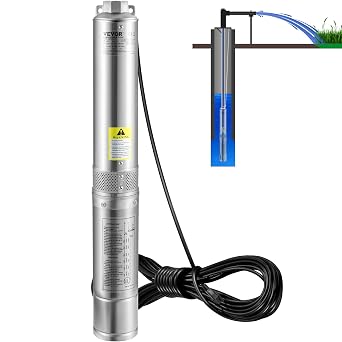
3 options shown here, $109.99 to $259.99, each with its own full review behind its name.


What buying source means for a well pump claim
Where you buy a well pump changes who must honor the claim, what proof you need, and whether the product is treated as new, refurbished, or outside the normal channel. Keep the invoice, serial number, and warranty card together from day one.
What a direct-from-maker purchase means for a claim
A direct purchase usually gives the cleanest paper trail, because the seller and the warrantor are the same party or closely linked. That usually means fewer handoffs, but you still need the dated proof of purchase and the exact model identification.
What an authorised retailer purchase means for a claim
An authorised retailer sale normally means the maker recognizes the seller for warranty purposes. The claim still depends on the retailer’s status at the time of sale and on the paperwork matching the exact pump you received.
What a marketplace seller purchase means for a claim
A marketplace seller can mean the platform is only the storefront, while the actual seller may be a third party. That can complicate proof of origin, and the warranty may depend on whether the listing was from an authorised source.
What refurbished or open-box means for a claim
Refurbished or open-box usually means the pump has already been sold, returned, or reconditioned. The claim may carry a shorter term, limited parts coverage, or a separate seller warranty, so the document matters more than the listing title.
What an importer or grey-market purchase means for a claim
An importer or grey-market seller usually means the pump entered the market outside the maker’s normal sales channel for your region. That can leave you with no local warranty support, no service network, or a claim that must go back through the seller alone.
If you are drilling deep into the ground, see our top picks for deep well systems to find the most reliable hardware.
What voids a well pump warranty
Warranty void actions in this category usually center on misuse, mismatch, and unapproved changes. The biggest losses come from conditions that the pump cannot survive for long, then a claim that fails because the document excludes that kind of damage.
What dry running means for coverage
Dry running means the pump runs without enough water around the intake, which can overheat the motor and damage seals. If the failure record points to low water level, the claim often fails even when the pump itself looks intact.
What incorrect sizing means for coverage
Incorrect sizing means the pump was matched to the wrong well depth, casing diameter, discharge size, or pressure system. That mistake can turn into short cycling, poor delivery, or overload, and the warranty may treat it as application error rather than a defect.
What unapproved changes mean for coverage
Unapproved changes include rewiring, altered controls, nonmatching pressure switches, and parts that are not listed in the warranty terms. If the claim file shows a modified system, the warrantor can argue that the failure no longer reflects factory condition.
What water quality damage means for coverage
Water quality damage includes sand, grit, scale, and corrosive chemistry that attack moving parts and seals. Those failures are often treated as site conditions, not manufacturing defects, unless the warranty document says otherwise.
What to keep before buying a well pump
Keep the warranty document, the sales invoice, the serial number, and every installation record the seller or installer gives you. If those papers do not match, a future claim can stall before anyone reaches the failure itself.
- Confirm the warranty length in writing, because the term varies by brand, region, and sale date.
- Save the full model name and serial number exactly as printed.
- Keep the purchase date, seller name, and order number.
- Keep the installer’s invoice if local rules require a qualified installer.
- Record the well depth, casing diameter, discharge size, and pressure-tank details before ordering.
- Keep any water-test or site notes that explain sand, low water, or corrosion risk.
- Read the exclusions for dry running, voltage issues, and water chemistry before the return window closes.
- Check whether the seller is authorised, refurbished, open-box, or grey-market.
- Keep photos of the label and packaging in case the serial number is disputed.
Think of the paperwork like the key to a lockbox: the pump may be inside, but the claim opens only if the right documents are still there. If you skip that step, you may spend time chasing proof that should have been saved on day one.
When an extended warranty on a well pump is worth it
An extended warranty is worth considering when the pump sits in a deep well, the water has sand or corrosive chemistry, or the replacement cost would be painful if the motor fails after the base term. It is less useful when the standard term is already long, the seller excludes the main failure risks, or the pump is being bought for a shallow, low-demand setup with a simple service path.
If your well has unstable water level or a history of sediment, the extra coverage can matter more than a small price difference. If the system is stable and the base warranty already covers the period you care about, the extension may add paperwork without adding much protection.
The other well pump guides we have published
Related posts:
 Well Pump Explained: What It Is and How It Works
The Types of Well Pumps, Explained
Well Pump Terms and Specs, Explained in Plain English
Horsepower for Well Pumps: How Much You Actually Need
Maximum Head for Well Pumps: How Much You Actually Need
Maximum Flow Rate for Well Pumps: How Much You Actually Need
Discharge Size for Well Pumps: How to Choose Yours
Well Casing Diameter for Well Pumps: How to Choose Yours