
Well Casing Diameter for Well Pumps: How to Choose Yours
Predicament Measures is reader-supported: some links on this page are affiliate links, and as an Amazon Associate Predicament Measures earns from qualifying purchases at no extra cost to you. Learn more.
Well casing diameter is the inside width of the casing, and it determines which pump body can fit without forcing an incompatible size into the well. Your own casing measurement, not the pump’s horsepower or flow rating, decides the right in. value for you. Measure the casing opening or check the well paperwork before you order.
Which well casing diameter suits you?
| if this is you | the well casing diameter that suits you | why |
|---|---|---|
| You already know the casing’s inside width from a well record. | Match that recorded in. value. | The casing size is the fit point, so the recorded number is the one to use. |
| You can measure the opening at the wellhead before ordering. | Use the measured in. value. | The opening gives you the number that the pump body has to fit. |
| You are replacing an existing pump and the casing has not changed. | Keep the same in. diameter already tied to that well. | A replacement has to respect the casing already in the ground. |
| You are unsure whether the well uses a 4-inch casing. | Confirm the actual in. size before you choose a pump. | 4-inch well casing is the common fit standard, but your well may use another size. |
| You only know the pump’s horsepower or flow rate. | Do not choose from that alone. | Horsepower and flow rate do not tell you whether the pump will fit the casing. |
Where these choices show up in our reviews
From $185 to $570.80: 3 of the 15 in this category we have reviewed in full.
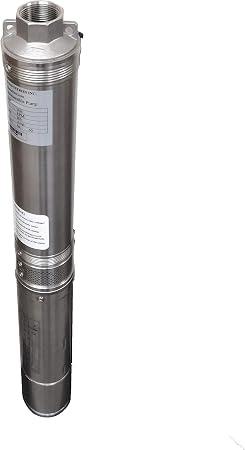


How do you measure your well casing diameter?
Use a tape measure or the well paperwork to find the casing’s inside width, then write it down in in. units. The number is usually on the well record, the pump paperwork, or a label near the wellhead. If the paperwork and the measurement disagree, the casing itself is the number that matters.
Measure the wellhead opening by inside width for a proper fit
Measure the opening at the wellhead if you can see it clearly, and measure the inside width rather than the outside pipe edge. Think of it like checking a drawer opening before buying a box for it: the outside of the box does not matter if the opening is smaller. You need the fit dimension, not the pipe’s outside diameter.
If you are working with a surface water source, you should find the best well pump for a shallow well to ensure adequate pressure.
Use the recorded casing size instead of assuming 4-inch standard
Some wells are documented as 4-inch well casing, which is the dominant fit standard buyers are asked to match. That label describes the casing size, not the pump’s output. If your record uses a different in. value, use that exact number instead of assuming the common one.
What goes wrong if the casing diameter is too small or too large?
A casing diameter that is too small leaves you with a pump that will not fit, or a fit so tight that the discharge size and body shape become a problem. The mistake shows up before water ever reaches the tap, because the system cannot be assembled around the wrong opening.
A casing diameter that is too large creates the opposite problem: the pump may sit in a space it was not sized to occupy, and the installation can end up needing incompatible parts. That kind of mismatch is the same failure mode as wrong casing diameter or discharge size, and it leads to a pump that cannot be used as planned.
Pressure complaints often get blamed on the pump when the real issue is fit. If the casing size is wrong, you can spend time on a return or a rebuild and still end up with the same mismatch in the well.
You can also source water from your well without the grid by choosing a system designed for independent operation.
What should you do when your well casing diameter falls between two sizes?
When your well casing diameter falls between two sizes, use the exact measured in. value, not the nearest round number. The right choice is the casing that is actually there, because fit depends on the real opening and not on a convenient label.
If the measurement is unclear, recheck the well record and the opening before you order. A buyer who is between two sizes should treat the uncertainty as a fit problem, not a performance problem.
Choose the size that matches the casing you have, and let a qualified installer handle the fitting where local rules require one. That keeps the decision tied to the well instead of to a guess about what might work.
The other well pump guides we have published
Related posts:
 Well Pump Explained: What It Is and How It Works
The Types of Well Pumps, Explained
Well Pump Terms and Specs, Explained in Plain English
What Well Pumps Cost, and What Each Price Level Gets You
Horsepower for Well Pumps: How Much You Actually Need
Maximum Head for Well Pumps: How Much You Actually Need
Maximum Flow Rate for Well Pumps: How Much You Actually Need
Discharge Size for Well Pumps: How to Choose Yours