
Fuel tank size for Propane Heaters: How to Choose Yours
Predicament Measures is reader-supported: some links on this page are affiliate links, and as an Amazon Associate Predicament Measures earns from qualifying purchases at no extra cost to you. Learn more.
Fuel tank size is the amount of propane a heater can hold, stated in lb. Your choice depends on how much runtime you need, how much space you can store, and whether portability matters more than refill frequency.
Which propane heater fuel tank size suits which buyer?
| if this is you | the Fuel tank size that suits you | why |
|---|---|---|
| You want the lightest cylinder for short, occasional use. | 1 lb | That size keeps the cylinder compact and easy to carry. |
| You move the heater often between storage and use. | 1 lb to 5 lb | Smaller cylinders reduce weight and take less room. |
| You need a balance between portability and fewer refills. | 10 lb to 20 lb | These sizes are common middle-ground choices for portable propane heaters. |
| You keep the heater in one place for longer sessions. | 20 lb to 40 lb | More propane means fewer changeovers during a long run. |
| You are choosing for a fixed setup where storage space is not tight. | 40 lb to 100 lb | Large tanks suit stationary use better than frequent carrying. |
Propane Heaters covered by our own reviews
Prices across these 3 run from $119.99 to $225.19; each one has a full review here.
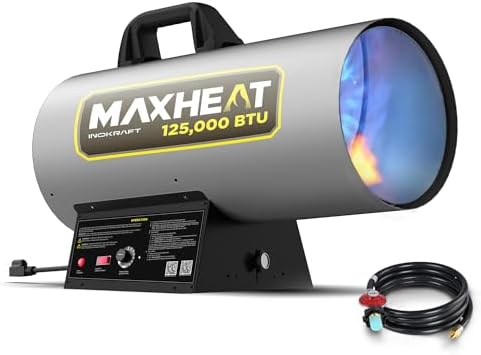


How do you check your own propane heater fuel tank size before ordering?
Check the cylinder, not the heater body, because fuel tank size is the propane capacity in lb. The number is usually stamped on the collar, printed on the label, or listed in the product details as tank capacity or propane capacity.
If you already own a cylinder, read the marked capacity in lb and use that exact figure. If you are buying for a space with limited storage, measure the shelf, cabinet, or transport area first, because a 20 lb cylinder takes far more room than a 1 lb canister.
What the marked lb figure on a cylinder means
The marked lb figure is the propane weight the cylinder is built to hold, not the heater’s heat output. A 20 lb tank holds more fuel than a 5 lb tank, but the number says nothing about how much heat the heater makes.
That matters because buyers sometimes read tank size as a room-heating claim. It is not one; it only tells you how much propane is available before refilling or swapping.
What goes wrong when the fuel tank size is too small or too large?
A tank that is too small shows up as frequent refills, shorter sessions, and more interruptions during use. For a heater used through long cold periods, that means you spend more time managing fuel than using the heater.
If you are planning an overnight trip, see how to stay warm in a tent or camper on a cold night.
A tank that is too large creates the opposite problem. It can be awkward to store, harder to move, and more than you need if you only use the heater occasionally.
The wrong size is most obvious when the tank no longer matches the way you actually use the heater. A 1 lb cylinder makes sense for short, portable use, while a 20 lb or larger tank makes more sense when refill frequency matters more than carrying weight.
What should you do when you are between two propane heater fuel tank sizes?
Choose the smaller size if portability, storage, or lifting matters more to you. Choose the larger size if fewer refills matter more and you have room to store the cylinder safely.
When you are between 5 lb and 10 lb, or between 20 lb and 40 lb, the decision usually comes down to how often you want to refill. If returns and sizing policy matter, confirm them before ordering, because a cylinder that is awkward for your space is harder to exchange later.
If your use pattern is still unclear, start from the longest session you expect to run without a refill. That number usually points you toward the larger of the two sizes you are considering.
The other propane heater guides we have published
- Choosing the Best Propane Heater Under $200
- Keeping One Room Warm When the Power Is Out for Days With a Propane Heater
- Which Propane Heater Can Heat a Cabin with No Electricity in Winter?
- The Propane Heaters That Keep a Tent or Camper Warm
- Best Propane Heater for Emergency Heat
- Winter Power Outage Propane Heater Compared
Related posts:
 Propane Heater Explained: What It Is and How It Works
The Types of Propane Heaters, Explained
Propane Heater Terms and Specs, Explained in Plain English
Propane Heater Warranties: What to Check Before You Buy
Heat output for Propane Heaters: How Much You Actually Need
Coverage area for Propane Heaters: How Much You Actually Need
Heater width for Propane Heaters: How to Choose Yours
Fuel type for Propane Heaters: How to Choose Yours