
Coverage area for Propane Heaters: How Much You Actually Need
Predicament Measures is reader-supported: some links on this page are affiliate links, and as an Amazon Associate Predicament Measures earns from qualifying purchases at no extra cost to you. Learn more.
Coverage area for propane heaters should usually be 500 to 1,500 sq ft. Choose 200 to 500 sq ft for a small room, and 1,500 to 3,000 sq ft for a larger garage or open area. Measure the space you actually need to warm, then compare that number with the heater’s stated coverage area.
Recommended Coverage Area by Use Case
| use case | recommended Coverage area | why this number |
|---|---|---|
| small enclosed room | 200 to 500 sq ft | Matches a compact space where a modest heating zone is enough. |
| bedroom or office | 300 to 700 sq ft | Gives room for a single room with doors, furniture, and uneven layout. |
| standard living area | 500 to 1,000 sq ft | Fits the middle of the stated range seen most often in listings. |
| large garage | 1,000 to 2,000 sq ft | Use this when the space is broad and heat loss is harder to avoid. |
| open or semi-open area | 1,500 to 3,000 sq ft | Suited to a larger footprint where a narrow rating would leave cold zones. |
| very large space | 3,000 sq ft and up | Only makes sense when the heater is intended for a much bigger area. |
Propane Heaters we have reviewed in detail
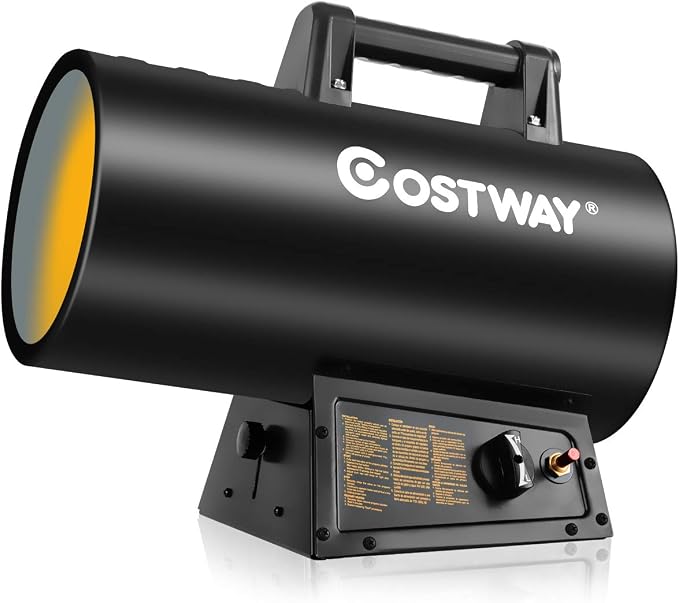
Each of the 3 shown here has its own full review on this site; they run from $119.99 to $225.19.


What Happens If You Go Under or Over?
Undersizing leaves part of the room outside the heater’s stated coverage area. That matters most in a garage, workshop, or open-plan room where heat spreads unevenly and drafts steal warmth fast.
Why oversized propane heater coverage wastes money and control
What happens if you buy too much coverage area? You pay for a larger rating than your room needs, and that extra capacity can be wasted in a small space. The cost is not only money; a heater sized far above the room often gives you less useful control over where the heat ends up.
Coverage area is not a comfort score. It is a floor-area claim, and a larger number only helps if your space is large enough to use it.
If you need to heat a massive workspace, see our comparison of large garage propane heaters.
The Coverage Area Mistake Buyers Make
The mistake is choosing coverage area from the room name instead of the room size. A “garage heater” can suit 500 sq ft or 3,000 sq ft, and those are very different decisions.
Measure the square footage of the space you want to heat, not the whole building. If the room is open to another area, count that opening as part of the heating load, because the heater has to warm both spaces.
Which propane heater coverage number to trust first
Which number should you trust first? Use the stated sq ft figure. Then check whether your room is enclosed, partially open, or exposed to drafts.
If your older heater felt weak, the problem may have been coverage area rather than fuel type or brand. A unit rated for 1,000 sq ft can still underperform in a 1,500 sq ft space, even before other specs enter the picture.
For outdoor enthusiasts, explore how to stay warm in a tent or camper.
How Coverage Area Interacts With Other Specs
Coverage area stops mattering when another spec becomes the real limit. Heat output, fuel tank size, heater width, and venting format can all matter more than the sq ft figure once the room gets specific.
A high coverage area is wasted if heat output is too low for the space. The category reference point at 10,000 BTU/h marks the range where room heating starts to become meaningful, so a large sq ft claim means little without enough output behind it.
Fuel tank size changes runtime, not coverage area. A heater that states 20 lb of propane capacity may run longer than a 1 lb model, but that does not change the room size it is meant to warm.
Width matters when your space is tight. A heater that states a large coverage area still has to fit where you plan to place it, and width can be the binding limit in a narrow room or crowded garage.
Budgeting is essential, so view our breakdown of propane heater price levels.
Vent-free and direct-vent units solve different problems. Vent-free models keep combustion in the room, while direct-vent units use sealed combustion and venting, so the right coverage area depends on the heating method as well as the floor plan.
Moisture is another limit. Vent-free combustion adds water vapor, so a room with poor airflow can feel damp long before the stated coverage area becomes useful.
For portable propane heaters, coverage area also has to match the tank format you plan to use. A 1 lb cylinder suits short runtime and mobility, while a 20 lb cylinder supports longer use, but neither changes the sq ft claim on its own.
We do not know which coverage-area figure is right for your room until you measure the space and check the heater’s other stated specs. That is the point where the number becomes a useful filter instead of a marketing line.
The other propane heater guides we have published
- Which Propane Heater Can Heat a Cabin with No Electricity in Winter?
- The Propane Heaters That Keep a Tent or Camper Warm
- Best Propane Heater for Emergency Heat
- Winter Power Outage Propane Heater Compared
- Choosing the Best Propane Heater for an Off-Grid Cabin
- The Portable Propane Heaters That Work Best for Camping
Related posts:
 Propane Heater Explained: What It Is and How It Works
The Types of Propane Heaters, Explained
Propane Heater Terms and Specs, Explained in Plain English
Propane Heater Warranties: What to Check Before You Buy
Heat output for Propane Heaters: How Much You Actually Need
Fuel tank size for Propane Heaters: How to Choose Yours
Heater width for Propane Heaters: How to Choose Yours
Fuel type for Propane Heaters: How to Choose Yours