
Gravity Water Filter Explained: What It Is and How It Works
Predicament Measures is reader-supported: some links on this page are affiliate links, and as an Amazon Associate Predicament Measures earns from qualifying purchases at no extra cost to you. Learn more.
Gravity Water Filter is a countertop gravity filter that uses no power and moves water through a filter element by gravity alone. You need one when you want pour-and-wait filtration and can accept refilling the upper chamber. The first thing to check is whether your household needs 2.25 gallons or 3.25 gallons of storage.
How a gravity water filter stores and dispenses clean water
A gravity water filter solves the gap between tap water that tastes off and a setup that needs no electricity. It stores untreated water above a filter, then lets clean water collect below for dispensing. If you are choosing by budget, compare capacity first, then the standard claims, then the build.
How Gravity Water Filter Works
Gravity water filter flow starts with untreated water in the upper chamber, then ends with filtered water in the lower chamber. The upper chamber holds the water before filtration, the filter element does the actual filtration, and the spigot controls water flow from the lower chamber. The lid covers the reservoir and reduces contamination while the system sits between uses.
- Fill the upper chamber with untreated water.
- Gravity pulls that water through the filter element.
- Filtered water drops into the lower chamber.
- Open the spigot to dispense water from below.
- Close the spigot and keep the lid in place.
The sequence matters because storage and filtration are separate jobs.
Gravity Water Filters we have reviewed in detail
Prices across these 3 run from $108.99 to $408; each one has a full review here.
New users can compare the best gravity water filter for beginners to find the right starting point for their needs.

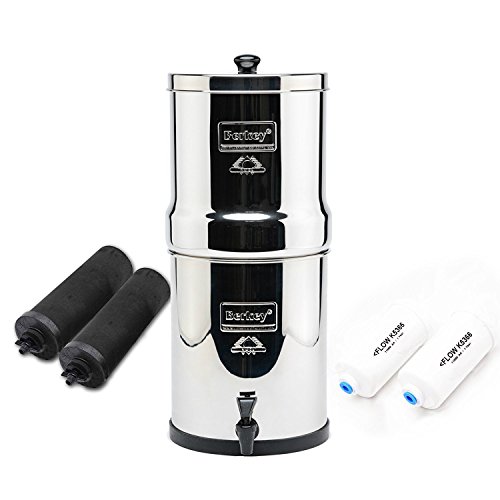
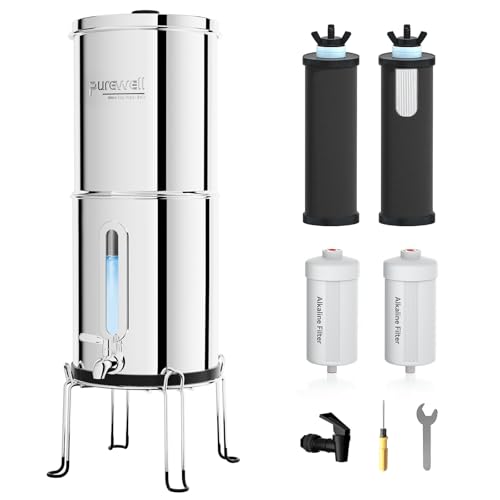
Parts That Matter Most in Gravity Water Filters
The parts that matter most are the upper chamber, lower chamber, spigot, filter element, and lid. Each part changes a different part of the result, so capacity, flow, and contamination control do not come from one component alone.
How the upper chamber, lower chamber, and spigot work
The upper chamber is the reservoir that holds untreated water before filtration. The lower chamber stores filtered water for dispensing, so its size affects how much clean water waits below. The spigot controls the release rate, which matters when you want a steady pour instead of lifting the whole unit.
How the filter element and lid affect water quality
The filter element is the part that changes water quality. Its pore size, also called micron rating or filtration rating, measures how small the openings are; that value limits what can pass through. The lid reduces contamination from dust and splashes, which matters when the unit sits on a counter for long periods.
What NSF/ANSI standards mean for gravity water filters
NSF/ANSI 42 is the baseline standard for chlorine, taste, and odor claims. NSF/ANSI 53 is the key standard for health-related contaminant reduction claims. A gravity-fed countertop system is the no-power, pour-and-wait format, so choosing it changes convenience more than it changes what the water is stored in.
What Gravity Water Filter Changes
Gravity water filter use changes the routine around drinking water, not the source itself. You pour once, wait for the upper chamber to drain, and draw from the lower chamber when needed. That helps in kitchens, cabins, and outage prep, where power-free dispensing matters more than speed.
If you are building a survival kit, view our list of emergency preparedness filters for high-reliability options.
When a gravity-fed countertop system makes the most sense
The format matters most when you want water ready without a faucet attachment or electricity. It matters less when you already have a strong under-sink system or you only need a glass or two at a time. Slow flow rate is the tradeoff that shows up first, and it is the reason some buyers overbuy capacity instead of checking daily demand.
How gravity water filter capacity affects daily use
Capacity is the other practical limit. A 2.25 gal countertop capacity is the common middle ground for batch size and refill frequency, while 3.25 gal suits higher daily use. If you live alone or refill often anyway, the smaller size can be easier to place and easier to move.
Buyer Questions About Gravity Water Filter
How does capacity and size compare in this price range?
Capacity and size usually trade off against each other in this price range. The common countertop figure is 2.25 gal, and larger units move toward 3.25 gal to cut refill frequency. If your counter space is tight, prioritize footprint and height before you chase extra storage.
Is it worth paying more for stainless steel?
Stainless steel usually buys you build material, not a different filtration principle. The value question is whether you need the larger reservoir, the sturdier housing, or the cleaner look more than a basic gravity-fed countertop system. If your budget is tight, spend for capacity and verified standards before you spend for appearance.
Does it remove the stuff I actually care about?
That depends on the filter element and the standards it claims. NSF/ANSI 42 covers chlorine, taste, and odor, while NSF/ANSI 53 is the key standard when you care about health-related contaminant reduction. If a listing names only taste claims, expect flavor improvement first and contaminant claims to stay unproven.
To better understand the technical data, examine our plain English filter specs guide.
Does it really remove the stuff I’m worried about, or just improve taste and smell?
It can do either, but the claim matters more than the housing. NSF/ANSI 42 is about taste and smell, while NSF/ANSI 53 is the standard tied to health-related reduction claims. If you care about a specific contaminant, look for the standard that names that kind of reduction, not just a polished tank.
How much chlorine taste and smell does it take out compared with other gravity filters?
Chlorine taste and smell reduction is the role tied to NSF/ANSI 42. Gravity filters that carry that claim are in the same category, so the real difference is usually capacity, flow, and build rather than the basic job. If chlorine taste is your main complaint, a 42 claim matters more than a larger reservoir.
Who Needs One, and Who Does Not
A gravity water filter makes sense when you want no-power filtration, room for batch storage, and a countertop setup you can refill by hand. It fits households that value pour-and-wait use, emergency water storage, or a simple way to improve taste without plumbing changes.
When a gravity water filter is not the right choice
You do not need one if you want fast output, low counter use, or a system that treats a very specific contaminant without checking the standard claim. You also do not need one if you only want a small amount of filtered water at a time. In that case, a slower gravity system can add waiting without adding much convenience.
The other countertop gravity filter guides we have published
Related posts:
 The Types of Gravity Water Filters, Explained
Gravity Water Filter Terms and Specs, Explained in Plain English
Gravity Water Filter Warranties: What to Check Before You Buy
Certifications and Safety Standards for Gravity Water Filters
Gravity Water Filter Alternatives: Other Ways to Get the Same Result
Filter Pore Size for Gravity Water Filters: How Much You Actually Need
Height for Gravity Water Filters: How to Choose Yours
Number Of Filter Elements for Gravity Water Filters: How Much You Actually Need