
Gravity Water Filter Alternatives: Other Ways to Get the Same Result
Predicament Measures is reader-supported: some links on this page are affiliate links, and as an Amazon Associate Predicament Measures earns from qualifying purchases at no extra cost to you. Learn more.
Gravity water filters are a no-power way to store and dispense filtered water. If your water use is light, bottled water, boiling, or a shared filter can cover the same need for less money upfront. Check how many litres you need between refills before you decide whether a gravity system is worth the space.
Bottled Water or Boiling Instead of a Gravity Water Filter
Bottled water usually costs more over time, while boiling costs little in equipment but adds fuel, time, and cooling time. If you only need a few safe servings a day, those routes can make more sense than a 2.25-gallon or 3.25-gallon gravity setup.
When bottled water or boiling makes more sense
Bottled water works when you need immediate access and do not want refills, chamber cleaning, or filter element replacement. Boiling works when your goal is pathogen reduction and you already have a heat source. Both stop making sense when you need routine household drinking water, because repeated purchase or repeated heating becomes the real burden.
Where these choices show up in our reviews
3 options shown here, $108.98 to $118.99, each with its own full review behind its name.
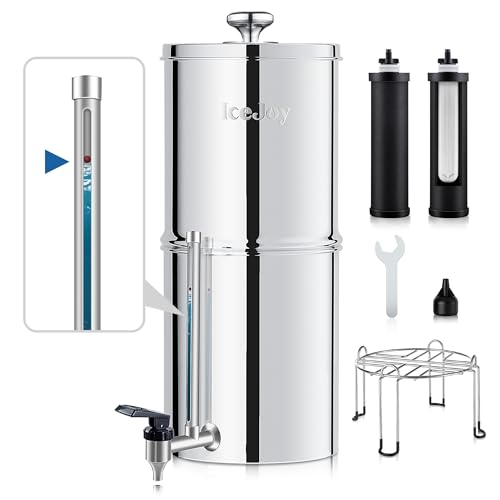


Buying Secondhand or Refurbished Gravity Water Filters
Buying secondhand or refurbished keeps the same gravity filter format in use, but with a lower upfront outlay than a new unit. The tradeoff is uncertainty around chamber seals, missing parts, and the remaining life of the filter elements. If the listing does not state element age or replacement availability, the risk rises quickly.
When a used gravity filter is worth buying
This route fits you when the body, spigot, and chambers are intact and the seller can document the parts included. It stops making sense when the system depends on proprietary elements or when the lower chamber fit is unclear, because bypass or leaks defeat the point of the format. A used unit also loses value fast if replacement elements cost close to the price difference versus new.
If you are looking for a primary household setup, see our comparison of the best gravity water filter for home use.
Borrowing or Renting a Gravity Water Filter
Borrowing or renting a gravity water filter shifts the cost from ownership to short-term access. That usually costs less than buying only when you need the filter for a short event, a temporary move, or a brief outage. It becomes a poor fit when the same household needs filtered water every day for weeks or months.
When renting a gravity filter makes sense
This route works best when capacity matters for a short period and storage space is limited. A 3.25-gallon system can serve a larger batch, but rental only makes sense if you will actually use that extra volume before the period ends. If you need an emergency water filter system for repeated use, ownership usually becomes the simpler choice.
How These Gravity Water Filter Alternatives Compare
| Route | Who it suits | Main advantage | Where it breaks down |
|---|---|---|---|
| Bottled water or boiling | Households with light daily use or short-term need | Low setup burden and immediate access | Recurring cost or recurring time adds up fast |
| Secondhand or refurbished | Shoppers who can verify parts and condition | Lower upfront cost than new | Unknown seal condition or element life raises risk |
| Borrowing or renting | Temporary use, outages, or short stays | No long-term ownership cost | Becomes inefficient for regular household use |
When Buying a Gravity Water Filter Is the Right Answer
Buying a gravity water filter makes sense when you need routine, no-power water access and want one unit to handle repeated daily use. It also fits better when you want a countertop system with a fixed capacity instead of recurring purchases or repeated boiling.
If you need filtered water for a household rather than a short event, ownership usually stops being optional and starts being practical. The decision turns on daily volume, available counter space, and whether you want a system that stays in place for ongoing use.
More Gravity Water Filter explainers and comparisons
Related posts:
 Gravity Water Filter Explained: What It Is and How It Works
The Types of Gravity Water Filters, Explained
Gravity Water Filter Terms and Specs, Explained in Plain English
Gravity Water Filter Warranties: What to Check Before You Buy
Certifications and Safety Standards for Gravity Water Filters
Filter Pore Size for Gravity Water Filters: How Much You Actually Need
Height for Gravity Water Filters: How to Choose Yours
Number Of Filter Elements for Gravity Water Filters: How Much You Actually Need