
Number Of Filter Elements for Gravity Water Filters: How Much You Actually Need
Predicament Measures is reader-supported: some links on this page are affiliate links, and as an Amazon Associate Predicament Measures earns from qualifying purchases at no extra cost to you. Learn more.
Gravity water filters usually need 2 filter elements for one or two people, and 4 filter elements for larger households that use more water each day. If your household uses water steadily or you want fewer refills, move up to 4 filter elements; if you only need a small countertop setup, 2 is the practical floor.
Recommended filter counts by use case
| use case | recommended number of filter elements | why this number |
|---|---|---|
| Single person or light daily use | 2 count | Two elements usually cover a small household without adding unnecessary cost or bulk. |
| Two people with regular countertop use | 2 to 4 count | This range balances refill frequency against the added capacity and throughput of more elements. |
| Three to four people | 4 count | Four elements better match higher daily draw and reduce the chance of running short. |
| Households that fill containers often | 4 count | More elements make sense when you want enough filtered water ready for repeated pours. |
| Low-use backup or emergency storage | 2 count | Small setups keep the system simpler when the goal is occasional use rather than daily volume. |
Where these choices show up in our reviews
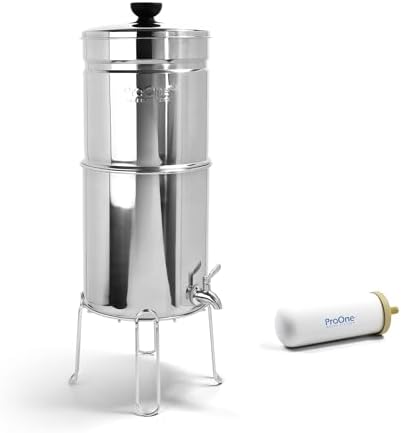
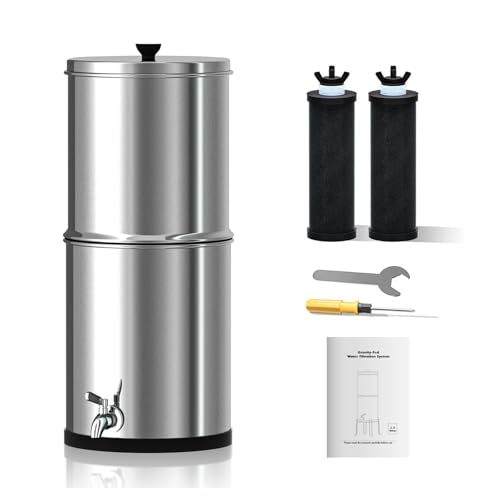
3 options shown here, $119.99 to $327.25, each with its own full review behind its name.

What happens if you go under or overbuy?
Going under usually means slower refill cycles and more time waiting for enough filtered water to collect. A 2-count setup can feel tight if several people draw from it during the day.
Overbuying raises the upfront cost and can leave you with capacity you do not use. A 4-count setup makes sense only when your daily water demand actually needs it, because extra elements do not help if the rest of the system is the limit.
Why underbuying creates a daily bottleneck
A small filter count can turn a gravity water filter into a waiting exercise. If the lower chamber empties faster than the upper chamber can pass water through, the system spends more time catching up than serving water.
That matters most in households that refill glasses, bottles, or pots several times a day. In that setting, 2 filter elements may be enough for taste and routine use, but not enough for convenience.
Why overbuying can waste money and space
Extra filter elements only pay off when the rest of the gravity water filter can use them. If the tank is small, the chamber fit is tight, or the flow path is the real limit, more elements add cost without changing daily output much.
Overbuying also makes sense only when you actually need the higher count for volume. If you are filling one pitcher at a time, 4 count can be more than you need.
The mistake most buyers make with filter count
The most common mistake is choosing number of filter elements before checking how much water you need between refills. The better target is daily demand, not a larger count by itself.
Start with how many people drink from the system and how often they refill containers. If your use is light, 2 count is usually enough; if the system serves a family, 4 count is the safer threshold.
One kitchen example is a household that fills a kettle, two bottles, and several glasses every day. That pattern usually points to 4 count, because the system needs more output between refills than a small setup can comfortably provide.
New users should start by viewing the best gravity water filter for beginners to see which entry-level models offer the most value.
How filter count interacts with other deciding specs
Filter count matters only when the rest of the gravity water filter can support it. Capacity, flow rate, and pore size decide different parts of the experience, and the smallest limit usually controls the result.
Capacity can make extra elements unnecessary
Capacity measures how much water the system holds at one time. If the upper chamber is small, extra filter elements do not change the amount stored between fills.
That is why a high count can be wasted in a compact countertop gravity filter. You may still refill often, even with more elements installed, because the reservoir is the bottleneck.
Flow rate can matter more than element count
Flow rate measures how much filtered water passes through in a set time. A higher count helps only if the elements can pass water fast enough to matter in daily use.
If the flow is slow, more elements may still leave you waiting. In that case, the speed of the system matters more than the count alone.
Pore size and standards answer different questions
Pore size measures how fine the filter openings are, while NSF/ANSI 42 and NSF/ANSI 53 speak to specific reduction claims. A higher number of elements does not replace those specs.
If you need taste and odor reduction, the standard matters more than the count. If you need health-related contaminant reduction claims, the relevant certification matters even more.
Height can limit what a larger setup fits
Height measures how tall the gravity water filter is from base to top. A larger element count can raise the total size of the unit, which matters if your counter or shelf space is tight.
That is a practical tradeoff for apartment kitchens and small counters. If vertical space is limited, a smaller count may fit better even when a larger one would serve more people.
Every countertop gravity filter guide in this category
- Gravity Water Filter for Camping Compared
- Choosing the Best Gravity Water Filter for Travel
- The Gravity Water Filters That Work Best for Small Kitchen Counters Under $200
- Which Gravity Water Filter Is Best for Apartments?
- Best Gravity Water Filter for Families
- Gravity Water Filters for Beginners Compared
Related posts:
 Gravity Water Filter Explained: What It Is and How It Works
The Types of Gravity Water Filters, Explained
Gravity Water Filter Terms and Specs, Explained in Plain English
Gravity Water Filter Warranties: What to Check Before You Buy
Certifications and Safety Standards for Gravity Water Filters
Flow Rate for Gravity Water Filters: How Much You Actually Need
Filter Pore Size for Gravity Water Filters: How Much You Actually Need
Height for Gravity Water Filters: How to Choose Yours