
Gravity Water Filter Terms and Specs, Explained in Plain English
Predicament Measures is reader-supported: some links on this page are affiliate links, and as an Amazon Associate Predicament Measures earns from qualifying purchases at no extra cost to you. Learn more.
Gravity Water Filter terms split into load-bearing specs and marketing fluff. Capacity, pore size, flow, and height tell you what the filter can do; words like “premium” do not. Start with your daily water use and the space you have for a countertop unit.
Gravity Water Filter Capability Terms
Capability terms decide whether a gravity water filter matches your household use. Bigger capacity helps if you refill often; smaller pore size matters when the listing gives a real micron figure.
- Of the 28 listings screened, 18 state a single capacity figure, from 1 to 3.25 gal; a larger number is better if you want fewer refills.
- Filter life – This is the amount of water a filter element is rated to process before replacement, usually in gallons. Nineteen listings state it, from 5,000 to 6,000 gal; a larger number is better if you want longer service between replacements.
- Eight listings state one figure, from 0.01 to 0.2 µm; a smaller number is better when you want finer filtration.
- Flow rate – This is how fast filtered water passes through the system, usually shown as gallons per hour or similar. A higher number is better if you care more about speed than long contact time, but a fast figure does not tell you capacity or pore size.
- Number of filters – This is the count of filter elements installed in the system. Twenty-six listings state it, from 1 to 6 pcs; a larger count can improve throughput, but it only helps if the chamber size and outlet design support it.
Where these choices show up in our reviews
Each of the 3 shown here has its own full review on this site; they run from $108.99 to $367.
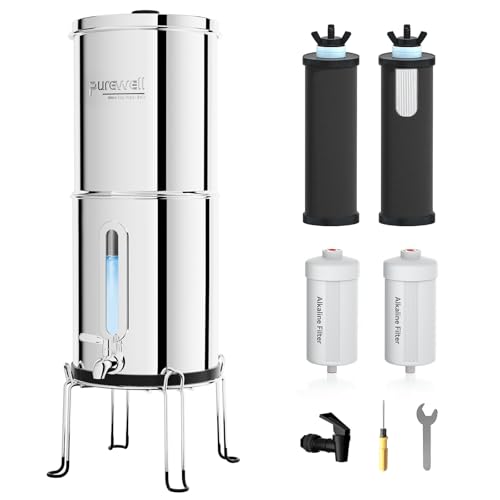
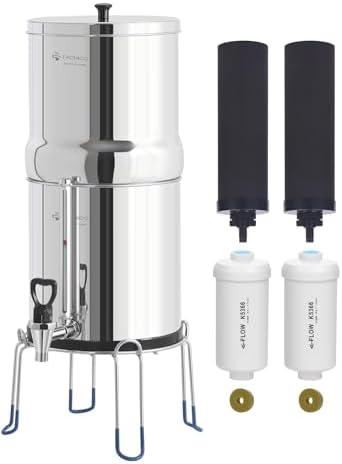

Gravity Water Filter Physical Terms
Physical terms describe how the gravity water filter is built and where each part sits. Bigger is not always better here; a taller unit can hold more in some listings, but height alone does not tell you storage or speed.
If you are planning an outdoor trip, you can view our comparison of the best gravity water filter for camping.
- Upper chamber – This is the top reservoir, and it holds untreated water before filtration begins. A larger upper chamber means fewer refills, but it also takes more counter space.
- Lower chamber – This is the bottom reservoir, and it stores filtered water for dispensing. A larger lower chamber gives you more ready-to-pour water, which matters if you do not want to wait for the next batch.
- Spigot – This is the outlet that controls water flow from the lower chamber. A better fit matters more than a bigger number here, because poor fit can cause leaks or bypass.
- Lid – This covers the reservoir and helps reduce contamination from dust and splashes. A lid matters more than size when you leave the unit sitting on a counter between fills.
- Material – This is the body material used for the chambers. Of the 28 listings screened, 24 state stainless steel, 1 states glass, and 1 states plastic; the material matters for weight, appearance, and how you plan to place the unit, but it does not by itself tell you filtration quality.
Standards and Fit Terms Buyers Ask About
Standards and fit terms tell you whether a gravity water filter can make the claims you expect and sit in the format you want. NSF/ANSI 42 and NSF/ANSI 53 mean different things, so do not treat them as interchangeable.
- NSF/ANSI 42 – This is the baseline standard for chlorine, taste, and odor claims. If a listing names it, you know the claim is about aesthetic water quality, not health-related contaminant reduction.
- NSF/ANSI 53 – This is the key standard for health-related contaminant reduction claims. If you want more than taste and odor reduction, this is the standard to look for in the listing text.
- Gravity-fed countertop system – This is the no-power, pour-and-wait format used on a counter. Choosing this format changes how you use the filter every day, because you fill the upper chamber and wait for gravity to do the work.
- Replacement filter element – This is the part you buy when the original element reaches its rated life. It has to match the system’s mount, size, and filter count, or it will not fit or seal correctly.
- Spigot gasket – This is the sealing ring that helps prevent leaks at the outlet. It has to match the spigot size and shape, because the wrong gasket can leave the lower chamber dripping.
- Priming washer – This is a small accessory used to prepare some filter elements for use. It has to match the filter element design, since not every element needs one and not every washer fits every thread or opening.
- Fluoride filter element – This is a specialized element that adds another reduction stage. If the listing includes one, it changes what the system is trying to reduce, and it has to match the same housing and chamber layout as the main element.
Which Gravity Water Filter Terms Get Confused Most?
Capacity and filter life are not the same term. Capacity tells you how much water sits in the chambers at once, while filter life tells you how much water the element can process before replacement; a bigger capacity helps with refilling, but a longer filter life helps with maintenance.
Capacity versus flow rate in daily use
Capacity is stored water; flow rate is speed. If you have a large household, you need enough capacity for the batch size you want and enough flow rate to avoid waiting too long for the next pour.
You can further understand the technology by learning about the different types of gravity water filters.
Filter pore size versus filter life in listings
Filter pore size describes opening size, and filter life describes service span. A smaller micron figure can signal finer filtration, but it does not tell you how long the element lasts, and a long life rating does not tell you how fine it filters.
Upper chamber versus lower chamber on the counter
The upper chamber holds untreated water, and the lower chamber stores filtered water. If you confuse them, you may overfill the wrong side or expect the lower chamber to do work it cannot do.
NSF/ANSI 42 versus NSF/ANSI 53 claims
NSF/ANSI 42 covers chlorine, taste, and odor. NSF/ANSI 53 covers health-related contaminant reduction, so the second standard matters more when your concern is not just flavor.
Browse our other countertop gravity filter pages
Related posts:
 Gravity Water Filter Explained: What It Is and How It Works
The Types of Gravity Water Filters, Explained
Gravity Water Filter Warranties: What to Check Before You Buy
Certifications and Safety Standards for Gravity Water Filters
Gravity Water Filter Alternatives: Other Ways to Get the Same Result
Filter Pore Size for Gravity Water Filters: How Much You Actually Need
Height for Gravity Water Filters: How to Choose Yours
Number Of Filter Elements for Gravity Water Filters: How Much You Actually Need