Off-grid solar panels require specific safety certifications to ensure electrical integrity and fire safety during long-term outdoor exposure. In most jurisdictions, compliance with national electrical standards like UL or IEC is a legal requirement for sale and installation. Other marks, such as specific efficiency ratings or manufacturing certifications, are voluntary but provide evidence of quality control. Decorative marks, such as generic “eco-friendly” logos or non-standardized “premium” badges, offer no verifiable safety data and should be disregarded during the selection process.
What does the UL certification mean for solar panels?
UL certification indicates that a solar panel has undergone rigorous testing by Underwriters Laboratories to meet specific safety standards for electrical components. This mark guarantees that the panel meets fire safety requirements, insulation standards, and structural integrity benchmarks for its intended use. UL testing ensures that the electrical components within the panel will not overheat or cause a short circuit under normal operating conditions.
UL certification does not guarantee the long-term power output or the specific efficiency of the cells. It is a safety standard, not a performance guarantee. A panel can be UL-certified while still suffering from rapid degradation or low energy conversion rates. You should treat UL as a baseline safety requirement rather than a measure of how much power the panel will produce over ten years.
Where these choices show up in our reviews
From $139.99 to $399.99: the 3 in this category we have reviewed in full.
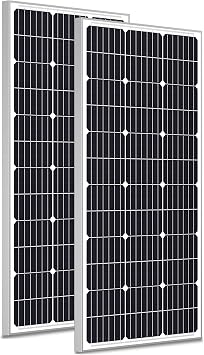

Calpha 200W 20V Monocrystalline Solar Panel
$139.99 price checked August 2026
Read our full Calpha 200W Solar Panel review
If your setup requires exposure to heavy rain, explore the best waterproof solar panels for outdoor use.

What does the IEC standard guarantee?
IEC standards, issued by the International Electrotechnical Commission, are the global benchmarks for solar photovoltaic (PV) modules. These standards, such as IEC 61215 and IEC 61730, cover mechanical load testing, thermal cycling, and moisture resistance. These tests ensure the panel can withstand extreme weather, such as heavy snow loads, high-wind pressures, and intense heat cycles.
IEC standards do not guarantee the specific brand’s warranty period or the availability of replacement parts. While the standard ensures the panel is built to withstand environmental stress, it does not dictate the manufacturer’s commercial obligations. You should look for IEC 61215 for mechanical durability and IEC 61730 for safety and reliability.
Which safety failure modes do these marks address?
The primary safety failure modes for off-grid solar panels include electrical arcing, thermal runaway, and mechanical fatigue. UL and IEC standards address these by testing the internal wiring and cell layout to prevent high-voltage leaks and fire hazards caused by overheating.
Arcing and thermal runaway are mitigated by requirements for specific insulation materials and fuse points within the module. Mechanical fatigue is addressed by stress testing the frame and glass surface to ensure the panel does not crack or shatter under environmental pressure. Without these standards, a panel might fail under the high-voltage loads common in off-grid systems, potentially leading to electrical fires or equipment damage.
How can you verify a certification is real?
Verifying a certification involves checking the manufacturer’s documentation rather than relying on the printed labels on the physical product. Manufacturers often print logos on packaging that may not correspond to the specific model being sold.
- Request a Certificate of Compliance (CoC) or a specific test report from the manufacturer.
- Check the manufacturer’s official website for a list of certified products and their corresponding certification numbers.
- Verify the certification number against the issuing body’s public database, such as the UL Product iQ portal.
- Confirm that the certification covers the specific wattage and voltage of the panel you are ordering, as certifications are often specific to certain power outputs.
Which marks are non-negotiable for off-grid solar?
UL and IEC certifications are the non-negotiable requirements for any off-grid solar panel intended for permanent installation. These standards provide the only verified proof that the hardware can safely handle the electrical loads and environmental stresses of a standalone power system.
While other marks regarding manufacturing processes or specific regional environmental ratings are useful, they should be weighed against the primary safety standards. If a panel lacks a recognized safety certification, the risk of electrical failure or fire outweighs any perceived benefits of other secondary features. Prioritize panels that explicitly list IEC 61215 and IEC 61730 in their technical documentation.
More Off-grid Solar explainers and comparisons
Related posts:
 Off-Grid Solar Panel Explained: What It Is and How It Works
The Types of Off-Grid Solar Panels, Explained
Off-Grid Solar Panel Terms and Specs, Explained in Plain English
Off-Grid Solar Panel Warranties: What to Check Before You Buy
Off-Grid Solar Panel Alternatives: Other Ways to Get the Same Result
Rated Power for Off-Grid Solar Panels: How Much You Actually Need
Operating Voltage for Off-Grid Solar Panels: How to Choose Yours
Panel Dimensions for Off-Grid Solar Panels: How to Choose Yours
Off-Grid Solar Panel Explained: What It Is and How It Works
The Types of Off-Grid Solar Panels, Explained
Off-Grid Solar Panel Terms and Specs, Explained in Plain English
Off-Grid Solar Panel Warranties: What to Check Before You Buy
Off-Grid Solar Panel Alternatives: Other Ways to Get the Same Result
Rated Power for Off-Grid Solar Panels: How Much You Actually Need
Operating Voltage for Off-Grid Solar Panels: How to Choose Yours
Panel Dimensions for Off-Grid Solar Panels: How to Choose Yours