
What Well Pumps Cost, and What Each Price Level Gets You
Predicament Measures is reader-supported: some links on this page are affiliate links, and as an Amazon Associate Predicament Measures earns from qualifying purchases at no extra cost to you. Learn more.
Well pumps usually land in the $135.99 to $219.99 range, where the median price rises from $159.97 to $208.99. As price rises, the medians shift more in horsepower and flow than in head, so the first thing to check is whether your well and fixtures need more output or just a different fit.
Well Pump Price Levels at a Glance
| Price level | Price range | Products | Median horsepower | Median maximum flow rate | Median rating |
|---|---|---|---|---|---|
| Entry level | $102 to $132.99 | 26 | 1HP | 26 GPM | 4.1 |
| Lower mid-range | $135.99 to $179.97 | 27 | 1HP | 20 GPM | 4.1 |
| Upper mid-range | $179.97 to $219.99 | 27 | 1HP | 18 GPM | 4.0 |
| Top end | $219.99 to $1099.95 | 27 | 0.8HP | 13 GPM | 4.2 |
Products in this category with a full review here
From $179.95 to $482.53: 3 of the 15 in this category we have reviewed in full.
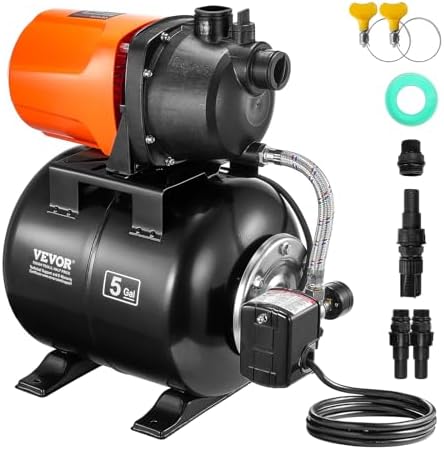


Entry-level well pumps and what the lower price buys
If your system needs the 4-inch well casing fit and you want the lowest median price, this is the first band to inspect.
A 1 HP pump in this tier suits a first-time replacement where the well can support a stronger motor and the plumbing does not need a higher price band for output. A 26 GPM median matters if you expect several fixtures to run together, such as a house with showers, laundry, and irrigation on the same system.
Lower prices do not guarantee 25 GPM flow
This tier gives up less in horsepower than many readers expect, but it gives up consistency in flow. Only 7 of the 13 listings that state flow rate reach 25 GPM, so the lower price does not guarantee the higher-output end of the category. If your priority is steady multi-fixture supply, the next tier is where you start to see a broader set of listings, not just a lower entry price.
Lower mid-range well pumps and the tradeoff at this price
Lower mid-range well pumps cost $135.99 to $179.97, and the median is $159.97. The median rating stays at 1 HP, while the median flow drops to 20 GPM and the median head sits at 164 feet, so this band spends more on price without raising the middle of the spec set.
If you are replacing a pump for a household well that does not need the highest flow figure, this band fits a moderate-demand setup. A 20 GPM median suits a smaller draw pattern than the entry band, and the 164-foot median head tells you this range still targets ordinary lift needs rather than a deeper-well jump.
This band costs more per horsepower without stronger flow
Against the next tier up, the main thing this band gives up is not horsepower. It gives up flow headroom and pays more per unit of horsepower, at a median of $169.95 per horsepower. Only 2 of the 10 listings that state flow rate reach 25 GPM, so the extra spend is not buying a stronger flow profile.
Upper mid-range well pumps and the point where flow flattens
Upper mid-range well pumps sit from $179.97 to $219.99, with a median price of $208.99. Their median horsepower remains 1 HP, but the median flow falls to 18 GPM and the median head to 150 feet, so this band does not buy a higher middle spec than the cheaper ranges.
This tier suits you if your decision depends more on a specific build than on a higher median output. A 1 HP median still covers many household wells, but the lower 18 GPM median makes this band a weaker choice when simultaneous fixture use matters more than price.
Higher prices in this range do not buy more flow
Compared with the lower mid-range band, the tradeoff is clear: the price rises, while the median flow and head both move down. Only 2 of the 10 listings that state flow rate reach 25 GPM, so the extra cost is not going toward more listings at the high-flow end. If you need more water at once, this is the point where paying more stops buying more flow.
Top-end well pumps and what the highest prices actually add
Top-end well pumps range from $219.99 to $1,099.95, and the median price jumps to $413.54. The median horsepower drops to 0.8 HP, the median flow is 13 GPM, and the median head is 151 feet, so this tier is not a simple move upward in the usual specs.
This band suits buyers who need a narrower fit, a different control setup, or a specialized listing rather than a larger median output. A 13 GPM median is enough for lighter demand, not for a household that wants multiple fixtures running together without planning around the pump.
Upper mid-range pricing rises while horsepower median falls
Against the upper mid-range tier, this is where price rises without a matching rise in the core medians. The median price per unit of horsepower reaches $480.74, far above the lower bands, while the horsepower median falls. If your well only needs ordinary output, this tier is hard to justify on output alone.
Where paying more stops buying more output
Paying more stops buying more output once the median horsepower stays at 1 HP while the median flow falls from 26 GPM to 20 GPM and then 18 GPM. The price-per-horsepower figures also rise from $130.31 to $169.95 and then $217.99, so the middle of the market costs more while delivering less flow on the median.
The clearest flattening point is the move from the entry band into the lower mid-range and upper mid-range bands. The median head also slides from 182 feet to 164 feet and then 150 feet, so higher prices here do not buy a stronger lift profile either. The gain that remains is not more output; it is a different mix of listings.
The top end keeps rising in price, but the median horsepower drops to 0.8 HP and the median flow to 13 GPM. That makes the upper bands a poor place to look if your only goal is more water at the tap.
What to budget for beyond the pump itself
Beyond the pump itself, budget for matching parts and installation work. A pressure tank reduces short cycling, and it has to match the pump’s output and the pressure switch settings so the system does not turn on and off too often.
Well pump accessories must match the existing system
A pressure switch controls pump start and stop, so it has to match the tank and the pump’s operating range. A pitless adapter provides a sanitary well connection, and it has to match the well casing and discharge size. A control box starts and protects the motor, and it has to match the motor type and wiring setup. These are not optional extras when the existing system does not already include them.
You also need to budget for the job of a qualified installer where local rules require one, plus any parts that depend on your own well layout. The mistake here is not overspending; it is buying a pump that fits the price band but not the rest of the system.
How to tell a fair price for a well pump
A fair price for a well pump tracks the price per unit of horsepower, not the sticker price alone. The medians move from $130.31 per horsepower in the entry band to $169.95, then $217.99, then $480.74, so the question is whether the extra spend buys a spec you actually need.
If your well only needs ordinary household output, the lower bands make more sense because their median horsepower stays at 1 HP and their prices per horsepower stay far lower. If you need a different fit, a control-box setup, or a special configuration, the top end can still be fair, but not because it offers more median output.
Prices were checked in October 2026, and retail prices move. Use the horsepower figure, then check whether the flow and head medians line up with your own well, fixtures, and casing size before you decide whether a price is fair.
The rest of our well pump guides
Related posts:
 Well Pump Explained: What It Is and How It Works
The Types of Well Pumps, Explained
Well Pump Terms and Specs, Explained in Plain English
Horsepower for Well Pumps: How Much You Actually Need
Maximum Head for Well Pumps: How Much You Actually Need
Maximum Flow Rate for Well Pumps: How Much You Actually Need
Discharge Size for Well Pumps: How to Choose Yours
Well Casing Diameter for Well Pumps: How to Choose Yours