Ham radio equipment requires specific certifications to ensure electrical safety and radio frequency compliance. In this category, FCC (USA) or CE (Europe) certifications are legally required for the device to operate on public frequencies. Additional marks, such as IP (Ingress Protection) ratings, are voluntary but provide meaningful data on environmental durability. Some markings, such as “high-performance” labels or brand-specific internal certifications, are decorative and do not guarantee any standardized safety or performance metrics.
What do FCC and CE marks mean for ham radios?
FCC and CE marks indicate that the radio meets the legal requirements for electromagnetic interference and radio frequency emissions in their respective regions. The FCC (Federal Communications Commission) regulates devices in the United States, while the CE (Conformité Européenne) mark indicates compliance with European Union safety, health, and environmental standards.
Radio Frequency Compliance
These marks guarantee that the radio operates within the designated frequency bands and does not emit “spurious emissions” that could interfere with aircraft navigation, emergency services, or other licensed communications. Compliance ensures the device’s internal oscillators and filters are stable enough to stay within the narrow allocated bands for amateur use.
What these marks do not guarantee
Neither FCC nor CE marks guarantee the physical durability of the device or its performance in specific weather conditions. They do not certify that a radio is “best” for a specific mode like SSB or DMR; they only confirm that the device is legally permitted to transmit on the amateur bands without causing prohibited interference.
Where these choices show up in our reviews
From $149.99 to $259: the 3 in this category we have reviewed in full.

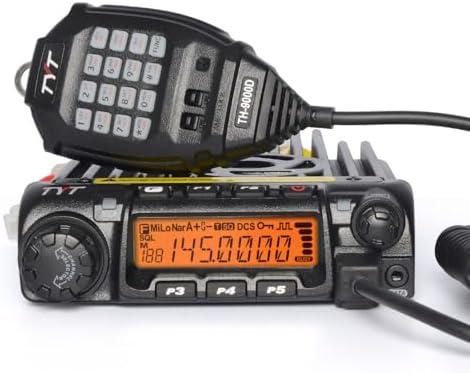
Tyt TH-9000D Vhf Mono Band Mobile Transceiver
Selecting the right transmission method is easy once you learn how to choose modulation modes.
$149.99 price checked August 2026

What does an IP rating mean for a ham radio?
An IP (Ingress Protection) rating defines the level of protection a ham radio has against solids and liquids. These ratings are issued by the International Electrotechnical Commission (IEC) and are denoted by two numbers, such as IP67 or IP68.
Solid and Liquid Protection
The first digit indicates protection against dust and solid objects, while the second digit indicates protection against water. For example, a rating of “6” for the first digit means the device is dust-tight. A second digit of “7” means the radio can withstand immersion in water up to 1 meter for 30 minutes.
Understanding your requirements is the first step to finding the ideal ham radio frequency range.
What IP ratings do not guarantee
An IP rating does not guarantee the radio can withstand high-pressure water jets or heavy impacts. It also does not account for chemical resistance or extreme temperature fluctuations. A radio with an IP67 rating may still fail if exposed to salt spray or high-pressure power washing.
What safety standards prevent hardware failure?
Safety standards in the ham radio category focus primarily on preventing SWR (Standing Wave Ratio) mismatches and thermal management. These standards ensure that the final power amplifier does not overheat or suffer catastrophic failure when connected to an antenna.
SWR Mismatch Protection
High-quality transceivers include internal circuitry to detect a high SWR. If the antenna system does not match the radio’s output impedance, the device may automatically reduce power or shut down the transmitter to prevent the power amplifier from burning out. This is a critical safety feature for high-power base stations.
Thermal Management and Heat Dissipation
Thermal standards ensure that the heat generated during high-duty-cycle transmissions is dissipated through the chassis or heat sinks. For mobile ham radios, this often involves heat sink designs that prevent the internal components from reaching temperatures that would cause permanent damage or melting of the outer casing.
How do you verify a certification mark?
Verifying a certification mark involves checking for physical labels, model numbers, and official documentation rather than relying on the packaging alone.
- Check the rear or bottom of the radio for a permanent, engraved, or high-quality printed label containing the FCC ID or CE mark.
- Verify that the model number on the physical label matches the model number listed on the manufacturer’s official website.
- Search the official FCC ID database using the specific ID found on the device to confirm the model was tested and approved.
- Confirm that the IP rating is listed in the official technical manual, as many manufacturers will print a rating on the box that is not applicable to the specific hardware.
Which marks are non-negotiable?
The most non-negotiable marks for ham radios are the regional radio frequency certifications (FCC or CE) and basic safety certifications like UL or TUV for power supplies.
Mandatory Certifications
You must ensure the radio has the correct regional radio certification. Using a radio that is not certified for your country’s amateur bands can lead to the seizure of the hardware or legal penalties. These are the baseline requirements for any legal operation.
Optional and Contextual Marks
Marks like IP67 or specific military-grade standards (MIL-STD) are important but should be weighed against your specific use case. If you are using a base station indoors, a high IP rating is unnecessary. If you are using a handheld radio for hiking, the IP rating becomes a primary decision factor. Always confirm the current local regulations for your specific location before ordering any radio equipment.
More Ham Radio explainers and comparisons
Related posts:
 Ham Radio Explained: What It Is and How It Works
The Types of Ham Radios, Explained
Ham Radio Terms and Specs, Explained in Plain English
Ham Radio Warranties: What to Check Before You Buy
Output Power for Ham Radios: How Much You Actually Need
Frequency Range for Ham Radios: How to Choose Yours
Battery Capacity for Ham Radios: How Much You Actually Need
Modulation Mode for Ham Radios: How to Choose Yours
Ham Radio Explained: What It Is and How It Works
The Types of Ham Radios, Explained
Ham Radio Terms and Specs, Explained in Plain English
Ham Radio Warranties: What to Check Before You Buy
Output Power for Ham Radios: How Much You Actually Need
Frequency Range for Ham Radios: How to Choose Yours
Battery Capacity for Ham Radios: How Much You Actually Need
Modulation Mode for Ham Radios: How to Choose Yours