Emergency Strobe Light Terms and Specs, Explained in Plain English
When researching emergency strobe lights, it is important to distinguish between load-bearing specifications and marketing vocabulary. Terms like “blazing,” “ultra-bright,” and “professional-grade” are subjective marketing descriptors that do not provide measurable data. You should focus on quantifiable metrics such as candela ratings, IP (Ingress Protection) ratings, and mounting standards. These specifications dictate how far the light is visible, how long it lasts in the rain, and whether it will physically fit your vehicle or equipment. By focusing on these data points, you can determine exactly what your specific environment requires rather than being swayed by descriptive adjectives.
Where these choices show up in our reviews
These 3 have their own full review on this site, and run from $180 to $219.99.
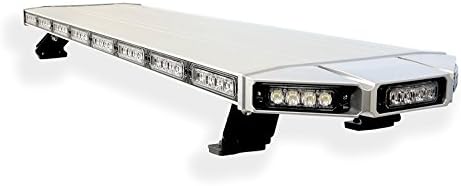

ThunderEye 18 Inch Low Profile Magnetic Strobe Bar
You can also learn about various emergency strobe types to see which configuration fits your specific needs.
$180 price checked August 2026

XRIDONSEN 37 inch 104 LED Magnetic Light Bar
$219.99 price checked August 2026
Read our full XRIDONSEN Magnetic Light Bar review
For a deeper dive, view our guide on strobe light mechanics to understand the internal technology.
Optical Performance and Visibility
- Candela (cd) – This measures the luminous intensity of the strobe in a specific direction. A higher candela rating means the light can be seen from a greater distance, which is the primary metric for determining visibility range.
- TIR (Total Internal Reflection) Optics – This is a lens design that reflects light inward before projecting it out in a concentrated beam. TIR optics provide a more focused, long-distance beam compared to standard reflectors which scatter light in all directions.
- Flash Frequency (Hz) – This is the number of times the strobe flashes per second. Higher frequencies create a more intense visual “pulse” that is easier for the human eye to detect quickly in high-traffic areas.
- Color Temperature (K) – Measured in Kelvin, this defines the hue of the light (e.g., 6000K for cool white). For emergency use, the specific color (amber, red, or white) is usually more important than the Kelvin rating, but a consistent color temperature ensures the light remains visible as intended.
- Beam Angle – This defines the spread of the light in degrees. A narrow beam angle (e.g., 15 degrees) projects light far away, while a wide beam angle (e.g., 120 degrees) provides broad visibility for nearby objects.
Durability and Build Specifications
- IP Rating (Ingress Protection) – This standard (e.g., IP67) measures how well the unit resists dust and water. A higher first digit indicates better dust protection, and a higher second digit indicates better water resistance; for outdoor use, a rating of IP67 or higher is standard.
- Thermal Management – This refers to how the unit dissipates heat. High-output LEDs generate significant heat; effective thermal management prevents the strobe from dimming or shutting down during prolonged use.
- Housing Material – This identifies what the outer shell is made of, such as polycarbonate or aluminum. Polycarbonate is standard for impact resistance, while aluminum may be used for specific heat dissipation needs.
- Operating Temperature Range – This is the range of degrees (Celsius or Fahrenheit) in which the device functions. You should ensure the lower limit of the range covers the coldest environment you expect to encounter.
- Voltage Range – This is the electrical input the strobe can accept (e.g., 12V-24V). A wider range allows the device to operate consistently even when the vehicle’s battery voltage fluctuates under load.
Mounting and Power Compatibility
- Magnetic Mount – This indicates the unit uses high-strength magnets for attachment. This is ideal for temporary use on metal surfaces but is not suitable for permanent integration or non-metallic surfaces.
- Permanent Bolt-on – This indicates the unit requires a bracket and hardware to be screwed into a surface. This is the standard for permanent vehicle integration to ensure the light does not move during operation.
- Wiring Harness – This is the pre-made set of wires and connectors used to power the unit. A dedicated harness ensures a secure connection and reduces the risk of electrical shorts or voltage drops.
- Current Draw (Amps) – This is the amount of electricity the strobe pulls from the power source. You must ensure your vehicle’s electrical system can support the total amperage of all added accessories to avoid blowing fuses or draining the battery.
- Fuse Rating – This is the maximum current the device’s internal or external circuit can handle before cutting power. You should check that your installation’s fuse matches the manufacturer’s recommended amperage.
Commonly Confused Terms
Buyers often confuse Candela with Lumens. Lumens measure the total amount of light emitted in all directions, while Candela measures the intensity of light in a specific direction. For emergency strobes, Candela is the more useful metric because it describes how far away the signal can be seen.
Another common point of confusion is IP67 versus IP68. While both are highly water-resistant, IP67 means the device can be submerged in up to 1 meter of water for 30 minutes, while IP68 indicates a higher level of protection for deeper or longer submersion. For most roadside use, IP67 is sufficient.
Finally, Magnetic Mount and Permanent Bolt-on are often confused in terms of durability. A magnetic mount is designed for quick deployment and portability, whereas a bolt-on mount is designed to withstand high-speed vibrations and wind resistance on a moving vehicle. You should choose based on whether the light needs to stay on the vehicle permanently.
Before ordering, confirm the specific electrical requirements and mounting dimensions for your vehicle or equipment. Because local regulations regarding the use of emergency signals vary by region, confirm the current rules for your specific location before purchasing.
Browse our other Emergency Strobe pages
- Choosing the Best Emergency Strobe Light Bars for Police Vehicles
- The Amber Strobe Light Bars That Work Best for Construction Vehicles
- Which Magnetic Mount Emergency Strobe Lights Are Best?
- Best Low Profile Roof Mount Strobe Bars
- Tow Truck Emergency Strobe Lights Compared
- Choosing the Best Small Emergency Strobe Light Bars
Related posts:
 Emergency Strobe Light Explained: What It Is and How It Works
The Types of Emergency Strobe Lights, Explained
Emergency Strobe Light Warranties: What to Check Before You Buy
Emergency Strobe Light Alternatives: Other Ways to Get the Same Result
Wattage for Emergency Strobe Lights: How Much You Actually Need
Voltage for Emergency Strobe Lights: How to Choose Yours
LED Count for Emergency Strobe Lights: How Much You Actually Need
Length for Emergency Strobe Lights: How to Choose Yours
Emergency Strobe Light Explained: What It Is and How It Works
The Types of Emergency Strobe Lights, Explained
Emergency Strobe Light Warranties: What to Check Before You Buy
Emergency Strobe Light Alternatives: Other Ways to Get the Same Result
Wattage for Emergency Strobe Lights: How Much You Actually Need
Voltage for Emergency Strobe Lights: How to Choose Yours
LED Count for Emergency Strobe Lights: How Much You Actually Need
Length for Emergency Strobe Lights: How to Choose Yours