There are three primary types of emergency strobe lights, differentiated by their optical output and intended visibility range. The choice between these types depends on whether the priority is localized warning for nearby personnel or long-range signaling for high-speed traffic environments. While all emergency strobes utilize high-intensity LEDs to provide a distinct visual signature, the internal optics and mounting configurations separate them into specific functional roles.
What defines a warning strobe?
A warning strobe is defined by its ability to provide a high-frequency visual signal that cuts through ambient light to alert nearby observers. These units are designed for immediate proximity awareness, such as at a construction site or a temporary roadside hazard. They prioritize high-visibility patterns over long-distance beam concentration.
A warning strobe is for individuals who need to mark a specific zone or stationary object. It performs better than long-range units in cluttered environments where a wide-angle flash is more effective than a narrow beam. These units give up the ability to be seen from several blocks away, as their light is dispersed to cover a wider area.
Warning strobes typically sit in the lower price band of the emergency lighting market because they do not require complex TIR (Total Internal Reflection) optics or heavy-duty housing required for high-speed integration.
Where these choices show up in our reviews
Prices across these 3 run from $180 to $376.75; each one has a full review here.
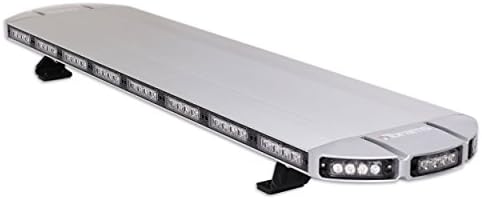
ThunderEye 48 Inch Low Profile Roof Mount Light Bar
$376.75 price checked August 2026
If you are outfitting a patrol car, you can compare the best emergency strobe light bars for police vehicles to find the right fit.
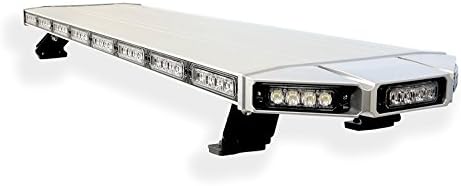

ThunderEye 18 Inch Low Profile Magnetic Strobe Bar
New users can learn how an emergency strobe light works to understand the basic mechanics of these signals.
$180 price checked August 2026
What defines a high-intensity strobe?
A high-intensity strobe is defined by its use of TIR optics to concentrate light into a focused, directional beam. This type is designed for high-speed environments where the signal must be visible to drivers approaching from a distance. It prioritizes reach and optical consistency over wide-area coverage.
A high-intensity strobe is for fleet operators and emergency responders who need to signal hazards well before a driver reaches the location. It performs better than standard warning strobes in open highway environments because the beam remains coherent over long distances. These units give up the ability to illuminate a wide radius of ground space, as the light is concentrated into a specific path.
High-intensity strobes sit in a mid-to-high price band, reflecting the cost of the specialized lenses and thermal management systems required to maintain beam integrity during prolonged use.
What defines a signal beacon strobe?
A signal beacon strobe is defined by its 360-degree omnidirectional output and high-lumen count, intended to act as a stationary landmark. This type is for permanent installations or heavy machinery where the goal is to make a vehicle or piece of equipment highly visible from every angle simultaneously.
To understand the technical data, view our guide to emergency strobe light terms and specs for a clear breakdown.
A signal beacon strobe is for industrial sites, warehouses, or large-scale machinery where 360-degree visibility is the primary requirement. It performs better than directional strobes in crowded work zones where observers may approach from any direction. These units give up the ability to project a long-distance beam, as the light is pushed outward in all directions.
Signal beacon strobes sit in a variable price band depending on the mounting hardware and the number of LED arrays used to achieve 360-degree coverage.
Comparison of Emergency Strobe Types
| Strobe Type | Best-Fit Buyer | Main Advantage | Main Compromise |
|---|---|---|---|
| Warning Strobe | Construction and site safety | Wide-area visibility | Limited distance reach |
| High-Intensity Strobe | Highway and fleet safety | Long-distance beam focus | Narrower coverage area |
| Signal Beacon Strobe | Industrial and heavy machinery | 360-degree visibility | No directional projection |
How do you tell which type you need?
You need a warning strobe if your primary concern is marking a specific work zone or a hazard that is close to the point of operation. Check if your site requires personnel to notice the hazard from a walking or slow-moving pace.
You need a high-intensity strobe if you are operating on a public roadway or a high-speed transit corridor. Check if the signal needs to be visible to drivers several hundred meters away to allow for safe braking distances.
You need a signal beacon strobe if the equipment is stationary and must be visible to workers approaching from any direction. Check if the device is mounted on a machine or a pole where 360-degree visibility is the standard requirement.
Confirm all local regulations regarding strobe intensity and flash frequency before ordering, as requirements vary by region and application.
Browse our other Emergency Strobe pages
- Tow Truck Emergency Strobe Lights Compared
- Choosing the Best Small Emergency Strobe Light Bars
- The Budget Emergency Strobe Light Bars That Work Best for Fire Trucks
- Which High Intensity TIR Emergency Strobe Lights Are Best?
- Choosing the Best Emergency Strobe Light Bars for Police Vehicles
- The Amber Strobe Light Bars That Work Best for Construction Vehicles
Related posts:
 Emergency Strobe Light Explained: What It Is and How It Works
Emergency Strobe Light Terms and Specs, Explained in Plain English
Emergency Strobe Light Warranties: What to Check Before You Buy
Emergency Strobe Light Alternatives: Other Ways to Get the Same Result
Wattage for Emergency Strobe Lights: How Much You Actually Need
Voltage for Emergency Strobe Lights: How to Choose Yours
LED Count for Emergency Strobe Lights: How Much You Actually Need
Length for Emergency Strobe Lights: How to Choose Yours
Emergency Strobe Light Explained: What It Is and How It Works
Emergency Strobe Light Terms and Specs, Explained in Plain English
Emergency Strobe Light Warranties: What to Check Before You Buy
Emergency Strobe Light Alternatives: Other Ways to Get the Same Result
Wattage for Emergency Strobe Lights: How Much You Actually Need
Voltage for Emergency Strobe Lights: How to Choose Yours
LED Count for Emergency Strobe Lights: How Much You Actually Need
Length for Emergency Strobe Lights: How to Choose Yours