Fuel type for a portable inverter generator refers to the specific combustible energy source the engine consumes to produce electricity. Your choice depends on your required storage duration, the frequency of use, and your local fuel infrastructure.
Which Fuel Type Suits Your Situation?
| If this is you | The Fuel Type that suits you | Why |
|---|---|---|
| You need to start a generator instantly and have a reliable supply of gasoline nearby. | Gasoline | Gasoline provides high energy density and is the most widely available fuel for rapid operation. |
| You need to store the generator for long periods of time without the risk of fuel degradation. | Propane | Propane remains stable in cylinders for years, unlike gasoline which can spoil or gum up the carburetor. |
| You want the ability to switch between fuels based on what is available or cheapest at the time. | Dual Fuel (Gas/Propane) | Dual fuel systems allow you to use gasoline for high-demand tasks and propane for long-term storage or backup. |
| You are in a remote location where gasoline is scarce but propane tanks are common. | Propane | Propane is often easier to transport in large quantities and has a longer shelf life in off-grid scenarios. |
| You need a consistent power source for a mobile RV and want to avoid frequent refueling stops. | Dual Fuel (Gas/Propane) | Dual fuel options provide flexibility to use larger propane tanks for extended camping trips. |
Where these choices show up in our reviews
From $799.99 to $1199: the 3 in this category we have reviewed in full.

Pulsar GD10KBN 10500W Dual Fuel Inverter Generator
$1036.08 price checked August 2026
Read our full Pulsar GD10KBN review
For added safety, you can see how the best inverter generator with co watchdog compares to other safety-focused models.
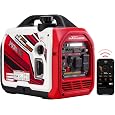

Honda EU2200ITAN 2200-Watt Inverter Generator
$1199 price checked August 2026
If you need more versatility, explore our comparison of the best dual fuel portable inverter generator options.
How to Determine Your Required Fuel Type Before Ordering
To determine which fuel type fits your needs, you must assess your storage environment and your proximity to fueling stations. Identify whether you will be keeping the unit in a garage, a shed, or a vehicle, as these environments dictate how you handle fuel stability.
Assessing Your Storage Environment
Check the temperature and humidity of your storage area. If you store your portable inverter generator in a space that fluctuates significantly in temperature, gasoline may begin to break down into a varnish-like substance within three to six months. If your storage area is not climate-controlled, propane is the more stable choice because it remains in a pressurized tank and does not chemically degrade over time.
Verifying Local Fuel Infrastructure
Map out the distance to the nearest fueling station. If you live in a rural area where gas stations are more than 20 miles away, a dual fuel portable inverter generator allows you to transport large propane tanks to your site rather than making frequent trips for gasoline. Check if your local hardware stores stock 20lb or 100lb propane tanks, as these are the standard sizes for portable power units.
What Happens if You Choose the Wrong Fuel Type?
Choosing a fuel type that does not match your usage pattern leads to mechanical issues or logistical failures. If you choose gasoline but do not have a consistent way to rotate the fuel, the engine may fail to start due to clogged internal components.
Make sure your power setup is sufficient by learning how to choose the right RV outlet capacity for your needs.
Consequences of Improper Gasoline Management
When gasoline sits in a fuel tank for extended periods, it loses its volatility. This results in “hard starting” where the engine cranks but refuses to fire. In severe cases, the fuel turns into a sticky residue that clogs the fuel lines and the carburetor jets, requiring a complete teardown and cleaning of the engine’s fuel system.
Limitations of Propane Systems
If you rely solely on propane but require high-output power for long durations, you may run out of fuel faster than expected. Propane has a lower energy density than gasoline, meaning a standard 20lb tank will provide fewer running hours than a full tank of gasoline. If you do not have a plan for frequent tank swaps, the unit will shut down during use.
What to Do if You Fall Between Fuel Type Options?
If you are unsure whether to commit to gasoline or propane, the decision usually rests on your primary use case: frequency versus duration. If you plan to run the generator weekly, gasoline is the standard; if you plan to run it once a month or less, propane is the safer choice.
The Case for Dual Fuel Systems
When you cannot decide between the two, a dual fuel portable inverter generator provides a technical solution by offering both systems in one machine. This allows you to use gasoline when you need the highest power output for a short period, and switch to propane for emergency backup or when you need to store the unit for months without maintenance. This eliminates the “wrong choice” risk by providing both options as a standard feature.
Final Decision Logic for Undecided Buyers
Ask yourself if you have a dedicated space to store and stabilize fuel. If you do not have a way to treat or rotate gasoline, choose a propane-compatible unit. If you require the maximum possible runtime on a single tank of fuel and have access to a gas station, stick with a gasoline-only model. If your needs are unpredictable, the dual fuel option is the only way to ensure the unit remains operational regardless of your circumstances.
Every Portable Inverter Generator guide in this category
- The Portable Inverter Generators That Work Best for Tailgating
- Which 4500 Watt Dual Fuel Inverter Generator Is Best?
- Best 7600 Watt Dual Fuel Inverter Generators
- Inverter Generators with CO Watchdog Systems Compared
- Which Quiet Inverter Generator Is Best for Camping?
- Best Dual Fuel Portable Inverter Generators
Related posts:
 Portable Inverter Generator Explained: What It Is and How It Works
Portable Inverter Generator Terms and Specs, Explained in Plain English
Portable Inverter Generator Warranties: What to Check Before You Buy
Certifications and Safety Standards for Portable Inverter Generators
Portable Inverter Generator Alternatives: Other Ways to Get the Same Result
Running Watts for Portable Inverter Generators: How Much You Actually Need
Peak Watts for Portable Inverter Generators: How Much You Actually Need
RV Outlet Capacity for Portable Inverter Generators: How to Choose Yours
Portable Inverter Generator Explained: What It Is and How It Works
Portable Inverter Generator Terms and Specs, Explained in Plain English
Portable Inverter Generator Warranties: What to Check Before You Buy
Certifications and Safety Standards for Portable Inverter Generators
Portable Inverter Generator Alternatives: Other Ways to Get the Same Result
Running Watts for Portable Inverter Generators: How Much You Actually Need
Peak Watts for Portable Inverter Generators: How Much You Actually Need
RV Outlet Capacity for Portable Inverter Generators: How to Choose Yours