
Choosing the Best LiFePO4 Battery Under $300: Three 100Ah Models Stay Under Budget
Predicament Measures is reader-supported: some links on this page are affiliate links, and as an Amazon Associate Predicament Measures earns from qualifying purchases at no extra cost to you. Learn more.
Our Top 3 Picks Under $300
The best LiFePO4 battery under $300 is the Timeusb 12V 100Ah LiFePO4 Battery, with 100A discharge for RV, marine, and off-grid use.
You are not here to run a research project. You are here to find a Lifepo4 Battery that works and get on with it – these 3 are the ones we picked.

#1 – Timeusb 12V 100Ah LiFePO4 Battery
Best for: you want the lowest entry price among these 100Ah 12V picks and need 100A continuous output.
$179.99
Why the Timeusb 12V 100Ah LiFePO4 Battery is our #1 pick
- $179.99 (entry among those compared)
- 4.6 rating from 430 ratings
Capacity: 100 Amp Hours · Nominal voltage: 12V
To put that capacity in context: JITA JITA-01 12V 100Ah LiFePO4 Battery at 100Ah and DJLBERMPW 12V 100Ah LiFePO4 Battery at 100Ah, both screened and not picked.

#2 – LiTime 12.8V 100Ah
Best for: you want a 13-inch battery with UL 1973 compliance and a marine terminal.
$229.99
Why the LiTime 12.8V 100Ah is our #2 pick
- $229.99 (mid-range among those compared)
- 4.5 rating from 1,741 ratings
Capacity: 100Ah · Nominal voltage: 12.8V
For comparison on capacity, two models we screened but did not pick: TCBWORTH 12V 100Ah LiFePO4 Battery at 100Ah and GOLDENMATE 12V 100Ah LiFePO4 Battery at 100Ah.
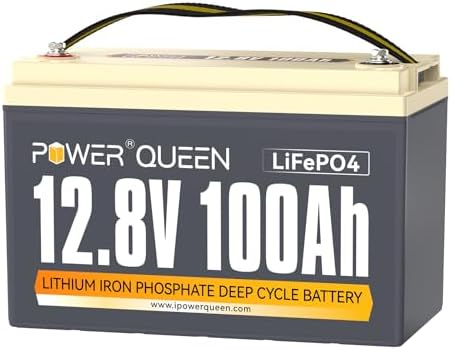
#3 – Power Queen 12V 100Ah LiFePO4 Battery
Best for: you want a Group 31 case size with M8 terminals and 4S4P support.
$239.99
Why the Power Queen 12V 100Ah LiFePO4 Battery is our #3 pick
- $239.99 (premium among those compared)
- 4.5 rating from 519 ratings
Capacity: 100 Amp Hours · Nominal voltage: 12V
Models we screened and left out, for reference on capacity: Cymoye 24V 100Ah LiFePO4 Battery at 100Ah and Timeusb 12V 140Ah Bluetooth LiFePO4 Battery at 140Ah.
For a deep dive into the smaller units, see our full ECO-WORTHY 12.8V20AH spec breakdown.
How Predicament Measures picked: we started from the most-reviewed lifepo4 battery listings in our retail dataset, removed duplicates, accessories and off-category products, and 55 qualified. The picks on this page were selected from those 55 candidates against this topic’s requirements. Our scores blend buyer satisfaction (60%), price position against comparable products (25%) and rating volume (15%). Specifications come from manufacturer listings and ratings from verified Amazon buyer reviews (data checked October 2026).
Our Pick and How the List Was Built
When your budget tops out at $300, the decision turns on fit, discharge headroom, and terminal style, not just amp-hours.
Timeusb 12V 100Ah LiFePO4 Battery keeps the price at $179.99 and gives you 100A output, so it suits RV, marine, and off-grid setups that need a lower entry cost. Pick LiTime 12.8V 100Ah instead if you want the 12.8V listing and a 13in case length. Pick Power Queen if you want M8 terminals and series/parallel support in the same price band.
We screened 55 LiFePO4 batteries at Predicament Measures and compared 10 in this page’s table for budget-first buyers under $300. The shortlist runs from $179.99 to $239.99, and the median price of the 10 products in our comparison is $199.99.
Lithium Iron Phosphate Batteries Under $300: The Findings in Brief
- Top pick: Timeusb 12V 100Ah LiFePO4 Battery at $179.99 (Capacity: 100 Amp Hours).
- Also picked: LiTime 12.8V 100Ah at $229.99; Power Queen 12V 100Ah LiFePO4 Battery at $239.99.
- We compared 10 LiFePO4 batteries, from $149.99 to $299, median $199.99.
- Best buyer rating in the comparison: Timeusb 12V 100Ah LiFePO4 Battery at 4.6/5 from 430 ratings.
- Not covered by these picks: Run a larger off-grid bank without parallel wiring – needs 200Ah, and none of the picks reaches it.
Lithium Iron Phosphate Batteries Under $300: Price, Rating and Specs Compared
| Product | Price | Rating | Capacity | Maximum continuous discharge current | Nominal voltage |
|---|---|---|---|---|---|
| Timeusb 12V 100Ah LiFePO4 Battery | $179.99 | 4.6 (430 ratings) | 100 Amp Hours | 100A | 12V |
| LiTime 12.8V 100Ah | $229.99 | 4.5 (1,741 ratings) | 100Ah | 100A | 12.8V |
| Power Queen 12V 100Ah LiFePO4 Battery | $239.99 | 4.5 (519 ratings) | 100 Amp Hours | 100A | 12V |
| Redodo 12V100AH LiFePO4 Battery | $199.99 | 4.5 (924 ratings) | 100Ah | 100 Amps | 12V |
| JITA JITA-01 12V 100Ah LiFePO4 Battery | $169.99 | 4.4 (516 ratings) | 100Ah | 100A | 12.8V |
| DJLBERMPW 12V 100Ah LiFePO4 Battery | $149.99 | 4.5 (311 ratings) | 100Ah | 100A | 12V |
| TCBWORTH 12V 100Ah LiFePO4 Battery | $168.66 | 4.2 (281 ratings) | 100Ah | 100A | 12.8V |
| GOLDENMATE 12V 100Ah LiFePO4 Battery | $199.99 | 4.5 (190 ratings) | 100Ah | 100A | 12v |
| Cymoye 24V 100Ah LiFePO4 Battery | $299 | 4.5 (180 ratings) | 100Ah | 100A | 24V |
| Timeusb 12V 140Ah Bluetooth LiFePO4 Battery | $251.99 | 4.6 (285 ratings) | 140Ah | 150A | 12.8V |
Prices are approximate and move frequently – check the current price before deciding. “Not stated” means the manufacturer listing does not give that figure – we do not estimate it.
Among our top picks, Timeusb 12V 100Ah LiFePO4 Battery is the value leader, and that matters here because it gives 100 Amp Hours at the lowest cost per unit of capacity.
Each Pick Under $300, Examined One by One
The 3 picks below run from $179.99 to $239.99, reviewed in rank order.
Timeusb 12V 100Ah LiFePO4 Battery
Timeusb opens the budget list because it stays under $300 while still giving you 100 amp hours, 12V nominal output, and a 100A continuous discharge rating. That mix makes it a practical fit for a starter 12V LiFePO4 setup where capacity and current limit both matter.
What we like: The $179.99 price gives this lithium iron phosphate battery the lowest entry cost among the three picks. Its 100A BMS and M8 terminals suit common RV, marine, and off-grid wiring, and the 23-pound weight keeps the pack manageable for a single-battery install.
Keep in mind: The capacity is still 100Ah, so it is the right size for a baseline bank, not a larger off-grid load. Series and parallel support is stated, but the listing gives no length figure, so fit in a tight tray is not fully answered here.
LiTime 12.8V 100Ah
LiTime is the capacity-first pick for this page because it pairs 100Ah with a 12.8V nominal rating and a 100A continuous discharge limit at around $229.99. In a 12V LiFePO4 battery roundup under $300, that is the kind of middle-ground spec set that keeps it useful without pushing the budget hard.
What we like: The 13-inch length gives you a concrete fit figure for battery boxes and trays, which matters as much as amp hours in cramped installs. It also states UL 1973 compliance, a 5-year warranty, and 24h professional tech support, so the listing gives more support context than the cheaper options.
Keep in mind: The marine terminal format is different from the M8 hardware on the other two picks, so accessory matching matters. If you want to scale into parallel wiring, the listing does not state series/parallel support, so that remains an open check.
Power Queen 12V 100Ah LiFePO4 Battery
Power Queen rounds out the list because it keeps the same 100Ah, 12V, and 100A core spec set while adding a BCI Group 31 case size. That makes it the most straightforward choice here if you care about physical fit as much as usable capacity.
What we like: The $239.99 price still sits under the page limit, and the 22-pound weight is lighter than the Timeusb pick. It also states M8 terminals and support for up to 4S4P configuration, so it is the clearest option here for larger banks and parallel wiring.
Keep in mind: The listing gives 100Ah, not a larger capacity figure, so it does not solve bigger runtime needs by itself. It also notes 24V 400Ah as a maximum configuration, which is useful for planning, but it does not replace checking your own system layout.
How to Choose a LiFePO4 battery Under $300
How usable capacity at 100Ah affects battery choice
Usable capacity at 100Ah is the main size check for this page, because all three picks sit at 100Ah and the 100Ah reference figure marks the point where a 12V LiFePO4 battery becomes practical for trolling motors, RV house loads, and solar storage. Timeusb, LiTime, and Power Queen each state 100Ah, so the difference here is not capacity but price, length, terminal style, and support details. If you need more runtime from one battery, none of these three moves you into the 200Ah or 280Ah territory. That makes the 100Ah class the right budget target when you want a standard 12.8V drop-in format without paying for extra amp-hours you may not use.
Why battery management system rating matters for startup loads
Battery management system rating matters most when your load can pull hard at startup, because an undersized BMS trips before the battery’s stored charge is fully useful. Timeusb, LiTime, and Power Queen each state a 100A BMS, so they are matched on continuous output rating even though their prices differ. Battle Born is the benchmark many shoppers use for drop-in 12V LiFePO4 pricing and support expectations, while these picks stay in the same practical 100Ah class at lower prices. If your inverter or trolling motor needs more than 100A continuous draw, you should move past this group instead of trying to stretch it.
How charge voltage compatibility affects 12V system matching
Charge voltage compatibility starts with the 12.8V nominal format, because that is the standard LiFePO4 “12V” setup you need to match to lead-acid systems and chargers. LiTime states 12.8V, while Timeusb and Power Queen state 12V, so the listings are not written with the same voltage label even though they sit in the same 12V battery class. That split is the main reason to read the voltage line first when you are replacing an older bank. If your charger profile is built for 12V lithium, the nominal voltage line tells you what the battery listing itself claims, not what you should assume.
Cycle Life At Stated Depth Of Discharge
Cycle life at stated depth of discharge helps you judge long-term value, and the depth figure matters because 100% DoD, 80% DoD, and 60% DoD do not describe the same wear condition. Timeusb gives 4,000+ cycles at 100% DoD, 6,000 cycles at 80% DoD, and 15,000 cycles at 60% DoD, so its listing is the most explicit on this page. LiTime states 15,000+ cycles and Power Queen states 13x more cycles than lead-acid, but neither gives the same depth-of-discharge breakdown in the supplied data. If you compare cycle life, compare the depth first, or the numbers do not mean the same thing.
Case Size And Terminal Layout
Case size and terminal layout decide fit more often than amp-hours do, because a battery box and cable set care about dimensions and fittings before they care about capacity. LiTime states a 13-inch length, Power Queen states BCI Group 31 size with M8 terminals, and Timeusb also uses M8 terminals, which makes terminal matching the easier check on this page. The case-size criterion set these apart more than capacity did, since all three picks sit at 100Ah. If you are replacing an existing tray or cable set, match the length and terminal style before you chase a lower price.
Timeusb 12V 100Ah LiFePO4 Battery is the lowest-priced pick here at around $180, and it states 23 pounds with M8 terminals. LiTime 12.8V 100Ah adds a 13-inch length and a marine terminal layout, while Power Queen states BCI Group 31 size and M8 terminals. Those differences matter more than the shared 100Ah rating when you are trying to fit a battery into a fixed space.
What Each Job Calls For vs What These Picks State
Match the job you actually need done to the figure it calls for, then check which picks state that figure or more. Where none do, the row says so.
| What you want to do | The figure it calls for | Picks at or above it |
|---|---|---|
| Run a small 12V load overnight | 100Ah | Timeusb, LiTime, and Power Queen all clear it. |
| Power a trolling motor for a half day | 100A continuous discharge current | Timeusb, LiTime, and Power Queen all clear it. |
| Run a larger off-grid bank without parallel wiring | 200Ah | None of them clear it; you need a 200Ah lithium iron phosphate battery. |
These figures are the levels this category is generally held to, not manufacturer claims. A pick at or above a figure states that number; how it reaches it and the rest of your setup still decide the job, so check them against your own workload before buying.
Who Buys Lithium Iron Phosphate Batteries, and What It Really Costs
Who buys a lithium ferrophosphate battery, and what each one needs
- RV owners — need 12.8V nominal batteries that fit Group 24, Group 27, or Group 31 case size and can replace lead-acid in house-power setups
- Trolling motor anglers — need around 100Ah capacity for a practical day on the water and a BMS (battery safety circuit) that can handle motor draw
- Off-grid cabin owners — need 200Ah capacity when one battery has to cover larger loads and reduce parallel wiring
- Solar DIYers — need batteries with a low-temperature cutoff (stops charging when cold) if panels charge them in winter
- Van lifers — need a battery with enough continuous discharge current (steady output limit) for inverter use and appliance loads
- Photography crews on location — need a 12.8V nominal drop-in battery that works with common 12V gear and charger profiles
What a LiFePO4 battery really costs, and where to buy one
What to budget for on top of the LiFePO4 battery
- Battery box — gives a secure mount and protects terminals during transport
- Proper lithium charger — matches the battery’s charge profile instead of a lead-acid charger profile
- Fuse or circuit breaker — limits damage if a short circuit happens
- Cables and lugs — connect the battery to loads and chargers with the right current handling
- Battery monitor — shows state of charge so you can plan runtime
What you can leave out of the budget
- Parallel battery bank — not needed when one battery already covers the load
- Lead-acid watering kit — lithium batteries do not need electrolyte top-offs
- Equalizer for flooded batteries — used for lead-acid balancing, not this chemistry
- Battery insulation wrap — unnecessary unless the install needs physical protection or cold-weather management
Where this kind of product is normally sold
- Specialty battery retailers — usually give clearer warranty handling, technical support, and return policies for compatibility questions
- Marine and RV stores — useful for matching case size and accessory bundles, with pricing that often reflects convenience
- Solar equipment dealers — tend to bundle chargers, monitors, and wiring, which helps with system matching
- General e-commerce marketplaces — broad price spread and easy comparison, but return terms and seller support vary
- Local electrical supply houses — good for cables, fusing, and in-person pickup when you need parts together
Travelers should look at the best LiFePO4 battery for van camping to maximize portable power in a small space.
Getting Started with Any of These Picks
What these 12V lithium iron phosphate batteries need before they work
Each lithium iron phosphate battery here needs a charger profile that matches its 12V or 12.8V nominal voltage before it will charge correctly.
- Timeusb 12V 100Ah LiFePO4 Battery states M8 terminals, so your battery box and cable lugs need that mounting style to fit cleanly.
- LiTime 12.8V 100Ah states a marine terminal, so you need connectors made for that terminal type rather than M8 hardware.
- Power Queen 12V 100Ah LiFePO4 Battery also states M8 terminals, and it supports series/parallel use, so it suits setups that may later need linked batteries.
- If you already own a charger for a 12V lead-acid battery, Timeusb and Power Queen are the safer matches to verify first because both state 12V nominal voltage; LiTime states 12.8V.
What to check on arrival after your LiFePO4 battery order
Cover varies by seller and country, so the first arrival check should focus on the battery itself, not the paperwork.
- Confirm the terminal type before the return window closes, because Timeusb and Power Queen state M8 while LiTime states a marine terminal.
- Check the case length if you have a tight tray or battery box. LiTime states 13in, and Power Queen states BCI Group 31 size.
- Inspect the weight listing against the carton label, because these batteries range from 22 pounds to 23 pounds among the three picks.
- Verify the BMS protection set, since the built-in battery management system is what handles overcharge, over-discharge, over-current, and overheating protection in these packs.
When it arrives, place it in the tray, confirm the terminals match your cables, and only then connect the charger.
What Buyers Still Want to Know About Lithium Ferrophosphate Batteries Under $300
Does the battery include a built-in BMS, and what protection features should I expect under $300?
Yes, each of these lithium iron phosphate batteries states a built-in BMS, which is the protection circuit that handles charge and discharge limits. Timeusb lists over-charging, over-discharging, over-current, short-circuits, and overheating protection; LiTime adds over-voltage and over-temperature; Power Queen lists overcharge, over-discharge, short circuits, and overheating.
Can I connect multiple LiFePO4 batteries in series or parallel later if I need more capacity?
Yes, but only the models that state series/parallel support give you that option later. Timeusb and Power Queen both state support, while LiTime does not state it in the data provided.
What should I check before buying so I don’t get a battery that is too heavy, too large, or missing the right terminals?
The battery that avoids fit problems is the one whose weight, length, and terminal type match your compartment and cables. Timeusb is 23 pounds with M8 terminals, LiTime is 22 pounds and 13 inches long with a marine terminal, and Power Queen is 22 pounds with M8 terminals and BCI Group 31 sizing.
Which under $300 lifepo4 battery should I buy for the best value?
If you want the lowest sticker price, Timeusb is around $179.99 and still states 100Ah, 12V, and 100A. If you want the most review volume, LiTime has 1,741 ratings at around $229.99, while Power Queen sits near $239.99 with 519 ratings.
To understand the chemistry behind these cells, view the types of LiFePO4 batteries explained in our guide.
Who Should Skip These LiFePO4 batteries
If you need 200Ah for a larger off-grid bank without parallel wiring, these three picks are the wrong tier. None of them states that capacity, so they are aimed at smaller 12V jobs instead.
Every LiFePO4 guide in this category
- Keeping a Fridge and Lights Running Through a Multi Day Power Outage With a LiFePO4 Battery
- Which LiFePO4 Battery Stores Solar Power for Use at Night Off the Grid?
- The LiFePO4 Batteries That Power a CPAP Machine During a Power Outage
- Best LiFePO4 Battery for Home Backup Power
- LiFePO4 Battery for Solar Power Storage Compared
- Choosing the Best LiFePO4 Battery for an Off Grid Cabin
Related posts:
 Best LiFePO4 Battery for Home Backup Power: 280Ah and 200Ah Picks for Outage Backup
LiFePO4 Battery for Solar Power Storage Compared: Three Sizes Cover 100Ah to 280Ah
Choosing the Best LiFePO4 Battery for an Off Grid Cabin: Cabin Loads Run On 100Ah, 200Ah, and 280Ah
The LiFePO4 Battery That Work Best for RVs: 12V Picks That Power RV Appliances
Which LiFePO4 Battery Is Best for Van Camping? 100Ah, 140Ah, and 200Ah Picks
Keeping a Fridge and Lights Running Through a Multi Day Power Outage With a LiFePO4 Battery: 140Ah, 100Ah, and 200Ah Picks
Which LiFePO4 Battery Stores Solar Power for Use at Night Off the Grid? 200Ah and 280Ah Models Hold Nighttime Loads
The LiFePO4 Batteries That Power a CPAP Machine During a Power Outage: 200Ah, 140Ah, and 100Ah Picks