Building a Hidden Cabin in a 7-ft Trailer
Predicament Measures is reader-supported: some links on this page are affiliate links, and as an Amazon Associate Predicament Measures earns from qualifying purchases at no extra cost to you. Learn more.
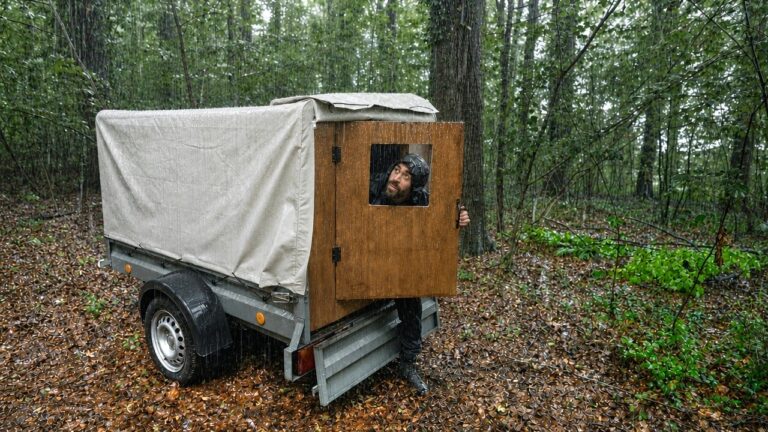
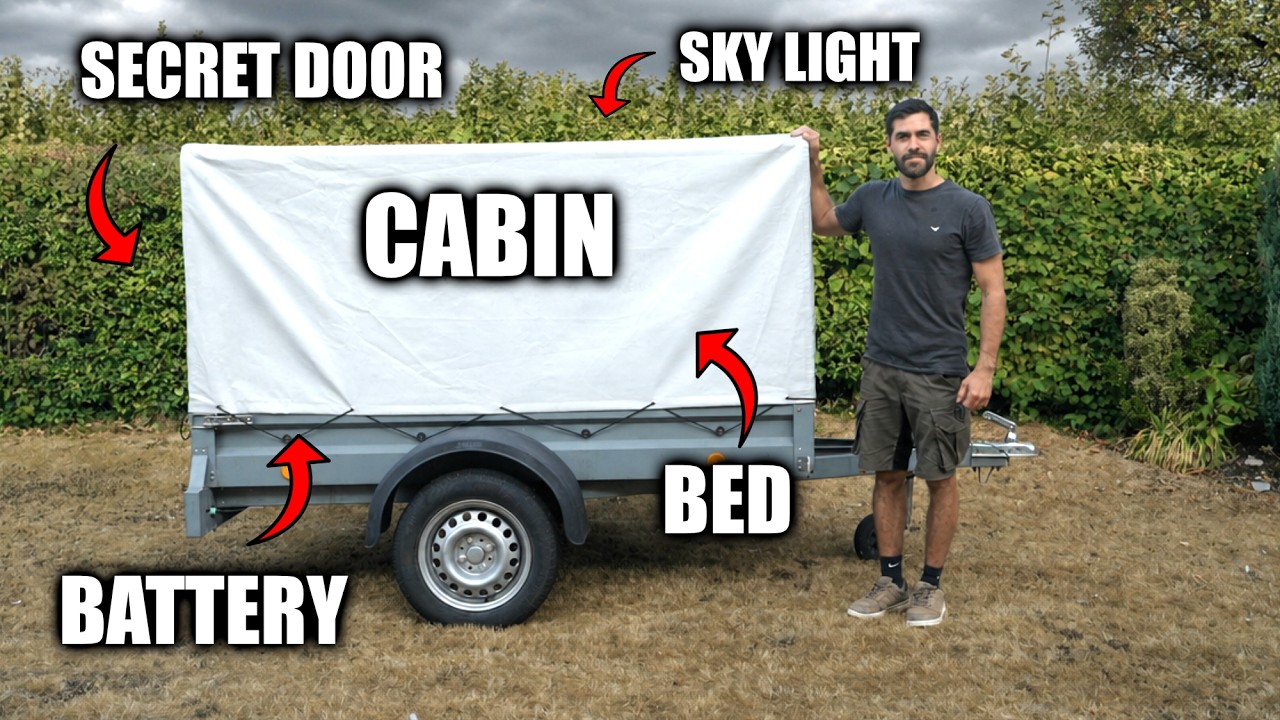
The Hidden Trailer Stealth Camper utilizes a 7-ft by 4-ft trailer to create a secret, portable basecamp that can be towed and deployed in the woods. TA Outdoors demonstrates how to build a full cabin interior while keeping the weight under a 750kg limit. The Hidden Trailer Stealth Camper suits DIY campers seeking a hidden basecamp, while those requiring a standing cabin should look at larger truck campers.
Who should try the Hidden Trailer Stealth Camper
Readers who should try the Hidden Trailer Stealth Camper
- DIY camper builders should try this build to learn how to maximize limited trailer space while adhering to strict weight limits.
- Bushcraft enthusiasts should try this build to create a semi-permanent, hidden basecamp that can be easily moved or concealed.
- Budget-conscious travelers should try this build to achieve a rustic cabin aesthetic using affordable materials like offcuts and wood stain.
- Forestry equipment owners should try this build to create a dual-purpose hauling trailer that serves as a workspace and a hidden cabin.
Readers who should skip the Hidden Trailer Stealth Camper
- People needing a standing cabin should skip this build and look at larger truck camper build guides, as the 7-ft by 4-ft trailer dimensions only allow for sitting.
- Users seeking heavy-duty glass windows should skip this build and look at standard camper conversion guides for heavy-duty windows, as this design prioritizes the weight savings of acrylic.
What to do next about the Hidden Trailer Stealth Camper
- Measure your trailer’s internal dimensions to ensure they can accommodate a 7-ft by 4-ft layout.
- Verify your trailer’s maximum towing capacity to confirm it can handle the 750kg weight limit.
- Source 11-mm hardwood ply to keep the cabin weight low enough for transport.
The Hidden Trailer Stealth Camper provides a portable basecamp for the woods
The Hidden Trailer Stealth Camper functions as a multi-purpose vehicle that can haul forestry equipment like logs or be transformed into a secret cabin. This design allows for a basecamp that can be deployed in the woods for weeks at a time and then easily loaded back onto the trailer for transport. The concept relies on a “secret” cabin that remains hidden under a cover once the trailer is parked.
The 750kg towing limit necessitates the use of thin 11-mm plywood
Weight management is the primary constraint for the Hidden Trailer Stealth Camper because the trailer has a maximum towing load of 750 kg. Using 11-mm hardwood ply instead of standard 18-mm or 20-mm plywood keeps the construction lightweight enough to stay within legal and safe limits. Why choose 11-mm plywood instead of the standard 18-mm or 20-mm boards? Choosing the thinner material allows the entire build to stay under the 750kg towing limit, which is a hard requirement for this trailer.
The 38x60mm stud timber provides the structural skeleton for the cabin
The construction starts with a solid base and side frame made from 38×60 mm stud timber. Using 100-mm long screws and an impact driver, the frame is secured to create a sturdy foundation for the interior. This timber skeleton defines the maximum cabin length of approximately 79 inches (roughly 2 meters) to ensure a perfect fit within the trailer’s 7-ft by 4-ft dimensions.
Required Materials and Tools
- 38 by 60 mm stud timber
- 11-mm hardwood ply
- Corrugated plastic sheets
- Dark oak wood stain
- Acrylic sheets
- Gorilla Glue
- USB LED string lights
- Shemagh
- Circular saw
- Jigsaw with metal blade
- Impact driver
Corrugated plastic roofing creates a waterproof and lightweight flat roof
Corrugated plastic roofing is selected for the roof because it is lightweight and inherently waterproof. Since the trailer’s flat design prevents for a traditional pitched roof, wood would eventually allow water to seep through the seams. Overlapping the corrugated plastic sheets by a few inches ensures that water remains out even on a flat surface. Every millimeter counts in this design, so the overhang is trimmed to allow the trailer’s exterior cover to zip closed.
Acrylic window fitting avoids the weight and safety risks of glass
Acrylic windows are used instead of glass to save weight and prevent shattering during transport on a light trailer. Fitting these windows requires a jigsaw with a metal blade, which must be sprayed with oil to prevent the blade from melting the material. The acrylic is secured into a plywood frame using Gorilla Glue and small hinges for functionality. Think of the acrylic windows like a lightweight shield; they provide the same visual clarity as glass without the risk of shattering during transport.
- Raise the acrylic sheet on stud wood to create a support channel.
- Use a jigsaw with a metal blade to make the cut, spraying the blade with oil to prevent melting.
- Mark out a plywood frame to hide the glue lines.
- Apply Gorilla Glue to the frame and press the acrylic in place.
- Drill holes for small hinges and secure the window.
Dark oak stain and a shemagh provide a rustic cabin aesthetic
A rustic cabin vibe is achieved by applying dark oak wood stain with a paintbrush, intentionally leaving visible marks for a rugged appearance. Interior lighting is provided by USB LED string lights, which are easy to wrap around the cabin’s corners. A shemagh, or a scarf-like wrap, is tied to a cord between the window frames to serve as a practical, makeshift curtain.
What is a shemagh?
A shemagh is a scarf-like wrap used as a functional piece of fabric in this build. It serves as a makeshift curtain that can be flipped over a cord to provide privacy. This choice offers a budget-friendly and portable solution for window coverings in a mobile cabin.
Technical Specifications for the Hidden Trailer Stealth Camper
- Trailer Dimensions
- 7-ft by 4-ft
- Maximum Towing Load
- 750 kg
- Maximum Cabin Length
- 79 inches (roughly 2 meters)
- Base Material
- 11-mm hardwood ply
- Stud Timber Size
- 38×60 mm
- Screw Sizes
- 30-mm, 70-mm, and 100-mm
- Drill Bit Sizes
- 2-mm and 10-mm
Future Developments and Testing
The next phase of the project involves towing the trailer into the woods to test the cabin’s performance on rutted tracks. TA Outdoors plans to add more features to the cabin during the field test to see how it fares in a real-world environment. The build’s success depends on how well the 11-mm ply holds up under weight and how the corrugated roof handles heavy rain.
TA Outdoors has not confirmed material costs, 11-mm ply durability, or cabin weight
- TA Outdoors has not stated the total cost of the materials used in the build.
- TA Outdoors has not confirmed the long-term durability of the 11-mm ply under heavy furniture loads.
- TA Outdoors has not specified the weight of the completed cabin structure.
A Hidden Cabin for a Weekend Woodsman
Suppose Liam owns a 7×4 trailer and wants a hidden cabin for camping but is worried about weight. Liam checks his trailer’s towing capacity and confirms it is 750kg, leading him to choose 11-mm hardwood ply for the base and walls to ensure the build stays lightweight. He uses a jigsaw with a metal blade to cut acrylic windows to avoid the weight and risk of glass. Liam builds a 2-meter long cabin that fits perfectly with 1cm of play on each side. If Liam’s trailer had a 3,500kg capacity instead of 750kg, he would have been able to use 18-mm or 20-mm ply to create a heavier, more durable interior structure.
Source: Hidden Trailer Stealth Camper: FULL CABIN BUILD (TA Outdoors).