
Can the Purewell 2.25G Filter reduce fluoride and other contaminants with its 0.01 m filter pore size?
Predicament Measures is reader-supported: some links on this page are affiliate links, and as an Amazon Associate Predicament Measures earns from qualifying purchases at no extra cost to you. Learn more.
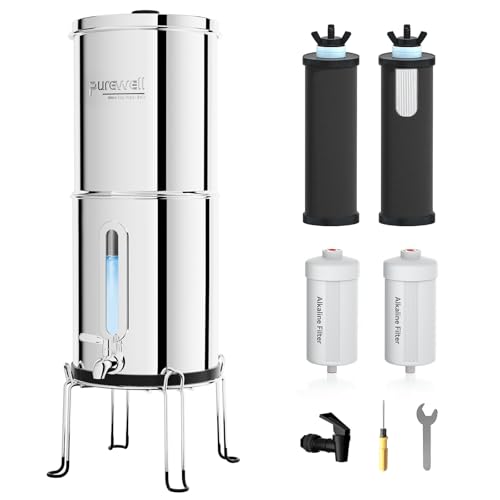
The black composite cartridge pairs a 0.01 m hollow fiber UF membrane with fluoride reduction material, silver ion media, and activated carbon block. It also lists reduction of fluoride, chlorine, organic matter, and heavy metals, plus a 90% fluoride reduction claim. That matters for a gravity water filter because low-pressure, pour-and-wait use leaves less room for media that needs push from a pressurized line. Activated alumina is a fluoride-removal media used in some filters, and this listing says the fluoride removal material is not alumina. NSF standards are not stated here, so there is no NSF/ANSI 42 or NSF/ANSI 53 claim to weigh alongside the chemical claims. Think of the cartridge like a layered screen stack in a workshop sink: each layer handles a different job, but the whole stack is only as useful as the media actually listed.
What to Check Before Buying the Purewell 2.25G Filter
- Check whether you need fluoride reduction or only sediment and taste removal. The cartridge lists fluoride reduction material, not just carbon.
- Very fine pores can restrict flow more than coarser gravity filters.
- Check whether your water source is already treated or heavily loaded with contaminants. Gravity systems rely on the cartridge media, not line pressure, to do the work.
- Check whether you want a claim tied to NSF standards. This listing does not state NSF/ANSI 42 or NSF/ANSI 53.
- Check whether you prefer activated alumina specifically. The listing says the fluoride removal material is not alumina.
Where the Purewell 2.25G Gravity Water Filter Fits
The Purewell 2.25G Gravity Water Filter suits you if you want a stainless steel gravity system with four filters, a stand, and a 6,000-gallon life claim. Buyers who need a stated NSF standard, or who want a simpler cartridge focused only on chlorine and taste, should keep looking at other gravity-filter types. The transparent water level window helps with refill checks, but the real decision point here is the fluoride media and the very fine pore rating. If you are upgrading from an older gravity unit that only handled sediment, this is a stronger fit when fluoride reduction is the main reason for the upgrade.
For more specific details, you can view frequently asked questions about the Purewell 2.25G Filter.
Choose this filter if your priority is fluoride reduction in a gravity setup and you are comfortable with a cartridge that uses multiple media layers. If you need a clearly documented NSF claim or a filter built around activated alumina, this is not the right match.
If you have a larger household, explore our top picks for family-sized gravity water filters.
The other Gravity Water Filter guides we have published
- The Gravity Water Filters That Work Best for Small Kitchen Counters Under $200
- Which Gravity Water Filter Is Best for Apartments?
- Best Gravity Water Filter for Families
- Gravity Water Filters for Beginners Compared
- Which Gravity Water Filter Helps with Well Water Taste?
- Which Gravity Water Filter Is Best for Home Use?
Related posts:
 Can the Travel Berkey provide enough potable water for camping, RVing, or off-grid use?
What contaminants can the Berkey Travel Gravity Water Filter reduce in freshwater sources?
Will the FSS3A-TB-F Gravity Water Filter hold enough water for a family dinner?
Will the CO-Z Gravity Filter fit on a small apartment counter without crowding the sink area?
Will the CO-Z Gravity Filter hold enough filtered water for a family dinner without constant refills?
Will the K8675 Gravity Water Filter hold enough filtered water for a small household’s daily drinking needs?
Will the Big+ gravity water filter hold enough filtered water for a household that drinks a lot every day?
Will the Big+ gravity water filter be enough for a weekend power outage?