Mudslide Survival and Pre-Construction Planning
Predicament Measures is reader-supported: some links on this page are affiliate links, and as an Amazon Associate Predicament Measures earns from qualifying purchases at no extra cost to you. Learn more.
The Nepal disaster involved a glacier collapse near Langtang Lirung that sent ice and rock 4,000 ft into a valley, resulting in 1,000 deaths and over 4,000 people unaccounted for. Mudslides and debris flows move with the consistency of wet concrete, making pre-construction planning and rapid response tactics essential for safety in high-risk terrain. Homeowners in mountainous regions should prioritize geological surveys and structural monitoring, while hikers should focus on identifying environmental triggers like heavy rainfall.
Who should try this mudslide survival and prevention method
Readers who should try this mudslide survival and prevention method
- Homeowners in mountainous areas should use these identification strategies to monitor for structural strain signs like tilting poles or wall cracks.
- Vacation home owners in mountain resorts should use these planning steps to ensure remote properties have pre-defined evacuation routes and structural safeguards.
- Hikers in high-elevation terrain should use these warning signs to recognize triggers like sudden snowmelt or heavy rain before they enter dangerous zones.
- Property developers should use these prevention tactics to ensure slope stability through geological surveys and retaining walls before construction begins.
Readers who should skip this mudslide survival and prevention method
- People in flat, low-elevation urban areas should skip this and focus on general urban emergency preparedness instead.
- Medical professionals seeking clinical protocols should skip this and refer to medical journals for clinical treatment guidelines.
What to do next about mudslide survival and prevention
- Consult a county and geological survey specialist before building on a hillside to assess the property for possible mudslide risk.
- Purchase a battery-powered NOAA weather radio to receive warnings as they are reported by local authorities.
- Check for structural strain signs on existing properties to determine if immediate evacuation is necessary.
The mechanics of high-velocity debris flows
The Langtang Khola River surge was caused by a glacier collapse that generated seismic energy equivalent to a magnitude 5.2 earthquake. This mass movement created a debris flow—a landslide involving high volumes of water and loose material like mud and rocks—which moved with the consistency of wet concrete.
What is a debris flow?
A debris flow is a landslide that includes a high volume of water and loose material like mud and rocks. Because of the high water content, these flows move much faster and with more force than standard landslides, often following river systems or drainage paths.
Environmental triggers for slope instability
Heavy rainfall is the most common trigger for mudslides as it reduces soil cohesion and increases the weight of slope materials. Other triggers include mountain snowmelt in the spring and summer, changes in groundwater levels, earthquakes, and volcanic eruptions. Wildfires also contribute to risk by destroying vegetation that normally stabilizes the soil, leaving slopes vulnerable to erosion during subsequent rains.
What is cohesion?
Cohesion is the property of soil that keeps it together. When heavy rainfall saturates the ground, this cohesion is reduced, making the soil prone to sudden movement and failure.
Early warning signs of geological strain
Residents can identify impending danger by watching for cracks in walls, flooring, paving, driveways, or foundations. Other signals include outside structures like deck stairs beginning to separate, doors and windows becoming difficult to open, and breaking utility lines. Fences, trees, and utility poles may begin tilting, while terrain may bulge or slant at the base of a slope.
- Structural Strain Indicators
- Cracks in walls, flooring, paving, driveways, or foundations
- External Movement
- Deck stairs beginning to separate from buildings
- Entry Obstructions
- Doors and windows becoming difficult to open and close
- Infrastructure Failure
- Breaking utility lines
- Vertical Shifts
- Fences, trees, and utility poles tilting
- Hydrological Anomalies
- Water accumulating in strange places
- Embankment Failure
- Roads and embankments breaking off at the edges
- Base Deformation
- Terrain bulging or slanting at the base of a slope
Preventative measures for high-risk property
Pre-construction planning offers the best protection against mudslides before a home is built. Homeowners should avoid steep slopes, natural or man-made runoff conduits, or eroded areas with a history of mudslides. Professionals can install flexible pipe fittings to prevent leaks and build retaining walls in likely mudslide channels. Analysis suggests that skipping a geological survey is costly, as it leaves owners with few options to implement structural protections once the foundation is poured.
The effectiveness of these measures depends on the site’s specific geology. If a site is not a steep slope or eroded area, the risk profile changes significantly. However, the cost of being wrong on a high-risk site is the potential loss of the entire structure.
Survival tactics during a mudslide
Survival during a mudslide depends on quick thinking and moving to higher ground if possible. If trapped in a home, residents should move to the second story and avoid down power lines. Survivors trapped in the mud should curl into a ball and put their arms in front of their faces to create an air pocket for breathing.
A battery-powered NOAA weather radio and medical kit provide critical survival resources
A battery-powered NOAA weather radio provides a critical link to real-time warnings during a disaster. Owners should also maintain a medical kit capable of handling traumatic injury and water sterilization, which is vital in remote areas where help is not on the way. These tools turn reactive panic into a structured response.
Costs for professional retaining walls and flexible pipe fitting dimensions remain unstated
- The specific cost of professional retaining walls has not been stated.
- The specific depth or diameter of the flexible pipe fittings required for various slope grades has not been stated.
A mountain home preparation scenario
Sarah is planning to build a vacation home in a mountain resort area. She avoids known mudslide zones and hires a geological survey specialist to assess the property for stability. She plans for a retaining wall in the primary mudslide channel and uses flexible pipe fittings for the plumbing. Sarah builds a home that is structurally prepared for slope movement. If Sarah had skipped the geological survey and built on an unstable slope, she would have had limited options to implement these preventative measures once construction began.
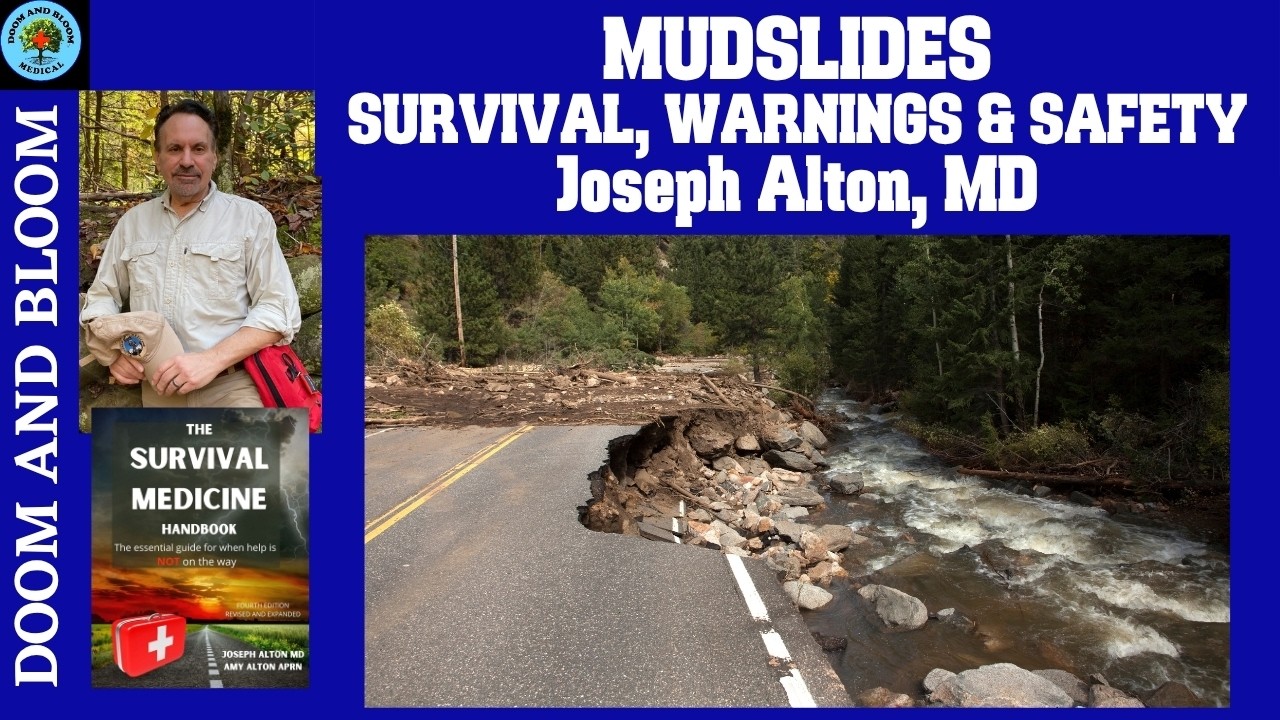
Details first shown in Mudslides: Survival and Warnings by Doctor Joseph Alton by DrBones NurseAmy.