How To – Terry Cloth Washcloths: Hot Compress Application for Infection Treatment
By Predicament Measures
Quick Answer: Can terry cloth washcloths be used as hot compresses to treat infections
Yes terry cloth washcloths can be used as hot compresses to help treat certain superficial localized infections because they retain and transfer heat to the area promoting improved blood flow and drainage and reducing pain when used correctly and hygienically.
- Effectiveness: Many superficial problems such as styes and small boils improve with warm compress therapy in roughly 60 to 90 percent of cases when used properly as adjunctive care with hygiene and monitoring depending on the condition and patient factors
- Cost: $1 to $5 per terry washcloth compared with $10 to $30 per reusable commercial hot pack and $15 to $40 for microwaveable heat packs
- Time: Apply for 10 to 20 minutes per session, 3 to 4 times daily, for 3 to 7 days while monitoring for improvement
- Limitation: Cannot replace antibiotics or professional drainage for deep abscesses or systemic infection and cannot sterilize tissue; risk of burns and contamination if used incorrectly
Terry cloth washcloths are small, looped-cotton towels commonly used for cleaning and as makeshift compresses. This $1-$5 solution provides affordable, portable localized heat transfer and flexibility compared to commercial hot packs priced at $10-$30 and microwaveable heat packs at $15-$40.
The process works through three key relationships: the terry cloth retains and transfers heat to skin resulting in increased local circulation and warmth, moist heat softens tissue enabling mobilization of fluid toward the surface and promotion of drainage, and repeated timed application reduces pain and supports symptomatic improvement in roughly 60-90 of appropriate superficial cases when combined with hygiene and monitoring.
How to use a terry cloth washcloth as a warm/hot compress step by step
- Choose a clean terry cloth (1-2 minutes): Select a dedicated, freshly laundered cotton terry washcloth (cost $1-$5). Instruction: Use a cloth reserved for first aid; do not reuse unwashed cloths between applications. Result: Reduces contamination risk.
- Heat water to a safe temperature (2-3 minutes): Bring water to warm, not boiling aim for about 40-43C (104-109F). Instruction: If you dont have a thermometer, test the water on the inside of your wrist until it feels comfortably hot but not painful. Result: Provides therapeutic warmth while minimizing burn risk.
- Soak and wring the cloth (30 seconds): Submerge the cloth, then wring it so it is damp but not dripping. Instruction: For moist heat, leave a little moisture; for a drier pack, fold and squeeze out more water and wrap in a thin plastic or dry layer. Result: Moist, conforming compress that transfers heat efficiently.
- Protect the skin and test first (10-20 seconds): Place a thin barrier (e.g., light towel or gauze) between the cloth and very sensitive skin or a childs skin. Instruction: Test on your inner wrist for 10-15 seconds before applying to the injured area. Result: Confirms safe temperature and prevents burns.
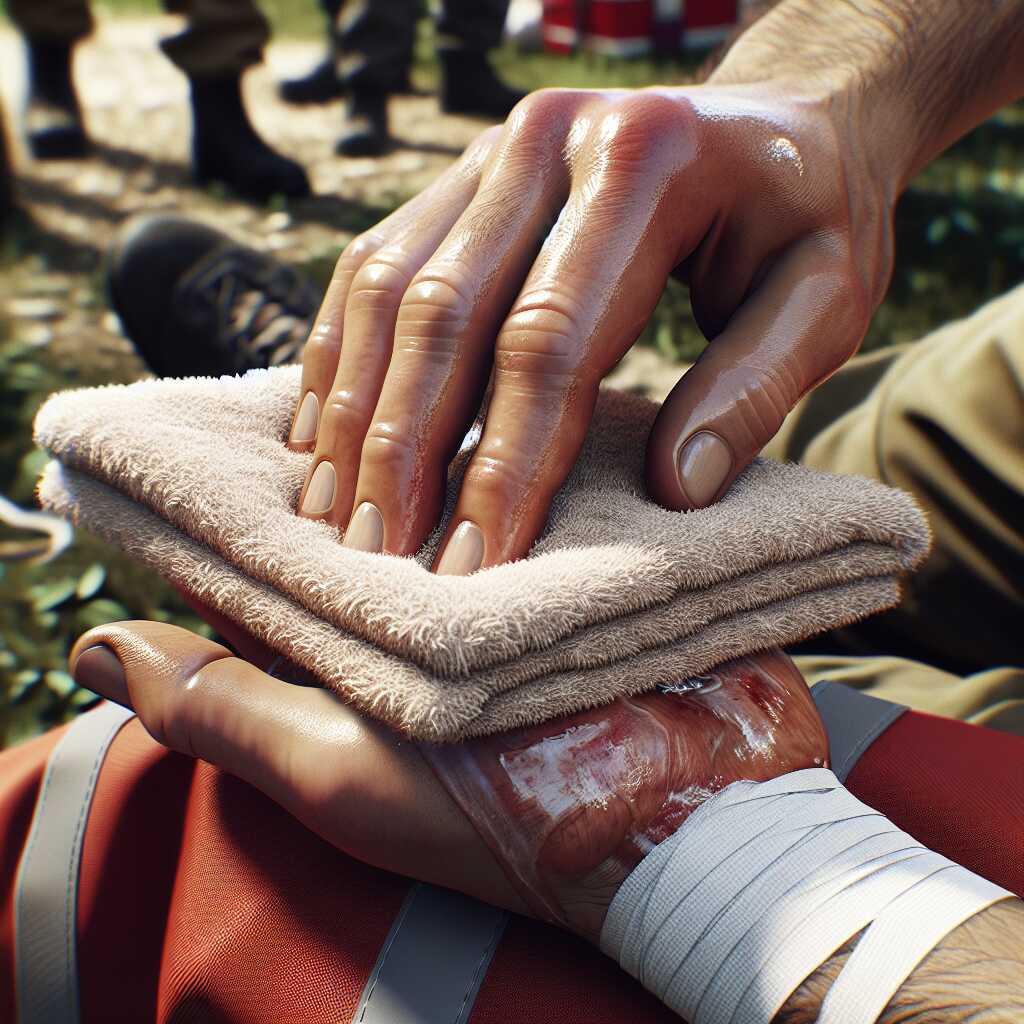
- Apply compress (10-20 minutes per session): Place the warm terry cloth directly on the affected area and keep it in place for 10-20 minutes. Instruction: Repeat this 3-4 times per day. Result: Promotes increased local blood flow, pain relief, and may encourage drainage of superficial collections.
- Reheat and repeat safely (immediate reheats as needed): If heat diminishes, re-soak the cloth in warmed water and reapply; do not reheat in a microwave unless the cloth is labeled microwave-safe and you understand timing. Instruction: Always retest before reapplying. Result: Maintains an effective temperature for the recommended session length.
- Clean or replace the cloth after each use (5-10 minutes to launder): After a session, launder the cloth in hot water (60C / 140F) and detergent or use a fresh clean cloth. Instruction: In field settings, use a fresh, boiled or chemically sanitized cloth if available; otherwise discard single-use options. Result: Lowers chance of contaminating the wound or spreading infection.
- Monitor progress and know when to seek care (continuous monitoring; reassess at 48-72 hours): Instruction: Expect improvement in pain, swelling, or drainage within 48-72 hours for many superficial cases; if redness spreads, fever develops, pain worsens, the area becomes fluctuant/deep, or you see no improvement in 72 hours, seek medical evaluation. Result: Ensures timely professional treatment for deep abscesses, systemic infection, or when antibiotics/drainage may be required.
FAQ
What are terry cloth washcloths and how are they defined medically
Terry cloth washcloths are looped cotton or cotton-blend textiles used as reusable soft towels that provide a moist heat carrier for topical warm compress therapy to superficial skin infections and styes. These washcloths cost about $1 to $5 each, provide reliable heat transfer, and are often chosen in field care and home care for their durability and absorbency. Predicament Measures recommends clean, single-patient use and routine laundering because terry cloth cannot sterilize tissue and cannot replace antibiotics or professional drainage when those are needed.
What fabrics thread counts and construction make terry cloth absorbent
High-loop 100 cotton terry, loop height about 2 mm to 6 mm and weight about 300 to 600 GSM, provides best absorbency and moisture retention for hot compress use. Loop density and pile construction determine how much warm water a cloth holds and how evenly heat delivers to skin, which testing and product review show matters for efficiency. Synthetic blends offer faster drying and durability while pure cotton offers the best comfort and heat-holding performance for wound and infection care.
How do terry cloth hot compresses work step by step for infection
Terry cloth hot compresses work by holding warmed, moist heat against the skin to increase local blood flow, soften blocked pores, and help drainage of superficial boils or styes when used as part of care and monitoring. Typical steps include heating water to a safe range, soaking a clean washcloth, wringing to avoid dripping, folding the cloth to 3 to 4 layers, applying to the site for 10 to 20 minutes, and repeating as needed 3 to 4 times per day. Field and home caregivers should test temperature, use single-patient washcloths, and follow reviews and experience-based protocols to enhance safety and reliability during treatment.
What temperature duration and frequency should a hot compress be applied
Set or test hot compress temperature to about 104F to 113F (40C to 45C) and apply for 10 to 20 minutes per session, 3 to 4 times daily, for 3 to 7 days while monitoring for improvement. Test temperature on the inner wrist before applying to children or reduced-sensation patients and do not allow skin contact with temperatures that feel very hot or cause redness that lasts after removing the compress. These parameters provide a balance of effectiveness shown in reviews while ensuring reduced burn risk and improving comfort and drainage results.
What are the main benefits of using terry cloth hot compresses for infection
Terry cloth hot compresses provide improved local circulation, pain relief, and help with drainage of superficial infection sites such as styes and small boils when used properly alongside hygiene and monitoring. Cost comparison shows $1 to $5 per terry washcloth versus $10 to $30 for reusable commercial hot packs and $15 to $40 for microwaveable heat packs, which makes terry cloth a low-cost, portable option for hikers, parents, and caregivers. Clinical experience and research reviews report that warm compress therapy helps symptoms in roughly 60 to 90 of cases for many superficial problems when used correctly and not used as a substitute for needed medical treatment.
How much pain reduction and drainage improvement can be expected and when
Many people report noticeable pain reduction within 24 to 72 hours of regular warm compress use with further improvement in drainage over 3 to 7 days for styes and small boils, with success rates commonly reported in the 60 to 90 range for these conditions. Expect subjective pain relief and softened tissue that enables natural drainage, and track changes daily with photos or notes to review progress. If pain does not decrease or drainage worsens after 48 to 72 hours, seek clinical review since terry cloth compresses cannot treat deep abscesses or systemic infection.
What are the risks and limitations of using terry cloth hot compresses safely
Main risks include thermal burns, scalds from overheated water, and contamination if a washcloth is reused unwashed; terry cloth cannot sterilize tissue or replace antibiotics for deeper or systemic infections. Use safe water temperatures, test on skin, and avoid compresses hotter than recommended so scald risk remains low; scald injuries increase with water above 120F (49C), which users should avoid. Field use requires clean storage and single-patient practice to reduce infection transfer and to ensure the reliability and safety of compress therapy.
How to recognize signs that indicate medical attention or antibiotic need
Seek medical attention if the infection shows spreading redness larger than 2 inches (5 cm), red streaks toward the heart, fever above 100.4F (38C), increased pain, or if the person has chills or feels unwell. If no improvement after 48 to 72 hours of compress therapy or if drainage is heavy, foul-smelling, or bleeding, obtain clinical review because these signs indicate a possible need for antibiotics or professional drainage. Use measured data, photos, and notes for expert review to improve triage quality and treatment decisions.
Who should consider using terry cloth hot compresses for minor infections
Parents, hikers, backpackers, home caregivers for elderly or disabled people, first aid and outdoor emergency responders, and DIY novices can consider terry cloth hot compresses for minor, superficial infections such as small boils and styes. Predicament Measures advises that this option provides an easy, low-cost, portable solution that enhances comfort, improves local blood flow, and enables drainage when used with good hygiene and monitoring. Users should follow best-practice testing, review product features, carry 2 to 4 clean washcloths at $1 to $5 each, and compare compress options for quality and durability before field use.
Which health conditions and age groups should avoid or modify this approach
People with diabetes, peripheral vascular disease, neuropathy, immune compromise, anticoagulation therapy, infants under 2 years, and anyone with reduced skin sensation should consult a clinician before using hot compresses because these conditions change risk and healing response. Modify care by using lower temperatures, shorter application times, supervised use, and clinician review to ensure safe application and to improve treatment outcomes. Caregivers should follow expert review and testing recommendations and stop compress use if signs of worsening appear and seek medical assessment.
When is the best time to use terry cloth hot compresses for infection care
The best time to use terry cloth hot compresses is when a superficial, localized infection such as a small boil, stye, or minor skin infection shows early signs like redness, warmth, localized swelling, or pain and does not have systemic symptoms; start within 24 to 72 hours of clear local symptoms. Apply 10 to 20 minutes per session, 3 to 4 times daily for 3 to 7 days while monitoring for improvement; studies and reviews report that warm compress therapy helps roughly 60 to 90 of simple styes and small boils when used correctly as adjunctive care. Predicament Measures notes clear limits: terry cloth compresses cannot replace antibiotics, professional drainage for deep abscesses, or treatment for systemic infection and they cannot sterilize tissue.
How soon after injury or symptom onset should heat be applied and why
Apply heat as soon as you see clear superficial signs, typically within 24 to 72 hours, because local warmth enhances blood flow and helps drainage of pus in small, superficial lesions. Aim for contact temperatures of about 104F to 113F (40C to 45C) and stop a session at 10 to 20 minutes to reduce burn risk and to enable the compress to improve circulation without harming tissue.
How much do terry cloth hot compresses cost compared with alternatives
Terry cloth washcloths cost about $1 to $5 each, which makes them an inexpensive option for hot compresses compared with commercial reusable hot packs that range from $10 to $30 and microwaveable gel packs that range from $15 to $40. The low cost and wide availability make terry cloth useful for field use, home care, and emergency packs while reviews and comparisons show that commercial packs often offer longer durability and built-in testing for heat retention. Predicament Measures recommends weighing cost against reliability and durability when choosing between a $1 to $5 cloth and a $15 to $40 microwaveable pack.
What are typical price ranges for washcloth packs and commercial hot packs
A single terry washcloth typically costs $1 to $5 and multi-packs commonly sell for about $5 to $20 depending on count and brand, which offers an inexpensive per-use cost. Commercial hot packs and gel microwave packs commonly cost $10 to $30 for reusable designs and $15 to $40 for higher-end microwaveable models that deliver tested heat retention and greater durability.
What materials and tools are needed to make a terry cloth hot compress at home
You need at minimum a clean terry cloth washcloth (about 11 to 13 inches square), a heat source to warm water, a temperature check method, and a clean container or plastic bag to hold the warmed cloth. Include a thermometer when possible to confirm water temperature at about 104F to 113F (40C to 45C), sterile saline 0.9 or clean water for wound irrigation if the infection has an open area, and basic gloves and antiseptic wipes for handling to enhance hygiene and reduce contamination. Predicament Measures suggests testing heat sources and materials by simple trials and reviews for reliability before using them on children, elderly people, or anyone with reduced skin sensation.
What safe heat sources and sterilization supplies should you use in the field
Use safe heat sources such as hot water from a stove or thermos that you cool to 104F-113F (40C-45C), approved chemical disposable warmers that list tested heat output, or a dampened microwave-heated cloth with clear timing guidelines for your wattage. Carry sterilization supplies such as soap and water for handwashing, 70 isopropyl alcohol wipes for external cleaning of intact skin, sterile saline for wound irrigation, clean gloves, and spare clean terry cloths; these supplies enhance infection control but cannot sterilize tissue or replace professional sterile technique.
What are the best alternatives to terry cloth hot compresses for infection care
The best alternatives include warm saline dressings for open wounds, cold compresses for acute swelling or immediate pain control, and medical drainage plus antibiotics for deep abscesses or infections with systemic signs. Warm saline dressings deliver gentle, moist heat and saline to help cleaning and drainage, cold compresses provide short-term reduction in swelling for 24 to 48 hours after injury, and professional drainage with antibiotics provides definitive care when a fluctuating mass, fever, or spreading redness appears. Predicament Measures recommends choosing an alternative based on the wound type, presence of systemic signs, and the reliability of available supplies.
When should you choose warm saline dressings cold compresses or medical drainage
Choose warm saline dressings for small open wounds with drainage that need cleaning and moist heat to promote healing and drainage when no systemic symptoms are present. Choose cold compresses for immediate pain and swelling control within the first 24 to 48 hours after acute injury or trauma, and choose medical drainage and antibiotics when you find a fluctuant abscess, spreading redness, fever, or no improvement after 48 to 72 hours of home care because compresses cannot replace professional incision and drainage.
What common mistakes should be avoided when using terry cloth hot compresses
Common mistakes include using water or packs that are too hot and causing burns, reusing contaminated cloths that spread infection, and delaying medical care when the infection worsens or does not improve in 48 to 72 hours. Keep skin contact temperature at about 104F to 113F (40C to 45C), limit each session to 10 to 20 minutes, wash cloths with detergent and hot water between uses, and avoid using moist heat on numb skin or poor circulation where burn risk increases. Predicament Measures highlights that testing, experience, and careful review of symptoms improve safety and outcomes while noting that terry cloth compresses cannot sterilize tissue or treat deep infections.
How to prevent burns contamination and delayed medical treatment when using heat
Prevent burns by testing compress temperature on your wrist and keeping it in the 104F to 113F (40C to 45C) range and by limiting sessions to 10 to 20 minutes per application. Prevent contamination by using a clean or single-use terry cloth, washing cloths in hot water and detergent after each use, wearing gloves when handling open wounds, and using sterile saline for irrigation when possible. Seek medical care if you see spreading redness, fever, increased pain, fluctuance, or no clear improvement after 48 to 72 hours because early professional care can reduce complications and is essential for deep or systemic infections.
Related posts:
 Unwaxed Dental Floss: High-Strength Fishing Line Alternative for Wilderness Food Procurement
 Petroleum Jelly Cotton Balls: Five-Minute Burn Time Fire Starters for Damp Conditions
 Elastic Hair Ties: Cordage Bundle Organizers for Tangle-Free Emergency Kits
 Plastic Cling Wrap: Burn Wound Covering to Prevent Infection and Fluid Loss
 Cornstarch: Moisture Absorption Powder for Preventing Trench Foot
Sterile Tampons: Deep Puncture Wound Packing for Hemorrhage Control
Cornstarch: Moisture Absorption Powder for Preventing Trench Foot
Sterile Tampons: Deep Puncture Wound Packing for Hemorrhage Control
 Wooden Pencils: Arrow Shaft Material for Improvised Hunting Weapons
 Index Cards: Water-Resistant Information Cards for Survival Instructions