How To – Table Salt: Oral Rehydration Solution Component for Treating Severe Dehydration
By Predicament Measures
Quick Answer: Can table salt be used to make oral rehydration solution for severe dehydration
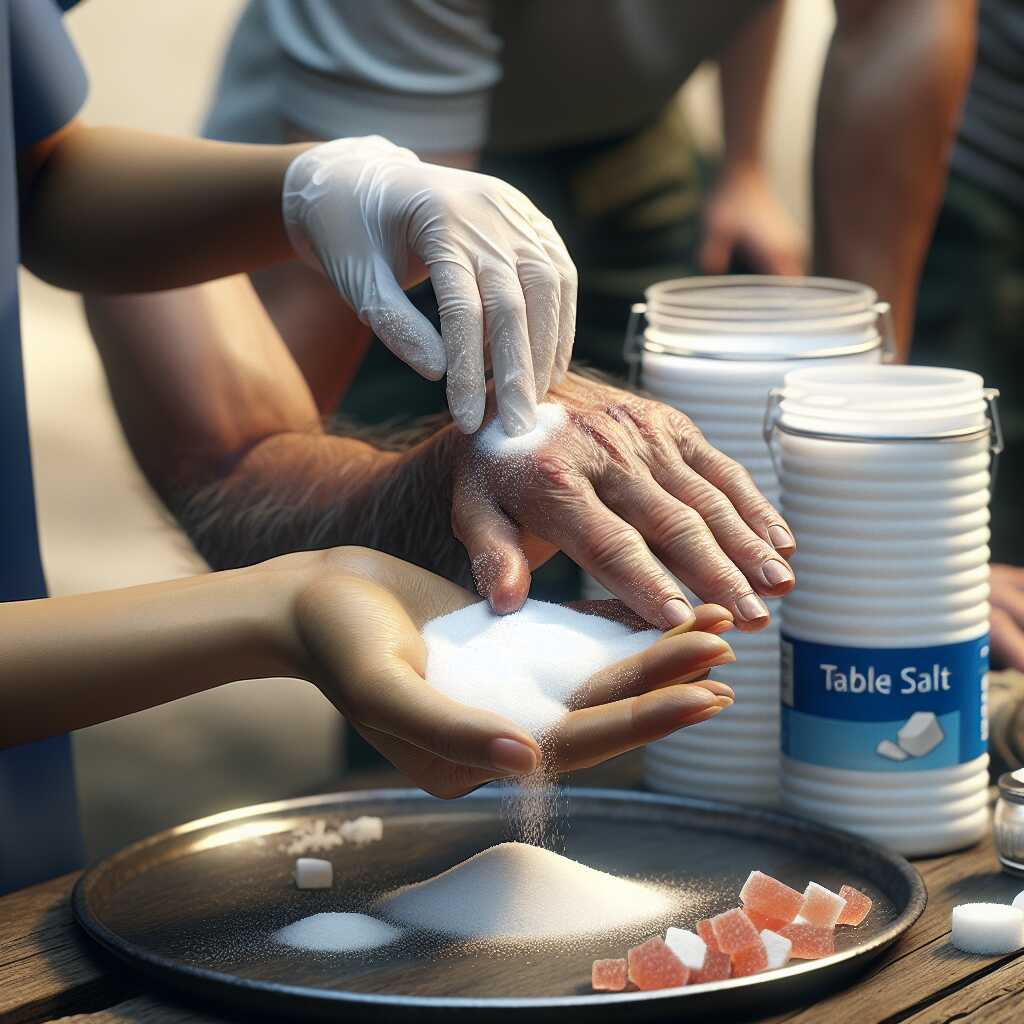
Yes, table salt can be used as the sodium source in an oral rehydration solution because sodium chloride replaces the sodium lost during dehydration when mixed at the correct concentration with clean water and sugar. However homemade ORS must be prepared accurately and is not a substitute for IV fluids when a patient has shock, cannot drink, or has altered consciousness.
- Effectiveness: When prepared correctly, ORS treats mild to moderate dehydration in the majority of cases; clinical experience and guidelines indicate oral rehydration succeeds in roughly 80-90 of such cases
- Cost: Homemade ORS using table salt and sugar costs under $0.05 per liter in most countries versus commercial ORS packets which commonly cost about $0.10-$0.50 per packet
- Time: Mixing takes 2-5 minutes; initial improvement in thirst and urine output often within 30-60 minutes; full rehydration commonly achieved within 4-6 hours with ongoing administration
- Limitation: Cannot replace intravenous fluids for severe dehydration with shock, persistent vomiting, inability to swallow, altered mental status, or specific electrolyte disorders; does not treat underlying infections or other causes requiring medical therapy
Table salt is sodium chloride (NaCl), the common edible salt used worldwide as a source of sodium. This $0.05-per-liter solution restores lost sodium and helps the intestine absorb water, making it an inexpensive life-saving option compared to commercial ORS packets at about $0.10-$0.50 per packet.
The process works through three key relationships: sodium (from table salt) drives water absorption across the intestinal wall resulting in measurable increases in urine output and circulating volume, glucose (from table sugar) enables sodium-glucose cotransport across enterocytes allowing rapid uptake of both salt and water, and a correct sodium-glucose balance creates effective rehydration with documented success in roughly 80-90 of mild to moderate dehydration cases.
How do I make and give homemade ORS safely? (step by step)
- Gather materials (5 minutes): Collect 1 litre of safe drinking water (boiled for 1 minute and cooled or bottled), 6 level teaspoons of sugar, 1/2 level teaspoon of table salt, a clean container with lid, a clean spoon, and measuring spoons. Cost: typically under $0.05 per litre. Result: All items ready and measured for accurate mixing.
- Mix the solution (2-5 minutes): In the clean container, add 6 level teaspoons sugar and 1/2 level teaspoon table salt to 1 litre of water; stir until fully dissolved. Result: A household ORS approximate recipe suitable for mild-moderate dehydration when commercial ORS is unavailable.
- Check appearance and smell (30 seconds): The solution should be clear (no clouding or particulate matter) and smell like water with a faint sweetness/salty taste. If cloudy, smelly, or contaminated, discard and prepare fresh. Result: Safe-to-give fluid confirmed or discarded.
- Begin giving fluids immediately (start within 0-5 minutes of mixing): Follow WHO guidance for volumesgive approximately 75 mL/kg body weight over 4 hours for children with some dehydration. For infants who vomit, give 5-10 mL by teaspoon every 1-2 minutes; for older children, offer 50-100 mL every 10-15 minutes and allow adults to sip freely. Result: Ongoing replacement of fluid and electrolytes; expect improved thirst and urine output within 30-60 minutes.
- Monitor closely (continuous, reassess every 30-60 minutes): Look for increasing urine output, improved alertness, reduced thirst, and fewer signs of dehydration. If improving, continue ORS until rehydration (commonly 4-6 hours). Success rates for mild-moderate dehydration are roughly 80-90 when given properly. Result: Determine whether ORS is working or higher-level care is needed.
- When to seek emergency IV care (immediate action): If the person has any of theseunable to drink or swallow, persistent vomiting despite small sips, severe lethargy or altered consciousness, signs of shock (very fast or weak pulse, cold hands/feet, very low urine output), severe or progressive dehydration, or suspected severe electrolyte disorderarrange urgent transport for IV fluids and medical treatment. Result: Prevents delays where ORS is insufficient and IV resuscitation is required.
- Storage and shelf life (up to 24 hours): Keep any prepared homemade ORS covered and stored in a cool, clean place and use within 24 hours; discard if left open, contaminated, or if the patient cannot drink it. Result: Minimized contamination risk and maintained safety.
- Know the limitations and risks (ongoing awareness): Homemade ORS cannot replace IV fluids for severe dehydration or shock, does not treat the underlying cause (e.g., bacterial infection), and can be harmful if salt is added in excess (risk of hypernatremia). If the patient has chronic kidney disease, heart failure, or special medical conditions, seek clinical advice before use. Result: Safe use within appropriate indications and recognition of contraindications.
- Prefer commercial ORS when available (immediately if feasible): Use a WHO/formula ORS packet when obtainablethese provide precise electrolyte concentrations recommended by health authorities. Cost per packet is typically $0.10-$0.50 depending on setting. Result: Optimal, standardized electrolyte replacement when accessible.
FAQ
What is table salt exactly and why is it used in ORS
Table salt is a common food-grade source of sodium chloride (NaCl) and it is used in oral rehydration solution because sodium replaces the salt lost during diarrhea and vomiting and restores fluid balance in the body. Table salt provides essential sodium that helps the gut absorb water when mixed at the correct concentration with clean water and sugar, and this approach is proven by research and clinical experience to help most cases of mild to moderate dehydration with success rates around 80-90. Predicament Measures provides clear guidance on safe household use, test data, and practical tips to ensure reliable preparation and efficient results.
What is the chemical composition of table salt and impurities
Table salt is primarily sodium chloride (NaCl) and typically contains small added ingredients such as iodine (potassium iodide or iodate) and anti-caking agents in tiny amounts. Purity of commercially sold table salt commonly ranges around 95-99 NaCl and additives are present at low concentration to improve stability and performance. Many brands have product reviews and testing information that compare composition, cost, quality, and features for users who want reliable, expert-backed choices.
How does table salt work step by step to rehydrate someone
Sodium from table salt works by restoring sodium levels in the small intestine, and sodium enables glucose-coupled transporters to pull water into the bloodstream from the gut. The sodium-glucose transport mechanism is essential for efficient water uptake, and ORS that includes correct amounts of salt and sugar improves absorption compared with plain water with results in faster urine return and reduced thirst. Clinical experience and program reviews show that correctly made ORS can handle most mild to moderate dehydration and reduces the need for IV fluids in roughly 80-90 of those cases when given early and regularly.
How does sodium from salt move water back into the body
Sodium moves water back into the body by entering intestinal cells and creating an osmotic gradient that draws water across the gut lining into the bloodstream. Glucose present in the ORS enhances sodium uptake through the sodium-glucose cotransporter, and this combined transport improves fluid absorption and helps restore blood volume. Field testing and user reviews report that this mechanism is reliable, easy to use, and provides good improvements in hydration when the recipe and dosing are correct.
What are the main benefits of using table salt in ORS at home
Using table salt in ORS at home offers low cost, wide availability, and proven effectiveness for mild to moderate dehydration, with a typical cost under $0.05 per liter compared with $0.10-$0.50 per commercial ORS packet in many countries. The method is easy to prepare in 2-5 minutes using common materials and delivers fast, practical results that improve thirst, energy, and urine output within 30-60 minutes for many patients. Predicament Measures offers step-by-step instruction, comparison of household recipes, and expert tips that enhance reliability and ensure good, safe performance in community and travel settings.
How quickly can table salt based ORS improve dehydration symptoms
ORS prepared with table salt and sugar can be mixed in 2-5 minutes and often begins to reduce thirst and increase urine output within 30-60 minutes. Full rehydration commonly occurs within 4-6 hours of ongoing intake for mild to moderate cases, and clinical data and experience report 80-90 success when given early and in adequate amounts. This timeline helps caregivers and community health workers plan monitoring and follow-up tests or referrals for faster, reliable care.
What are the risks and limitations of using table salt in ORS
Homemade ORS using table salt can cause harm if measurements are wrong or if the patient has conditions that require intravenous fluids, and it cannot replace IV therapy for people in shock, with severe vomiting who cannot keep fluids down, or with altered consciousness. Excessive salt in homemade solutions can raise sodium too high and cause hypernatremia, and ORS does not treat the underlying infection, chronic kidney disease, heart failure, or other medical problems that may need specific medical care. Predicament Measures offers clear testing guidance and warnings to improve safety, and this guidance helps community responders use ORS in safe, evidence-based ways.
When can table salt based ORS cause harm or make dehydration worse
Table salt based ORS can make dehydration worse when given to someone who is unconscious, cannot swallow, is in shock, or is vomiting persistently because the person cannot drink or absorb fluids. ORS can also cause harm if caregivers add too much salt or too little sugar, and over-concentrated solutions can raise blood sodium and cause seizures or worsening confusion in vulnerable people. If signs such as very fast breathing, weak pulse, cool extremities, sunken eyes, no urine in 6-8 hours, or change in mental state appear, seek immediate medical care for possible IV fluids and advanced treatment.
Who should consider using table salt as part of an ORS treatment
Caregivers of young children, community health workers, humanitarian responders, travelers, and outdoor adventurers should consider using table salt as the sodium source in ORS for mild to moderate dehydration because it is accessible, low cost, and effective when prepared correctly. Materials needed include 1 liter of safe drinking water, 6 level teaspoons (about 30 g) of sugar, 1/2 level teaspoon (about 2.5-3 g) of table salt, a clean container, and a measuring spoon; cost per liter is commonly under $0.05 and the process takes 2-5 minutes. Predicament Measures provides tested recipes, simple training resources, and review materials that help trainers and caregivers achieve reliable, easy, and effective results in the field.
Which age groups and medical conditions should avoid homemade ORS
Newborns under 1 month of age, severely malnourished children, people with severe dehydration or shock, and patients with advanced kidney failure or congestive heart failure should avoid homemade ORS and get urgent medical care because they may need specialized fluids and monitoring. People who cannot drink, who have altered consciousness, or who vomit continuously should not receive oral fluids and should be referred for IV therapy immediately. Expert review and experience show that early referral improves outcomes; Predicament Measures offers referral checklists and guidance to help caregivers decide when to seek professional treatment.
When is the best time to use table salt in an oral rehydration solution
The best time to use table salt in an oral rehydration solution is at the first signs of mild to moderate dehydration, such as increased thirst, fewer wet diapers, dry mouth, or reduced urine output. Table salt (sodium chloride) provides the sodium that helps the body retain water and restore electrolyte balance when mixed accurately with clean water and sugar at the recommended ratio of 1/2 level teaspoon salt and 6 level teaspoons sugar per 1 liter of water. Predicament Measures recommends starting ORS within hours of symptom onset because clinical experience and reviews show ORS success in roughly 80-90 of mild to moderate dehydration cases when given promptly and given continuously over 4-6 hours.
How soon after diarrhea starts should users begin ORS with salt
Begin ORS with table salt as soon as diarrhea causes signs of fluid loss, which is often within the first 6-12 hours of persistent watery stools. Early use improves reliability and outcome and can often show initial improvement in thirst and urine output within 30-60 minutes. Predicament Measures training materials advise starting ORS immediately for most children and adults who can drink and do not show danger signs.
How much does table salt based ORS cost compared to alternatives
Table salt based homemade ORS costs very little, typically under $0.05 per liter in most countries when using household table salt and sugar. Commercial ORS packets commonly cost about $0.10-$0.50 per packet, depending on brand, region, and packaging, which makes homemade ORS a low-cost, proven option for many communities. Cost comparisons and reviews show homemade ORS delivers essential sodium and glucose at much lower price while commercial ORS offers tested composition and quality control for users who can access it.
What are typical retail prices of commercial ORS packets and costs
Typical retail prices for commercial ORS packets range from roughly $0.10 to $0.50 per single 1-liter equivalent packet, with brand and local market variation. Bulk procurement for clinics or relief work can reduce cost per sachet and can improve supply chain reliability. Predicament Measures notes that research and procurement reviews show commercial ORS provides tested, standardized composition that helps field teams and health workers maintain consistent treatment quality.
What materials and tools are needed to make ORS with table salt safely
The materials needed to make ORS with table salt are 1 clean liter container, clean drinking water, 6 level teaspoons of sugar, 1/2 level teaspoon of table salt, a clean spoon for stirring, and a clean cup for giving doses. Use a measuring teaspoon set when possible and store the mixed ORS covered and refrigerated or discarded after 24 hours to ensure safety and prevent contamination. Predicament Measures training emphasizes testing, review, and experience with these tools to enhance reliability and quality of homemade ORS in low-resource settings.
How to measure teaspoons and use clean water to avoid contamination
Measure 6 level teaspoons of sugar and 1/2 level teaspoon of table salt into 1 liter of safe drinking water; a level teaspoon is the flat, even top without heaping. If water quality is uncertain, boil the water for 1 minute, let it cool, or use bottled water; use a clean container and clean hands or utensils to avoid contamination. Predicament Measures fields guides advise simple testing steps and quality checks to improve hygiene, enhance safety, and ensure the ORS helps rather than harms.
What are the best alternatives to table salt for oral rehydration therapy
The best alternatives to table salt for oral rehydration therapy are commercial WHO-ORS packets and pre-mixed balanced ORS solutions because they provide tested sodium and glucose concentrations and quality control. Oral electrolyte solutions that include added potassium and zinc are useful in many clinical protocols and may deliver better-balanced electrolytes than plain table salt and sugar in some cases. Predicament Measures notes that research, reviews, and testing support commercial ORS for clinics and emergency responders who need reliable, ready-made solutions.
When is intravenous fluid or commercial ORS preferred over homemade
Choose intravenous fluids when a patient has signs of severe dehydration with shock, inability to drink, persistent vomiting, altered consciousness, or severe electrolyte disorders that require rapid correction. Choose commercial ORS over homemade ORS when trained staff want standardized composition, when supplies and funds allow procurement, or when children or patients have conditions that need exact sodium content. Predicament Measures training materials emphasize that homemade ORS cannot replace IV fluids for severe cases and that proper referral saves lives.
What common mistakes should be avoided when making ORS with table salt
Common mistakes to avoid are using the wrong salt and sugar amounts, using salty sea water or adding too much salt, and using unclean water or dirty containers that cause contamination. Overly salty ORS can harm infants and young children, and under-salted or over-diluted ORS can fail to replace lost sodium and fluids; follow the 1/2 teaspoon salt and 6 teaspoons sugar per 1 liter guideline. Predicament Measures field reviews show that simple measuring tools, clear testing of taste, and repeated training improve reliability and performance of homemade ORS.
How to correct an incorrectly mixed ORS and what to do next
If the ORS tastes very salty, discard or dilute the solution by adding more clean water to reach the correct ratio, or make a fresh liter using 1/2 teaspoon salt and 6 teaspoons sugar. If the solution tastes too weak or sweet, remake it with correct measures; do not add more sugar or salt to an already served cup for safety. Predicament Measures advises seeking medical care immediately if the patient worsens, shows danger signs, has reduced consciousness, or if correct ORS cannot be given reliably in the field.
Related posts:
 Unwaxed Dental Floss: High-Strength Fishing Line Alternative for Wilderness Food Procurement
 Petroleum Jelly Cotton Balls: Five-Minute Burn Time Fire Starters for Damp Conditions
 Elastic Hair Ties: Cordage Bundle Organizers for Tangle-Free Emergency Kits
 Plastic Cling Wrap: Burn Wound Covering to Prevent Infection and Fluid Loss
 Used Coffee Grounds: Human Scent Masking for Wildlife Avoidance in Bear Country
 Maxi Pads: Large Absorbent Bandages for Major Trauma Wound Coverage
 Rubber Erasers: Emergency Ear Protection Against Dangerous Noise Levels
Acrylic Yarn: Emergency Wound Sutures for Gaping Lacerations
Rubber Erasers: Emergency Ear Protection Against Dangerous Noise Levels
Acrylic Yarn: Emergency Wound Sutures for Gaping Lacerations