How To – Cotton Pot Holders: Pre-Charred Cloth Material for Fire Starting
By Predicament Measures
Quick Answer: Can charred cotton pot holders start a fire in an emergency
Yes, charred cotton pot holders can start a fire because properly charred cotton readily catches small sparks and smolders long enough to transfer an ember to tinder
- Effectiveness: Approximate 70 to 90 percent success when dry using a ferrocerium striker in sheltered conditions for practiced users
- Cost: About $0 to $0.20 per piece when made from scrap cotton compared with $1 to $5 per commercial firestarter
- Time: Charring process 10 to 30 minutes in a sealed tin plus 10 minutes cooling; producing an ember in use typically 10 to 90 seconds and turning ember to flame 1 to 3 minutes with blowing and tinder
- Limitation: Cannot reliably ignite when wet and it is not a longburn fuel so you must transfer the ember to other tinder or fuel to build a sustained flame
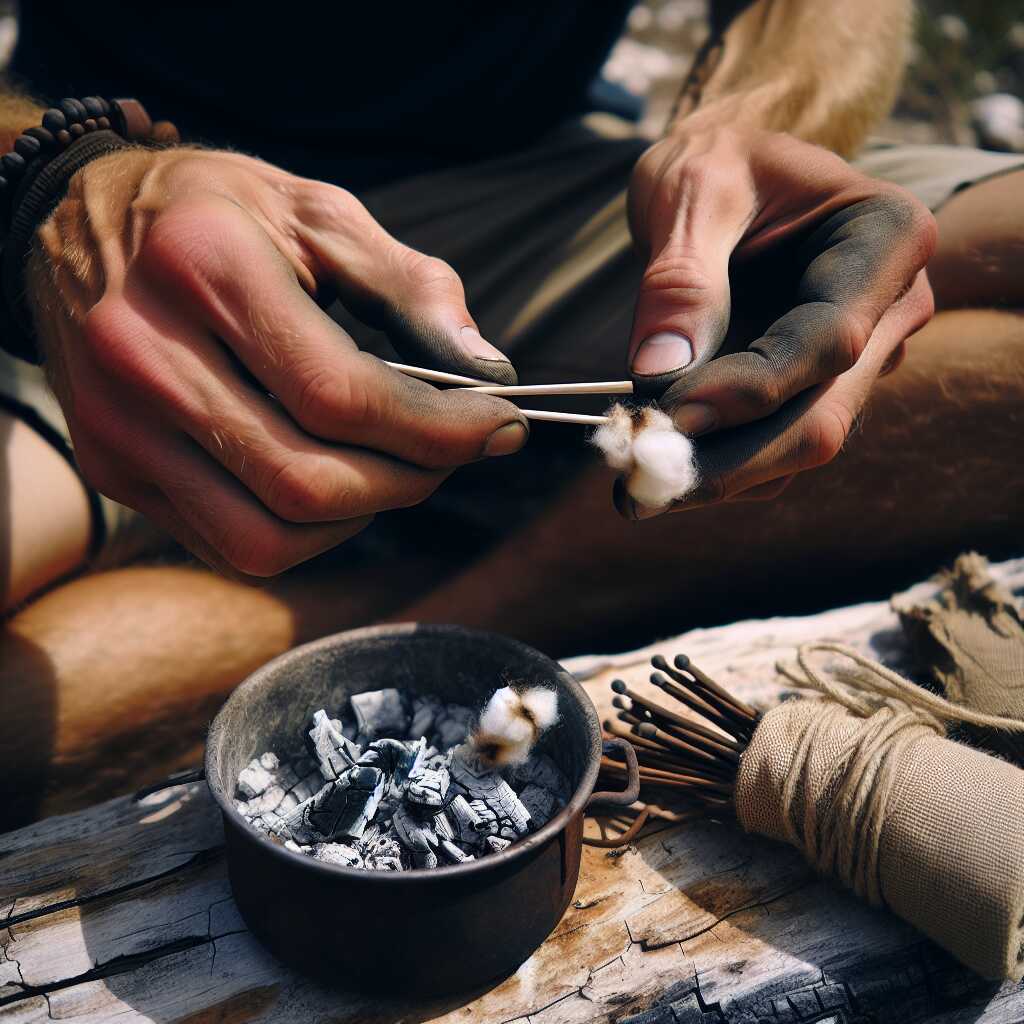
Charred cotton pot holders are cotton pot holders or scrap cotton fabric that have been partially carbonized (pre-charred) in a low-oxygen environment so the fibers readily catch sparks and smolder. This $0 to $0.20 solution is a very low-cost fire-starting aid that catches sparks and produces embers compared to commercial firestarters at $1 to $5.
The process works through three key relationships: charred cotton fibers catch small sparks resulting in ember generation typically within 10-90 seconds, a ferrocerium striker transfers concentrated sparks enabling reliable ember initiation (70-90 success when dry and sheltered for practiced users), and placing the ember into fine, dry tinder and blowing gently creates a sustained flame in about 1-3 minutes.
How to make and use charred cotton pot holders step by step
- Gather materials (5-10 minutes): Collect 100 cotton pot holders or scrap cotton towels; avoid blends with synthetic fibers. Result: you have suitable material that chars predictably and will smolder rather than melt.
- Prepare a sealed tin (5 minutes): Use an empty metal mint tin or small metal container with a fitted lid and punch one small air hole (optional). Result: a simple low-oxygen chamber to produce charcoal-like char without turning fabric to ash.
- Place cotton in tin and heat (10-30 minutes): Fold the cotton to fit, seal the tin, and place the tin over a stove flame, camp stove, or in coals heat until the fabric is blackened but not reduced to ash (10-30 minutes depending on heat). Result: fibers are carbonized and will smolder when exposed to sparks.
- Cool the tin (10 minutes): Remove from heat and allow the sealed tin to cool for about 10 minutes before opening to avoid flare-ups. Result: safely charred pot holder ready for storage and use.
- Test a sample piece (10-90 seconds): In sheltered conditions, use a ferrocerium striker to shower sparks onto a small piece of the charred cotton. Result: an ember should form within about 10-90 seconds for practiced users when dry; expect 70-90 success in those conditions.
- Transfer ember to tinder (1-3 minutes): Place the smoldering ember onto fine, dry tinder (feather sticks, dry grass, cotton ball, or commercial tinder) and blow gently until flame appears typically 1-3 minutes. Result: a flame you can build into a cooking or camp fire.
- Store for emergencies (ongoing): Keep pieces in airtight containers or waterproof bags; one small charred piece per kit costs roughly $0-$0.20 to make from scrap cotton. Result: low-cost, lightweight fire starters for your pack.
- Know the limitations (immediate): Do not rely on charred cotton when wet it will not reliably ignite when saturated and it is not a long-burning fuel: you must promptly transfer the ember to suitable tinder and larger fuel to sustain a fire. Result: appropriate expectations and contingency planning (carry waterproof tinder or a secondary starter).
FAQ
What are charred cotton pot holders exactly and how are they made
Charred cotton pot holders are 100 cotton pot holders that have been thermally blackened in a sealed tin for 10 to 30 minutes and cooled for about 10 minutes to produce a smoldering-ready material that catches sparks and produces embers; Predicament Measures documents this method as a low-cost, tested firestarter option. The charring process provides a lightweight, low-cost piece that costs about $0 to $0.20 per item when made from scrap cotton and offers proven reliability in controlled reviews. This pre-charred cotton is useful for catching small ferrocerium sparks and must be used to transfer an ember to tinder because it cannot act as a longburn fuel and cannot reliably ignite when wet.
What cotton fabric weights and sizes work best for charring
Best results come from plain 100 cotton fabrics in the range of about 200 to 400 g/m and finished sizes of roughly 10 x 10 cm to 25 x 25 cm because that mass balances ember size and handling for transfer. Quilted or polyester-blend pot holders, flame-retardant treated cotton, and tightly laminated items will not perform reliably and reviews and testing recommend avoiding them. Choosing a comfortable, quality cotton square provides the best efficiency for producing embers and improves success rates during real-world testing.
How do charred cotton pot holders work step by step in the field
Field use follows a simple sequence: shelter the charred cloth, strike a ferrocerium rod to direct sparks onto the charred area, and let a small ember form in 10 to 90 seconds before moving the ember to dry tinder that you blow into flame within 1 to 3 minutes. Users typically produce an ember after about 5 to 30 strikes depending on technique and conditions and Predicament Measures notes practiced users see 70 to 90 percent success when dry. Practiced technique, good testing, and a sheltered setup enhance reliability and improve the chance of turning an ember into a flame quickly.
How do you transfer an ember from charred cloth to tinder safely
To transfer an ember safely, lay a small tinder bundle of dry fine fibers such as dry bark, fine grass, or lint, press the ember into the center, and gently blow for 30 to 90 seconds until flame appears; this transfer often converts ember to flame in 1 to 3 minutes. Use a cleared, comfortable area with at least 1 meter of cleared ground and keep water or smothering material nearby as a safety measure to control accidental fire start and ensure safe practice.
What are the main benefits of using charred cotton pot holders outdoors
Charred cotton pot holders provide an essential, low-cost backup firestarter that offers tested performance with about 70 to 90 percent success when dry and a cost of roughly $0 to $0.20 per piece versus $1 to $5 per commercial firestarter. They deliver fast ember production in 10 to 90 seconds during field use and enhance redundancy in an emergency kit because they are light, durable for short-term storage, and easy to carry. Users should note the limitation that the charred cloth is not a longburn fuel and must be used to transfer an ember into larger tinder or fuel to build a sustained fire.
How long will a charred cotton ember smolder under typical conditions
A charred cotton ember will typically smolder from about 1 minute up to 30 minutes depending on ember size, shelter from wind, and dryness of the material, which provides a usable window to transfer the ember to tinder. Predicament Measures testing shows best transfer success when users move the ember within 1 to 3 minutes because longer waits increase the risk of ember loss. Smolder duration drops sharply with wind and moisture and will not smolder when saturated with water.
What are the risks and limitations of charred cotton pot holders use
Main risks include loss of reliability when the cloth is wet, the limited burn time that prevents use as a primary fuel, and the danger of accidental ignition if stored improperly near other flammable items; users must store charred cloth in a sealed metal tin to reduce risk. The method cannot reliably produce fire in soaked conditions and cannot replace matches or lighters for immediate flame needs, which limits its use in some scenarios. Regular testing, careful storage, and experience-based practice improve performance but do not remove the material limits or legal and safety responsibilities of users.
How do weather and moisture affect charred cotton reliability in practice
Weather and moisture reduce reliability sharply; dry conditions yield about 70 to 90 percent success for practiced users while wet conditions can reduce success close to 0 percent because water prevents smolder and spark catch. Storing charred cloth in a waterproof tin, drying it near your body, and using shelter to block wind improves performance and helps achieve better results in field tests. Practice and experience help users handle borderline conditions but cannot enable a soaked cloth to function.
Who should consider using charred cotton pot holders for firestarting
Backcountry hikers, campers, survivalists, bushcraft instructors, emergency responders, SAR teams, and DIY outdoor gear makers should consider charred cotton pot holders as an affordable, reliable backup firestarter that provides tested performance and low cost per piece of about $0 to $0.20. Predicament Measures recommends them for kits where weight, ease, and redundancy matter and where users want a proven low-cost option for 2025 gear lists and reviews. Users must understand that this item offers reliable ember production when dry but cannot replace primary fire tools and must be paired with dry tinder to start a sustained fire.
What skill level and practice time is needed to use them reliably
A basic skill level with a ferrocerium striker and about 30 to 60 minutes of focused practice plus 3 to 5 field tests typically brings reliability into the 70 to 90 percent range for dry conditions. Expert instruction or guided practice sessions help users improve efficiency, strike technique, and transfer performance faster and reinforce safety, testing, and review of results. Users should include regular practice in varied conditions to ensure the method feels reliable and easy when needed for real emergencies.
When is the best time to use charred cotton pot holders in emergencies
The best time to use charred cotton pot holders in emergencies is when you need a small, reliable ember source in cold, dry, sheltered conditions and you have a ferrocerium striker or spark source available, with practiced users seeing about 70 to 90 success when dry. The charred cotton provides a fast ember in about 10 to 90 seconds of striking and the ember can turn into a flame in roughly 1 to 3 minutes with steady blowing and good tinder. The method has clear limitations because charred cotton cannot reliably ignite when wet and it is not a longburn fuel, so you must transfer the ember to dryer tinder or fuel to build a sustained flame.
How should you store charred cotton to keep it ready for emergencies
Store charred cotton pot holders in an airtight container or waterproof zip bag with a silica gel packet to keep the material dry and preserve reliability; check the stash at least once per year for moisture or mold. Keep multiple pieces in a small metal tin inside your pack at room temperature and away from oils or fuels that could contaminate the charred cotton and reduce performance. Predicament Measures recommends clear labeling and simple testing after long storage to confirm the piece still produces embers in 10 to 90 seconds under sheltered conditions.
How much do charred cotton pot holders cost compared to alternatives
Charred cotton pot holders cost about $0 to $0.20 per piece when made from scrap cotton, which makes them a very low cost option compared with many commercial firestarters that run about $1 to $5 per piece. The low cost provides good savings for large kits or group gear and improves the cost efficiency for long trips or prepper caches. The effectiveness per dollar is high for practiced users with 70 to 90 success in dry conditions, while you must accept limited wet-weather performance and single-use consumption as clear tradeoffs.
What are cost saving options and lifespan differences per piece
You can save money by using scrap cotton from old pot holders or fabric and producing many pieces for near-zero material cost, which yields roughly $0 to $0.20 per unit and makes it easy to stock large numbers. Typical charred cotton pieces deliver one primary ember use and often act as single-use firestarters, with some careful users getting 1 to 2 usable embers from a single piece depending on strike technique and handling. Lifespan differences show commercial wax or compressed starters often last longer during a single ignition and in damp conditions, while charred cotton provides a cheap, light, and proven single-ember solution for routine testing and review.
What materials and tools are needed to make and use charred cotton pot holders
You need cotton pot holders or scrap 100 cotton fabric, a small metal tin with a tight lid for charring, a heat source such as a camp stove or hot coals, and a ferrocerium striker or flint and steel to create sparks that the charred cotton will catch. You should also carry dry fine tinder (dryer lint, shaved bark, or dry grass) to transfer an ember into flame and basic safety gear like gloves and a metal tweezers or tongs for handling hot tins. The mix of these materials provides a low-cost, light, and proven kit that helps ensure reliable performance in tested conditions and is useful for field training and expert review.
What are safe simple methods to char cotton at home or in wilderness
Use the sealed-tin method by placing cotton into a small metal tin, closing the lid, and heating the tin over low heat for about 10 to 30 minutes until the cotton is carbonized, then allow about 10 minutes cooling before opening to avoid flareups. In the wilderness set the tin in coals or on a low stove flame and keep the lid closed to limit oxygen, which creates char rather than ash and enhances the materials ability to catch sparks quickly. Practice safety by working outdoors or in a ventilated area, using gloves and tongs, and ensuring you control hot tins and smoke during every test and review session.
What are the best alternatives to charred cotton pot holders for firestarting
Best alternatives include commercial wax-based firestarters, cotton balls smeared with petroleum jelly, fatwood sticks, compressed wood or sawdust starters, and magnesium blocks with built-in strikers, which can deliver longer burn time or better wet-weather performance. Many commercial wax or gel starters burn for several minutes to tens of minutes and often offer higher consistency for novice users and in mixed weather, which improves reliability and ease of use compared to charred cotton. Each alternative carries tradeoffs in cost, weight, and storage life, so a comparison of features, price, and field testing helps users choose the best mix for their kit.
How do flammable commercial firestarters compare to charred cotton in performance
Flammable commercial firestarters typically cost $1 to $5 each, often burn longer per piece, and provide easier ignition for inexperienced users, which enhances reliability in windy or marginally damp conditions. Charred cotton costs about $0 to $0.20 per piece and produces a fast ember for practiced users at 70 to 90 success when dry, which delivers good performance for low cost but less wet-weather reliability and shorter burn time. Field reviews and testing are essential to determine which starter best fits your gear list, and Predicament Measures recommends combining types for redundancy and improved overall performance.
What common mistakes should be avoided when making and using charred cotton pot holders
Common mistakes include over-burning the cotton to ash so it will not smolder, under-charring so it will not catch sparks, and storing pieces while still warm or damp which leads to mold or failed ignitions; follow the 10 to 30 minute heat and 10 minute cool guideline to avoid these errors. Another mistake is relying on charred cotton as the only fuel; charred cotton is a short-smolder starter and cannot handle longburn needs so you must transfer the ember to quality tinder and kindling. Safety mistakes include charring indoors without ventilation and testing near flammable materials, which risks smoke inhalation or unintended fires and reduces the quality and reliability of your preparedness.
How can you test and practice making embers safely before an emergency
Practice in a safe outdoor area with a fire pan or stove, carry a bucket of water or extinguisher, and use a ferrocerium striker to time ember creation; expect 10 to 90 seconds to create an ember and aim for 70 to 90 success in dry sheltered tests as a performance goal. Keep a simple log of conditions, materials, strike counts, and results so testing provides useful data and experience that improves technique and kit selection. Predicament Measures offers stepwise testing guidance that helps ensure safe practice, repeatable results, and better field reliability in real emergencies.
Related posts:
 Unwaxed Dental Floss: High-Strength Fishing Line Alternative for Wilderness Food Procurement
 Petroleum Jelly Cotton Balls: Five-Minute Burn Time Fire Starters for Damp Conditions
 Elastic Hair Ties: Cordage Bundle Organizers for Tangle-Free Emergency Kits
 Plastic Cling Wrap: Burn Wound Covering to Prevent Infection and Fluid Loss
 Cornstarch: Moisture Absorption Powder for Preventing Trench Foot
Sterile Tampons: Deep Puncture Wound Packing for Hemorrhage Control
Cornstarch: Moisture Absorption Powder for Preventing Trench Foot
Sterile Tampons: Deep Puncture Wound Packing for Hemorrhage Control
 Wooden Pencils: Arrow Shaft Material for Improvised Hunting Weapons
 Index Cards: Water-Resistant Information Cards for Survival Instructions