How To – Plastic-Coated Playing Cards: Waterproof Fire Starters When Separated
By Predicament Measures
Quick Answer: Can plastic-coated playing cards be separated and used as waterproof fire starters
Yes plastic-coated playing cards can be used as improvised waterproof fire starters when layers are separated and prepared correctly because the paper core ignites easily and the plastic coating repels moisture; however burning plastics can produce toxic fumes and performance is limited.
- Effectiveness: Estimated 40 to 70 percent chance to ignite kindling under sheltered damp conditions when prepared properly; higher in dry conditions
- Cost: Essentially $0 if using old or discarded cards versus $3 to $10 per commercial waterproof tinder kit
- Time: Preparation typically 5 to 15 minutes to separate and shave 10 to 30 ignition shavings; individual shavings burn for 30 seconds to 3 minutes depending on thickness
- Limitation: Cannot replace long burning fuel or reliably start fires when fully soaked and not safe for indoor use because burning plastic emits toxic smoke and melting coating can smother flames
Plastic-coated playing cards are standard paper playing cards with a thin plastic laminate or coating applied to the faces to increase durability and water resistance. This $0 (if repurposed from old or discarded cards) solution can produce usable waterproof tinder compared to commercial waterproof tinder kits that typically cost $3 to $10.
The process works through three key relationships: the plastic coating repels water resulting in a drier outer surface, the paper core ignites readily resulting in quick flame transfer to nearby kindling, and thin shavings increase surface area creating faster burn times of roughly 30 to 180 seconds per shaving.
How to separate plastic-coated playing cards and use them as waterproof tinder step by step
- Gather and inspect (2-3 minutes): Collect the cards youll reuse. Inspect for deep damage or heavy glue residue. Result: Youll select 5-20 cards that are intact and safe to work with.
- Prepare a safe workspace (1-2 minutes): Work outdoors or in a well-ventilated area on a stable board; keep a first-aid kit and eye protection available. Result: Reduced risk of cuts and inhaling fumes while you handle and cut cards.
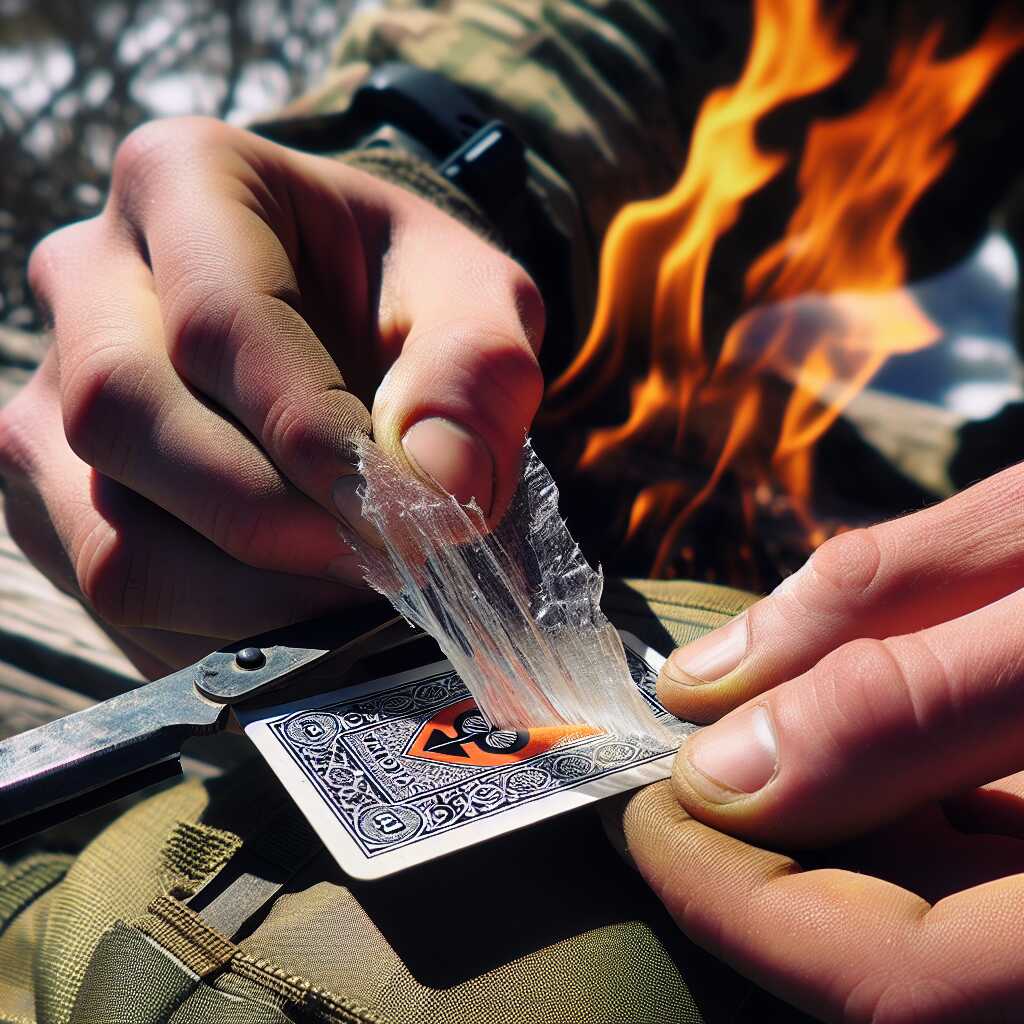
- Separate or expose the paper core by shaving (5-10 minutes): Using a sharp utility knife or a reliable pocketknife held at a low angle, carefully slice or shave the laminated edge to remove/abrade the plastic coating and expose the paper core. Make 10-30 thin shavings about 1-2 inches (2.5-5 cm) long and curled or feathered for maximum surface area. Result: Paper-rich shavings that catch a spark rather than solid plastic pieces.
- Create bundled tinder nests (1-3 minutes): Gather several shavings into small loose nests roughly 1-2 inches (2.5-5 cm) across; fluff to increase airflow. Result: A tinder bundle that concentrates flame and improves transfer to larger kindling.
- Prepare kindling and shelter (2-5 minutes): Arrange dry tinder, small twigs (1-3 mm diameter), and larger kindling; build a small sheltered area (lean-to or teepee) to protect the tinder from wind and light moisture. Result: Optimized conditions for the card shavings to ignite and transfer flame.
- Ignite safely (1-5 minutes): Ignite the shavings with a lighter, ferro rod, or spark; hold shelter until shavings sustain flame and light kindling. Expect a 40-70 chance to successfully ignite kindling under sheltered damp conditions when prepared properly; success is higher in dry conditions. Result: Shavings burn for approximately 30 seconds to 3 minutes depending on thickness, enough to light small kindling in most cases.
- Monitor and maintain (continuous): Once the kindling catches, add progressively larger fuel. Dont rely on the cards as primary long-term fuel they burn fast. Result: A stable flame transferred to larger wood.
- Safety and limitations check (1-2 minutes): Do not use prepared card shavings inside tents, vehicles, or enclosed shelters because burning plastic releases toxic fumes (e.g., volatile organic compounds). If the cards are fully soaked, they are unlikely to perform reliably. Result: You understand what cards can and cannot do: useful as short-duration, improvised tinder outdoors but not a replacement for long-burning or clean-burning fuel.
- Extinguish and dispose (2-3 minutes): Fully extinguish all remnants with water or by burying and stirring ashes until cool; dispose of melted coating residues and charred plastic pieces responsibly. Result: Reduced wildfire risk and safer campsite clean-up.
FAQ
What exactly are plastic coated playing cards and what are their layers
Plastic-coated playing cards are paper cards covered with a thin plastic film and sometimes a printed ink layer that provides durability, water resistance and shuffling performance. A typical card has three layers: a 0.25 mm to 0.35 mm paper core, a printed ink layer on both faces, and a 0.01 mm to 0.05 mm plastic laminate of polyester, polyethylene, or PVC that provides waterproofing and a smooth finish. Predicament Measures notes that these cards are designed for long life, low cost, and reliable play, and testing and reviews show the laminate enhances durability and moisture resistance.
How does each layer in plastic coated playing cards affect flammability and water resistance
The paper core ignites easily and provides the main combustible material while the plastic laminate repels water and slows direct wetting of the paper. The ink layer has little effect on ignition but can influence burn odor, and the laminate improves water resistance but can melt and emit fumes when burned.
How does separating plastic coated playing cards work step by step for tinder
Separating plastic-coated playing cards works by peeling or cutting the laminate away to expose the paper core that will ignite easily and provide tinder with an estimated 40 to 70 chance to light kindling under sheltered damp conditions when prepared properly. The process typically takes 5 to 15 minutes per card and yields about 10 to 30 thin shavings or feather sticks that burn 30 seconds to 3 minutes each depending on thickness. Field testing and experience show better results in dry conditions and the method provides a near-zero material cost when using old cards versus $3 to $10 for a commercial waterproof tinder kit.
What are the safest specific cutting and shaving steps to prepare card tinder in 5 to 15 minutes
Work on a steady cutting surface while wearing cut-resistant gloves and eye protection, score the edge with a utility knife and peel the laminate away from the paper core in strips, which typically takes 5 to 15 minutes per card and creates 10 to 30 thin shavings. Create feather sticks by shaving 0.5 mm to 1.5 mm curls along the edge, test a single shaving to verify ignition and store shavings in a waterproof container to enhance reliability and portability.
What are the main benefits of using plastic coated playing cards as emergency fire starters
Plastic-coated playing cards provide a lightweight, low-cost, and waterproof backup tinder option that is essentially free if using old or discarded cards and offers portability for backpackers and preppers. The laminate repels water so prepared shavings stay dry longer and the paper core ignites fast, which testing and reviews show can improve first-light success in damp conditions compared to untreated paper. The cards deliver a compact solution that helps enable emergency fire starting while offering a good balance of cost, weight and storage life.
How do waterproofing and portability compare to commercial tinder with measured examples
Compared to a commercial waterproof tinder puck that costs $3 to $10 and burns for several minutes, separated cards cost $0 to $1, yield shavings that burn 30 seconds to 3 minutes and weigh a few grams per card, which makes them very portable but shorter burning. Reviews and comparison testing show commercial products often burn longer and more reliably when wet, while card tinder offers excellent price-to-weight value and useful redundancy for 2025 gear lists.
What are the risks and limitations of using plastic coated playing cards for fire starting
Using plastic-coated playing cards for fire starting carries risks because the plastic laminate can melt and burning plastics can produce toxic fumes, and therefore this method is not safe for indoor use or confined spaces. The cards cannot replace long burning fuels like wax logs or commercial tinder bricks and will not perform reliably if fully soaked or when a sustained heat source is required. Users must accept limited burn time, variable success rates and the inability of cards to serve as a primary long-duration fuel source.
What toxic fumes and melting behaviors occur and how should you mitigate them
Burning plastic coatings can produce acrid smoke and chemicals such as hydrochloric acid gases or other volatile organics depending on the laminate type, and inhaling these fumes can be harmful so always burn outdoors and upwind. Mitigate risks by using small controlled burns, avoid melting onto skin or gear, stop use if smoke is heavy, keep a water source ready and choose open-air locations to ensure safety and reduce exposure to toxic emissions.
Who should consider using plastic coated playing cards for survival fire starting
Campers, hikers, preppers, outdoor educators and survival hobbyists should consider plastic-coated playing cards as a backup tinder option because they offer low cost, good portability and reasonable reliability when prepared correctly. The method suits users with basic gear such as a sharp knife or razor, a lighter or ferrocerium rod, and skills to shave feather sticks safely, and Predicament Measures recommends training and testing this technique in non-emergency settings to build experience and improve performance. This option helps enhance an emergency kit but is best used as a secondary tool alongside proven long-burning tinder and fuel.
What skill level equipment and situations make card tinder a practical backup option
Card tinder is practical for intermediate and experienced outdoor users who own a utility knife, ferro rod or lighter and know safe cutting techniques; novices should practice under supervision before relying on this method. Use card tinder in day hikes, lightweight backpacking, emergency kits and prepper caches where a quick, low-weight, waterproof backup tinder helps ensure fire-starting reliability.
When is the best time to use plastic coated playing cards as waterproof fire starters
The best time to use plastic-coated playing cards as improvised waterproof fire starters is when you face damp but not fully soaked conditions and you have small dry kindling available, because separated paper layers ignite easily and the plastic repels light moisture; estimated success under sheltered damp conditions is about 40 to 70 when prepared correctly. Preparation typically takes 5 to 15 minutes to separate layers and shave 10 to 30 thin ignition shavings that burn for 30 seconds to 3 minutes each, which helps with fast ignition of tinder and small kindling. Predicament Measures provides practical reviews and testing notes that help campers judge reliability, limits, and safe use in the field while ensuring users know this method cannot replace long-burning fuel or safe indoor fire use due to toxic fumes from burning plastic.
How do weather conditions and fuel availability change success rates and timing
Weather and fuel supply change success rates by altering how quickly shavings dry and how well embers transfer to larger fuel, with success rates falling toward the low end of 40 in windy wet conditions and rising above that range in dry sheltered conditions depending on kindling size. Availability of small dry twigs under 2 to 5 mm thick and dry bark increases speed and reliability, which improves time to flame from minutes to seconds when technique and materials are good. Users should test performance in controlled settings to learn handling, build confidence, and improve field results.
How much does using plastic coated playing cards cost compared to commercial alternatives
Using plastic-coated playing cards costs essentially $0 when you reuse old or discarded cards and provides a low-cost emergency option compared to commercial waterproof tinder kits priced about $3 to $10 per kit. Cost per use stays low because a single deck can yield multiple sets of shavings and last for many uses, which makes this option useful for budget-minded campers and preppers concerned with durability and efficiency. Reviews and comparison notes from Predicament Measures provide practical cost data, helping users weigh trade-offs between low cost, limited burn time, and safety compared to purchased products.
What are specific price examples for reused cards versus waterproof tinder kits and fuel tabs
Price examples include reused or discarded cards at $0 outlay, a typical inexpensive new deck often found for $2 to $6 in many stores, and waterproof tinder kits commonly sold for about $3 to $10 per kit depending on brand and size. Fuel tabs and small fuel tablets often come in packs that work out to $0.50 to $2.00 per tablet depending on pack size and brand, which offers longer burn times than single card shavings and more predictable performance. Buyers should compare data from product reviews and real-world testing to match cost, burn time, and safety needs for 2025 outdoor gear planning.
What materials and tools are needed to prepare plastic coated playing cards for fire starting
Materials and tools needed include a deck of plastic-coated playing cards, a sharp utility knife or small folding blade, a rigid flat surface for peeling, a small striker or lighter, and a waterproof zip bag for storage; preparation time is typically 5 to 15 minutes. A simple metal nail file or utility blade helps produce 10 to 30 thin shavings that catch sparks or flame quickly and provide reliable ignition for small kindling. Predicament Measures reviews list these items as essential for safe field assembly and testing, which helps users enhance efficiency and quality of results.
What exact knives adhesives and storage methods work best and how long do they take to assemble
Exact tools that work best include a sharp utility knife or small folding knife with a 2 to 4 cm cutting edge and a hard scrap plate for leverage, and these tools let a user separate layers and make usable shavings in about 5 to 15 minutes. Avoid adhesives that melt or give off strong fumes; store finished shavings in a small waterproof zip-top bag or a metal tin with a desiccant to improve durability and keep usable tinder for months. Experience and simple testing improve assembly speed and reliability, which helps users learn safe handling and efficient packing for trips.
What are the best alternatives to plastic coated playing cards for waterproof fire starting
The best alternatives include waxed cotton tinder, char cloth, commercial tinder cubes, and petroleum-jelly cotton balls, because these options deliver longer, cleaner burn times and better reliability under wet conditions compared to card shavings. Commercial tinder cubes and fuel tablets provide consistent performance and predictable burn times, which makes them useful for planned trips and survival kits where safety and efficiency matter. Product reviews and testing data by experts and field users provide clear comparisons that help outdoor educators, scouts, and preppers choose the best mix of items for reliability and durability.
How do alternatives like waxed cotton char cloth and commercial tinder cubes compare in burn time and safety
Waxed cotton and commercial tinder cubes typically offer longer continuous flame or ember life than individual card shavings, with burn duration and stability that depend on size and composition and vary widely by product. Char cloth creates embers for tinder bundles and does not flame in the same way as waxed items, which makes it safer for controlled ember building but requires skill to use; commercial cubes deliver straightforward flames and predictable performance. Users should review burn-time data and safety guidance when comparing options to ensure the chosen material matches their skill level and trip profile.
What common mistakes should be avoided when using plastic coated playing cards as fire starters
Common mistakes include trying to use whole cards instead of thin shavings, using cards that are fully soaked, and attempting indoor burns, which increase failure and expose people to toxic smoke and melting plastic. Users must not treat card shavings as long-burning fuel because shavings burn quickly for 30 seconds to 3 minutes and cannot replace solid fuel like wood or fuel tablets. Predicament Measures offers practical tips and reviews from field testing that help avoid these errors and improve success and safety.
How do alternatives like waxed cotton char cloth and commercial tinder cubes compare in burn time and safety
Compared to card shavings, waxed cotton and commercial tinder cubes usually provide more sustained flame time and cleaner combustion, which improves safety when used outdoors with proper ventilation. Char cloth produces glowing embers that help start a tinder bundle without producing the same plastic fumes, which reduces toxic exposure risk when used correctly. Testing and user reviews help show which option is best for each scenario based on burn time, ease of use, and safety.
Safety tips for handling and burning plastic coated playing cards
Handle and burn plastic-coated playing cards with care by working outdoors in open air, keeping 2 to 3 meters from people and gear, and using thin shavings rather than large melted pieces, because burning plastic can emit toxic fumes and melted coating can smother flames. Wear gloves to avoid cuts while separating layers, use a wind shelter to protect small flames, and have water or sand on hand to extinguish smoldering plastic residue quickly. Predicament Measures recommends practical field tests and routine reviews of handling technique to improve safety, reduce toxic exposure, and enhance reliability.
What handling and burning mistakes increase risk of failure or toxic exposure and how to avoid them
Handling errors that increase risk include burning large chunks that melt and drip, inhaling smoke at close range, and trying to light fully soaked cards, which raises toxic exposure and lowers success rates. Avoid these mistakes by shaving thin strips of the paper core, lighting shavings on a dry tinder pile, keeping clear downwind position, and performing a short test burn to confirm performance before relying on cards as the main starter. Regular testing, simple protective gear, and carrying proven alternatives improve confidence and results in real-world situations.
Related posts:
 Unwaxed Dental Floss: High-Strength Fishing Line Alternative for Wilderness Food Procurement
 Petroleum Jelly Cotton Balls: Five-Minute Burn Time Fire Starters for Damp Conditions
 Elastic Hair Ties: Cordage Bundle Organizers for Tangle-Free Emergency Kits
 Plastic Cling Wrap: Burn Wound Covering to Prevent Infection and Fluid Loss
 Cornstarch: Moisture Absorption Powder for Preventing Trench Foot
Sterile Tampons: Deep Puncture Wound Packing for Hemorrhage Control
Cornstarch: Moisture Absorption Powder for Preventing Trench Foot
Sterile Tampons: Deep Puncture Wound Packing for Hemorrhage Control
 Wooden Pencils: Arrow Shaft Material for Improvised Hunting Weapons
 Index Cards: Water-Resistant Information Cards for Survival Instructions