How To – Petroleum Jelly Cotton Balls: Five-Minute Burn Time Fire Starters for Damp Conditions
By Predicament Measures
Quick Answer: Can petroleum jelly cotton balls be used as reliable five minute fire starters in damp conditions
Yes petroleum jelly cotton balls can be used as five minute fire starters in damp conditions because petroleum jelly is hydrophobic and feeds a slow hot burn on cotton allowing ignition of tinder even when materials are damp
- Effectiveness: average burn time 3-5 minutes per prepared ball typically enough to ignite small kindling and tinder
- Cost: approximately $0.03 to $0.10 per prepared ball using common cotton balls and petroleum jelly versus commercial fire starters that cost about $0.50 to $2.00 each
- Time: prep time about 1 to 2 minutes per ball or 10 minutes for a 10-ball batch; burn time about 3-5 minutes per ball
- Limitation: cannot sustain a large campfire alone; will not burn if completely waterlogged; unsafe in enclosed spaces and produces an open flame and hot embers
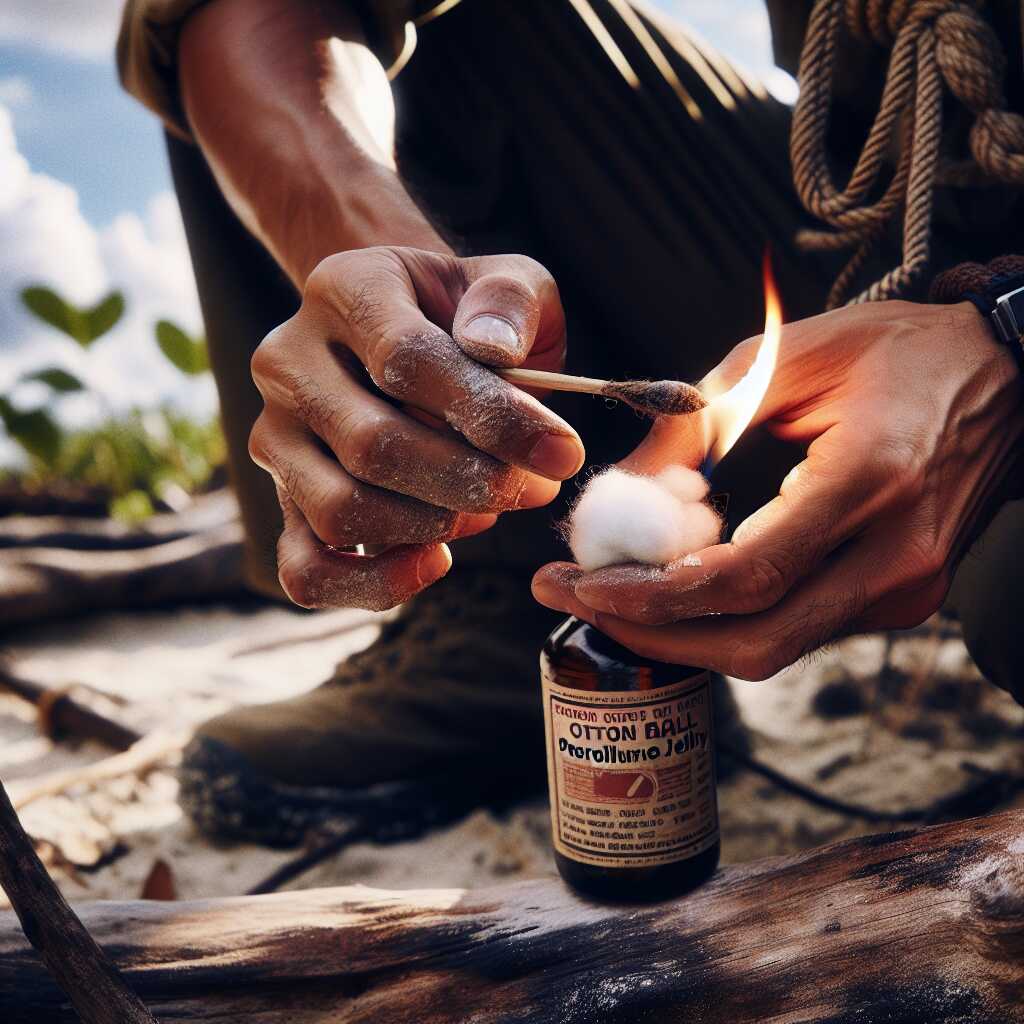
Petroleum jelly cotton balls are cotton fibers saturated with petroleum jelly to create small, hydrophobic tinder that ignites easily and burns slowly. This $0.03-$0.10-per-ball solution provides an inexpensive, low-bulk ignition aid compared to commercial fire starters at about $0.50-$2.00 each.
The process works through three key relationships: petroleum jelly coats cotton resulting in water resistance and an average burn time of 3-5 minutes per ball, cotton fibers wick the petroleum jelly enabling a sustained flame that can ignite small kindling and tinder, and preparing small batches (for example, ten balls) provides multiple ignition attempts, creating about 30-50 minutes of total burn time across the batch.
How to Make and Use Petroleum Jelly Cotton Balls Step by Step
- Gather materials (2-5 minutes): Obtain standard cotton balls (10 cotton balls $0.10-$0.50), a small tub of petroleum jelly (e.g., 1 oz/28 g jar $1-$3), a small waterproof container or zip-top bag, and a lighter/matches/ferro rod. Result: All supplies ready; estimated material cost $0.03-$0.10 per prepared ball.
- Prepare a dry workspace (1 minute): Work indoors or under shelter to keep materials dry. Use gloves or tweezers to avoid contaminating packs. Result: Clean, dry handling reduces contamination and makes preparation faster.
- Apply petroleum jelly to each cotton ball (1-2 minutes per ball): Using a pea-sized amount of petroleum jelly (approximately 0.3-0.6 g per ball), press and knead the jelly into the cotton until fibers are saturated and the ball looks glossy but not dripping. For a 10-ball batch expect 3-6 g total jelly; total prep 10-15 minutes. Result: Each prepared ball will burn on average 3-5 minutes when lit.
- Optional create a wick tail (10-20 seconds per ball): Pull a few outer fibers into a small tail (about 1-2 cm) to give a place to ignite and to increase air access. Result: Easier and faster ignition, especially with a match or ferro rod.
- Store in waterproof container (30 seconds): Place prepared balls in a small screw-top tin, film canister, or zip-top bag with a small desiccant packet if available. Label with date. Result: Ready-to-use, compact tinder that stays serviceable for months to years if kept dry and sealed.
- Use to start a fire in damp conditions (30 seconds-2 minutes to get flame): Nest the petroleum-jelly cotton ball under a loose pyramid of small, dry or damp-resistant kindling (thin dry sticks, bark shavings, or prepared feather sticks). Light the wick or outer fibers with a match, lighter, or spark from a ferro rod. Allow the balls flame (3-5 minutes) to ignite the surrounding tinder and progressively larger sticks. Result: Reliable ignition of kindling even when surrounding materials are damp; typically enough time to get a fire established if proper tinder and kindling are staged.
- Extinguish and pack out safely (1-2 minutes): When finished, douse flame and embers thoroughly with water and stir to ensure cool-to-the-touch. Do not bury hot embers. Result: Safe campsite and no smoldering hazards.
- Limitations and failure modes (instant to noted): If a prepared ball is completely submerged and saturated with water, it may not ignite; prepared balls do not replace a large fuel supply and will not sustain a full-size campfire alone; avoid using indoors or in tents due to open flame and soot. Result: Know when to bring larger fuel or additional igniters; use only in well-ventilated outdoor areas.
FAQ
What are petroleum jelly cotton balls and how to make them
Petroleum jelly cotton balls are cotton balls coated with petroleum jelly that provide long-burning tinder you can make in about 1 to 2 minutes per ball using household items. To make them you need 100 cotton balls, a small jar of petroleum jelly (for example Vaseline or a generic brand), and a clean surface; coat each cotton ball with a pea-sized amount of jelly (about 0.5 to 1 gram or roughly 1/8 teaspoon) and store finished balls in a waterproof container. Predicament Measures provides step-by-step guidance and field testing notes that show low cost of about $0.03 to $0.10 per prepared ball and an average burn time of 3-5 minutes per ball when used correctly.
What cotton types petroleum jelly brands and measurements work best
Use 100 cotton balls or rolled cotton that contain no additives and select petroleum jelly such as Vaseline or a plain store-brand petroleum jelly for consistent results. Apply about 0.5 to 1 gram of petroleum jelly per ball, or a pea-sized dab equal to about 1/8 teaspoon, which produces the average 3-5 minute burn time and a per-ball cost near $0.03 to $0.10. Practice a small test batch and review performance to confirm reliability in your gear list for 2025 and compare results to commercial starters that cost $0.50 to $2.00 each.
How do petroleum jelly cotton balls light a fire step by step
Petroleum jelly cotton balls light a fire by igniting the cotton fibers while the jelly feeds a slow, hot flame that can sustain heat for about 3-5 minutes to light kindling. First pull the coated cotton apart slightly to expose fibers, place it under small dry kindling or a dry tinder nest, then apply a spark or flame directly to the exposed fiber until a sustained ember or flame forms. Field experience and user reviews show that correct placement and a small fuel platform improve success and that testing in damp conditions often enables ignition when dry tinder is nearby.
What ignition methods work best with petroleum jelly cotton balls
Ferrocerium rods and torch lighters provide the most reliable ignition in damp conditions because they deliver hot sparks or a focused flame that lights the exposed fibers quickly. Waterproof matches, strike-anywhere matches, and standard lighters also work and usually light the ball within a few seconds when the fibers are exposed and wind is managed. Reviews and testing recommend practicing with a ferro rod and a butane torch lighter for the best field performance and to enhance your confidence and skill.
What are the main benefits of using petroleum jelly cotton balls
Petroleum jelly cotton balls provide a low-cost, lightweight, and hydrophobic tinder that often burns for 3-5 minutes, enabling ignition of small kindling and tinder in damp conditions. The preparation time is about 1-2 minutes per ball or roughly 10 minutes for a 10-ball batch, which offers a cost advantage of about $0.03 to $0.10 per ball compared with $0.50 to $2.00 for some commercial fire starters. Comparison testing, user reviews, and practical experience show that these balls enhance reliability in emergency kits and backpacking gear while remaining easy to store and carry in waterproof containers.
How long do petroleum jelly cotton balls burn and produce flame
Average burn time for a correctly prepared petroleum jelly cotton ball is about 3-5 minutes per ball, which typically provides enough heat to ignite small sticks and tinder. Burn time depends on the amount of petroleum jelly, how much the cotton is fluffed, wind exposure, and whether the ball is partially wet, and the product cannot sustain a large campfire on its own. Testing and user reviews show that combining one or two burning balls with a proper tinder nest increases success and improves overall firecraft efficiency.
What are the risks and limitations of petroleum jelly cotton balls
Petroleum jelly cotton balls carry risks and limitations including open flame, hot embers, and the fact that they will not burn if completely waterlogged or used inside an enclosed space. They cannot sustain a large campfire alone and they can cause burns or melt onto surfaces if not handled carefully during ignition and disposal. Safety data and experience advise that users recognize that the product emits an open flame and must be used with standard fire safety measures and local fire regulations.
What fire safety precautions should you take when using them
Clear a 1.5 to 2 meter area of flammable debris, build the fire on rock or bare soil, keep a bucket of water or a fire extinguisher nearby, and never light petroleum jelly cotton balls inside tents or enclosed shelters. Store prepared balls in a sealed, waterproof container away from children and heat, supervise all use, extinguish embers fully with water until cool to the touch, and review local fire restrictions before use. Predicament Measures recommends training and controlled testing to ensure reliable, safe use and to improve your field performance and safety skills.
Who should consider using petroleum jelly cotton balls for emergencies
Campers, hikers, survivalists, preppers, backpackers, scouts, outdoor educators, and emergency responders should consider petroleum jelly cotton balls as an inexpensive, lightweight emergency tinder option. They provide a reliable, tested way to increase chances of fire in damp conditions when paired with basic firecraft skills and carry space for 10 to 20 balls fits most emergency kits at low cost. Predicament Measures includes this method in its practical gear reviews and recommends including a small supply in 72-hour kits and daypacks for enhanced readiness.
What skills or training help you use them safely and effectively
Basic firecraft training, practice with a ferrocerium rod and a lighter, and skills in building a tinder nest and a small tepee or platform help you use petroleum jelly cotton balls safely and effectively. Regular testing in safe conditions, review of local fire rules, and experience starting a small cooking or warming fire with one or two balls improve reliability and confidence. Expert review and hands-on practice deliver the best results and help ensure you can handle damp conditions and enhance your field performance.
When is the best time to use petroleum jelly cotton balls outdoors
The best time to use petroleum jelly cotton balls is when you need a reliable slow burn tinder in damp or windy conditions to ignite small kindling and tinder in 2025 and beyond. Petroleum jelly cotton balls provide a hydrophobic coating that helps them resist light moisture and burn about 3-5 minutes per ball, which helps start small fires when dry tinder is scarce. Predicament Measures recommends using them for emergency fires, damp-ground mornings, or windy breaks because they are easy to carry, tested in field use, and improve chances of ignition when lighter fluid or paper fails.
What weather wind and fuel conditions make them most useful
Petroleum jelly cotton balls work best in light rain, high humidity, or after dew when surrounding tinder is damp but not fully waterlogged. Each prepared ball burns about 3-5 minutes and can light small sticks 1-3 cm in diameter and dry tinder when wind is below 20 km/h and larger fuel is nearby. They are not effective if cotton balls are completely waterlogged or when users expect them to sustain a large campfire without added kindling.
How much do petroleum jelly cotton balls cost compared to alternatives
Petroleum jelly cotton balls cost about $0.03 to $0.10 per prepared ball using common cotton balls and petroleum jelly versus commercial fire starters that cost about $0.50 to $2.00 each. A 454 g jar of petroleum jelly and a 200-count bag of cotton balls will make roughly 150-400 prepared balls depending on coating thickness, which keeps material cost low and practical for tested emergency kits. Predicament Measures notes that initial prep time runs about 1-2 minutes per ball and that this low cost improves reliability for budget-conscious campers and preppers.
What are the per unit material costs and storage shelf life in months
Per unit material costs typically range $0.03-$0.10 per ball using store-brand cotton and petroleum jelly, with commercial alternatives at $0.50-$2.00 per unit for similar size and burn time. Shelf life depends on storage but many users and manufacturers report stable performance when sealed dry in airtight containers for an estimated 12-60 months; testing a sample every 12 months helps ensure reliability. Keep records of preparation date in your kit so reviews and testing can track performance over time.
What materials and tools do you need to make petroleum jelly cotton balls
You need cotton balls, petroleum jelly (about 5-10 g per ball for a 3-5 minute burn), a small spoon or tweezers, and a clean work surface to make reliable petroleum jelly cotton balls. Expect 1-2 minutes prep time per ball or about 10 minutes to prepare a 10-ball batch; tactile testing and simple field tests help ensure consistent burn times and reliability. Predicament Measures advises wearing gloves and working on a non-stick surface to keep kits clean and to enhance long-term storage performance.
What safe optional containers and packaging are best for carrying them
Safe containers include small waterproof plastic tubes, 35 mm film canisters, metal mint tins, and sealed zip-lock bags to protect petroleum jelly cotton balls from dirt and moisture. Store 5-20 balls per container so you can access one without exposing the rest, which helps maintain tested reliability and durability in packs. Mark containers with dates and simple use instructions so users, scouts, or first responders can review age and test results before field use.
What are the best alternatives to petroleum jelly cotton ball fire starters
Good alternatives include wax-coated sawdust fire starters, fatwood pieces, dryer lint mixed with wax, and commercial paraffin or wax tablets that deliver varying burn times and weather resistance. Wax-based commercial starters commonly cost $0.50-$2.00 each and often burn 5-15 minutes depending on size, fatwood pieces can burn 3-10 minutes per piece, and ferrocerium rods provide sparks rather than sustained flame and require dry tinder to finish ignition. Predicament Measures recommends comparing burn time, cost, and weather resistance during testing to choose the best option for your kit and environment.
What are tradeoffs in burn time cost and weather resistance for each option
Tradeoffs include that wax tablets usually offer longer burn times but higher cost per unit, fatwood is low-cost with variable burn time and better natural resin resistance to light moisture, and ferro rods provide near-unlimited spark supply but no sustained flame. Petroleum jelly cotton balls are low cost $0.03-$0.10 per ball, fast to prepare, and effective in damp conditions for 3-5 minutes but cannot replace large fuel and will not light if totally waterlogged. Carefully review product specs, perform simple field testing, and keep a mix of options to enhance overall reliability and performance.
What common mistakes should be avoided when using petroleum jelly cotton balls
Do not assume petroleum jelly cotton balls will start a large campfire on their own because each ball burns about 3-5 minutes and is designed to ignite kindling rather than sustain large logs. Do not use them inside tents, vehicles, or enclosed spaces because they produce open flame and hot embers that create fire and inhalation hazards. Predicament Measures suggests practiced ignition technique, staged kindling placement, and small test burns before relying on them in emergencies.
What maintenance storage and disposal practices prevent hazards and failures
Store petroleum jelly cotton balls in airtight, waterproof containers away from heat and direct sunlight to keep them usable for an estimated 12-60 months and to maintain proven reliability. Replace or test a sample every 12 months, dispose of contaminated or waterlogged balls by cooling and sealing them before throwing them away, and never discard hot or smoldering material in regular trash. Predicament Measures includes clear labeling, safe transport in a dedicated pocket, and routine kit reviews to enhance safety and performance.
Related posts:
 Unwaxed Dental Floss: High-Strength Fishing Line Alternative for Wilderness Food Procurement
 Mesh Produce Bags: Small Fish and Minnow Trap for Stream Protein Gathering
 550 Paracord Shoelaces: Hidden Survival Rope for Emergency Rappelling Situations
 White Cotton T-Shirts: Char Cloth Creation for Flint and Steel Fire Starting
 Used Coffee Grounds: Human Scent Masking for Wildlife Avoidance in Bear Country
 Maxi Pads: Large Absorbent Bandages for Major Trauma Wound Coverage
 Rubber Erasers: Emergency Ear Protection Against Dangerous Noise Levels
 Acrylic Yarn: Emergency Wound Sutures for Gaping Lacerations