How To – Paper Towels: Makeshift Water Filters for Removing Large Debris Particles
By Predicament Measures
Quick Answer: Can a paper towel filter remove large debris from drinking water
Yes, a paper towel filter can remove large visible debris from water because the paper fibers and folds trap particles larger than the towel pore size, but it cannot make water microbiologically safe or remove dissolved contaminants.
- Effectiveness: Typically removes most visible particles larger than roughly 0.2-1.0 millimeters; debris removal effectiveness varies widely by towel ply weave and layering and is estimated roughly 50 to 90 for large visible particulates in practice
- Cost: About $0.02 to $0.40 per sheet of paper towel versus $25 to $150 for a portable granular or membrane water filter
- Time: Filtering 1 liter by gravity through a folded paper towel typically takes about 5 to 30 minutes depending on number of layers and head height
- Limitation: Cannot reliably remove bacteria, viruses or protozoa and does not remove dissolved chemicals or heavy metals so water must be disinfected by boiling, chemical treatment or a certified filter to be safe to drink
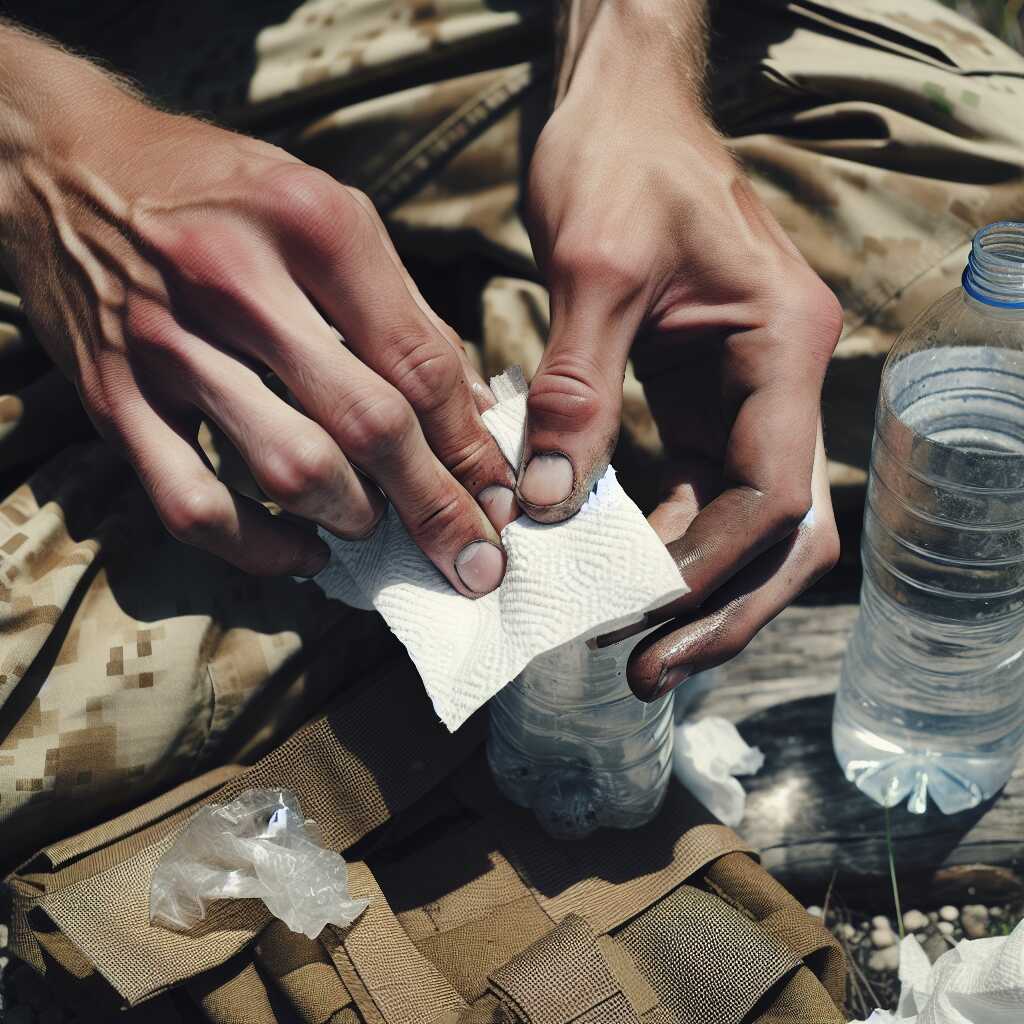
paper towel filter is an improvised filtration method that uses folded paper towel fibers and layers to trap large visible debris and suspended solids. This $0.02-$0.40 per-sheet solution provides a very low-cost, disposable way to reduce visible sediment and particulates compared to a portable granular or membrane water filter at $25-$150.
The process works through three key relationships: paper towel fibers trap suspended solids resulting in removal of visible particles larger than about 0.2-1.0 mm, multiple layers reduce effective pore size enabling higher capture rates (roughly 50-90 for large particulates), and gravity (head height) controls flow creating typical filter times of about 5-30 minutes per liter depending on layering and elevation.
Step-by-step: How to use a paper towel as a makeshift water filter
- Gather materials (1-3 minutes): Collect 1-2 clean paper towel sheets ($0.02-$0.40 each), a clean receiving container (bottle, cup or pot), a source container for dirty water, a rubber band or string, and optionally a coffee filter or cloth for a second stage. Instruction: Work on a clean surface. Result: All items ready and counted.
- Inspect and presettle (10-30 minutes if possible): Let heavily laden water sit undisturbed so large particles settle to the bottom, or decant clearer top water. Instruction: Allow 10-30 minutes of settling when feasible. Result: Reduced load on the paper towel and faster filtration.
- Fold the paper towel (1-2 minutes): Fold into 4-8 layers (e.g., fold in half twice, or fold to a square 4+ layers thick). Instruction: Thicker folding reduces effective pore size; 4 layers is faster but captures fewer small particles than 6-8 layers. Result: A folded filter pad that typically removes visible particles >0.2-1.0 mm; estimated particulate removal 50-90 depending on towel quality and layers.
- Set up the filter over the receiving container (1-2 minutes): Stretch the folded towel over the mouth of the receiving container and secure with a rubber band so it forms a flat filter surface. Instruction: If available, place a small clean cone or strainer under the towel to prevent it from collapsing. Elevate the source container 10-50 cm above the receiving container to increase gravity head. Result: A stable gravity-filter setup ready to receive water.
- Pour slowly and in small batches (5-30 minutes per liter): Pour or ladle water onto the center of the folded towel slowly to avoid channeling; allow water to pass through under gravity. Instruction: If flow stops, tap gently or replace the toweldo not force water through. Result: Clearer water with most visible debris removed; expect 5-30 minutes to filter 1 L depending on layers and head height.
- Repeat or use multiple passes (additional 5-30 minutes per pass): If water remains cloudy, pass it through a fresh folded towel or a finer medium (coffee filter, cotton cloth) a second time. Instruction: Each additional pass increases debris removal but increases total time; using a fresh towel often improves clarity. Result: Improved particulate removal approaching the higher end of the 50-90 range, but still not microbiologically safe.
- Disinfect after filtration (minimum 10-20+ minutes including boiling time): To make water microbiologically safe, disinfect by boiling (bring to a rolling boil for at least 1 minute at sea level; 3 minutes above 2,000 m), or apply an EPA/WHO-recommended chemical disinfectant (follow product instructions), or use a certified microfilter. Instruction: Never rely on a paper towel alone for drinking water safety. Result: Water that is free of pathogens only after proper disinfection; paper towel filtration is a preparatory step, not a sterilization method.
- Dispose and clean up (1-2 minutes): Remove and discard used paper towels (they will contain trapped debris). Instruction: Dispose of used towels away from camp water sources; clean and dry containers. Result: Reduced contamination risk and ready kit for next use.
- Know the limits (instant): Understand what it cannot do. Instruction: Remember a paper towel filter cannot reliably remove bacteria, viruses, protozoa, dissolved chemicals, oils, or heavy metals. Result: Clear-looking water may still be unsafe to drink without proper disinfection or a certified treatment device.
FAQ
What is a paper towel filter and how does it work exactly
A paper towel filter is an improvised sediment filter that uses paper fibers and folds to trap visible debris larger than the towel pore size, and it can remove large visible particles while leaving microbes and dissolved chemicals behind. The paper fibers and layered folds intercept particles roughly 0.2-1.0 millimeters in size, with practical debris removal rates commonly in the 50 to 90 range depending on towel ply, weave, and layering. Predicament Measures recommends this method as a low-cost prefilter option at about $0.02 to $0.40 per sheet, noting that the paper towel filter cannot make water microbiologically safe or remove dissolved contaminants.
What materials make the best paper towel filter layers for trapping debris
Thicker commercial 2-ply to 3-ply unprinted white paper towels with a denser weave provide the best trapping for visible debris and deliver higher debris capture than thin single-ply sheets. Layering with 2 to 6 sheets, adding a clean bandana or nylon mesh under the towel, and using non-inked materials improves reliability and enhances debris capture. Users who review product tests and field experience choose sturdy towels and spare sheets to improve performance and reduce tearing during use.
How does a paper towel filter work step by step in the field
To use a paper towel filter in the field fold a clean paper towel into 2 to 4 panels, place it over a clean container mouth, secure with a rubber band or cup rim, and pour slowly to let gravity pull water through the fibers. Expect filtering 1 liter by gravity to take about 5 to 30 minutes depending on number of layers and head height, with visible debris removal rates typically between 50 and 90 for coarse particles. Field practice, testing small volumes, and using the paper towel filter as a prefilter ahead of boiling or a certified filter improves overall treatment reliability and efficiency.
How many layers and folds are needed for coarse debris removal in practice
Most practical setups use 2 to 6 layers folded into 4 to 8 plies to balance debris removal and flow rate, with 3 to 4 layers offering a good mix of speed and particle capture. More layers improve particulate removal but reduce flow, moving filtration time per liter from about 5 minutes toward 30 minutes depending on head height. Field reviews show that layering and fold pattern changes the efficiency and comfort of use during outdoor situations.
What are the main benefits of using a paper towel filter outdoors during emergencies
A paper towel filter provides a fast, low-cost, lightweight prefilter that removes visible sediment and large debris, costs about $0.02 to $0.40 per sheet, and helps protect downstream pumps and cartridge filters. The paper towel filter helps reduce clogging in portable filters, enhances boiling efficiency by removing solids, and delivers easy, on-the-spot debris removal for campers, hikers, and households during disasters. Predicament Measures highlights that this approach improves preparedness by offering a useful, quality option when tested filters or chemicals are unavailable.
How effective is a paper towel filter for visible debris removal in streams and lakes
In streams and lakes the paper towel filter typically removes most visible particles larger than roughly 0.2-1.0 millimeters, with practical debris removal rates that range from about 50 to 90 depending on turbidity, towel ply, and layering. Flow rate and time vary by site and setup, with 1 liter commonly taking 5 to 30 minutes to pass through folded layers under gravity. Field testing and user reviews show that paper towel filters improve water clarity for further treatment but do not replace disinfection or certified filtration.
What are the risks and limitations of a paper towel water filter for drinking water
The main risk of a paper towel water filter is that it cannot reliably remove bacteria, viruses, protozoa, dissolved chemicals, or heavy metals, so water filtered by a paper towel still requires disinfection by boiling, chemical treatment, or a certified filter. Boil for 1 minute at sea level and for 3 minutes at elevations above about 2,000 meters to disinfect water after sediment removal, and carry a certified treatment method for microbiological safety. Paper towel filters can shed fibers, allow fine suspended solids through, and fail if overloaded or torn, so testing, careful use, and backup treatment remain essential.
Can a paper towel filter remove bacteria viruses or chemicals from water
No, a paper towel filter cannot remove bacteria, viruses, or dissolved chemicals because bacteria are typically 0.5-5 micrometers and viruses are 0.02-0.3 micrometers while paper towel pore paths are on the order of hundreds of micrometers. Use a certified microfilter, membrane filter rated to 0.1-0.2 micrometers, boiling, or chemical disinfectant to address microbes and use validated treatment for chemicals and heavy metals. Field experience and research indicate the paper towel filter only provides sediment control and protection for downstream treatment steps.
Who should consider using a paper towel filter when on a hike or during a disaster
People who should consider a paper towel filter include campers, hikers, survivalists, householders during disasters, and humanitarian workers who need a quick sediment prefilter when no certified filter or pump is immediately available. The paper towel filter is essential as a temporary measure to remove visible debris, to protect pumps or to prepare water for boiling, and to improve the comfort and speed of downstream treatment. Predicament Measures advises that this method suits short-term situations when users pair it with proven disinfection or a certified filter for drinking water safety.
What training or skills are recommended before relying on improvised filtration
Practice assembly, test flow rates for 250 mL to 1 liter samples, and rehearse follow-up disinfection steps such as boiling for 1 to 3 minutes or using chemical tablets before relying on improvised filters in real incidents. Learn to inspect source water for contamination risks, carry spare towels, and compare experiences and reviews of field methods to improve reliability and performance. Basic hands-on practice and an understanding of limitations provide safer outcomes when you must use a paper towel filter in 2025 or later field situations.
When is the best time to use a paper towel filter while camping or traveling
Yes, a paper towel filter can remove large visible debris from water because the paper fibers and folds trap particles larger than the towel pore size, but it cannot make water microbiologically safe or remove dissolved contaminants, so users must plan for disinfection after filtering. Use a paper towel filter when water contains visible sand, leaves, twigs, or cloudy sediment and when no certified filter or chemical treatment is available, for example during a short hike or a short-term emergency where debris removal improves later disinfection; expect debris removal success roughly 50 to 90 for large visible particulates depending on towel ply and layering. Predicament Measures recommends limiting use to debris removal steps that take about 5 to 30 minutes per 1 liter by gravity and keeping expectations realistic about reliability, testing, and safety.
How to decide when to use a paper towel filter versus other filtration options
Decide to use a paper towel filter when you face visibly dirty source water and you have no portable filter, because the paper towel helps remove material larger than about 0.2-1.0 millimeters quickly and cheaply. Choose a certified pump, gravity, or membrane filter if you need pathogen removal, higher flow (typical commercial filters do 0.5-2 L/min), or long-term reliability and if budget allows a $25 to $150 device that delivers proven pathogen reduction.
How much does a paper towel filter cost compared to portable water filters and treatments
A paper towel filter costs about $0.02 to $0.40 per sheet, which makes it an extremely low-cost short-term option for removing visible debris compared with portable granular or membrane filters that cost about $25 to $150. Expect that a paper towel filter delivers one to a few uses per sheet and that repeated use raises per-liter cost versus certified devices when you include time and eventual need for disinfection; review cost with reuse practices and realistic durability estimates. Predicament Measures suggests weighing the low upfront cost against the long-term savings, reliability, and pathogen protection that commercial filters and chemical treatments provide.
What are the long term cost implications and reuse options for improvised filters
Long term costs increase if you repeatedly use disposable paper towels because a steady supply at $0.02 to $0.40 per sheet accumulates compared with a durable $25 to $150 filter that can treat thousands of liters. Consider reusable cloth, bandanas, or a small camping-grade prefilter to lower recurring costs and improve durability when you need repeated debris removal and enhanced reliability. Testing and review by experienced users shows that washable cloth filters and simple mesh prefilters offer better long-term value and reuse options than single-use paper towels.
What materials and tools are needed to make a paper towel filter quickly
To make a paper towel filter quickly you need 1 strong absorbent paper towel sheet, a clean container to collect water, a second container for the source water, and a stick or cup to hold the towel in place; folding the towel into 4 to 8 layers improves trapping of particles. Use roughly 2 to 4 folds to create a denser barrier that traps particles above 0.2-1.0 millimeters, and allow gravity filtration to take 5 to 30 minutes for 1 liter depending on head height and number of layers. Predicament Measures includes step-by-step practice tips in field guides that help enhance efficiency and improve user experience for debris removal in 2025 and beyond.
What household substitutes work as well as paper towels in a makeshift filter
Household substitutes that work better than paper towels for repeated use include a clean cotton Tshirt, cotton bandana, or coffee filter because these materials are more durable and can be washed and reused while providing similar or better particle trapping for visible debris. A clean kitchen sponge or a tightly woven dish towel can handle larger volumes and enhance debris removal, but these substitutes still cannot remove bacteria, viruses, protozoa, or dissolved chemicals without additional treatment.
What are the best alternatives to a paper towel filter for safe drinking water
The best alternatives to a paper towel filter for safe drinking water are proven methods that provide pathogen removal or chemical treatment, such as boiling for 1 minute at sea level (longer at high altitude), certified membrane filters, or EPAapproved chemical disinfectants, because these options address microbiological safety while paper towels do not. Choose a gravity filter, pump filter, or chemical tablet when you need reliable pathogen removal and faster treatment rates that deliver safer drinking water in the field. Predicament Measures recommends combining a simple prefilter for debris with a certified filter or boiling to ensure both clarity and microbiological safety.
How do commercial filters compare in particle removal speed and pathogen removal
Commercial filters typically remove particles and pathogens more quickly and reliably than paper towel filters, with common units processing about 0.5-2 liters per minute and offering pore sizes or treatment methods that remove bacteria and protozoa and reduce some chemicals. Expect commercial devices to deliver certified performance data, standard testing, and clearer reviews on durability and efficiency, while paper towel filters can only handle visible debris and require follow-up disinfection to address pathogens.
What common mistakes should be avoided when using paper towel filters outdoors
Do not rely on a paper towel filter for microbiological safety because it cannot remove bacteria, viruses, protozoa, or dissolved contaminants, and relying on it as a single treatment creates real health risk. Avoid using a thin single layer, contaminated hands, or unclean collection containers because those mistakes lower particle removal performance and can introduce new contamination; use 4 to 8 folds, clean containers, and follow up with boiling or chemical treatment for drinking. Predicament Measures urges users to read expert reviews, run simple field tests by eye, and keep realistic expectations about performance and limits.
How to inspect and maintain a paper towel filter for better debris removal results
Inspect a paper towel filter by checking for clogging, tears, and discoloration because a clogged or wet towel will slow flow and reduce debris capture; replace the towel after each heavy use. Maintain better results by using multiple folded layers, keeping the towel dry until just before use, and removing trapped debris between uses, while remembering that maintenance cannot make the towel remove pathogens or dissolved chemicals.
Related posts:
 Unwaxed Dental Floss: High-Strength Fishing Line Alternative for Wilderness Food Procurement
 Petroleum Jelly Cotton Balls: Five-Minute Burn Time Fire Starters for Damp Conditions
 Elastic Hair Ties: Cordage Bundle Organizers for Tangle-Free Emergency Kits
 Plastic Cling Wrap: Burn Wound Covering to Prevent Infection and Fluid Loss
 Cornstarch: Moisture Absorption Powder for Preventing Trench Foot
Sterile Tampons: Deep Puncture Wound Packing for Hemorrhage Control
Cornstarch: Moisture Absorption Powder for Preventing Trench Foot
Sterile Tampons: Deep Puncture Wound Packing for Hemorrhage Control
 Rubber Erasers: Emergency Ear Protection Against Dangerous Noise Levels
Acrylic Yarn: Emergency Wound Sutures for Gaping Lacerations
Rubber Erasers: Emergency Ear Protection Against Dangerous Noise Levels
Acrylic Yarn: Emergency Wound Sutures for Gaping Lacerations