How To – Paper Envelopes: Seed Packet Storage for Emergency Victory Garden Planning
By Predicament Measures
Quick Answer: Can paper envelopes effectively store seeds for emergency Victory Garden planning
Yes, paper envelopes can store seeds effectively for short to medium term because they are breathable, inexpensive, and easy to label when seeds are fully dry and kept in a cool dark place but they are not moistureproof or pestproof so they are not ideal as a lone long term storage solution
- Effectiveness: Approximately 70 to 90 seed viability retention over 1 to 3 years for many vegetable and flower seeds when fully dried and stored cool and dark in envelopes with secondary protection
- Cost: $0.02 to $0.10 per paper envelope versus $0.20 to $1.50 per Mylar bag plus vacuum equipment and $0.50 to $3.00 per airtight jar
- Time: About 30 to 60 minutes to sort, label, and pack 100 small seed packets excluding drying time (drying can take 1 to 7 days depending on seed moisture)
- Limitation: Cannot provide long term moisture barrier, insect or rodent protection, or guaranteed multi decade viability without secondary sealed and moisture controlled storage
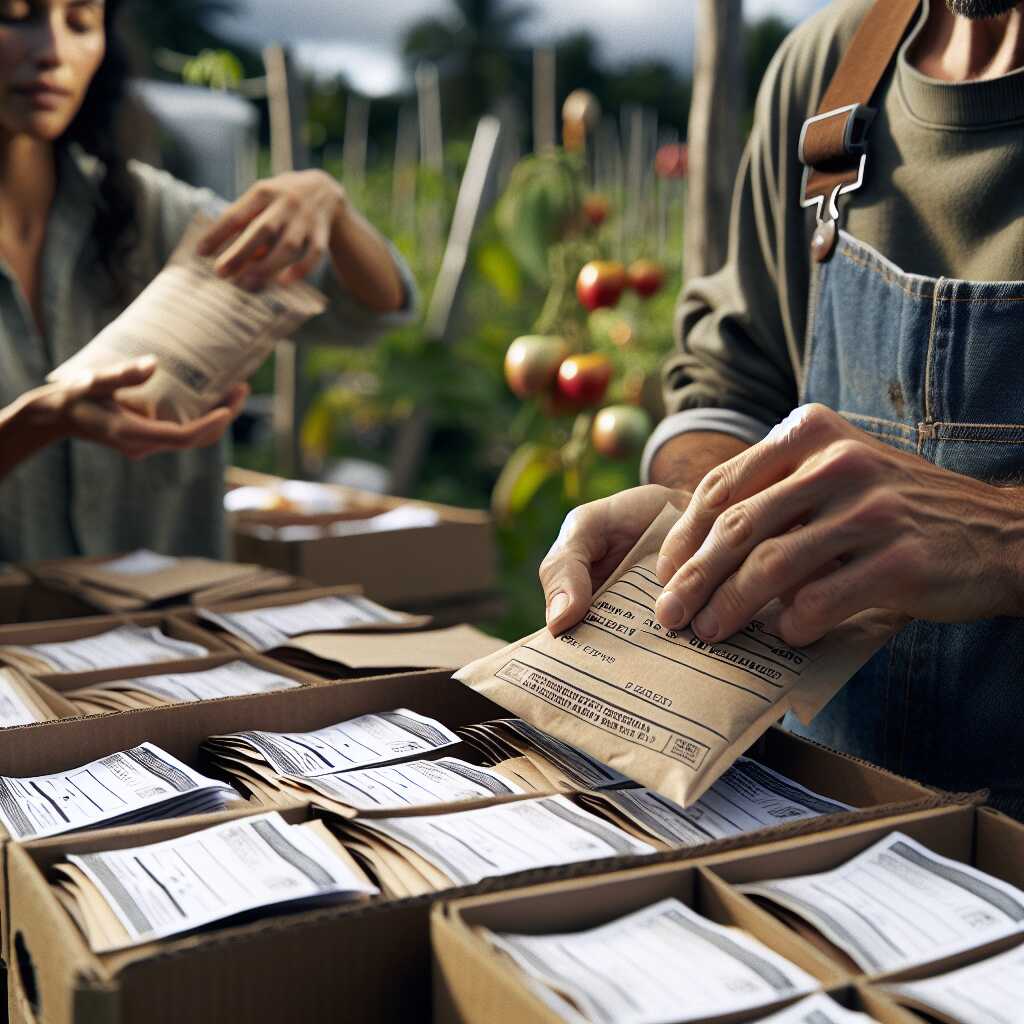
Paper envelopes are thin paper packets used to store, label, and temporarily protect fully dried garden seeds. This $0.02-$0.10 per envelope solution preserves and organizes seeds affordably and accessibly compared to Mylar bags at $0.20-$1.50 each or airtight jars at $0.50-$3.00 per container.
The process works through three key relationships: paper envelopes hold fully dried seeds resulting in approximately 70-90 viability retention over 1-3 years when combined with proper secondary protection, clear labeling attaches to envelopes enabling rapid identification and organization of varieties in an emergency, and desiccant packs stabilize internal humidity creating measurable moisture reduction that helps maintain seed viability during short-to-medium term storage.
How to store seeds in paper envelopes step by step
- Dry seeds thoroughly (1-7 days): Spread seeds in a single layer on a paper towel or baking sheet in a well-ventilated, shaded spot and allow them to dry until crisp to the touch. Result: Seeds with low surface moisture that are far less likely to mold; drying time varies by species and initial moisture.
- Count and portion seeds (5-20 minutes per variety): Place a practical sample number into each envelopecommon amounts are 10-50 larger seeds (e.g., beans) or 25-200 small seeds (e.g., lettuce) depending on size and future sowing needs. Result: Packets sized for quick sowing or germination tests and reduced handling losses.
- Label each packet clearly (30-60 minutes for 100 packets): Write variety name, harvest date, location, and estimated seed count on the envelope with permanent ink; include expected days to germination if known. Result: Fast identification in an emergency and better record-keeping for viability tracking.
- Add moisture control and secondary protection (5-15 minutes per jar or bag): Place labeled envelopes with a silica gel or desiccant packet into an airtight jar or Mylar bag; for multiple envelopes, group by year or crop per container. Result: Secondary sealed protection reduces moisture ingress and pest access, improving short-to-medium term viability (contributes to the 70-90 retention range over 1-3 years).
- Store in a cool, dark place (immediate, long-term monitoring): Keep sealed containers below about 60F (15C) if possible and away from sunlight and fluctuating heat sources; label storage location and date. Result: Slower metabolic decline in seeds and prolonged usable life compared with warm, humid storage.
- Perform annual germination checks (7-14 days per test): Each year test a representative sample (e.g., 10-25 seeds) on a damp paper towel for 7-14 days to measure germination rate. Result: A measured success rate that tells you which packets to replant, replace, or prioritize in an emergency.
- Note and mitigate limitations (ongoing): Recognize that paper envelopes alone do not stop rodents, insects, or long-term moisture; plan to use sealed containers and periodic checks for multi-year storage. Result: Realistic expectations and a mixed-method approach that balances low cost with responsible preservation.
FAQ
what are paper envelopes exactly for seed packet storage
Paper envelopes are simple breathable packets designed to hold fully dried garden seeds for short to medium-term storage and organization. They cost about $0.02 to $0.10 each and provide an affordable, easy-to-label option that helps preserve seed reliability when combined with cool, dark storage and secondary protection. Paper envelopes cannot provide a long-term moisture barrier or guaranteed pestproof protection and Predicament Measures recommends testing and review of each seed lot for best results.
what materials and sizes do paper envelopes for seeds come in
Paper envelopes for seeds come in glassine, kraft, and lightweight coin-style papers in common sizes such as 2″3″, 3″4″, and 4″6″ that handle single varieties or 5 to 200 seeds depending on seed size. Prices range from $0.02 to $0.10 per envelope and many designs include gummed or tuck flaps, clear windows, and printed labeling areas that improve organization and field usability. Choose glassine for moisture resistance that enhances short-term storage, choose kraft for durability and recycling, and perform testing to confirm which material delivers the best results for your seed types.
how do paper envelopes work step by step for storing seeds
Paper envelopes work by holding fully dried seeds in a breathable packet that reduces trapped moisture and makes labeling and sorting fast and reliable. Seed breathability helps prevent condensation that causes mold when seeds are dry, and envelopes work best when placed inside a secondary container such as an airtight jar or box with desiccant to improve longevity. Paper envelopes deliver good short-term performance with estimated viability retention of about 70 to 90 over 1 to 3 years for many vegetable and flower seeds when drying, cool storage, and secondary protection are used.
what is the best step by step method to prepare seed packets
Dry seeds thoroughly for 1 to 7 days until seed coats feel dry and then sort, label, and fill paper envelopes, which takes about 30 to 60 minutes to pack 100 small seed packets excluding drying time. Add clear labels with variety, date, source, and a lot number, place envelopes inside an airtight container with a small desiccant packet, and store at a cool dark temperature near 40F to 50F (4C to 10C) when possible to improve longevity. Perform a small germination test of 10 to 20 seeds per lot in the first year to gather proven data on viability and use that testing result in your seed review records.
what are the main benefits of using paper envelopes for seeds
Paper envelopes provide low cost, easy organization, clear labeling, and good breathability that helps preserve seeds after proper drying and handling. They cost about $0.02 to $0.10 each and deliver efficiency for community seed sharing, emergency Victory Garden planning, and seed libraries by enabling fast packing and distribution with minimal equipment. Paper envelopes are not moistureproof or rodentproof on their own and users should combine them with airtight boxes, desiccants, or Mylar bags for longer-term reliable storage.
how do paper envelopes compare to plastic or mylar in benefits
Paper envelopes compare as lower cost, easier to label, and more recyclable than plastic or Mylar while Mylar and vacuum-sealed options offer superior moisture and oxygen barriers for multi-year storage. Mylar bags cost about $0.20 to $1.50 each and require vacuum equipment to deliver the multi-decade protection that paper alone cannot provide, while airtight glass jars cost about $0.50 to $3.00 each and offer good middle-ground protection. Use a comparison based on budget, desired storage time, and testing results to decide if paper envelopes plus a secondary sealed container meets your emergency garden needs.
what are the risks and limitations of paper envelopes for seeds
The main risks of paper envelopes are moisture exposure, insect damage, rodent chewing, and accelerated viability loss in warm or humid conditions. Paper envelopes cannot block humidity or pests by themselves, and seed viability will fall faster if stored above about 60F (16C) or in relative humidity above 50 without desiccant and sealed secondary containers. Testing and periodic review of stored seed lots helps reveal declines in germination so you can replace or rejuvenate seed stocks when results show loss of reliability.
what environmental factors can damage seeds in paper envelopes
Moisture, high relative humidity, temperature swings, light exposure, insects, and rodents can damage seeds stored in paper envelopes and cause mold or loss of germination over weeks to years. Condensation after incorrect drying, storage above 60F (16C), or prolonged humidity above 50 increases the risk of mold and viability loss, so include desiccant, store in a cool dark place, and perform periodic germination tests to monitor results. Predicament Measures suggests regular review and testing that provides data-driven decisions and helps ensure seed stocks remain useful for emergency gardening.
who should consider using paper envelopes for emergency seed storage
Backyard gardeners, seed savers, community garden coordinators, prepper groups, homesteaders, and small-scale farms should consider paper envelopes when they need an affordable, easy, and scalable way to organize seed lots for 1 to 3 year emergency Victory Garden planning. Paper envelopes cost about $0.02 to $0.10 each, help you pack 100 small packets in 30 to 60 minutes, and provide a reliable method when combined with cool dark storage and secondary protection. Predicament Measures recommends this practical approach for groups that need low-cost, fast, and tested solutions while using germination testing and review to confirm ongoing seed performance.
what types of gardeners organizations benefit most from envelopes
Small community seed libraries, nonprofit garden programs, neighborhood emergency prep groups, school gardens, and local seed stewards benefit most from paper envelopes because they offer low cost, ease of labeling, and fast distribution. These organizations often handle dozens to hundreds of seed packets and find that envelopes enhance organization, reduce upfront costs, and enable efficient testing and review of seed lots in 2025 planning cycles. Use paper envelopes for initial sorting and sharing, then combine with airtight containers for storage that improves long-term reliability and durability.
when is the best time to use paper envelopes for seed saving
The best time to use paper envelopes for seed saving is after seeds reach full maturity and have dried to safe moisture levels, typically late summer to early fall for many vegetables and flowers. Paper envelopes provide breathable storage that helps preserve viability with reported retention around 70 to 90 over 1 to 3 years when seeds are fully dry and kept in a cool, dark place with secondary protection. Paper envelopes cannot act as a moisture barrier or pest barrier for long term storage and should not be the only protection when you need multi-year or multi-decade reliability.
what seasonal timing preserves seed viability best for storage
Harvest seeds when pods and fruits have dried on the plant and then air dry seeds 1 to 7 days until seed moisture reaches an approximate target range of 5 to 8 for many garden crops. Seasonal timing in late summer through fall helps ensure lower field moisture levels and reduces mold risk, yielding better test germination rates in reviews and small-scale testing. Paper envelopes cannot dry wet seeds; you must complete proper drying and a germination test before packing to ensure reliability.
how much do paper envelopes cost compared to seed storage alternatives
Paper envelopes cost about $0.02 to $0.10 per packet for basic coin or envelope sizes while Mylar bags typically range $0.20 to $1.50 per bag and airtight glass jars range $0.50 to $3.00 per jar. Using paper envelopes with a secondary sealed container and silica gel offers lower material cost and reasonable short to medium term results with proven cost efficiency for community seed saving and emergency Victory Garden planning. Paper envelopes cannot provide the long term moisture barrier and airtight pest protection that Mylar, vacuum sealing, or jars deliver for high-value heirloom seed storage.
what are realistic per packet costs and bulk pricing for envelopes
Realistic per packet costs for paper envelopes are $0.02 to $0.10 each for retail single packs and roughly $0.01 to $0.05 each when bought in bulk lots of 500 to 2,000, depending on size and paper weight. Add printed or archival labels at $0.01 to $0.05 per packet and optional small silica gel sachets at $0.01 to $0.05 per packet to improve moisture control and overall value in cost comparisons. Paper envelopes cannot replace the cost and performance profile of sealed Mylar plus oxygen absorbers when your goal is guaranteed multi-decade storage under varied conditions.
what materials and tools are needed to store seeds in envelopes
Essential materials include quality paper envelopes sized 2 x 3 inches to 4 x 6 inches, fine-point archival ink pens or printable adhesive labels, tweezers, a small digital hygrometer, and a secondary sealed container for grouped packets. Practical tools include small silica gel sachets (1 to 2 grams per small packet), a clean flat tray for drying seeds 1 to 7 days, and a basic kitchen scale or simple germination test setup that helps measure seed counts and test viability with clear data and results. Paper envelopes cannot stop rodents or heavy moisture on their own so include reliable secondary protection designed to enhance pest and humidity control for longer storage.
what labels and desiccants are recommended for envelope seed packets
Use archival ink pens or printed adhesive labels that include variety name, harvest date, source, and a germination test date to help ensure good record keeping and useful review data for seed saving reliability. For desiccants, use indicator silica gel packs sized about 1 to 2 grams per small envelope and consider a 5 to 10 gram pack per 1 liter sealed container to enhance moisture control and improve long term results. Desiccants cannot dry seeds that are packed wet and cannot fully replace airtight secondary storage when humidity or pest risk is high.
what are the best alternatives to paper envelopes for seed storage
Best alternatives include Mylar bags with oxygen absorbers and vacuum sealing, airtight glass jars with silica gel, and refrigerated storage when you need multi-year or multi-decade reliability for heirloom or high-value seed lots. Mylar and vacuum sealing provide an excellent moisture and oxygen barrier and can help preserve germination for many years when seeds are fully dry, offering a proven option in lab and field reviews compared to paper alone. Paper envelopes cannot match the sealed durability, pest resistance, or guaranteed moisture barrier that sealed Mylar or jars provide when long term, expert-level preservation is required.
when should you choose mylar bags vacuum sealing or jars instead
Choose Mylar bags, vacuum sealing, or airtight jars when you expect storage longer than 3 to 5 years, when you store large seed volumes, when humidity routinely exceeds about 50 relative humidity, or when you need rodent protection and airtight performance. These sealed options deliver better performance in stability testing and offer higher reliability for long-term seed banks, community seed vaults, and emergency stockpiles intended to last decades for some species. Sealed storage cannot rescue seeds that were stored wet or not fully dried before packing; always complete drying and testing first.
what common mistakes should be avoided when using paper envelopes for seeds
Common mistakes include packing seeds that are not fully dry, failing to label packets with harvest and test dates, and leaving packets in warm, humid, or pest-prone locations that reduce viability and increase loss. Regular germination testing every 1 to 3 years, using silica gel in a sealed secondary container, and keeping storage temperatures near cool cellar levels around 35F to 55F (2C to 13C) help improve results and usability. Paper envelopes cannot protect against persistent insects, rodents, or long-term moisture exposure so plan secondary protection and regular review as part of seed stewardship.
how can labeling moisture and pest errors be prevented when packing seeds
Prevent labeling errors by using a consistent label template that includes variety, harvest date, weight or seed count, and last germination test result to enable easy review, testing, and comparison in community seed systems like Predicament Measures recommends. Prevent moisture and pest problems by drying seeds to target moisture, adding 1 to 2 gram silica gel packs per small envelope, placing packets in a sealed secondary container, and storing that container in a cool, dark location with a digital hygrometer to track relative humidity. Labels and desiccants cannot fix seeds that were harvested immature or stored in a damp environment for long periods; test germination and cull low-performing lots to maintain a reliable seed bank.
Related posts:
 Unwaxed Dental Floss: High-Strength Fishing Line Alternative for Wilderness Food Procurement
 Petroleum Jelly Cotton Balls: Five-Minute Burn Time Fire Starters for Damp Conditions
 Elastic Hair Ties: Cordage Bundle Organizers for Tangle-Free Emergency Kits
 Plastic Cling Wrap: Burn Wound Covering to Prevent Infection and Fluid Loss
 Cornstarch: Moisture Absorption Powder for Preventing Trench Foot
Sterile Tampons: Deep Puncture Wound Packing for Hemorrhage Control
Cornstarch: Moisture Absorption Powder for Preventing Trench Foot
Sterile Tampons: Deep Puncture Wound Packing for Hemorrhage Control
 Wooden Pencils: Arrow Shaft Material for Improvised Hunting Weapons
Acrylic Yarn: Emergency Wound Sutures for Gaping Lacerations
Wooden Pencils: Arrow Shaft Material for Improvised Hunting Weapons
Acrylic Yarn: Emergency Wound Sutures for Gaping Lacerations