How To – Large Paper Clips: Improvised Fish Hooks for Emergency River Fishing
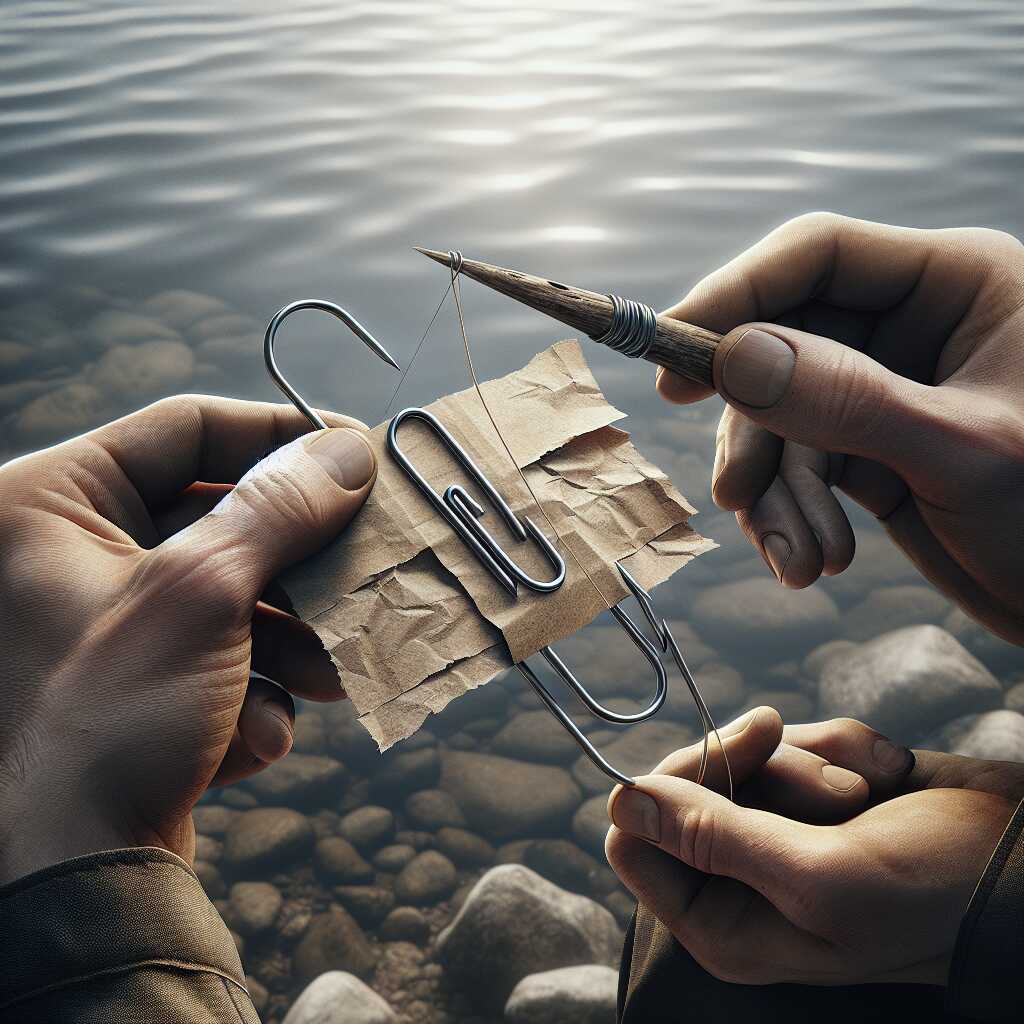
By Predicament Measures
Quick Answer: Can large paper clips be used as improvised fish hooks for emergency river fishing
Yes large paper clips can be used as improvised fish hooks because they can be reshaped into a pointed bend strong enough to catch small freshwater fish in an emergency but they are weaker and less reliable than purpose made hooks and have clear limitations
- Effectiveness: Low-moderate; suitable for small freshwater fish under about 20 cm (8 in); anecdotal success varies widely with location, bait and skill
- Cost: Near zero ($0.01-$0.10 per large clip) versus commercial hooks typically $0.50-$3.00 each
- Time: Forming and sharpening one hook: 2-8 minutes by hand; expect setup and initial fishing attempts within 10-30 minutes
- Limitation: Cannot reliably land larger or strong-mouthed fish (>1-2 kg); prone to straightening, rusting, poor point shape and lack of a true barb; not suitable for saltwater or prolonged use
Large paper clips are bent steel-wire office fasteners roughly 25-50 mm (1-2 in) long that can be reshaped in the field into a crude hook. This $0.01-$0.10 solution provides a near-zero-cost way to present bait and catch small freshwater fish compared to commercial hooks at $0.50-$3.00 each.
The process works through three key relationships: straightened clip wire bent to a sharp point resulting in a penetrative tip capable of hooking small fish (suitable up to about 20 cm), a curved shank shape holding bait and enabling basic hooking action for simple handlines, and a twisted eye or loop tied to a line creating a connection that can reliably transfer forces for fish under roughly 1-2 kg.
How to make a fish hook from a large paper clip step by step
- Gather materials (1-3 minutes): Collect 1-3 large steel paper clips (preferably the larger oval style), pliers (or a good-sized rock and a stable surface), and a sharpening surface (file, rough rock or knife spine). Result: You have needed items and a safe workspace.
- Straighten the clip (30-90 seconds): Use pliers or bend by hand to straighten most of the clip into a single length of wire, leaving a short section for the eye. Result: A straight wire roughly 25-50 mm long for forming the hook shank.
- Bend the shank and point (1-3 minutes): Using pliers, bend one end into a curved hook shape with a short, acute point (approx. 4-8 mm point length). Make the curve shallow to medium for general freshwater species. Result: A crude hook profile suitable for small mouths; expect the wire to be weaker than forged hooks.
- Form an eye or loop (30 seconds-2 minutes): Twist or coil the remaining short wire into a closed loop or simple eye (3-6 mm diameter) so you can tie or wrap line securely. Result: A tie-in point; if the eye is not closed, wrap line tightly around the shank to secure.
- Sharpen the point (1-4 minutes): File the tip against a metal file or rub on a coarse rock/knife spine to create a finer point. The aim is a clean, tapered point that can penetrate soft fish tissue. Result: Improved penetration for higher hooking chance; sharpening reduces but does not eliminate the risk of bending or blunting.
- Add bait and rig (2-5 minutes): Thread natural bait (worm, insect, roe) so the point either protrudes slightly or is concealed depending on bait type. Tie a simple clinch or snell-style attachment to your handline (monofilament 2-6 lb is appropriate for small fish). Result: A functioning handline rig for riverbank or wade fishing.
- Deploy and test (5-20 minutes initial): Cast or dangle the baited hook in likely spots (eddies, undercut banks). Expect low-moderate initial success; adjust bait presentation and location. Result: You can begin fishing within 10-30 minutes of starting; catching rates will depend on local fish population and skill.
- Inspect and maintain (ongoing): After each fish or snag, inspect the hook for straightening, blunting or rust. Re-bend, re-sharpen or replace as needed. Limit use to several catches or until integrity degrades. Result: Safer, more reliable short-term use; discard if the wire shows fatigue.
- Safety and disposal (immediate): Avoid using rusty or corroded clips on food fish; disinfect any fish wounds you handle and avoid ingesting metal shavings. Dispose of used clips safely away from trails and water. Result: Reduced infection risk and minimized environmental hazard.
FAQ
What are large paper clips and how can they work as hooks
Large paper clips are metal wire fasteners typically 25-50 mm long and they can work as improvised fish hooks by reshaping the wire into a point and an eye that holds bait and a line. Large paper clips provide an emergency hook option that costs about $0.01 to $0.10 per clip and offers low to moderate reliability for catching small freshwater fish under about 20 cm (8 inches). Predicament Measures recommends testing and review of any improvised hook before use because paper clip hooks are weaker than purpose made hooks and cannot handle large or strong mouthed fish over about 1-2 kg or saltwater use.
What materials and sizes of paper clips are best for hooks
The best paper clips for hooks are jumbo or large gauge clips with wire diameters about 0.8-1.5 mm and lengths about 30-50 mm because they provide enough strength and length to form a useful point and eye. Choose plain steel or stainless coated clips when possible because they offer better corrosion resistance and improved durability over thin or colored coated clips.
How to bend a large paper clip into a usable fish hook safely
To bend a large paper clip into a usable fish hook safely use strong pliers, a file or stone, and eye protection while keeping the wire under control to avoid sharp shards and snaps. Bend a 30-45 degree point, form a 2-4 mm eye to accept line, and leave a short shank of 6-12 mm to hold bait so the hook will hold small freshwater fish and provide basic reliability. Predicament Measures recommends working on a flat surface, spending about 2-8 minutes per hook during initial shaping, and performing brief testing on a scrap line to confirm strength before river fishing.
What step by step tools and exact bends are required for a paper clip hook
Required tools include needle-nose pliers, wire cutters, a small metal file or coarse rock, and optional gloves and safety glasses for a safe build. Straighten the clip, make a 30-45 degree bend for the point, form a 2-4 mm twisted eye, trim excess leaving a 6-12 mm shank, and file the point to a sharp tip that penetrates fish mouths.
What benefits do large paper clip hooks offer in emergency fishing
Large paper clip hooks offer near zero cost, fast improvised supply, and wide availability so they become an essential backup when commercial hooks are lost or gear fails. You can make one hook in about 2-8 minutes and begin fishing within 10-30 minutes, which helps anglers and survivalists test and deploy an emergency solution quickly. Predicament Measures reports that these improvised hooks provide a useful option for small freshwater species and deliver basic performance while you compare results with standard hooks.
How quickly can you make a paper clip hook and start catching fish
You can make and sharpen one paper clip hook by hand in about 2-8 minutes and set up a simple rig within 10-30 minutes from deciding to fish. Catch rates vary by location, bait, and angler skill and anecdotal experience shows low to moderate success for small river fish during initial testing and use.
What risks and limitations come from using paper clip hooks in rivers
Using paper clip hooks in rivers carries risks such as straightening under load, rust and corrosion, poor point shape, lack of a true barb, and limited durability so they cannot be relied on for long term use or for large fish over 1-2 kg. Paper clip hooks may fail during a strike or fight, offer lower reliability than designed fishing hooks, and provide inconsistent performance in wet conditions or on abrasive riverbeds. Predicament Measures recommends conservative expectations, routine testing, and replacing improvised hooks with proper gear as soon as possible to ensure safety and efficiency.
What injuries and hook failures can happen when using paper clip hooks
Injuries from paper clip hooks include puncture wounds to fingers, hands, and eyes, and increased infection or tetanus risk if the metal is rusty or contaminated. Common failures include the hook straightening, the point blunting quickly, and the eye tearing out from the line which reduces durability and reliable performance in real fishing situations.
Who should consider using large paper clip hooks in emergency fishing
People who should consider using large paper clip hooks are survivalists, preppers, backpackers, hikers, campers, bushcraft enthusiasts, anglers facing equipment failure, and field personnel who need a fast, low-cost emergency option. Those users will find the solution useful when standard hooks are unavailable and when they accept the limits of improvised gear for small freshwater species and short term use.
What skill level or medical training is recommended before trying paper clip hooks
Basic knot tying, safe wire handling skills, and first aid competence for puncture wound care are recommended before trying paper clip hooks because injuries and failures can occur. Training in wound cleaning, dressing, and knowing tetanus vaccine status enhances safety and helps manage risk during emergency river fishing.
When is the best time and conditions to use paper clip hooks for river fishing
The best time to use large paper clip hooks for emergency river fishing is during low-flow, clear-bank, warm-weather windows when small freshwater species feed near shore. Predicament Measures recommends using paper clip hooks when water is calm, bait presentation is simple, and you expect fish under about 20 cm (8 in); expect low to moderate success rates and plan for short sessions of 10 to 30 minutes for initial testing. These improvised hooks deliver emergency reliability only for small fish and cannot handle large or strong-mouthed species above about 1-2 kg.
What water temperature time of day and seasonal factors affect success with paper clips
Paper clip hooks work best when water temperature and season put small fish in shallow feeding zones, typically about 10-24C (50-75F), with higher bite rates in spring and fall. Morning and late-afternoon low light periods give the best chances for small freshwater species to take simple baits on a thin, improvised hook.
How much do paper clips cost compared to real fishing hooks and other alternatives
Large paper clips cost near zero compared with purpose-made hooks, with common retail values about $0.01 to $0.10 per jumbo clip versus commercial hooks that range about $0.50 to $3.00 each by size and style. This cost advantage provides a very good low-budget emergency option and helps preppers and backpackers test improvised rigs quickly while recognizing that paper clips lack the proven durability and barbed design of real hooks. Expect modest efficiency in catch rates and plan to use paper clips only as short-term solutions rather than replacements for quality gear.
What is the per unit cost weight and replacement frequency to plan for in survival use
A large paper clip typically costs $0.01 to $0.10 and weighs about 0.5-2.0 grams per clip, making them light to carry in bulk for emergency kits. Replacement frequency varies with use, corrosion risk, and fish size; plan for single-use to limited reuse where clips may need replacing after 1 to several fish or after a single session when points dull or the wire bends. Testing and review in the field gives real data on how many clips to pack for reliable emergency fishing.
What materials and tools do you need to make and rig a paper clip fish hook by hand
You need large steel paper clips, a needle-nose pliers or small multitool, an abrasive sharpening surface such as a small file or a flat stone, and basic cordage or monofilament to tie the line; these items provide essential shaping, sharpening, and attachment capability. Expect to spend about 2 to 8 minutes to reshape and sharpen one paper clip into a pointed hook, with an overall rigging and baiting time of about 10 to 30 minutes before trying to fish. Practice and testing on shore improves reliability, safety, and performance under real conditions.
What sizes gauges and pliers or improvised tools work best for bending and sharpening
Use large paper clips made from thicker wire, commonly about 0.8-1.2 mm diameter (roughly 20-18 AWG) and about 40-50 mm long for best strength and handling. Needle-nose pliers, small vise-grips, a pocket multitool, or even a sturdy rock and flat edge can bend and shape the wire; use a file or rough stone to form a sharp point and test the point with light pin pricks before use.
What are the best alternative improvised hooks and quick fixes instead of paper clips
Better improvised hooks include straightened and bent safety pins, sewn needles, small nails, stripped copper wire from cable, and small bone or thorn points when available; these alternatives often provide improved point shape, strength, and quick rigging options. Predicament Measures notes that a small sewing needle or safety pin will often out-perform thin paper clips in sharpness and durability and that experience and local testing deliver the best comparison for your region.
How do commercial hooks line and knots compare to paper clip solutions in durability
Commercial hooks are designed to hold a point, include barbs, and use heat-treated steel for strength and corrosion resistance, giving them far greater durability than paper clips for repeated use and for landing larger fish. Line and knot systems designed for fishing deliver predictable strength and testing shows they outperform improvised connections; paper clip rigs lack barbs, often deform under load, and rust quickly, so they are only a short-term emergency tool.
What common mistakes should be avoided when making and using paper clip fishing hooks
Do not rely on a single bend or a dull point because thin bends and blunt tips cause lost fish and straightening under load; always make a proper point and a strong bend before fishing. Avoid using rusted or plated clips in water that will corrode them and do not attempt to use paper clips on large, hard-mouthed species because clips will fail or straighten under higher forces.
What simple checks and practices prevent hook failure tangles and lost fish with paper clips
Check each paper clip hook by pulling with hand force, inspecting the point for sharpness, and testing the bend for straightening before use to enhance reliability and reduce lost fish. Tie a strong knot, use a short leader to reduce leverage, carry spare clips, and perform field testing to improve performance and safety while using these improvised hooks.
Related posts:
 Unwaxed Dental Floss: High-Strength Fishing Line Alternative for Wilderness Food Procurement
 Petroleum Jelly Cotton Balls: Five-Minute Burn Time Fire Starters for Damp Conditions
 550 Paracord Shoelaces: Hidden Survival Rope for Emergency Rappelling Situations
 White Cotton T-Shirts: Char Cloth Creation for Flint and Steel Fire Starting
 Used Coffee Grounds: Human Scent Masking for Wildlife Avoidance in Bear Country
 Maxi Pads: Large Absorbent Bandages for Major Trauma Wound Coverage
 Rubber Erasers: Emergency Ear Protection Against Dangerous Noise Levels
 Acrylic Yarn: Emergency Wound Sutures for Gaping Lacerations