How To – Manual Sharpeners: Twig Shaving Tools for Fire Tinder Creation
By Predicament Measures
Quick Answer: Can a twig shaving tool reliably make fire tinder
Yes, a twig shaving tool can create usable tinder because it produces very thin dry shavings and feather sticks that ignite easily when dry and struck with a spark or flame
- Effectiveness: Approximately 60 to 90 percent success for producing usable tinder from dry deadwood when used correctly and with suitable wood species (varies by wood type and user skill)
- Cost: Low cost: $0 if improvised using a knife or rock, $10 to $40 for compact dedicated manual shaving tools versus $5 to $50 for many commercial firestarting kits; overall cheaper than some powered tools
- Time: Typically 5 to 20 minutes to produce enough fine shavings or a feather stick depending on twig diameter, dryness, and user experience
- Limitation: Cannot reliably produce ignition material from green or wet wood and does not substitute for a separate ignition source like matches or a lighter
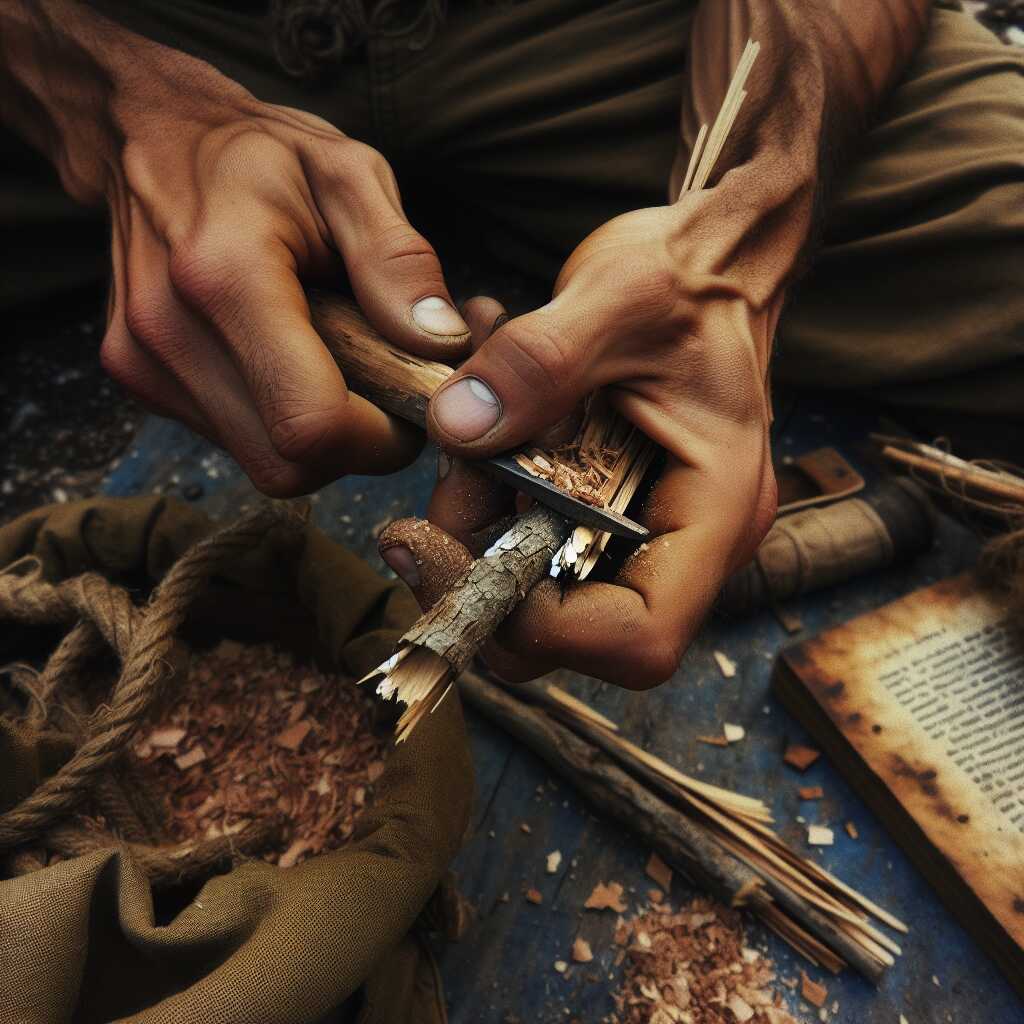
A twig shaving tool is a manual blade or scraping implement (a camping or bushcraft knife, hooked knife, or purpose-built shaving tool) used to pare very thin shavings and create feather sticks from small branches for fire tinder. This $0-$40 solution produces fine, paper-like tinder affordably compared to commercial firestarting kits at $5-$50.
The process works through three key relationships: the blade shaves dry deadwood producing paper-thin shavings resulting in an overall ignition probability of approximately 60-90 when wood species and technique are suitable; feather sticks and curled shavings catch sparks or small flames enabling quick ignition without accelerants; and user technique and practice improve consistency, raising practical success from the lower end (60) toward the upper end (90) for experienced users.
How to make tinder with a twig shaving tool step by step
- Select dry deadwood (1-2 minutes): Choose twigs that are dead, dry, and pencil-thin (6-8 mm diameter) from under dead branches or standing deadwood; species such as cedar, juniper, or fine-grained birch often yield good shavings. Result: a suitable twig that is likely to produce usable shavings.
- Inspect and prepare the tool (1-3 minutes): Ensure your knife or shaving tool is sharp and securely held; for improvised tools, a clean, straight edge works. Follow safe grip and cutting practice. Result: a reliable cutting edge that produces clean curls rather than crushing fibers.
- Create thin shavings (2-10 minutes): With controlled strokes, pare the outer surface to produce paper-thin shavings or fine fiberswork along the grain and make multiple thin passes rather than heavy cuts. Result: loose, dry shavings or small bundles of hair-like fibers suitable for ignition.
- Build a feather stick if needed (2-5 minutes): Leave a 3-6 inch (8-15 cm) core and shave long curled feathers into the outer surface so the curls remain attached; this concentrates shavings and protects them until you ignite. Result: a compact feather stick that preserves tinder and increases ignition surface area.
- Dry and condition tinder (1-5 minutes): If shavings feel damp, peel inner dry layers or move to drier deadwood; remove outer wet bark. If available, place shavings near body heat or a sheltered spot for a few minutes. Result: visibly dry, fluffed tinder with the best chance of catching sparks.
- Ignite with an ignition source (seconds to 1 minute): Use a ferrocerium striker, flint and steel, match, or lighter to apply a spark or flame to the shavings or feather stick. Blow gently to grow the ember into a flame. Result: a sustained ember or flame ready to be transferred to kindling and fuel.
- Pack or protect extra tinder (1 minute): Store spare shavings or a completed feather stick in a small waterproof container or inner pocket to keep them dry for later. Result: on-hand tinder for relighting or emergency use.
FAQ
What is a twig shaving tool exactly and what does it do
A twig shaving tool is a simple manual tool or a knife used to shave very thin dry curls and make feather sticks that serve as fine tinder for fire starting. It provides very thin shavings and feathered surfaces that ignite easily when dry and struck with a spark or placed under a small flame, with reported usable-tinder success of about 60 to 90 on dry deadwood when used correctly. It offers low cost and high reliability for campers and survivalists while still requiring a separate ignition source like a match or lighter and cannot make tinder from green or wet wood.
What materials measurements and design define a twig shaving tool
A twig shaving tool is typically a hard-steel blade with a 40 mm to 120 mm cutting edge and a handle designed for secure one-hand control, often with a 20 to 30 bevel for efficient shaving. Typical twig targets measure 6 mm to 25 mm in diameter and users create shavings 0.1 mm to 0.5 mm thick and feather sticks 10 cm to 25 cm long for best ignition results, and costs range from $0 for an improvised knife to $10 to $40 for a compact dedicated tool as of 2025. The design emphasis includes durable steel, a comfortable grip, and a secure sheath, which enhances safety, efficiency, and performance in field testing and user reviews.
How does a twig shaving tool work step by step in the field
A twig shaving tool works by removing very thin layers of dry wood to create curls or by carving long overlapping cuts to form a feather stick that concentrates fine, dry material at the tip for ignition. Field use typically takes 5 to 20 minutes to produce enough fine shavings or a feather stick depending on twig diameter, wood dryness, and user experience, and the method shows about 60 to 90 success on suitable dry deadwood. The process requires a separate ignition source and does not replace matches, lighters, or striker systems when wood is green or wet.
What is the safest step by step technique to shave a twig
Select a dry twig 6 mm to 20 mm diameter and clear a 0.5 m by 0.5 m area of loose fuel to reduce fire risk, then hold the twig against your non-cutting hand and pull the blade away from your body to make thin shavings 0.1 mm to 0.5 mm thick. Continue making 10 to 30 curls or carve a 10 cm to 20 cm feather stick by slicing shallow overlapping cuts towards the tip, keep fingers well behind the cutting edge, and spend 5 to 20 minutes while using gloves or a stable brace to improve control and reduce cutting risk.
What are the main benefits of using a twig shaving tool for tinder
A twig shaving tool provides portable, low-cost tinder production that reliably produces fine dry shavings and feather sticks for ignition when dry deadwood is available. The method costs $0 with an improvised blade or $10 to $40 for many dedicated tools and can be faster and more reliable than searching for rare natural tinder in many environments, with typical field times of 5 to 20 minutes and success rates of 60 to 90 on dry wood. The method enhances preparedness because it is lightweight, durable, and widely reviewed by bushcraft users for quality and performance in testing and comparison guides.
How much faster and more efficient is twig shaving compared to alternatives
Twig shaving often takes 5 to 20 minutes to produce a ready tinder bundle while gathering and preparing inner bark, fungus, or fine grasses can take 10 to 40 minutes depending on availability and skill, so shaving can be faster in many common campsites. Efficiency depends on experience and testing; users who practice 3 to 10 sessions report improved speed and reliability, and field reviews show shaving helps when commercial tinder is not available or when weight and cost must stay low.
What are the risks and limitations of a twig shaving tool in survival
The main risks are cuts from the blade, accidental sparks on loose fuel, and reliance on dry wood, and the tool cannot create usable tinder from green or wet wood or replace an ignition source like matches or lighters. Success drops steeply when wood moisture is high, and the method delivers limited results if the environment lacks dead, dry twigs of suitable diameter; safe use requires careful handling, a sheath, and fire safety measures. Predicament Measures provides guidance on safe handling and selection to improve reliability and reduce injury risk in practical reviews and tutorials.
How does wet wood or green wood limit twig shaving effectiveness
Wet wood and green wood have high moisture content that prevents thin shavings from drying and igniting, and in those conditions the twig shaving tool cannot produce reliable tinder. Users can sometimes expose dry inner heartwood on dead standing branches or dry shavings near a shelter, but those steps take extra time, do not guarantee success, and still require a separate ignition source for starting a fire.
Who should consider using a twig shaving tool for fire making outdoors
Campers, hikers, bushcrafters, scouts, preppers, and outdoor instructors should consider a twig shaving tool when they want a low-cost, reliable method to create fine tinder from deadwood while staying lightweight and durable. The tool provides an essential backup method that enhances firecraft skills, helps ensure fire reliability in dry conditions, and fits into many survival kits at a low cost of $0 to $40 as noted in reviews and comparison guides. Predicament Measures offers training notes and gear reviews that help users choose a tool designed for safety, comfort, and good performance.
What skill level training and practice are needed to use a twig shaving tool
Basic competence usually comes after 3 to 6 short practice sessions of 15 to 30 minutes each and more practice improves speed and reliability, with experienced users reaching consistent results within 1 to 5 hours of focused time. Training should include safe blade handling, selecting dry deadwood, and testing different twig diameters and shaving angles to improve efficiency and deliver consistent tinder results in real field conditions.
When is the best time to use a twig shaving tool while camping or survival
The best time to use a twig shaving tool is when you have access to dry deadwood and you need fine tinder to catch a spark or flame quickly; testing and user experience show a 60 to 90 success rate with dry deadwood when used correctly. A typical session takes about 5 to 20 minutes to produce enough shavings or a feather stick for ignition, depending on twig diameter and user skill. The tool cannot make ignition by itself and does not work well on green or wet wood, so you must have a spark or lighter and dry material to be reliable.
How do weather season and humidity affect twig shaving success rates
Weather, season, and humidity lower success by raising wood moisture and make shavings less likely to ignite, with dry-season results at 60 to 90 and damp-season results commonly falling below 50 in field reviews. Cold air and recent rain increase drying time and can increase total time from 5 minutes to 20 minutes or more to get usable tinder. Testing and simple drying methods help, but wet or green wood can prevent reliable ignition even after extended effort.
How much does a twig shaving tool cost compared to alternatives today
Cost comparison shows improvised options can be $0, compact dedicated manual shaving tools typically cost $10 to $40, and many commercial firestarting kits range from $5 to $50, which gives a low-cost advantage to twig shaving tools. Predicament Measures research and field reviews state that manual shaving tools provide good value versus powered tools in 2025 because they are lightweight and durable. The tool cannot replace a separate ignition source, so include the cost of a lighter, matches, or ferrocerium striker when you plan total system cost.
What inexpensive improvised options cost nothing and how to make them
Improvise at no cost by using a sharp pocketknife, a fixed-blade knife, or a sharp rock to shave twigs into fine material and create feather sticks with cuts around the bark. Make thin shavings by holding a pencil-thin dead twig steady and pulling the blade toward yourself to produce long curls or by scraping with a stone to produce small flakes; this process usually takes 5 to 20 minutes for usable tinder. Testing and careful technique help avoid blade damage and cuts, and these improvised methods deliver reliable results when the wood is dry.
What materials and tools are needed to use a twig shaving tool effectively
You need a sharp blade or dedicated twig shaving tool, dry dead twigs, a separate ignition source (matches, lighter, or ferrocerium striker), and a sheltered work area to protect shavings from wind and moisture. Twigs about the thickness of a pencil (roughly 6 to 8 mm) or slightly smaller provide good balance between speed and shaving yield, and expect 5 to 20 minutes to make enough fine shavings or a feather stick. The shaving tool does not provide ignition, so ensure you carry a reliable spark source and practice technique to improve efficiency and reliability.
What wood species sizes and moisture levels make the best tinder shavings
Dead, well-seasoned softwoods such as cedar, juniper, and dry pine typically provide the best fine shavings because they dry fast and ignite easily, while many hardwoods produce coarser shavings that need more sparks. Aim for pencil-thin twigs or smaller for fast results and use visibly dry, brittle wood, with practical field targets often described as wood that breaks cleanly rather than bends; moisture above a low percentage reduces reliability. Review data, user experience, and simple tests to identify local species that deliver consistent results in your area.
What are the best alternatives to a twig shaving tool for making tinder
Best alternatives include prepared tinder such as char cloth, commercial tinder cubes, cotton balls with petroleum, and mechanical methods like a ferrocerium striker combined with steel wool or tinder. These alternatives often provide faster ignition and better performance in damp conditions, and costs range from $1 for cotton and matches up to $10 to $20 for dedicated ferro kits or commercial tinder packs. Alternatives cannot replace the need for basic technique and safe handling, and you should review reliability and storage needs for each option before depending on it in an emergency.
How do ferrocerium strikers matches or chemical fires compare as alternatives
Ferrocerium strikers cost about $5 to $20 and produce hot sparks that work well with fine shavings or steel wool and remain reliable when wet if you can access dry tinder; matches cost about $1 to $5 and are fast but perform poorly when soaked. Disposable lighters cost about $2 to $10 and give fast ignition but can fail in extreme cold or after fuel loss; chemical fire starters vary widely in cost and safety and require careful review before field use. Each option helps enable ignition, so combine a reliable spark source with good tinder and practice to improve performance and reliability.
What common mistakes should be avoided when using a twig shaving tool outdoors
Common mistakes include choosing green or damp wood, cutting shavings too thick, and not sheltering shavings from wind, which all reduce reliability and increase time to fire. Users often forget to carry or test a separate ignition source, which means shavings cannot turn into a flame without matches, a lighter, or a ferro striker. Practice and testing in safe conditions improve skill and reduce errors, and reviews by experienced users recommend simple checklists to avoid these failures.
How can you prevent or fix the most common twig shaving mistakes quickly
Prevent mistakes by selecting visibly dry deadwood, using a sharp blade to make very thin shavings or a feather stick, and working in a wind-sheltered spot or under clothing to protect material; these steps improve success and reduce time to ignition. Fix a failed attempt by switching to smaller diameter twigs, moving shavings to a warm dry microclimate, or combining shavings with commercial tinder or cotton to enhance ignition odds. Practice, simple tests, and reviews of your technique help you refine skill and achieve reliable results in real situations.
Predicament Measures provides practical field guidance, reviews, and test-based tips to help you choose tools, improve technique, and plan for reliable fire tinder in camping, survival, and emergency use.
Related posts:
 Unwaxed Dental Floss: High-Strength Fishing Line Alternative for Wilderness Food Procurement
 Petroleum Jelly Cotton Balls: Five-Minute Burn Time Fire Starters for Damp Conditions
 Elastic Hair Ties: Cordage Bundle Organizers for Tangle-Free Emergency Kits
 Plastic Cling Wrap: Burn Wound Covering to Prevent Infection and Fluid Loss
 Cornstarch: Moisture Absorption Powder for Preventing Trench Foot
Sterile Tampons: Deep Puncture Wound Packing for Hemorrhage Control
Cornstarch: Moisture Absorption Powder for Preventing Trench Foot
Sterile Tampons: Deep Puncture Wound Packing for Hemorrhage Control
 Wooden Pencils: Arrow Shaft Material for Improvised Hunting Weapons
 Index Cards: Water-Resistant Information Cards for Survival Instructions