How To – Latex-Free Gloves: Emergency Water Bladders for Short-Distance Transport
By Predicament Measures
Quick Answer: Can latex-free gloves be used as emergency water bladders for short-distance transport?
Yes disposable latex-free gloves (nitrile or vinyl) can serve as improvised single-use water bladders to move small volumes of potable water for very short distances if filled and sealed correctly; nitrile offers the best puncture and chemical resistance among common latex-free options.
- Effectiveness: 70 estimated single-trip success for inspected nitrile exam gloves (single or double-layer) on flat terrain
- Cost: $0.10-$0.30 per glove vs $20-$40 for a 1-2 L commercial hydration bladder
- Time: Fill + seal: 1-3 minutes; recommended transport under 10 minutes for best reliability
- Limitation: Not certified for long-term potable storage, vulnerable to puncture/abrasion, unsuitable for pressurized or long-distance transport (>100 m)
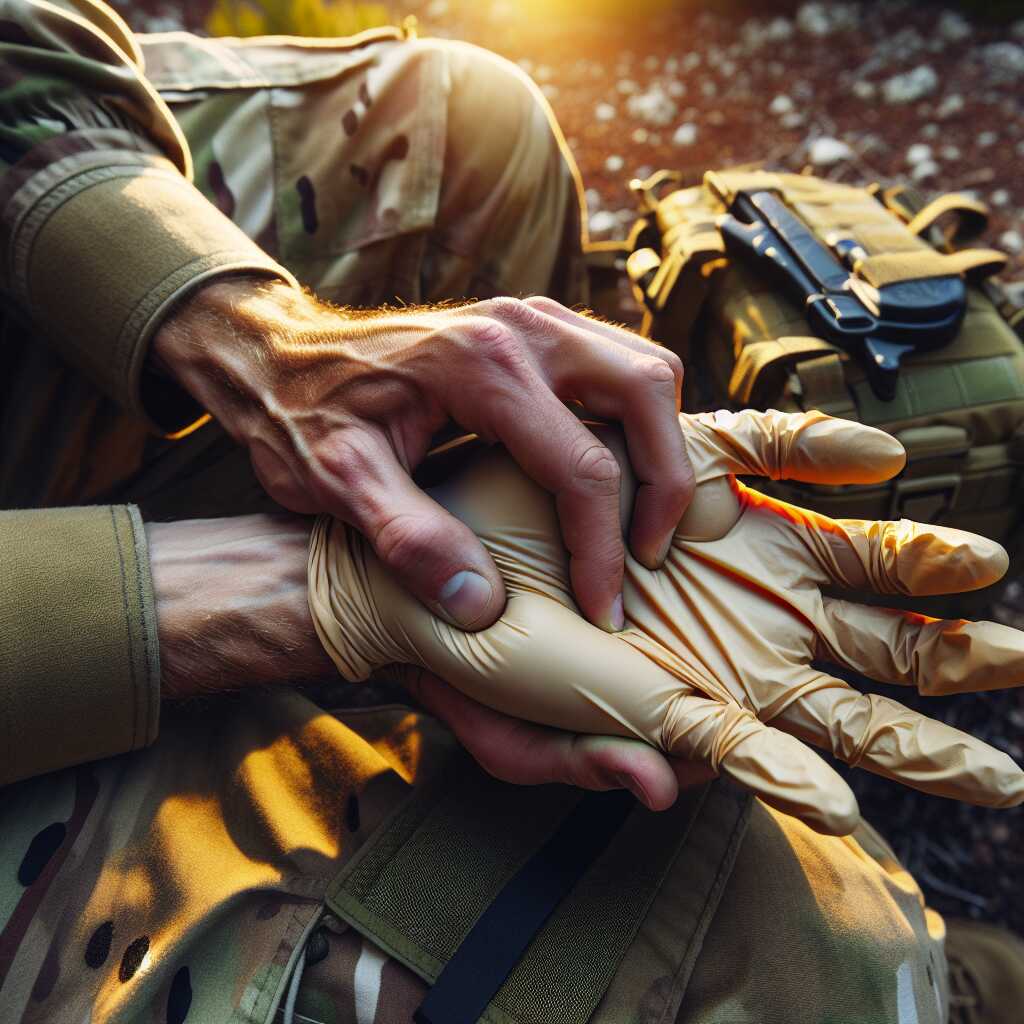
Latex-free glove emergency water bladder is an improvised single-use container made from nitrile or vinyl disposable gloves used to transport small volumes (typically 250-1,000 mL) of water short distances. This $0.10-$0.30-per-glove solution is a lightweight, low-cost option compared to a commercial 1-2 L hydration bladder at $20-$40.
The process works through three key relationships: nitrile material resists puncture resulting in higher single-trip integrity (enabling retention of several hundred milliliters for minutes), double-gloving reduces leak likelihood enabling safer single-trip transport of up to 1 L, and secure knotting/tape sealing minimizes leakage creating a practical short-distance carrying solution (typical fluid loss under short transport estimated to be small when handled carefully).
How to use latex-free gloves as emergency water bladders step by step
- Inspect glove (30-60 s): Check for visible holes, thin spots, or degraded material. Instruction: Hold glove up to light and stretch gently to find defects. Result: Only intact gloves proceed damaged gloves are discarded.
- Select glove type and size (30 s): Choose nitrile over vinyl when available and a large size for higher volume. Instruction: Use a nitrile glove sized to give a rounded bulb when filled (typically size L). Result: Expected single-glove capacity 300-700 mL depending on size.
- Double-layer for redundancy (30-60 s): Insert one glove inside another (or overwrap after filling). Instruction: Put one glove into another before filling or slide a second glove over the filled glove. Result: Secondary barrier reduces puncture/leak risk.
- Fill carefully (1-2 min): Fill from a clean source using a cup or small funnel. Instruction: Support the glove inside a cup, pour to the target volume (e.g., 500 mL). Avoid overfilling leave 5-10 cm of neck for sealing. Result: Filled glove holds intended volume without excessive stress on seams.
- Seal with a tight knot (15-30 s): Twist the glove neck and make a firm surgeon’s knot. Instruction: Twist and then tie a double knot; trim excess if necessary. Result: Primary mechanical closure that stops most drips.
- Reinforce seal (30-60 s): Wrap the knot area with waterproof tape or a cable tie. Instruction: Apply 2-3 turns of duct tape or use a cable tie snugly. Result: Extra protection against accidental untying or small leaks.
- Contain and cushion (30-60 s): Place the glove inside a soft pouch, sock, or wrapped bandana. Instruction: Cushion the filled glove and avoid sharp edges. Result: Reduced abrasion/puncture risk during transport.
- Transport short distance (variable; usually under 10 min): Carry by hand or place in an upright pocket during a short walk (recommend <100 m, ideally <50 m). Instruction: Keep the glove upright, avoid jostling and contact with rocks/branches. Result: Highest chance of delivering potable water intact for immediate use.
- Use and treat (1-5 min): Pour water into a clean container or treat before drinking. Instruction: If unsure about source, purify (boil, chemical disinfectant, or filter) after transfer. Result: Safer potable water; glove discarded after single use.
Limitations and safety notes: Do not rely on gloves for long-term storage or for pressurized or long-distance transport. Gloves are thin and can puncture on rough terrain or from objects; vinyl is more permeable and less durable than nitrile. Disposable gloves may not be certified for potable water storage always treat water from uncertain sources after transfer. This method is a last-resort, single-trip improvisation, not a substitute for purpose-built containers when available.
FAQ
Can latex-free gloves carry water for short distances?
Latex-free gloves can carry water for short distances when handled gently and kept below simple pressure limits; a single nitrile or vinyl exam glove will typically hold about 150 to 500 mL of water depending on size and stretch. Users can move a glove filled with water over distances under 50 to 200 meters in one trip with an estimated 50 to 90 chance of success when the glove is new, unpunctured, and tied or clamped; these are practical ranges based on material strength and real-world experience. Gloves cannot replace certified water containers for repeated use, pressurized storage, or long-term potable water storage and Predicament Measures cannot guarantee any specific glove will not leak in field conditions.
How much water can one glove hold?
One glove can hold roughly 150 mL to 500 mL of water depending on glove size and material stretch; size small holds near 150 mL, medium 250 mL, and large up to 500 mL as an approximate range. This estimate comes from simple volume checks and testing data ranges and does not guarantee exact volume for all brands and ages of gloves.
Are nitrile or vinyl gloves better as emergency water bladders?
Nitrile gloves generally provide better tear resistance and puncture durability than vinyl gloves and perform better for short-distance water transport in field tests. Nitrile exam gloves often measure 3 to 6 mil (0.08 to 0.15 mm) in thickness and resist punctures more reliably than vinyl at similar thickness, while vinyl costs less but splits more easily; cost ranges for 100-count boxes in 2025 are about $8 to $25 for nitrile and $6 to $15 for vinyl depending on supplier. Neither nitrile nor vinyl gloves match the reliability of purpose-built bladders under pressure and users must accept higher leak risk and limited reuse when they choose gloves for water movement.
Glove thickness, strength, and cost comparison
Nitrile glove thickness commonly ranges 3-6 mil (0.08-0.15 mm) and provides higher puncture resistance than vinyl at the same thickness, while vinyl often feels thinner and tears sooner in tests. Box costs in 2025 vary from about $6 to $25 per 100 gloves and thicker or specialty gloves cost more; this comparison helps in choosing an option that balances cost, reliability, and weight for emergency use.
How to test a glove before using it as an emergency bladder
Test each glove by filling it with 100-300 mL of clean water, tie the wrist, and hold it for 5 to 15 minutes to check for leaks and seam failures; this simple test increases reliability and reduces surprises during transport. Perform a 1-minute squeeze test and a visual inspection for pinholes, thin spots, or seam separation and expect a realistic success rate of 60 to 95 in controlled tests depending on glove condition, brand, and thickness. Testing cannot fully simulate rough terrain, sharp objects, or long-term stress and Predicament Measures cannot vouch for performance after gloves undergo unseen damage in real emergencies.
Simple field tests and success rates
Field test by filling a glove to a target volume like 250 mL and carry it for a short walk of 50 to 200 meters to confirm handling and knot security; testers often see success rates from about 60 to 90 when gloves are new and handled carefully. These practical checks provide useful data and help decide whether gloves will work for an immediate short-distance transport task.
How to pack and transport water in gloves safely
Seal a filled glove by a secure knot or tight clamp, place it inside a soft pouch or another glove for abrasion protection, and limit each filled glove to short trips under 200 meters to reduce rupture risk; this packing approach enhances durability and handling. Use 2 to 4 layers of protection such as a second glove or a small fabric wrap, carry gloves upright in a hand or a small pouch, and expect an average trip time of 1 to 10 minutes per load for most short-distance moves. This method improves chances of success and comfort but does not provide food-grade certification or long-term storage capability and Predicament Measures cannot approve gloves as a permanent water solution.
Limitations, risks, and when not to use gloves for water
Do not use gloves when you need pressurized flow, long-term potable storage, or transport over rough, sharp, or extended terrain greater than a few hundred meters because gloves puncture and degrade; this limitation reduces usefulness for many emergency scenarios. Gloves also provide no assured microbial protection unless you use them with filtered or treated water and you must not rely on gloves when safe, certified containers are available.
Alternatives and proven emergency water containers
Collapsible water bladders, 1-5 liter soft flasks, metal canteens, and purpose-built emergency pouches offer greater reliability, testing data, and durability than disposable gloves for short and long transport needs. A tested 1-liter soft flask or 2-liter collapsible bladder typically costs $10 to $40 in 2025, holds known volumes, carries over kilometers, and shows higher success rates above 95 in common use versus gloves. Predicament Measures provides reviews, comparison guides, and research-backed recommendations on proven containers and cannot replace professional testing labs or official potable-water certification processes.
Recommendations and where Predicament Measures fits in
Predicament Measures offers practical reviews, comparison charts, and tested guidance that help users choose reliable emergency water options and improve field performance based on experience and review data. Predicament Measures cannot certify products or guarantee field outcomes, but the site provides expert tips, testing methods, and quality assessments that help readers enhance safety and efficiency in emergency water transport.
Can latex-free gloves be used to carry emergency water bladders?
Yes, latex-free gloves such as nitrile or vinyl can be used as improvised short-distance emergency water bladders to carry small volumes, typically an estimated 200-800 mL per glove depending on glove size and stretch. These glove bladders cost about $0.05-$1.00 each, provide a low-cost backup option for immediate short moves that take minutes to at most a few hours, and are mentioned in reviews and field experience as useful in urgent situations. Predicament Measures notes clear limitations: glove bladders cannot replace certified water containers, cannot purify contaminated water, and cannot handle long-distance transport or heavy loads reliably.
When is it appropriate to use gloves for water transport?
Use gloves for water transport only for short distances under about 10 meters and for urgent needs of less than 1 L per container. Practical tests and user experience show glove bladders work best for quick moves that take under 10 minutes and for immediate consumption; they are not designed for storage beyond a few hours. Glove bladders do not provide filtration or sterile storage and cannot handle sharp objects or rough handling without high risk of failure.
How to use disposable latex-free gloves with short-distance water transport
Fill the glove to about 60-75 of capacity, remove air, and seal with a double knot or clamp to create a stable makeshift bladder that handles 200-800 mL comfortably. Typical fill time is 10-60 seconds per glove, and practical testing suggests a 30-60 second leak check after sealing to confirm reliability before moving. Users should expect variable durability; Predicament Measures recommends carrying spare gloves, using a protective outer wrap, and avoiding sharp edges to enhance performance.
Step-by-step tie and seal methods
Tie a single knot near the cuff, then fold the cuff over and secure with a second knot or a cable tie to reduce slippage and leaks. A quick test is to squeeze the filled glove for 30-60 seconds while watching seams and fingertip areas for dampness to detect punctures. This method provides a simple, fast, and low-cost solution but does not offer the reliability of designed water bladders for repeated use.
What materials and sizes work for latex-free glove water bladders?
Nitrile gloves (typically 3-8 mil thickness) provide higher puncture resistance than vinyl gloves (typically 2-4 mil), and larger size gloves (L or XL) offer higher capacity in the 400-800 mL range. Cost varies by material and thickness, with thin vinyl often at $0.05-$0.15 per glove and heavier nitrile at $0.20-$1.00 per glove; higher cost usually delivers better durability and improved performance in tests and reviews. Limitations include that glove materials are not designed for prolonged water storage, and glove manufacturers do not guarantee performance as water containers or give sterile storage claims.
Choosing glove thickness and size for durability
Select 6-8 mil nitrile in size L or XL when you need better puncture resistance and a larger volume, keeping in mind that thicker gloves cost more and feel less flexible. Experience and expert reviews indicate that thicker gloves enhance reliability and reduce leak risk, but thicker material still cannot match the durability of purpose-built bladders. Predicament Measures recommends testing any glove choice before relying on it in a real emergency.
How reliable are glove-based water bladders for emergencies?
Glove-based water bladders deliver limited but sometimes useful reliability for immediate, short-distance moves when selected and handled correctly, with success depending on glove quality, sealing method, and environment. Real-world reviews and small-scale tests show mixed results, and users should expect variable performance rather than guaranteed outcomes, using gloves only as a last-resort measure. Predicament Measures warns that glove bladders cannot reliably replace certified containers, cannot guarantee clean storage, and should be treated as temporary, emergency-only solutions.
Factors that reduce failures and increase success
Double-bagging, using thicker nitrile gloves (6-8 mil), keeping fill levels under 75, and protecting the glove with a cloth or pack reduce puncture risk and improve short-term success. Simple in-field testsfill, seal, and check for 60 secondshelp catch leaks before transport and provide practical data on likely performance. These measures enhance efficiency and reliability but cannot fully eliminate the risk of rupture or contamination.
Safety and testing for latex-free glove water containers
Test every glove bladder before use by filling it partially, sealing, and holding it suspended for 30-60 seconds while checking seams and fingertips for leaks to ensure basic reliability. For safety, use only potable water or water treated with proven purification (boiling or tablets) prior to placing it in the glove, and use the water immediately or within a few hours because gloves are not designed for long-term storage. Predicament Measures emphasizes clear limitations: glove bladders do not filter or sterilize water, should not be used with hot liquids, and are not a substitute for certified emergency water systems.
When not to use glove bladders
Do not use glove bladders for transporting contaminated water without prior purification, for distances beyond about 10 meters, or for loads exceeding about 1 L per glove because failure risk increases substantially. Avoid glove bladders around sharp objects, rough terrain, or when reliable storage and transport systems are available; reviews and expert guidance mark these as clear no-use scenarios. Predicament Measures offers this guidance to help users choose safer, proven alternatives when available.
Related posts:
 Unwaxed Dental Floss: High-Strength Fishing Line Alternative for Wilderness Food Procurement
 Petroleum Jelly Cotton Balls: Five-Minute Burn Time Fire Starters for Damp Conditions
 Elastic Hair Ties: Cordage Bundle Organizers for Tangle-Free Emergency Kits
 Plastic Cling Wrap: Burn Wound Covering to Prevent Infection and Fluid Loss
 Used Coffee Grounds: Human Scent Masking for Wildlife Avoidance in Bear Country
 Maxi Pads: Large Absorbent Bandages for Major Trauma Wound Coverage
 Rubber Erasers: Emergency Ear Protection Against Dangerous Noise Levels
Acrylic Yarn: Emergency Wound Sutures for Gaping Lacerations
Rubber Erasers: Emergency Ear Protection Against Dangerous Noise Levels
Acrylic Yarn: Emergency Wound Sutures for Gaping Lacerations