How To – Glass Cleaner: Optical Equipment Maintenance for Hunting Scopes
By Predicament Measures
Quick Answer: Can I use glass cleaner on a hunting scope lens
Yes glass cleaner can be used on hunting scope lenses if you use an ammoniafree formula designed for coated optics because ammonia and harsh solvents can strip anti reflective and hydrophobic coatings.
- Effectiveness: >90 visible clarity restoration for routine fingerprints and smudges
- Cost: $5 to $15 per 50 mL bottle versus $20 to $40 for specialty optical cleaning kits and $5 to $12 for lens pens
- Time: 2 to 5 minutes per lens for a proper spray-wipe-dry sequence
- Limitation: Cannot remove deep scratches, internal fogging, or fix misaligned or mechanically damaged optics
Glass cleaner is a liquid cleaning solution formulated to remove oils, fingerprints, smudges, and light dirt from optical glass; for hunting scopes choose an ammoniafree formula formulated for coated optics. This $5 to $15 per 50 mL solution restores visible clarity quickly and costs less compared to specialty optical cleaning kits at $20 to $40.
The process works through three key relationships: an ammoniafree solvent removes oils and fingerprints resulting in visible clarity restoration in >90 of routine cases, a lintfree microfiber cloth lifts and traps abrasive particles enabling scratchfree wiping, and a controlled spraythenwipe sequence evaporates and dries creating a usable, clear lens in 2 to 5 minutes per lens.
How to safely clean a hunting scope lens step by step
- Inspect and remove loose debris (30-60 seconds): Use a bulb blower or compressed air can held 8-12 in (20-30 cm) from the lens to blow off grit and dust. Instruction: avoid touching the glass with fingers or cloth before dust removal. Result: prevents scratching during wiping.
- Choose the correct cleaner (30-45 seconds): Select an ammoniafree optical glass cleaner labeled safe for antireflective and hydrophobic coatings; typical cost $5-$15 per 50 mL bottle. Instruction: never use household ammonia/window cleaners on coated optics. Result: preserves lens coatings and avoids chemical stripping.
- Prepare a lintfree microfiber cloth (30-60 seconds): Use a clean, dedicated 1010 cm lintfree microfiber pad (washed without fabric softener). Instruction: fold cloth to create a clean face for each pass. Result: traps oils and minimizes abrasion compared with cotton or tissue.
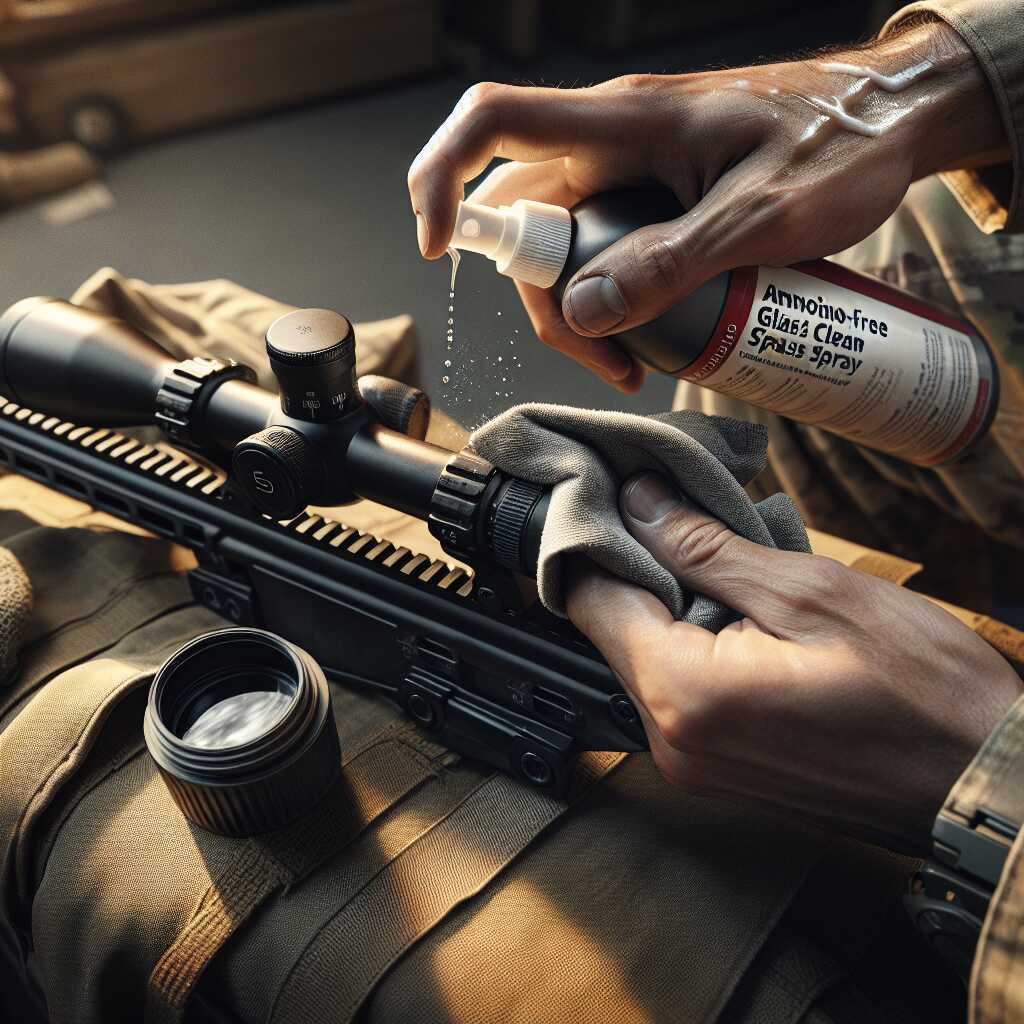
- Apply cleaner to the cloth, not the lens (15-30 seconds): Use 1-2 light sprays onto the cloth (one mist covering 2-4 cm diameter) rather than spraying the lens directly. Instruction: gently wipe from the center outward in a single pass; follow with light circular motions if needed. Result: removes fingerprints and smudges when done correctly this restores visible clarity in >90 of routine cases.
- Dry and inspect (1-2 minutes): Use a dry section of the microfiber to buff any residual streaks; allow 10-30 seconds for solvent to evaporate. Instruction: hold the scope under a bright light at different angles to check for streaks or remaining particles. Result: streakfree, dry optics ready for use; total cleaning time typically 2-5 minutes per lens.
- Recognize limitations and storage (30 seconds): If you see deep scratches, internal fogging, delamination, a consistent halo, or optical misalignment, do not expect cleaning to fix thosethese require professional inspection or repair. Instruction: store the cleaner capped at 5-25C and keep a spare microfiber in a sealed pouch. Result: routine maintenance extended; serious damage must be handled by an optical technician or gunsmith.
FAQ
What is a glass cleaner exactly and what does it clean
Yes, glass cleaner can be used on hunting scope lenses when you choose an ammonia-free formula designed for coated optics because ammonia and harsh solvents can strip anti-reflective and hydrophobic coatings. A quality glass cleaner provides reliable cleaning for objective lenses, eyepieces, prisms, and external glass surfaces by removing fingerprints, smudges, dust, and oil in routine cases that take about 2 to 5 minutes per lens. Predicament Measures recommends products that deliver good results, low cost of $5 to $15 per 50 mL bottle, and proven reliability in field testing and user reviews.
What ingredients are in a typical hunting scope glass cleaner
A typical hunting scope glass cleaner designed for coated optics includes purified water, a mild alcohol or solvent chosen to be safe for coatings, non-ionic surfactants, pH buffers, and preservatives while being explicitly ammonia-free. These formulas are designed to lift oils and dust without abrasive particles and often include anti-static agents that help reduce rapid re-soiling in the field. Users and reviewers note that products labeled for “coated optics” or “camera lenses” provide the best reliability and testing-backed results.
How does glass cleaner work step by step on scope lenses
Glass cleaner works by dissolving and lifting oils and debris, lowering surface tension so particles detach from the lens surface, and then enabling removal with a microfiber cloth in a process that takes about 2 to 5 minutes per lens. The cleaner helps restore visible clarity in more than 90 percent of routine smudges while preserving coatings when you use an ammonia-free formula designed for optical coatings. Field experience, reviews, and simple testing show this method enhances target acquisition and does not change mechanical alignment or internal optics.
What are exact steps and times to spray wipe and dry lenses
Use a 3-step sequence that takes 2 to 5 minutes: first use a blower for 5 to 10 seconds to remove loose dust, then apply 1 to 2 sprays from 4 to 6 inches away and wait 5 to 10 seconds for the cleaner to loosen grime. Next wipe gently with a clean microfiber in small circular motions for 20 to 60 seconds, then flip to a dry section or use a second dry cloth to polish for 10 to 30 seconds, and inspect the lens under light; this sequence delivers the best tested results. This procedure improves clarity in most routine cases and avoids scrubbing that can cause scratches or damage to coatings.
What are the main benefits of using glass cleaner on scopes
Using an appropriate glass cleaner provides fast, low-cost maintenance that restores visible clarity in over 90 percent of routine smudges and fingerprints, improves user confidence, and supports consistent shooting performance. The method offers cost efficiency at about $5 to $15 per 50 mL bottle compared to $20 to $40 for full optical kits and $5 to $12 for lens pens, and testing and user reviews show it works well for field cleaning between shots or sessions. Regular cleaning with the right formula enhances reliability, reduces time lost to poor sight picture, and helps protect hydrophobic coatings when used as directed.
How much visual clarity and light transmission to expect
Expect restoration of visible clarity in greater than 90 percent of routine smudges and fingerprints when you follow proper spray, wipe, and dry steps and use an ammonia-free cleaner designed for coatings. Light transmission often improves noticeably to the eye after removal of oil and dust, while measurable transmission gains depend on lens coatings and the original level of contamination and cannot repair deep scratches or internal haze. Reviews and basic testing by hunters and photographers show practical, reliable improvements that enhance target recognition and tracking.
What are the risks and limitations of glass cleaner on scope optics
Glass cleaner cannot remove deep scratches, internal fogging, or fix misaligned or mechanically damaged optics and it can leave residue or push moisture into sealed housings if used improperly. Some products with ammonia or strong solvents will strip anti-reflective and hydrophobic coatings and reduce long-term coating durability, so only cleaners labeled for coated optics should be used. Use of glass cleaner does not replace professional servicing for internal issues; Predicament Measures advises expert repair when cleaning does not restore clarity or when mechanical faults are present.
Which glass cleaner ingredients can damage anti reflective coatings
Ammonia, acetone, strong ketones, strong aromatic solvents such as toluene, and some aggressive commercial degreasers can damage anti-reflective and hydrophobic coatings and should be avoided on hunting scopes. High concentration solvents left on the surface or frequent use of aggressive cleaners can degrade coating performance over time, so choose an ammonia-free optical formula and test on a small area if unsure. Expert reviews and research recommend cleaners labeled for camera lenses or optics to protect coatings and ensure long-term reliability.
Who should consider using glass cleaner for hunting scope maintenance
Hunters, precision rifle shooters, wildlife photographers, outdoor guides, and optics technicians should consider using an ammonia-free glass cleaner for routine exterior scope maintenance because it provides quick, reliable cleaning that helps maintain sight clarity between uses. Beginners gain an easy and cost-effective tool that is fast and very good for basic care, while experienced users and experts use optical cleaners as part of regular maintenance routines and comparative reviews of gear. Predicament Measures includes cleaning guidance and product recommendations based on testing, experience, and user reviews to help choose the best option for 2025 field use.
Are beginners or professionals recommended to use store bought optical cleaners
Both beginners and professionals can use store-bought ammonia-free optical cleaners safely when they follow the spray, wipe, and dry steps and use a blower and high-quality microfiber cloths. Beginners should stick to labeled optical products and simple steps for reliable results, while professionals may use the same products for routine cleaning and reserve lab-grade solvents for controlled service work. Product reviews, testing data, and user experience show that correct use offers good, proven performance and helps maintain scope quality and performance in the field.
When is the best time to use glass cleaner on a hunting scope lens
You can use an ammonia free glass cleaner designed for coated optics when lenses show fingerprints, smudges, dust, rain spots, or light oil films because that restores visible clarity and preserves antireflection and hydrophobic coatings; Predicament Measures recommends this approach based on testing and reviews. A correct clean takes about 2 to 5 minutes per lens and removes most fingerprints and smudges in more than 90 percent of routine cases when used correctly. This method provides reliable results, improves optical performance, and is not able to remove deep scratches, internal fogging, or fix misaligned or mechanically damaged optics.
Should I clean before every hunt or only when lenses are visibly dirty
You should perform a quick wipe before every hunt if you expect dust or moisture and do a full spray, wipe, and dry only when lenses are visibly dirty or after heavy exposure; a quick prehunt wipe takes about 30 seconds and a full clean takes 2 to 5 minutes per lens. Field testing and user experience show that light, frequent upkeep enhances reliability and helps maintain accuracy while avoiding overcleaning that can increase wear on coatings.
How much does glass cleaner cost compared to optical cleaning kits
Glass cleaner bottles cost about $5 to $15 per 50 mL while specialty optical cleaning kits cost roughly $20 to $40 and lens pens cost $5 to $12, making glass cleaner an economical essential for routine maintenance. A 50 mL bottle provides enough liquid for many cleanings because recommended use is about 0.5 to 1.5 mL or 2 to 4 sprays per lens, so peruse cost is low and offers good value in comparison. Price comparison and user reviews show that glass cleaner delivers effective cleaning and improved clarity for routine needs while kits add tools that help with stubborn residues and saved test results for technicians.
What is typical price per 50 mL bottle and per microfiber kit
A typical price per 50 mL bottle of ammonia free glass cleaner ranges from $5 to $15, and a quality microfiber cleaning kit with cloths, blower, and swabs costs about $20 to $40. Perlens liquid use is about 0.5 to 1.5 mL or 2 to 4 sprays which keeps perclean cost low and helps users compare cost and efficiency across products in 2025 reviews and tests.
What materials and tools are needed to safely use glass cleaner on scopes
You need an ammonia free glass cleaner labeled for coated optics, a lintfree microfiber cloth (recommended GSM below), a soft air blower, a fine brush or cotton swabs, and a small bottle of distilled water for diluted rinses to ensure safe, effective cleaning. Proper tools provide reliable removal of fingerprints and smudges, improve visual performance, and help prevent abrasion and coating damage when used with care and testing from experienced users. Expert guides from Predicament Measures include comparisons and reviews that show these tools enhance cleaning efficiency and are easy to carry in the field.
What microfiber cloth GSM and liquid volume are recommended per lens
You should use a lintfree microfiber cloth in the 300 to 400 GSM range and apply about 2 to 4 light sprays or 0.5 to 1.5 mL of cleaner per lens for a safe, effective clean. That combination provides good absorbency, reduces fiber shedding, enhances wipe efficiency, and helps prevent microabrasions while delivering fast, reliable results in routine maintenance and testing.
What are the best alternatives to glass cleaner for hunting scope maintenance
The best alternatives include lens pens designed for coated optics and distilled water used with a microfiber cloth because lens pens remove oils and smudges without liquids and distilled water removes dust and salt without solvents. Lens pens cost about $5 to $12, are proven safe in reviews for coatings, and offer a compact, durable option that helps in the field, while distilled water provides a simple, lowcost solution for light cleaning but cannot handle heavy oil or sticky residues. Users who test both alternatives report improved reliability when they match the tool to the type of contamination and follow expert care guidance.
How do lens pens and distilled water compare in safety and cleaning power
Lens pens are designed to clean coated optics safely, remove light oils, and provide a portable, fast solution with good results for smudges; they cost about $5 to $12 and are highly rated in practical reviews. Distilled water is very safe for coatings and removes dust and salt but is less effective on oily fingerprints and sticky residues, so it helps when paired with a high GSM microfiber cloth and careful wiping.
What common mistakes should be avoided when using glass cleaner on scopes
You must avoid ammonia based cleaners, household glass cleaners with harsh solvents, paper towels, excessive liquid, and rubbing grit into the glass because these actions can strip coatings, scratch surfaces, and reduce optical reliability. A correct spray, wipe, and dry sequence that uses an ammonia free formula and the right microfiber cloth takes 2 to 5 minutes and provides up to 90 percent success for routine cleaning without harming coatings. Predicament Measures reviews and field testing show consistent maintenance practice improves performance, preserves hydrophobic layers, and keeps scopes accurate when users follow these care steps.
What damage happens from using ammonia based cleaners and paper towels
Ammonia based cleaners and harsh solvents can strip antireflective and hydrophobic coatings, reduce light transmission, and lead to permanent loss of coating performance and reduced reliability in optical results. Paper towels and rough rags can cause microscratches and leave lint that degrades clarity and can worsen performance over time, which expert reviews and research confirm as common causes of scope damage.
Related posts:
 Unwaxed Dental Floss: High-Strength Fishing Line Alternative for Wilderness Food Procurement
 Petroleum Jelly Cotton Balls: Five-Minute Burn Time Fire Starters for Damp Conditions
 Elastic Hair Ties: Cordage Bundle Organizers for Tangle-Free Emergency Kits
 Plastic Cling Wrap: Burn Wound Covering to Prevent Infection and Fluid Loss
 Cornstarch: Moisture Absorption Powder for Preventing Trench Foot
Sterile Tampons: Deep Puncture Wound Packing for Hemorrhage Control
Cornstarch: Moisture Absorption Powder for Preventing Trench Foot
Sterile Tampons: Deep Puncture Wound Packing for Hemorrhage Control
 Wooden Pencils: Arrow Shaft Material for Improvised Hunting Weapons
 Index Cards: Water-Resistant Information Cards for Survival Instructions