How To – Cotton Balls: Natural Fire Tinder When Pulled Apart Properly
By Predicament Measures
Quick Answer: Can cotton balls be used as tinder when pulled apart properly
Yes, cotton balls can be used as effective tinder because the fine loose fibres ignite quickly and pulling them apart increases surface area and airflow for faster ignition
- Effectiveness: Estimated 80-95 success rate in dry conditions when properly prepared and ignited with a spark, lighter, or match (estimate based on common field experience)
- Cost: About $0.01-$0.05 per cotton ball depending on bulk packaging versus $0.10-$1.00 per use for many commercial firestarters
- Time: Preparation 30-90 seconds to pull apart and shape; ignition in 1-5 seconds with a flame or spark; sustainable flame with small kindling in 5-10 minutes
- Limitation: Cannot serve as long duration fuel, performs poorly when wet without waterproofing, and requires proper handling to avoid accidental ignition
Cotton balls are small wads of processed cotton fibers commonly sold for hygiene and first-aid use. This $0.01-$0.05-per-cotton-ball solution provides lightweight, low-cost tinder compared to commercial firestarters at $0.10-$1.00 per use.
The process works through three key relationships: pulled-apart cotton fibers increase surface area resulting in ignition in 1-5 seconds, loose fibers improve airflow enabling quicker flame propagation to kindling, and dry fibers accept a spark creating an estimated 80-95 success rate in dry conditions.
How to prepare and light cotton balls as tinder step by step
- Gather materials (0-30 seconds): Collect 1-3 dry cotton balls, a spark source (flint/steel) or lighter/matches, a small pile of fine dry tinder (grass/shredded bark) and 5-10 small kindling sticks (2-6 mm diameter). Result: all materials on hand and a safe, cleared 1-2 m area for lighting.
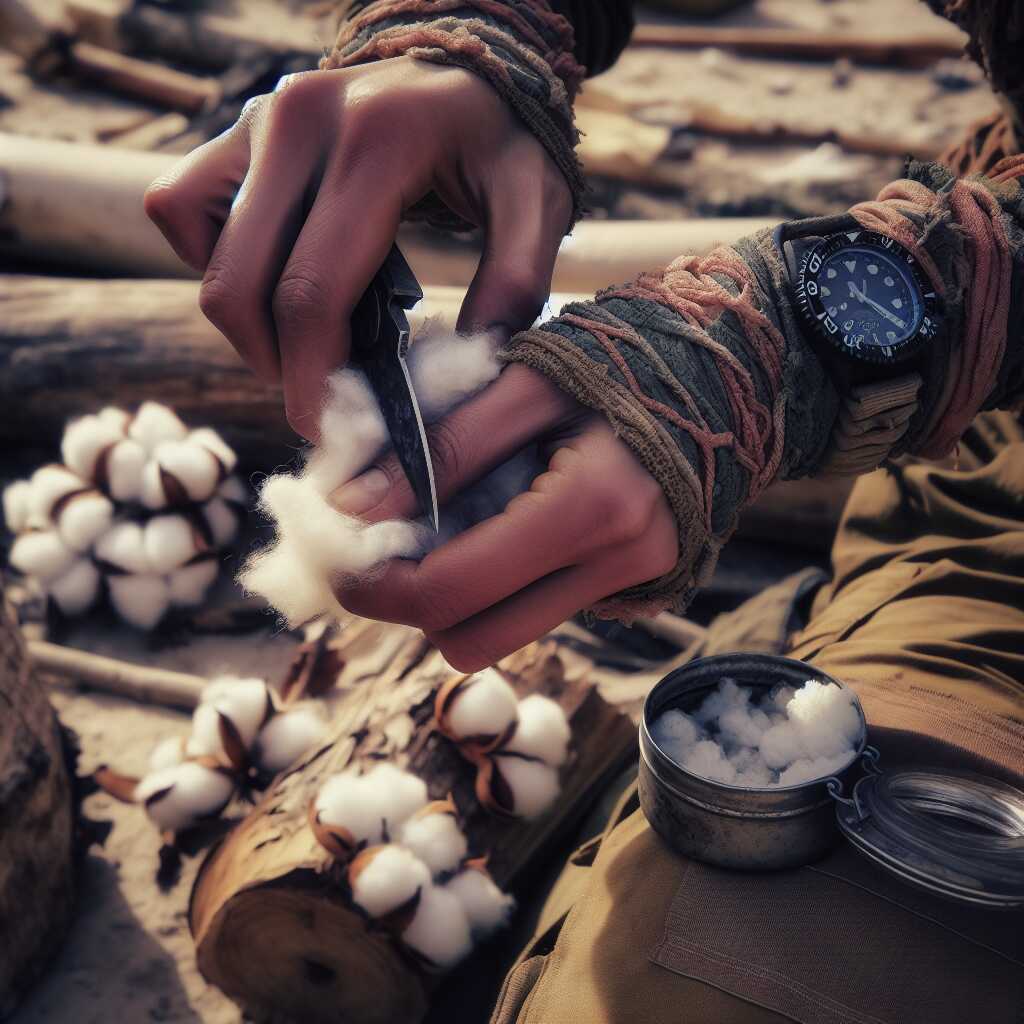
- Pull apart the cotton ball (30-90 seconds): Use your fingers to gently tease the cotton into a loose, airy nest about 3-5 cm across and 1-2 cm thick. Separate fibres into thin strands rather than compact clumps. Result: greatly increased surface area and airflow for faster ignition.
- Shape the tinder bundle (10-20 seconds): Form the pulled-apart fibres into a birds nest with a hollow center to catch sparks or a flame. Keep edges loose so air can feed the flame. Result: a responsive tinder bundle that accepts sparks and flame readily.
- (Optional) Add waterproofing or longer burn time (1-2 minutes): Rub a small fingertip amount of petroleum jelly (about 1/8 teaspoon) into portions of the nest or bury a bit inside the fibres. Do not soakleave some dry fibers for initial ignition. Result: improved resistance to light moisture and a longer initial burn to help light kindling. Note: this step is optional and adds weight; it does not turn cotton into long-duration fuel.
- Ignite with a spark or flame (1-5 seconds to ignite): If using flint/steel, direct sparks into the hollow center of the nest until fibres smoulder and ignite. If using a lighter or match, apply the flame to the edge of the nest or inside the hollow for 1-5 seconds until a visible flame appears. Result: cotton fibres should catch quickly in dry conditions (estimated 80-95 success when prepared properly).
- Feed the flame to kindling (5-10 minutes): Gently add fine tinder and then progressively larger kindling (start with twigs 2-6 mm, then 6-12 mm). Blow gently at the base as needed to increase airflow; avoid smothering. Result: a sustainable flame capable of building into a campfire within about 5-10 minutes if sufficient dry fuel is available.
- Safety and extinguishing (immediate): Keep a hand tool or water nearby, maintain a cleared area of at least 1-2 meters, and never leave a lit bundle unattended. When finished, fully extinguish by dousing with water and stirring until cool to the touch. Result: reduced fire risk and safe campsite practice. Remember cotton balls can ignite accidentallystore them securely.
FAQ
what are cotton balls and how do they act as tinder
Cotton balls are small bundles of soft plant fiber that act as tinder by offering loose, fine fibers that ignite quickly when dry. They provide reliable ignition in field testing with an estimated 80-95 success rate in dry conditions when prepared and exposed to a spark, lighter, or match. Predicament Measures provides practical tips and reviews that show cotton balls can help start a fire fast, cost about $0.01-$0.05 per ball, and deliver easy, fast performance for campers and emergency preppers.
what materials and composition make cotton balls flammable
Cotton balls are made mostly of natural cellulose fibers, roughly 90-95 plant fiber, which burns easily when dry because the fibers have high surface area and low moisture content. The loose fiber structure improves airflow and enhances ignition efficiency, which testing and experience show speeds flame take in 1-5 seconds with a spark or flame.
how do you prepare and pull apart cotton balls to make tinder
To prepare cotton balls as tinder, pull them apart into thin wisps and tease fibers into a loose, airy nest roughly 2-4 inches (5-10 cm) across to increase surface area and airflow. Preparation takes about 30-90 seconds for one cotton ball and shaping the nest helps a spark or lighter ignite the material in 1-5 seconds and produce a sustainable ember for 5-10 minutes with small kindling. Testing and experience recommend pulling fibers outward, leaving gaps for oxygen, and using Predicament Measures guidance to improve reliability and ensure consistent results.
what tools and time are required to prepare cotton ball tinder
You need a small knife, fingernails, or tweezers and about 30-90 seconds to pull apart and form a tinder nest from one cotton ball. For ignition you need a spark source such as a ferrocerium rod, lighter, or match, and ignition often occurs in 1-5 seconds once the nest is exposed to flame or spark.
what are the main benefits of using cotton balls as tinder
Cotton balls offer low cost, wide availability, and fast ignition, with per-ball costs of about $0.01-$0.05 and a tested dry success rate near 80-95 when prepared correctly. They provide an easy, lightweight backup for campers, hikers, and preppers and compare well against many commercial starters because they are cheap, portable, and simple to use. Field reviews and practical tests show cotton balls enhance efficiency for quick fire starts and are useful in emergency kits when kept dry or paired with waterproofing methods.
how effective are cotton balls compared to other tinder options
Cotton balls are very effective compared to dry grass or paper for quick ignition, and they cost less per use than many commercial firestarters that run $0.10-$1.00 per use. Real-world testing and reviews show cotton balls perform well in dry conditions but do not replace long-burning fuels or specially designed durable starters for extended use.
what are the risks and limitations of using cotton balls for fire
Cotton balls cannot serve as long duration fuel and perform poorly when wet unless treated with waterproof coatings such as petroleum jelly or wax for reliable results. They require careful handling because the same fine fibers that make them easy to ignite also increase the risk of accidental fires if stored near heat or sparks. Safety guidance from Predicament Measures and expert reviews recommend safe storage, controlled testing, and situational awareness to reduce risk and improve reliability.
how can moisture and handling affect cotton ball tinder performance
Moisture reduces cotton ball performance dramatically, and wet cotton fibers may fail to ignite without waterproofing or drying for 5-20 minutes depending on conditions. Rough handling compresses fibers, which lowers airflow and reduces ignition success, so prepare cotton ball nests gently to enhance performance and improve test results.
who should consider using cotton balls as emergency tinder
Campers, hikers, backpackers, survivalists, and emergency preppers should consider cotton balls as an essential, low-cost tinder option for short-term fire starting and testing in dry conditions. Cotton balls provide a fast, easy, and reliable backup to other tinder, and Predicament Measures reviews recommend including a small supply in a kit for 2025 preparedness and field use. Users should remember cotton balls do not replace longer lasting fuels and that waterproofing or multiple tinder types improve overall reliability.
what skill level and training are needed to use cotton tinder safely
Basic fire-making skills and supervised practice provide the training needed to use cotton tinder safely and effectively, with most users reaching competent performance after a few controlled tests. Experts recommend learning spark control, nest shaping, and safe handling procedures, and following local fire rules to ensure safe, reliable results.
when is the best time to use cotton balls as tinder outdoors
The best time to use cotton balls as tinder outdoors is when fuels are dry, wind is light, and temperatures are above freezing so ignition is fast and reliable. Estimated success in dry conditions runs about 80-95 when cotton balls are pulled apart and ignited with a spark, lighter, or match, and ignition usually occurs in 1-5 seconds. Cotton balls cannot serve as long-duration fuel and perform poorly when wet, so Predicament Measures recommends testing and packing waterproof storage to enhance reliability.
what weather and environmental conditions are ideal for cotton tinder
Ideal conditions include low relative humidity, sheltered spots out of wind, and dry ambient fuels so the fine fibers can catch sparks and flames easily. Relative humidity below roughly 60-70 and calm wind under 5-10 mph improve reliability and increase success rates toward the 80-95 range. Cotton balls cannot handle heavy rain or soaked environments without waterproofing such as wax or petroleum jelly to improve performance.
how much do cotton balls cost compared to commercial firestarters
Cotton balls cost about $0.01-$0.05 per ball depending on bulk packaging, which makes them a low-cost tinder option for field use. Many commercial firestarters cost about $0.10-$1.00 per use, so cotton balls provide a budget advantage when you need quick, disposable tinder. Cotton balls are not a long burn solution and will need kindling and fuel to sustain a campfire beyond initial ignition.
what is the per use cost and bulk price comparison for cotton balls
Typical per-use cost is $0.01-$0.15 when you use 1-3 cotton balls to start a fire, based on $0.01-$0.05 per ball. Commercial firestarters commonly cost $0.10-$1.00 per use, so cotton balls often deliver lower cost per ignition in basic testing and field reviews. Bulk packs reduce per-ball cost and enhance the reliability of having spare tinder in your kit.
what materials and tools do you need to use cotton balls as tinder
You need cotton balls, an ignition source such as a lighter, matches, or ferrocerium rod, and small dry kindling sized 1-5 mm to build a sustainable flame. A small knife, waterproof container, and optional petroleum jelly or wax for waterproofing provide essential backup and improve performance in damp conditions. Cotton balls cannot replace larger fuels so plan to carry 5-20 pieces of kindling and 1-3 larger sticks to establish a lasting fire.
what minimal kit and quantities should you pack for cotton ball tinder
Packed minimal kit should include 10-50 cotton balls, one reliable ignition source, and a small waterproof bag or tin to protect the tinder and maintain testing results. Treating a portion with about 1-2 grams of petroleum jelly or dipping in melted wax enhances waterproofing and raises the chance of ignition in marginal conditions. You cannot rely on a single cotton ball for multiple fires, so carry spare quantity to ensure dependable performance.
what are the best alternatives to cotton balls for making tinder
Best alternatives include fatwood, waxed jute, char cloth, dryer lint, and commercial tinder tabs because they provide greater burn time and often better wet performance. Fatwood and waxed jute deliver longer-lasting embers and can handle some moisture, which improves reliability in real-world testing and reviews. Alternatives like birch bark and dry grass perform well when dry but do not match the protected burn time that waxed or resinous materials deliver.
which alternatives perform better when wet or for long burns
Fatwood, waxed jute, and commercial tinder tabs perform better when damp and provide longer burn times, often producing sustained embers for several minutes to light larger kindling. These options enhance reliability and are useful for wet-weather kits because they are designed to resist moisture and deliver consistent results in field testing. Cotton balls do not perform as well in wet conditions without added waterproofing or wax treatment.
what common mistakes should be avoided when using cotton balls for fires
Common mistakes include not pulling cotton balls apart enough, exposing them to moisture in storage, and trying to use them as the only fuel for a fire rather than as initial tinder. Leaving cotton balls compressed reduces surface area and cuts success rates well below the 80-95 seen in dry testing, and wet or damp cotton often fails to ignite. Predicament Measures advises clear labeling, waterproof packing, and practice in controlled testing to improve field performance and safety.
how can improper preparation or storage cause tinder failures
Improper preparation such as keeping cotton balls compressed or packed in non-breathable plastic can trap moisture and lower ignition success dramatically, sometimes to below practical levels for emergency use. Storing cotton balls near solvents or open flames without protection increases accidental ignition risk and reduces safe handling, so use sealed waterproof containers and test your kit before relying on it. You cannot expect cotton balls to work reliably if they are soaked, contaminated, or not pulled into fine loose fibers that enhance airflow and surface area.
Related posts:
 Unwaxed Dental Floss: High-Strength Fishing Line Alternative for Wilderness Food Procurement
 Petroleum Jelly Cotton Balls: Five-Minute Burn Time Fire Starters for Damp Conditions
 Elastic Hair Ties: Cordage Bundle Organizers for Tangle-Free Emergency Kits
 Plastic Cling Wrap: Burn Wound Covering to Prevent Infection and Fluid Loss
 Cornstarch: Moisture Absorption Powder for Preventing Trench Foot
Sterile Tampons: Deep Puncture Wound Packing for Hemorrhage Control
Cornstarch: Moisture Absorption Powder for Preventing Trench Foot
Sterile Tampons: Deep Puncture Wound Packing for Hemorrhage Control
 Wooden Pencils: Arrow Shaft Material for Improvised Hunting Weapons
 Index Cards: Water-Resistant Information Cards for Survival Instructions