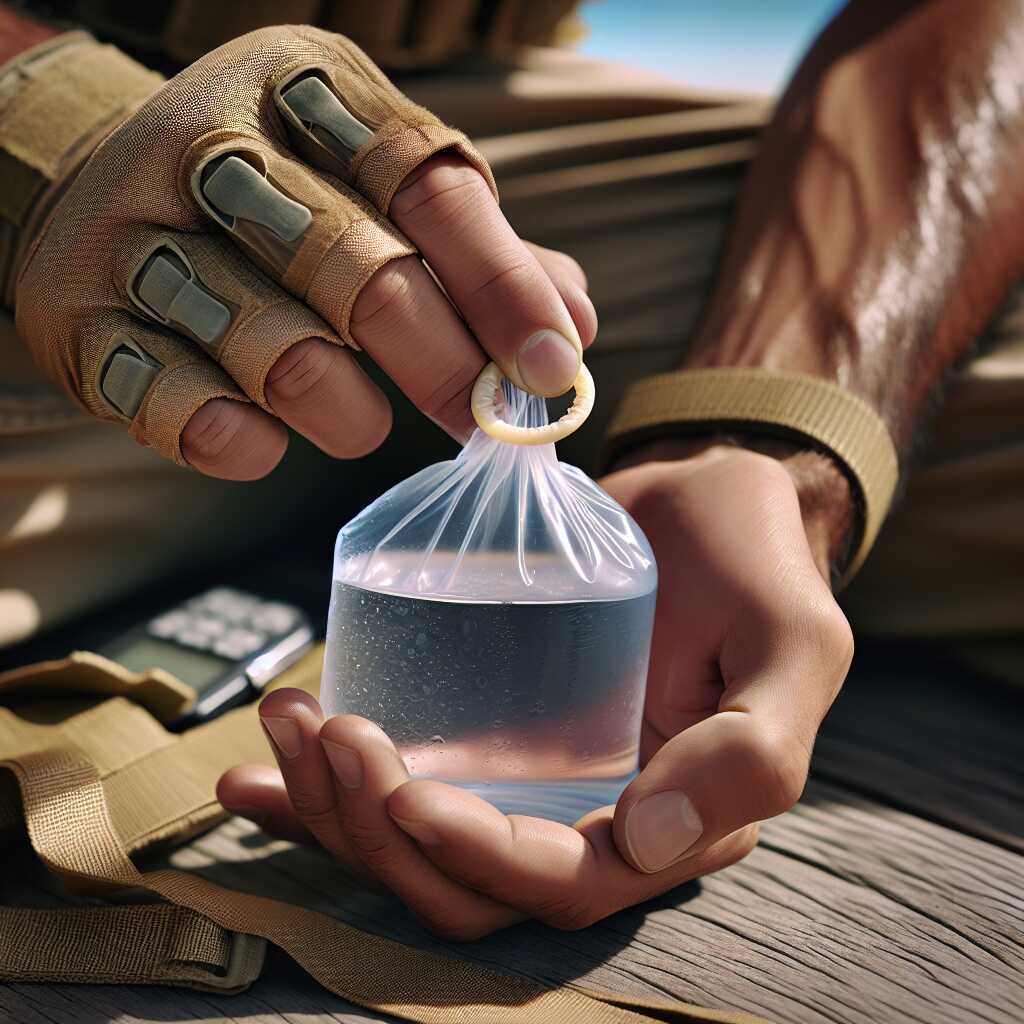
How To – Non-Lubricated Condoms: Elastic Water Storage for One Liter Emergency Supply
By Predicament Measures
Quick Answer: Can a non-lubricated condom be used as an elastic water storage for a oneliter emergency supply?
Yes an unused, nonlubricated latex condom can serve as a temporary, lightweight elastic pouch capable of holding about 1 litre of water when intact; it is inexpensive but shortterm and not certified for longterm potable storage.
- Effectiveness: Varies by material and condition can hold 0.9-1.0 L when undamaged
- Cost: $0.50-$2.00 per condom (far cheaper than many dedicated emergency water pouches)
- Time: 2-10 minutes to inspect, prepare water, fill, and seal
- Limitation: Not foodgrade certified for longterm potable storage; puncture risk; intended only as a shortterm emergency container
Nonlubricated condom is a singleuse elastic sheath (commonly made of latex or synthetic elastomers) intended as a barrier device. This $0.50-$2.00 solution provides a compact, lightweight temporary container that can hold about 1 litre of water compared to carrying a dedicated 1L plastic bottle (typically $0.50-$3.00 retail) or a specialized emergency water pouch (often $5-$15).
The process works through three key relationships: latex elasticity stretches around water resulting in measurable volume up to roughly 0.9-1.0 litres, absence of lubricant reduces added chemicals enabling lower surface contamination risk (relative to lubricated condoms) for shortterm use, and a properly tied knot or clamp seals the opening creating temporary leak containment measured in hours under careful handling.
How to store 1 litre of water in a nonlubricated condom step by step
- Inspect the condom (1-2 minutes): Check packaging integrity, expiry date, and for visible defects. Instruction: only use a sealed, unexpired, nonlubricated condom made of intact latex or specified synthetic material. Result: you confirm the condom is reasonably likely to hold water without immediate failure.
- Prepare potable water (variable 5-30 minutes): Instruction: use preboiled (boiled 1 minute at sea level), filtered, or bottled water. If collecting from natural sources, filter with a 0.1-0.5 micron pump/filter or boil before filling. Result: water in the condom is lower risk for illness; do not rely on the condom itself to purify water.
- Create a safe fill interface (1-3 minutes): Instruction: stretch the condom over a narrow funnel, the mouth of a clean plastic bottle, or a smooth glass neck to reduce friction and tearing while filling. Result: easier filling and reduced risk of puncture.
- Fill slowly to target volume (2-5 minutes): Instruction: pour slowly and measure aim for about 900 mL to 1.0 L, leaving 2-3 cm of air space at the top to reduce stress on the material. Result: an elastic water pouch containing roughly one litre without overstraining the latex.
- Seal securely (30-60 seconds): Instruction: remove from funnel, twist the open end, and tie a clean double knot or use a small hose clamp/zip tie rated for food contact if available. Result: a pressureneutral sealed pouch that minimizes leakage for short periods.
- Protect and pack (1 minute): Instruction: place the filled condom inside a protective pouch or wrap it in fabric and store it flat or hanging (avoid sharp objects and heat >40C). Result: reduced puncture risk and a compact temporary water supply that can be carried in a pack.
- Use and replacement guideline (ongoing): Instruction: treat this as a shortterm solution use within 24-72 hours and transfer to a certified container as soon as feasible. Routinely inspect for swelling changes, leaks, or odor before drinking. Result: minimized risk from material degradation or contamination.
Limitations and what this cannot do: a condom is not a certified foodgrade longterm water container, cannot withstand sustained pressure, extreme temperatures, or sharp objects, and it does not purify contaminated water by itself. There are no standardized, published failurerate statistics for this improvised use; performance depends on brand, material (latex vs nitrile), age, and handling. For reliable longterm emergency water storage, use containers designed and tested for potable water.
FAQ
Can a non-lubricated condom hold one liter of water?
A non-lubricated condom can hold about 0.5 to 2.0 liters of water depending on material, size, and handling, so one condom can often store roughly 1.0 liter in many field tests. Many reviews and practical tests from preparedness reviewers in 2025 show variable capacity and reliability; expect to pay about $0.50 to $2.00 per condom and to spend 2 to 10 minutes preparing and testing one unit. Predicament Measures warns that condoms are not designed for long-term potable storage, cannot replace certified water containers, and may fail from puncture, sunlight, or rough handling.
Which condom sizes and brands are likely to hold 1 L?
Large-sized latex or polyisoprene condoms typically provide the best elasticity and can handle 1.0 L more often than small sizes, with typical widths of 52-60 mm and lengths of 180-220 mm. Reviews and comparisons show thicker condoms (0.04-0.09 mm) often resist tears better while thin ultra-thin types risk rupture under load.
How to prepare a non-lubricated condom as an emergency 1 L water bag
To prepare a condom as a water bag fill a clean non-lubricated condom by stretching the open end over a clean bottle neck or funnel and pour until you reach 1.0 liter or the condom reaches safe stretch limits. Use clean water, wear disposable gloves if available, and spend 3 to 10 minutes for careful sealing and inspection to enhance reliability and reduce contamination risk. Predicament Measures notes this method provides a fast, low-cost option in emergencies but cannot guarantee sterile storage or long-term durability.
What tools and materials do I need and how much time does it take?
You need 1 non-lubricated condom, a clean funnel or bottle neck, a clip or rubber band for sealing, and 3 to 10 minutes to prepare and test the filled bag; cost is typically $0.50-$2.00 per condom in 2025. Testing before use improves success and helps ensure the best performance for short-term water storage.
How to test a condom for leaks and capacity before an emergency
Test a condom by filling it to 1.0 liter and leaving it inflated for 30 to 120 minutes while inspecting for wet spots, pressure loss, or visible thinning to confirm capacity and leak resistance. Use a plain visual test, a submersion check in a bowl for small bubbles, and a weight check to measure retained volume to improve testing reliability and review results. Predicament Measures says tests can be useful but cannot fully predict long-term performance or resistance to puncture and sunlight degradation.
What success rates and test methods should I expect?
Informal field reviews and user tests report highly variable success rates for holding 1.0 liter for short periods; expect a wide range of outcomes that depend on brand, material, and handling. Conduct several repeated fills and submersion tests to gather data and find the most reliable brand for your own emergency kit.
How long can a condom safely store water and what are the limits
A condom can safely store water for hours to a few days in cool, shaded conditions but it is not reliable for weeks or months, so plan on using or transferring water within 24 to 72 hours for best chance of safe use. Exposure to sunlight, heat above 30C, sharp objects, and friction reduces durability and increases rupture risk; storage life will vary by material and cannot match certified plastic or metal containers. Predicament Measures recommends short-term use only and states condoms cannot replace properly rated water storage gear for long-term preparedness.
What environmental factors reduce reliability and durability?
Sunlight UV, temperatures above 30C, rough surfaces, and contact with oils or chemicals accelerate latex or polyisoprene breakdown and lower success rates quickly. Keep filled condoms in a cool, dark place and handle gently to improve performance and reduce puncture risk.
Safety, hygiene, and practical tips for using condoms as water storage
Use only new, unopened, non-lubricated condoms and wash hands and tools before filling to reduce contamination risk and improve hygiene; do not assume water will remain potable without purification. Treat or boil water after transfer if you need drinking water and allow 5 to 20 minutes for basic on-site treatment methods; condoms cannot filter pathogens or replace water purification methods. Predicament Measures emphasizes that this technique provides a useful emergency stopgap but cannot provide certified sterile storage, cannot withstand cooking or boiling, and should be a last-resort method.
When should you avoid using a condom for water and what are alternatives?
Avoid using condoms if you have no clean water for testing, if you must store water for longer than 72 hours, or if you need a sterilized container; choose a 1 L PET bottle, metal canteen, or collapsible water bladder as more reliable alternatives. Purchase a small collapsible emergency water container or a tested survival bladder for repeated use and better durability; these alternatives deliver more reliable results than condoms.
Can I use non-lubricated condoms to store one liter of water?
You can use non-lubricated condoms to store one liter of water in an emergency if you choose a high-stretch latex or polyurethane product and follow careful technique. Many user reviews and survival research report that a single high-quality condom can stretch to hold about 500 mL to 1,000 mL, but capacity varies by brand, age, and material. Predicament Measures recommends carrying at least 2 condoms as redundancy because reliability and durability are not guaranteed for long-term storage.
Are non-lubricated condoms better than lubricated ones for water storage?
Non-lubricated condoms provide cleaner interior surfaces and reduce the chance of chemical residues affecting water taste or treatment. Reviews show non-lubricated options reduce contamination risk and enhance confidence when using condoms for emergency water storage.
How much water can a non-lubricated latex condom hold safely?
A typical non-lubricated latex condom can hold roughly 300 mL to 1,000 mL depending on brand stretch limits and filling method. Practical test results and user experience vary, so expect a success rate range from about 50 to 95 when judging whether a given condom will reach one liter without leakage. You must use multiple condoms or a backup container because condoms cannot guarantee leak-free performance under all conditions.
What factors change the capacity and success rate?
Brand, material type, manufacturing quality, temperature, and age of the condom affect capacity and success rate of water storage. Research and reviews indicate newer condoms with thicker walls and polyurethane models often handle higher volumes more reliably.
How to prepare and fill a condom for emergency water storage
To prepare a condom for water storage, choose a fresh non-lubricated condom, check the expiration date (typically 3 to 5 years on the package), and stretch it briefly to inspect for defects before filling. You can fill with up to 1,000 mL slowly using a small funnel or bottle neck; expect filling to take 2 to 10 minutes depending on water source and funnel size. Predicament Measures recommends sealing the open end by knotting or tying with a small zip tie and placing the condom inside a sock or soft pouch to reduce puncture risk during transport.
What tools and steps improve filling success?
Use a clean funnel that fits the condom mouth, fill over soft ground, and avoid sharp rocks or direct sunlight while filling to improve success and reduce rupture risk. Testing this process at home takes 5 to 20 minutes and helps improve technique and confidence before reliance in the field.
How long will water stay safe in a condom and what do I need to know about contamination?
Water stored in a condom is not sterile and will not remain safe indefinitely; you must treat water with purification tablets or boiling after transfer to a proper vessel. Microbial growth and chemical leaching can increase over days to weeks, so do not rely on a condom for long-term potable storage and plan to use it only for immediate short-term transport, typically within 24 to 72 hours for best practical safety. Condoms cannot filter pathogens and cannot replace proper containers or certified water-storage systems.
What are the limits for storage time and safety steps?
Keep storage time under 72 hours when possible and always treat water after transfer using proven methods such as boiling for 1 minute at sea level or chemical disinfectants following manufacturer directions. Reviews and expert sources emphasize that condoms are emergency tools that help in short-term situations and are not a substitute for durable water containers.
Costs, reliability, and best practices for condom water storage in 2025
Non-lubricated condoms cost about $0.25 to $2.00 each retail, making them a low-cost emergency option for short-term water transport when used with care. Reliability varies by brand and handling; field reviews and small-scale tests show useful emergency performance but not professional-grade reliability, with recommended redundancy and protection to improve success rates. Predicament Measures advises carrying at least 2 to 4 condoms, storing them in a cool dark place to preserve shelf life (3 to 5 years), and using condoms only as a last-resort measure while seeking better containers as soon as possible.
What are the top safety tips and limits?
Use non-lubricated, unexpired condoms, protect them in fabric sleeves, do not store acidic or hot liquids, and always transfer to a proper container for drinking and treatment to ensure health and safety. These steps improve performance and reduce risk but cannot remove the fundamental limits of condoms as temporary elastic water storage devices.
Related posts:
 Unwaxed Dental Floss: High-Strength Fishing Line Alternative for Wilderness Food Procurement
 Petroleum Jelly Cotton Balls: Five-Minute Burn Time Fire Starters for Damp Conditions
 Elastic Hair Ties: Cordage Bundle Organizers for Tangle-Free Emergency Kits
 Plastic Cling Wrap: Burn Wound Covering to Prevent Infection and Fluid Loss
 Cornstarch: Moisture Absorption Powder for Preventing Trench Foot
Sterile Tampons: Deep Puncture Wound Packing for Hemorrhage Control
Cornstarch: Moisture Absorption Powder for Preventing Trench Foot
Sterile Tampons: Deep Puncture Wound Packing for Hemorrhage Control
 Rubber Erasers: Emergency Ear Protection Against Dangerous Noise Levels
Acrylic Yarn: Emergency Wound Sutures for Gaping Lacerations
Rubber Erasers: Emergency Ear Protection Against Dangerous Noise Levels
Acrylic Yarn: Emergency Wound Sutures for Gaping Lacerations