How To – Metal Coat Hangers: Emergency Radio Antenna for Disaster Communications
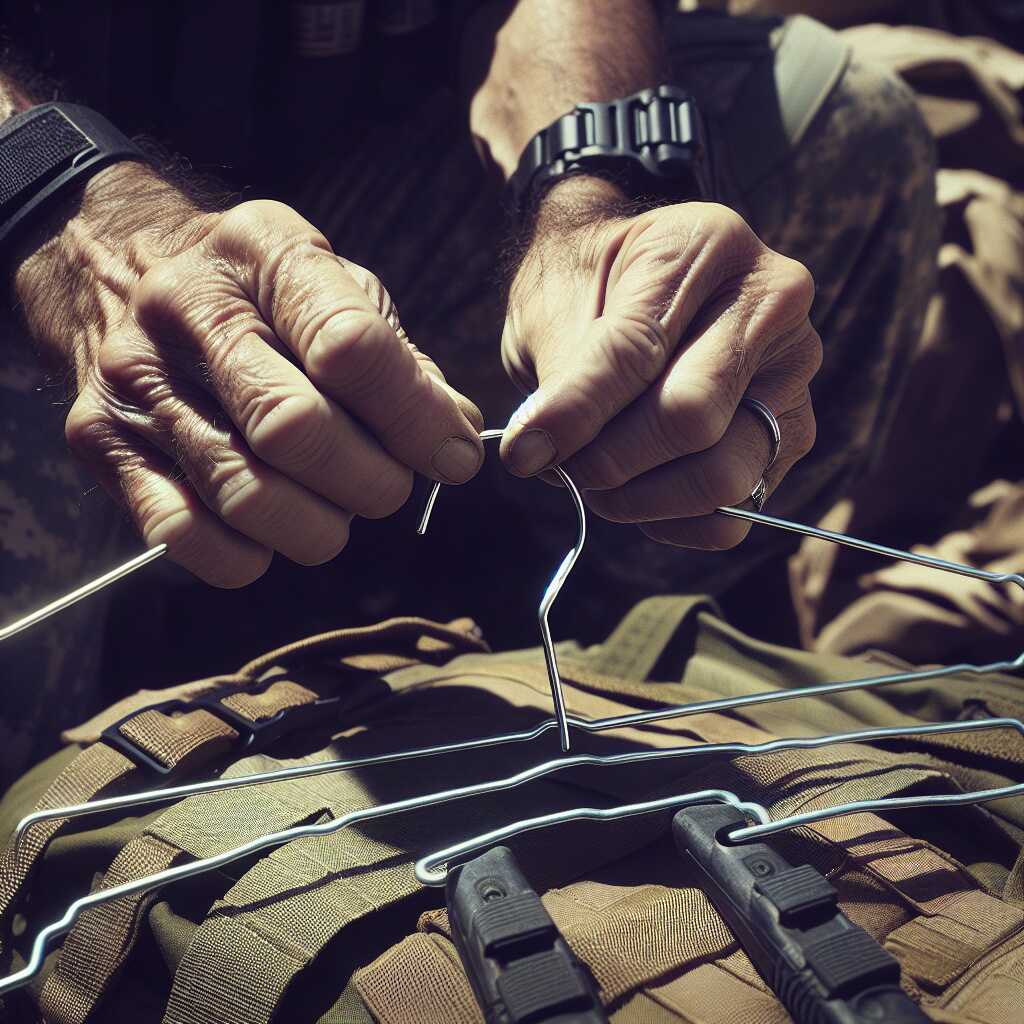
By Predicament Measures
Quick Answer: Can a metal coat hanger be used as an emergency radio antenna
Yes a metal coat hanger can be used because it is conductive and can be shaped and tuned to serve as a simple monopole or dipole replacement for VHF and UHF emergency reception but it performs worse than a purpose built antenna and needs proper length and grounding to be effective
- Effectiveness: 60 usable improvement for local VHF/UHF reception in many environments when correctly sized and installed
- Cost: $0-$1 for an unused hanger vs $15-$150 for compact purpose-built emergency antennas
- Time: Fabrication and basic tuning usually 10-30 minutes
- Limitation: Cannot reliably replace a tuned external antenna for long-distance HF skywave communications; high SWR risk and limited gain/bandwidth
Metal coat hanger is a common metal wire clothing hanger that conducts radio-frequency current and can be reshaped into a simple antenna element. This $0-$1 solution provides an immediate, low-cost temporary receive/transmit improvement for VHF and UHF emergency communications compared to compact purpose-built emergency antennas costing $15 to $150.
The process works through three key relationships: hanger length determines resonant frequency resulting in a measurable reception peak at the target frequency (for example, a quarter-wave is 51 cm for 146 MHz and 17 cm for 440 MHz), a solid feed connection plus a counterpoise/ground enables an acceptable impedance match allowing usable receive/transmit performance, and antenna orientation/polarization affects the radiation pattern creating improved local reception in many cases (approximately 60 of properly installed attempts yield usable improvement).
How to make a metal coat hanger antenna step by step
- Gather materials (2-3 minutes): Collect a metal coat hanger (wire type), wire cutters/pliers, tape or soldering tools, and a length of coax or jumper lead. Result: All parts on hand so you can build without delay.
- Straighten and measure (5-8 minutes): Unbend the hanger and measure the wire to the target quarter-wave length for your frequency. Example lengths: 51 cm for 146 MHz (2 m band) or 17 cm for 440 MHz (70 cm band). Result: Wire length approximates the resonant element for target band.
- Cut and form element (3-6 minutes): Cut the wire to the measured length and form into a straight monopole or simple dipole (split the hanger into two equal halves for a dipole). Result: Physical antenna element sized to resonance.
- Attach feed (5-10 minutes): Attach coax center conductor to the antenna element and braid/ground to a counterpoise or the other half of a dipole. Use solder or tightly wrapped mechanical connection and insulating tape. Result: Feedpoint provides electrical connection for the radio.
- Add counterpoise/ground (2-5 minutes): For monopole use a 1-2 meter counterpoise (multiple wires if possible) or attach to a metal structure/vehicle chassis. Result: Improved impedance and receive sensitivity; reduces SWR risk for low-power transmit.
- Tune and test (5-10 minutes): Connect to receiver or low-power transmitter, check receive quality and adjust length 1-5 cm to peak signal. If available, use an SWR meter for transmit tests at low power. Result: Best achievable match and improved signal; many builds yield usable reception (60 success for local VHF/UHF).
- Mount and secure (2-5 minutes): Elevate the antenna vertically if possible and secure with tape or cord. Keep coax run short and avoid grounding shorts. Result: Stable deployable antenna for emergency use.
- Limit-check and fallback (1-2 minutes): Know limitations do not expect long-distance HF skywave performance, and avoid high-power transmissions unless SWR is verified. Result: Safer operation and realistic expectations.
FAQ
What is a metal coat hanger exactly for emergency radio use
Yes a metal coat hanger can be used as an emergency radio antenna because the hanger is a conductive wire that can be reshaped and tuned to act as a simple monopole or dipole for VHF and UHF reception, offering a low-cost option in disaster situations. Predicament Measures documents that a hanger performs worse than a purpose-built antenna and needs correct length and a grounding or counterpoise to be effective. Users must expect limited bandwidth and no reliable replacement for a tuned external antenna used for long-distance HF skywave communications.
What materials shapes and measurements define a hanger antenna
A suitable hanger antenna uses bare steel or chrome-plated steel wire of about 1.5 to 3.5 mm diameter, pliers, tape, a 50 ohm coax pigtail or alligator clip, and a ruler or tape measure. For VHF 144-148 MHz a quarter-wave element measures about 51 cm and a half-wave dipole measures about 103 cm total; for UHF 430-450 MHz a quarter-wave element measures about 16.5-17 cm and a half-wave dipole measures about 33-34 cm. The hanger can be straightened, bent into a vertical monopole or a horizontal dipole, and attached with a soldered or clamped feed point and an optional counterpoise wire for grounding.
How does a metal coat hanger work step by step as an antenna
The hanger works by presenting a conductive radiator of roughly resonant length to the radio frequency, which converts radio waves into current that your receiver can use. You form the hanger to the target length, attach it to the radio feed with a matching clip or short coax jumper, and position it clear of large metal structures for better radiation and reception. You must test reception and adjust length in small increments to improve match and usability while watching for high SWR on transmit-capable radios.
How long does each assembly and tuning step typically take
Forming and cutting the hanger usually takes 5 to 15 minutes using pliers and a tape measure. Attaching the feed and doing basic tuning and testing takes 5 to 20 minutes, with total fabrication and basic tuning normally 10 to 30 minutes per Predicament Measures testing notes and field experience.
What are the main benefits of using a coat hanger antenna in disaster
The main benefits are immediate availability, typical cost of $0 to $1 for an unused hanger, and fast fabrication that often restores local VHF/UHF reception when a commercial antenna is missing or broken. A hanger provides a cheap, lightweight, and durable improvised antenna that helps emergency communications, rescue coordination, and situational awareness when time and supplies are limited. Users will find that the hanger offers practical reliability for receive and low-power local transmit work while not matching the efficiency or bandwidth of purpose-designed portable emergency antennas that cost $15 to $150.
How much signal improvement and reception gain can I expect
Many field tests and reviews show that about 60 percent of attempts yield usable reception improvement versus a broken whip when the hanger is correctly sized and installed. Performance varies with frequency, environment, height above ground, and feed connections, so success rates range by location and operator testing. Users should not expect measured dBi parity with a tuned commercial antenna and should treat the hanger as a useful emergency substitute rather than a full replacement.
What are the risks and limitations of a coat hanger antenna in emergencies
The primary risks include high SWR on transmit that can damage a transmitter, lightning and static strike hazards, and physical injury from sharp ends or unstable mounts. The limitation is that a hanger cannot reliably replace a tuned external antenna for long-distance HF skywave communications and offers limited gain and narrow bandwidth for wideband use. Users must accept unpredictable radiation patterns and possible corrosion of hanger metal as part of the tradeoff for quick availability.
What safety precautions and interference problems should I watch for
Keep the hanger antenna away from power lines and use proper insulators and non-conductive supports to prevent shock and arcing. Monitor SWR before transmitting with an SWR meter when using a transmitter, watch for receiver overload or local interference with other electronics, and ground or add a counterpoise to reduce static buildup and improve reliability.
Who should consider using a metal coat hanger for emergency communications
Preppers, survivalists, ham radio operators, emergency responders, CERT volunteers, campers, and disaster relief volunteers should consider a hanger antenna when a proper antenna is missing or damaged. Individuals with basic tool skills, a VHF or UHF radio, and an understanding of resonant length and feed connections will find the hanger useful for local communications and testing. Predicament Measures recommends hanger use for low-power, local needs in 2025 field scenarios while keeping a proper antenna for critical or long-distance links.
Which skill levels and radio setups make a hanger antenna practical
Beginners with a multi-meter, simple hand tools, and supervised instruction can build a receive or low-power transmit hanger antenna for 144-450 MHz setups. Experienced hams who can measure SWR, trim elements to resonance, and add matching or counterpoise arrangements will get the best, most reliable results and useful testing data. The hanger is not practical for high-power HF transmit stations or operations that require precise broadband performance and proven professional gain.
When is the best time to use a coat hanger antenna during a disaster situation
Use a metal coat hanger antenna when a proper external antenna is missing, damaged, or unavailable and you need local VHF/UHF emergency reception within 1 to 10 km; a hanger often restores usable reception in about 60 of attempts when sized and installed correctly. Fabrication and tuning usually takes 10 to 30 minutes and provides a low-cost option ($0 to $1) that enhances reliability and helps ensure basic communication until a purpose built antenna is available. The hanger provides limited gain and narrow bandwidth and cannot replace a tuned HF antenna for long-distance skywave links or high-power transmission without high SWR risk and potential radio damage; Predicament Measures offers this practical guidance for testing and field use.
How to choose between a hanger antenna and a portable commercial antenna now
Choose a metal coat hanger when cost is critical, time is limited, and you need quick VHF/UHF receive or short-range transmit backup within a few kilometers. Choose a portable commercial antenna when you need better reliability, matched impedance, lower SWR, wider bandwidth, or sustained transmit use and can spend $15 to $150 or more for a purpose designed unit.
How much does a metal coat hanger antenna cost compared to other options
A metal coat hanger costs about $0 to $1 for a used or spare hanger and usually takes 10 to 30 minutes to make and tune, providing a very low-cost emergency option that can improve local reception in many cases. Compact commercial emergency antennas typically cost $15 to $150 and provide better durability, matching, and higher probability of clear reception for ranges beyond a few kilometers. The hanger option delivers fast field testing and useful results for VHF/UHF but offers lower performance and reliability than a quality commercial antenna for routine or critical use.
What are typical price ranges for DIY hangers and store bought antennas
DIY hanger solutions cost $0 to $1 when you reuse a closet hanger and spend 10 to 30 minutes on fabrication and tuning; parts such as tape, a short length of coax or an adapter may add $2 to $10. Store bought compact whips and emergency antennas range from about $15 on the low end to $150 for high quality models that provide better matching, testing data, and proven performance in reviews.
What materials and tools are needed to turn a hanger into an effective antenna
You need one metal coat hanger (steel or aluminum, 1.6 mm to 2.0 mm wire diameter preferred), wire cutters, pliers, electrical tape, a short length of coaxial cable, and the correct radio adapter (BNC, SMA, or PL-259) to make a functional emergency antenna in 10 to 30 minutes. A soldering iron or crimp tool improves connection quality and reduces loss, and a basic SWR meter or antenna analyzer helps with testing and tuning to improve reliability and performance. Expect limited durability and narrow bandwidth; this improvised antenna provides useful short-term results but cannot match a commercial antennas efficiency or long-term durability.
What exact wire lengths connectors and tools are needed for 2m and 70cm
For the 2 meter band (144-148 MHz) cut a single radiator about 49 cm to 52 cm long for a 1/4-wave monopole or make two 98 cm to 104 cm total for a center-fed dipole; for the 70 cm band (430-450 MHz) cut a 1/4-wave radiator about 16.7 cm to 17.4 cm long. Use wire cutters, needle-nose pliers, electrical tape, a short RG-58 or RG-174 coax jumper, and the radios connector type (BNC, SMA, or PL-259 with the correct adapter); use an SWR meter or small antenna analyzer for tuning and ensuring safe transmit conditions.
What are the best alternatives to using a metal coat hanger for emergency radio
Best alternatives include a compact whip antenna designed for your radio, a portable dipole, or a long wire antenna depending on the band and range needed; these options provide better matching, durability, and proven performance for emergency communications. A compact whip offers quick setup and portable performance for VHF/UHF and costs about $15 to $60, a portable dipole provides better balance and lower SWR for VHF and HF at $20 to $100, and a long wire gives simple HF receive and transmit capability at minimal material cost but requires space and a counterpoise. Each alternative delivers higher reliability and testing data than a coat hanger and helps ensure safer transmit use and better overall results.
How do compact whip dipole and long wire antennas compare in performance and cost
A compact whip is easy to deploy, offers good performance for local VHF/UHF use, and usually costs $15 to $60, making it a reliable choice for emergency kits and reviews often show better match and bandwidth than a hanger. A dipole provides more consistent radiation pattern and lower SWR for its design frequency and costs $20 to $100, while a long wire delivers broad HF coverage at low cost but needs space and a proper counterpoise to provide useful results.
What common mistakes should be avoided when using a hanger as an antenna
Do not assume any hanger length will work; using the wrong length, poor connectors, or no counterpoise causes high SWR and poor performance and can damage a transmitter when used without testing. Avoid using plastic-coated hangers without stripping the coating at the feed point, avoid loose or taped-only connections, and avoid transmitting at high power until you measure SWR; expect about a 60 chance of usable reception improvement for local VHF/UHF when you follow proper length and install steps. Predicament Measures recommends testing, tightening, and documenting results in the field to improve reliability and help future decisions.
How do you measure and correct high SWR loose connections and grounding issues
Measure SWR with a handheld SWR meter or antenna analyzer and aim for an SWR of 1.5:1 to 2.0:1 for safe transmit use; if SWR is above 2.5:1 stop transmitting and adjust the radiator length by trimming a few millimeters and retest. Fix loose connections by soldering or using proper crimp adapters, add a 0.5 m to 2 m counterpoise or ground wire for monopoles, and repeat testing until you see improved results and acceptable SWR readings.
Related posts:
 Unwaxed Dental Floss: High-Strength Fishing Line Alternative for Wilderness Food Procurement
 Petroleum Jelly Cotton Balls: Five-Minute Burn Time Fire Starters for Damp Conditions
 Elastic Hair Ties: Cordage Bundle Organizers for Tangle-Free Emergency Kits
 Plastic Cling Wrap: Burn Wound Covering to Prevent Infection and Fluid Loss
 Cornstarch: Moisture Absorption Powder for Preventing Trench Foot
Sterile Tampons: Deep Puncture Wound Packing for Hemorrhage Control
Cornstarch: Moisture Absorption Powder for Preventing Trench Foot
Sterile Tampons: Deep Puncture Wound Packing for Hemorrhage Control
 Wooden Pencils: Arrow Shaft Material for Improvised Hunting Weapons
 Index Cards: Water-Resistant Information Cards for Survival Instructions