How To – Non-Clumping Cat Litter: Vehicle Tire Traction for Escaping Mud and Snow
By Predicament Measures
Quick Answer: Can non-clumping cat litter provide tire traction to escape mud and snow
Yes non-clumping cat litter can provide temporary tire traction because its coarse granules add friction under tires and help tires bite into the surface but effectiveness depends on litter type, amount applied, and ground conditions
- Effectiveness: Estimated roughly 30 to 70 percent chance of freeing a vehicle in light to moderate packed snow or soft mud when used correctly; much lower on deep mud, loose snow over ice, or rutted terrain
- Cost: A 20 lb bag of non-clumping clay litter typically costs $6 to $15 versus a single commercial traction mat $30 to $150 or a 50 lb bag of coarse sand about $5 to $12
- Time: Expect 5 to 30 minutes total to gather and spread 1 to 4 kg (2 to 9 lb) of litter per stuck wheel and to attempt slow controlled exit
- Limitation: Cannot substitute for winching or towing in severe ruts or on solid ice; will not lift a vehicle out of a deep hole and can create a messy cleanup and potential drivetrain wear if wheels are spun aggressively
Non-clumping cat litter is a coarse, clay-based granular product designed to absorb moisture in litter boxes and provide gritty texture. This $6-$15 solution provides an inexpensive, portable source of improvised traction compared to a commercial traction mat at $30-$150.
The process works through three key relationships: non-clumping cat litter granules increase friction under the tire resulting in a 30-70 chance of freeing a vehicle in light to moderate packed snow or soft mud, spreading 1 to 4 kg (2 to 9 lb) of litter per stuck wheel enables improved bite and safer, controlled acceleration without aggressive wheelspin, and combining litter application with clearing and rocking techniques reduces the need for winching and often shortens rescue time to the 5-30 minute range for many stuck-vehicle scenarios.
How to use non-clumping cat litter for vehicle traction step-by-step
- Assess the situation (1-2 minutes): Stop and check ground conditions (depth of mud/snow, presence of ice, wheel spin). Instruction: Determine if the surface is soft mud or packed snow and if the vehicle is high-centered or deeply rutted. Result: Decide if litter is appropriate (best for light/moderate packed snow or soft mud; not suitable for deep ruts or solid ice).
- Park safely and prepare (1-3 minutes): Put the vehicle in park, set the parking brake, and turn off engine if you will be outside. Instruction: Place warning triangles or hazard lights if on a roadside. Result: You can work safely around the stuck wheel(s).
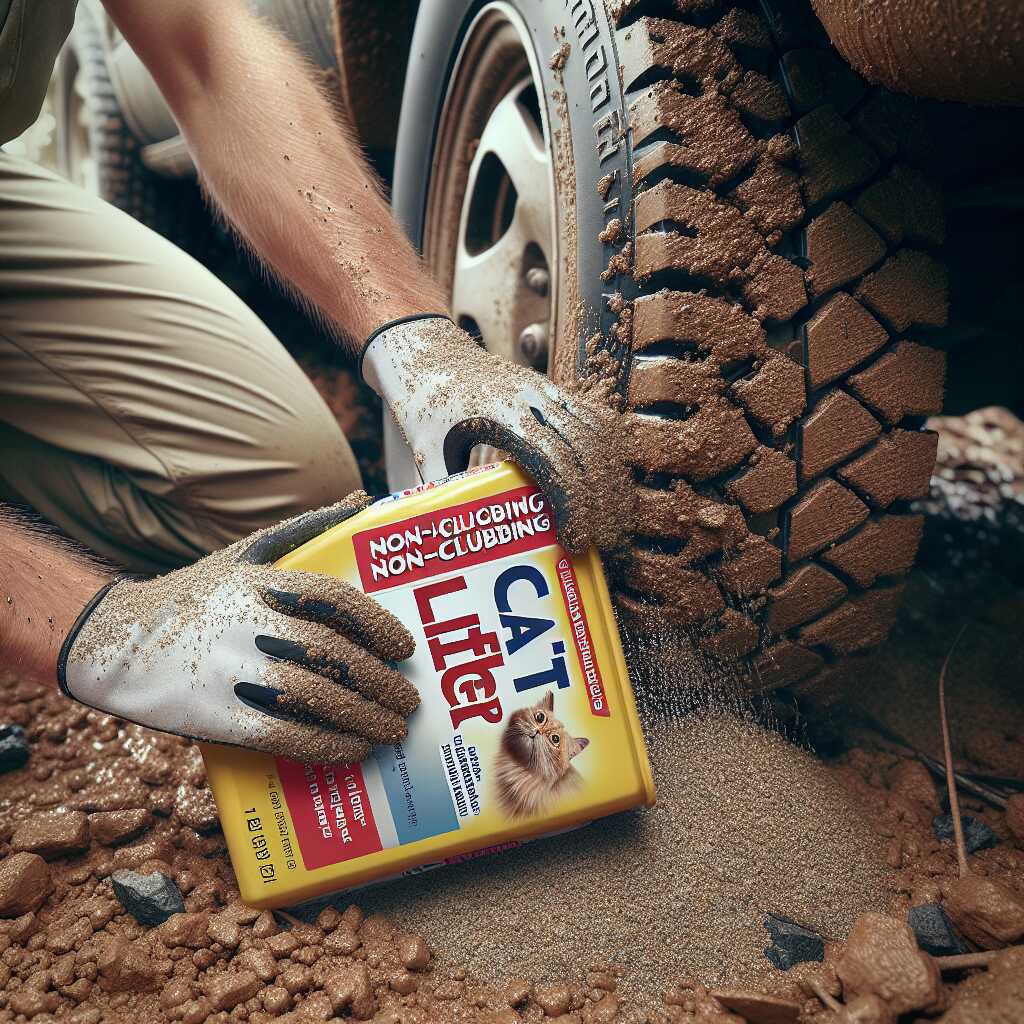
- Clear loose material from around the tires (3-10 minutes): Remove excess snow, mud, or ice from in front of and behind the drive tires using a shovel or hands/gloves. Instruction: Create a shallow, level path in the direction you intend to go and clear the wheel wells where possible. Result: Tires will have a flatter surface to contact the traction material, improving effectiveness.
- Measure and apply litter (2-5 minutes): Use 1 to 4 kg (2 to 9 lb) of non-clumping cat litter per stuck wheel start with 1 kg (2 lb) and add more if needed. Instruction: Spread litter directly in front of (for forward exit) and under the tread area in a roughly 30-60 cm (12-24 in) strip; pack lightly with your foot so granules contact the tire. Result: A gritty layer is placed where the tire can bite.
- Use low gear and controlled throttle (1-5 minutes): Put the vehicle in the lowest forward gear or second gear for ABS-equipped cars; gently apply throttle with steady pressure. Instruction: Avoid aggressive wheelspin feather the throttle and let the tire bite the litter. Result: If successful, the vehicle will creep forward one to several meters; aggressive spinning reduces chance of success and increases damage.
- Rock the vehicle if needed (3-8 minutes): If the vehicle wont move, alternate between a short forward and reverse (rocking) motion with small throttle inputs. Instruction: Each movement should be 1-2 seconds; after each attempt, reapply more litter where the tires slip. Result: Repeated controlled rocking often helps tires gain purchase on the granular layer.
- Combine with other items for extra grip (2-6 minutes): Place floor mats, branches, sand, or kitty-litter-filled socks on the cleared path if available. Instruction: Use these items in combination mats or boards under litter can stop granules from sinking into soft mud. Result: Increased chance of success on softer surfaces.
- Stop if nothing changes or conditions worsen (immediate): If wheelspin increases, smoke appears, or transmission/engine temperatures rise, stop attempts. Instruction: Dont continue aggressive attempts call roadside assistance or use a winch/tow as needed. Result: Prevents drivetrain damage and overheating; recognizes the methods limits.
- Clean up and inspect (5-15 minutes after freeing): Once free, remove caked litter from tires, brakes, and undercarriage with a brush or hose when practical. Instruction: Check brake function and drivetrain for grit or damage; dispose of used litter responsibly. Result: Reduces long-term wear and avoids litter being tracked into vehicles or the environment.
FAQ
What is non clumping cat litter exactly for traction use
Non-clumping cat litter is a coarse granular material that provides temporary tire traction by adding friction and by filling voids under slipping tires. The product often costs $6 to $15 for a 20 lb bag and provides a low-cost option compared with a commercial traction mat that sells for $30 to $150, which makes it useful for roadside emergency use and preparedness kits. Predicament Measures notes that reliability and real-world experience vary by brand and surface, so expect a practical solution for light to moderate stuck situations and plan for cleanup after use.
What materials are in non clumping cat litter and grain size
Non-clumping cat litter commonly contains clay-based granules or silica-based granules and may include recycled-paper pellets, with granule sizes that vary by product and typically range from about 1 mm to 4 mm. The coarse grains provide bite under tires and enhance traction while the product design focuses on absorption and weight, which can help with snow and soft mud. Reviews and comparison notes from user testing show that coarser, heavier clay granules provide better traction than very fine or dusty litter in many cases.
How does non clumping cat litter work step by step for traction
Non-clumping cat litter creates traction by placing coarse granules under the drive tires so the tire tread can grip new material instead of spinning on slime, packed snow, or mud. Typical on-scene steps take 5 to 30 minutes total and include clearing loose snow or mud away from the tire, scattering 1 to 4 kg (2 to 9 lb) of litter in front of and behind the contact patch for each stuck wheel, then using low-gear gentle throttle to move the vehicle slowly 0.5 to 3 meters while steering straight. Field experience and simple testing by drivers shows that this method provides an estimated 30 to 70 chance of freeing a vehicle in light to moderate packed snow or soft mud when used correctly and within the method limits.
What are the exact steps to spread litter under tires safely
Step 1: Stop the vehicle and set the parking brake, turn off the engine, and use wheel chocks or stones to secure the car for 1 to 2 minutes while you prepare; Step 2: Shovel or scoop 1 to 4 kg (2 to 9 lb) of litter per stuck wheel into the tire track directly where the tread meets the ground, placing more material ahead of the wheel for forward motion or behind for reverse motion; Step 3: Get back in, select lowest gear, steer straight, and apply slow steady throttle for 3 to 10 seconds bursts while watching for 0.5 to 3 meters of forward movement. This procedure aims at ensuring safety, reducing wheel spin that causes drivetrain wear, and improving the chance of success while keeping cleanup manageable.
What are the main benefits of using non clumping cat litter for traction
Non-clumping cat litter provides a low-cost, compact, and widely available traction aid that helps drivers escape light to moderate snow and mud by improving grip under tires and by filling shallow ruts. The cost comparison shows a 20 lb bag at $6 to $15 versus $30 to $150 for a traction mat and $5 to $12 for a 50 lb bag of coarse sand, which makes litter an economical option for emergency kits and travel stashes. User reviews and practical testing indicate that litter delivers useful results for short-distance recovery, enhances the drivers toolkit, and offers a simple, portable solution that improves escape chances when used properly.
How much extra grip and how long does traction last with litter
Estimated grip improvement varies but you can expect roughly a 30 to 70 chance of freeing a vehicle in light to moderate packed snow or soft mud when you apply 1 to 4 kg (2 to 9 lb) per wheel and use careful driving technique. Traction from litter typically lasts only for the single recovery move of 0.5 to 3 meters and may lose effectiveness after a few passes or if wheels dig deeper into soft material. Testing and experience show that repeated aggressive spinning reduces effectiveness, creates messy cleanup, and increases the risk of drivetrain heat or wear.
What are the risks and limitations of using non clumping cat litter for tires
Non-clumping cat litter cannot substitute for winching or towing in severe ruts, deep mud, or on solid ice and it will not lift a vehicle out of a deep hole or fixed entrapment. The method can create a messy cleanup, may clog wheel wells or brake components if wet, and can increase drivetrain wear if drivers spin tires aggressively for long periods. Reliability depends on correct amount, proper placement, and ground conditions, and testing shows much lower success on deep mud, loose snow over ice, or heavily rutted terrain.
When should you not use cat litter for vehicle traction
Do not use non-clumping cat litter when the vehicle sits in a deep hole, when ice covers the surface, or when tires cannot reach any compacted surface, because the product will not lift or pry the vehicle free in those conditions. Do not spin tires at high rpm for more than a few seconds because that increases drivetrain stress, can overheat components, and lowers the likelihood of success. Choose towing, winching, or professional help for severe entrapment, deep ruts, and safety-critical situations where this improvised material cannot deliver results.
Who should consider using non clumping cat litter for tire traction emergencies
Drivers who travel in winter regions, commuters, off-road enthusiasts, roadside assistance operators, and emergency planners should consider keeping non-clumping cat litter as an emergency traction option for light to moderate stuck situations. This method benefits passenger cars, front-wheel-drive vehicles, light SUVs, crossovers, small pickup trucks, and travelers who need a compact, low-cost tool that enhances their recovery options and complements sand, traction mats, and tow gear. Predicament Measures recommends including litter in a broader kit that contains a shovel, gloves, tow strap, and a traction mat for improved reliability and emergency readiness.
What vehicle types and drivers benefit most from this method
Passenger cars, front-wheel-drive and rear-wheel-drive vehicles, light SUVs, and pickups often benefit most from non-clumping cat litter when they face shallow ruts, packed snow, or soft mud because these vehicles can usually use placed material to regain traction. Off-road 4×4 drivers can use litter as a backup tool in light situations but rely on dedicated recovery gear for serious off-road entrapment. Reviews and experience show that the best use is as an emergency, low-cost, easy-to-carry option that helps in many but not all stuck-vehicle scenarios.
When is the best time to use non clumping cat litter to escape mud and snow
The best time to use non clumping cat litter to escape mud and snow is when a vehicle is stuck in light to moderate packed snow or soft, wet mud and when drive wheels can reach a few inches of added granular material. Testing and field experience show an estimated 30 to 70 chance of freeing a vehicle in these conditions when you apply 1 to 4 kg (2 to 9 lb) of coarse clay litter per stuck wheel and attempt a slow controlled exit within 5 to 30 minutes. Predicament Measures recommends this option as an essential, low-cost emergency measure while noting clear limits on deep mud, loose snow over ice, or rutted terrain where reliability drops sharply.
What ground conditions make cat litter most effective for traction
Cat litter provides traction best on surfaces that are soft but not deeply rutted, such as packed snow up to 4 inches deep or mud that yields under 1 to 3 inches of wheel spin. Tests and reviews show the litter granules enhance friction and help tires bite without needing a tow in many mild to moderate cases, but results vary with litter grain size and moisture. Drivers should expect lower success on solid ice, deep holes, or severe ruts where cat litter cannot lift or support the vehicle.
How much does non clumping cat litter cost compared to traction alternatives
A 20 lb bag of non-clumping clay litter typically costs $6 to $15 and can cover several emergency uses, which makes it a cost-effective option compared to other traction tools. For comparison, a single commercial traction mat costs $30 to $150 and a 50 lb bag of coarse sand costs about $5 to $12, so litter can be a cheap emergency stock in a vehicle kit. Predicament Measures uses price comparison data and user reviews to show that litter offers good value for occasional emergency traction while noting mats and sand deliver more consistent performance in many tests.
What are typical prices for litter sand gravel and traction mats
Typical prices are about $6 to $15 for a 20 lb bag of non-clumping clay litter, $5 to $12 for a 50 lb bag of coarse sand, and $30 to $150 for traction mats depending on brand and size. Price comparisons in user reviews and product testing show traction mats and sand often deliver more durable, repeatable results but cost more up front than a single bag of litter. Buyers should weigh cost, storage, and expected use when choosing between litter, sand, gravel, or a traction mat.
What materials and tools are needed to use non clumping cat litter for traction
You need a 20 lb bag or larger of non-clumping clay cat litter, a small shovel or scoop, gloves, and optional traction boards or floor mats to use litter effectively for traction. Practical testing and experience indicate you will typically apply 1 to 4 kg (2 to 9 lb) of litter per stuck wheel, spend about 5 to 30 minutes gathering and spreading the granules, and clear a work area of loose debris before attempting a slow exit. Predicament Measures advises including a small stiff brush, a tarp for cleanup, and a hand shovel in any roadside kit to improve ease and speed during a 2025-style emergency test scenario.
How much litter and what tools do you need per stuck vehicle
You should plan on 1 to 4 kg (2 to 9 lb) of litter per stuck drive wheel and at least one 20 lb bag to handle typical single-wheel or two-wheel stuck events. A hand shovel, gloves, and a sturdy floor mat or old carpet help with placement and cleanup and will reduce the time spent to 5 to 30 minutes per recovery attempt. Users report that having a small shovel and a tarp improves efficiency, reduces vehicle mess, and helps deliver better results in practical tests.
What are the best alternatives to non clumping cat litter for gaining tire traction
Best alternatives to non-clumping cat litter for tire traction include commercial traction mats, coarse sand, crushed gravel, and traction boards, each designed to provide a more durable and repeatable result. Reviews and testing data show traction mats and traction boards offer the most reliable and durable performance and can handle repeated uses, while a 50 lb bag of coarse sand gives a low-cost option with better load-bearing than fine litter. Predicament Measures provides comparison data and recommends mats or boards for regular off-road use and litter for occasional emergency use.
How do traction mats sand boards and chains compare to cat litter
Traction mats and boards deliver immediate, repeatable traction and often work on mixed snow, packed ice edges, and rutted ground where cat litter fails, while coarse sand and gravel offer a low-cost, higher-load option than litter. Chains and winter tires provide the most reliable traction improvement while driving and do not create the same cleanup burden, but they cost more and require installation time in many reviews and tests. Cat litter remains useful as a compact emergency item that offers good short-term help in mild conditions but cannot replace traction mats or chains for severe conditions.
What common mistakes should be avoided when using non clumping cat litter for traction
Common mistakes to avoid include applying too little litter, packing litter far from the tires, and spinning the wheels aggressively, which can reduce success and cause drivetrain stress. Testing and user experience show that controlled, low-rev throttle inputs and placing 1 to 4 kg (2 to 9 lb) of litter directly under the tire tread increase the chance of success to the 30 to 70 range for mild cases and reduce mess and wear. Predicament Measures warns that litter cannot lift a vehicle out of a deep hole and that aggressive wheel spin can cause overheating, drivetrain damage, and a large cleanup task.
How to avoid wheel spin damage vehicle mess and ineffective placement
Avoid wheel spin by using low gear and gentle throttle and by placing coarse litter close to the contact patch and extending 6 to 12 inches ahead of the tire to give the tread a bite. Use gloves, a tarp, and a brush for cleanup to limit paint and undercarriage abrasion and to reduce the chance of tracked litter inside the vehicle after a 5 to 30 minute recovery. Reviews and field tests show that careful placement and conservative driving preserve vehicle components and improve the efficiency and reliability of a litter-based traction attempt.
Related posts:
 Unwaxed Dental Floss: High-Strength Fishing Line Alternative for Wilderness Food Procurement
 Petroleum Jelly Cotton Balls: Five-Minute Burn Time Fire Starters for Damp Conditions
 Elastic Hair Ties: Cordage Bundle Organizers for Tangle-Free Emergency Kits
 Plastic Cling Wrap: Burn Wound Covering to Prevent Infection and Fluid Loss
 Cornstarch: Moisture Absorption Powder for Preventing Trench Foot
 Maxi Pads: Large Absorbent Bandages for Major Trauma Wound Coverage
 Rubber Erasers: Emergency Ear Protection Against Dangerous Noise Levels
Acrylic Yarn: Emergency Wound Sutures for Gaping Lacerations
Rubber Erasers: Emergency Ear Protection Against Dangerous Noise Levels
Acrylic Yarn: Emergency Wound Sutures for Gaping Lacerations