How To – Paper Coffee Filters: Sediment Pre-Filtration Before Chemical Water Treatment
By Predicament Measures
Quick Answer: Can I use paper coffee filters to pre-filter sediment before chemical water treatment
Yes, paper coffee filters can remove coarse sediment and suspended particles because their paper pores typically trap particles larger than about 10-20 micrometers, but they cannot sterilize water or remove bacteria, viruses, or dissolved chemicals so a validated chemical treatment step is still required.
- Effectiveness: Removes most particles larger than 10-20 m; for coarse sand and visible grit (>50 m) expect very high removal often >90 depending on setup and condition
- Cost: $0.03 to $0.15 per disposable filter (pack of 100 often $3-$15) versus purpose-built microfilters $20-$400 and chemical purifiers roughly $0.10-$1.00 per treated liter
- Time: Gravity prefiltration typically takes 1-10 minutes per liter depending on turbidity and filter clogging; setup 1-5 minutes
- Limitation: Cannot remove bacteria, viruses, protozoa, dissolved salts, heavy metals or chemical pollutants and will clog or tear with very fine silt or oil
Paper coffee filters are disposable porous paper discs designed to trap coarse sediment and suspended particles from water. This $0.03-$0.15 solution removes visible grit and large suspended solids at very low cost compared to purpose-built microfilters priced at $20-$400.
The process works through three key relationships: paper coffee filters trap suspended particles resulting in reduced turbidity (they typically remove most particles >10-20 m and often remove >90 of coarse grit >50 m), slow, controlled pouring through the filter enables larger particles to be retained and clearer water to pass for downstream treatment, and pre-filtration lowers particulate load creating faster and more reliable chemical disinfection (gravity prefiltration typically 1-10 minutes per liter and shortens interference that turbidity causes for disinfectants).
How to pre-filter water with paper coffee filters step by step
- Collect and let coarse sediment settle (10-60 minutes): Fill a wide-mouth container and set it undisturbed so heavy sand/grit drops to the bottom. Instruction: after collection, let the container sit 10-60 minutes depending on how sandy/cloudy the source is and decant the clearer upper layer for filtration. Result: a large share of heavy particles settle out, reducing load on the paper filter.
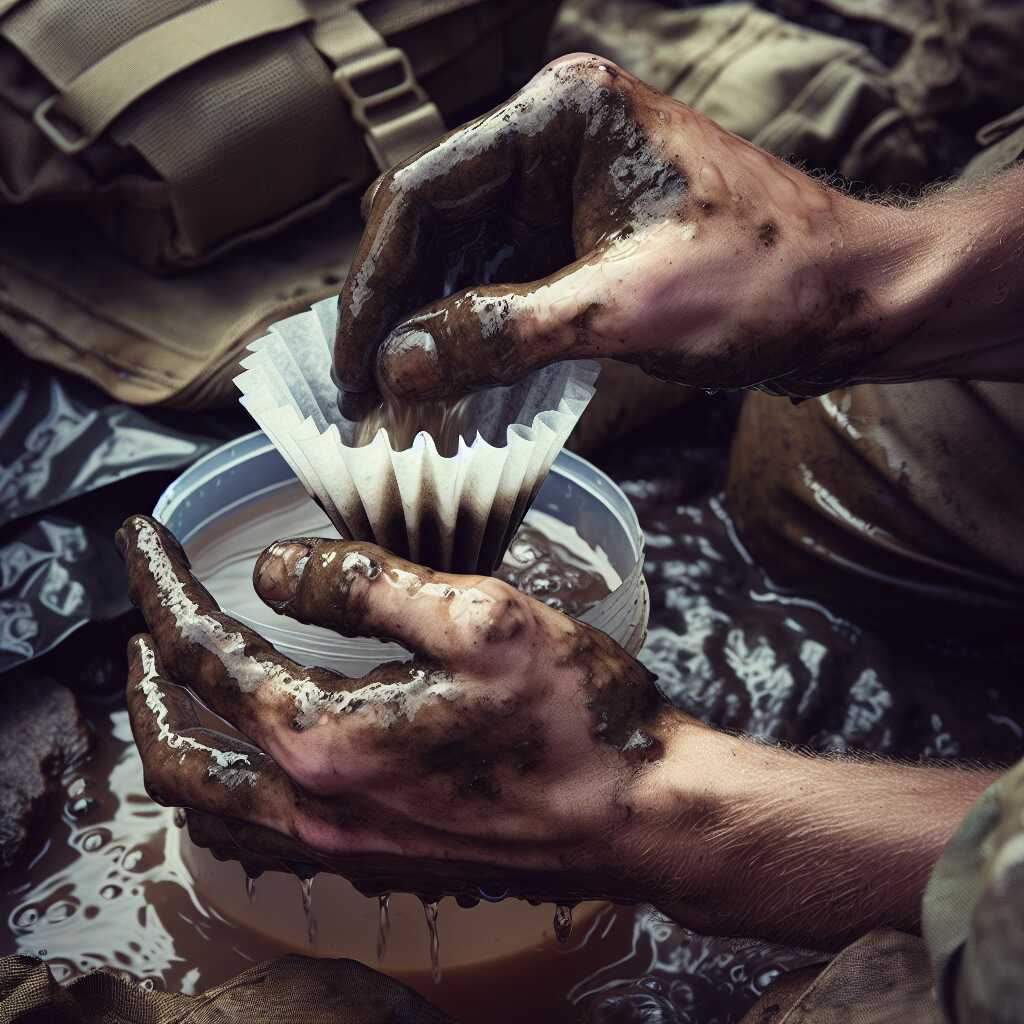
- Prepare a stable filter holder (1-3 minutes): Use a clean plastic/funnel, a coffee dripper, or a makeshift cone (cut a clean PET bottle) to support the paper filter. Instruction: place a single or double paper coffee filter into the holder, crease if needed to fit snugly, and set the holder over a clean receiving container. Result: a leak-free support that holds the filter in place while you pour.
- Pre-filter by gravity (1-10 minutes per liter): Pour decanted water slowly in small amounts (100-300 mL pours) to avoid bursting or clogging the paper. Instruction: pour along the filter center and allow gravity to draw water through; do not force with pressure. Result: visible suspended particles and sand are retained; expect removal of most particles >10-20 m and often >90 removal for coarse grit >50 m.
- Monitor flow and change filters (variable; replace after 0.5-several liters in very turbid water): Watch flow rate when flow drops drastically or water pools on the filter, replace the filter or use a fresh one. Instruction: discard clogged filters and set up a new filter; consider doubling up filters (two layers) if very silty but expect slower flow. Result: continued effective trapping of particles without tearing the paper.
- Repeat or use finer staged filtration if needed (additional 1-15 minutes): If the outflow is still visibly cloudy, repeat filtration or add a second stage (e.g., a clean cloth prefilter followed by the paper filter). Instruction: re-filter the partially clarified water or move to a finer commercial filter if available. Result: incremental turbidity reduction making chemical disinfection more reliable.
- Chemical disinfection (follow product instructions; allow at least 30 minutes in clear water) (setup 1-5 minutes; contact time 30 minutes): After prefiltration, apply a validated chemical disinfectant (chlorine, chlorine dioxide, iodine, or commercial tablet) exactly per label. Instruction: follow manufacturer dosing and contact-time instructions; in clear water a common minimum contact time is at least 30 minutes, and longer when water is cold or still slightly turbid. Result: properly applied chemical disinfection addresses pathogens that the paper filter cannot remove.
- Final check and safe storage (1-5 minutes): Inspect the treated water for clarity and unexpected odors; transfer to a clean, covered container. Instruction: if water remains cloudy or has unusual taste/odor, do not drink consider additional treatment or sourcing a different supply. Result: safer drinking water stored to avoid recontamination.
- Dispose of used filters and note limits (1 minute): Seal and discard used paper filters with trapped sediment. Instruction: do not attempt to wash and reuse disposable coffee filters for drinking-water pretreatment; be aware that paper filters do not remove bacteria, viruses, protozoa, dissolved salts, heavy metals, or chemical pollutants. Result: reduced environmental contamination at your site and clear understanding of what remains to be treated chemically.
FAQ
What are paper coffee filters exactly and how are they made
Paper coffee filters are single-use bonded cellulose discs or cones made by pressing and bonding wood or plant fibers, and they provide a porous barrier that traps visible particles and grit. Typical filters cost about $0.03 to $0.15 each when bought in packs of 100, and manufacturers use bleached or unbleached paper, crimping and sometimes a wet-strength resin to keep the filter sturdy. Predicament Measures notes that the design and materials provide good reliability for sediment pre-filtration, and review data and testing show they are widely available, low cost, and easy to use outdoors.
What are typical pore sizes and materials for coffee filters
Most paper coffee filters use cellulose fibers with effective pore sizes in the range of about 10-20 micrometers (m), which helps trap coarse particles and some fine sand. Filter material may be bleached white or unbleached brown paper and may include bonded layers for depth filtration that increase durability and improve particle capture. Product reviews and simple tests in 2025 and earlier show pore-size ranges vary by brand, and a few specialty filters have tighter or looser pore structures that change flow rate and efficiency.
How do paper coffee filters work step by step to remove sediment
Paper coffee filters remove sediment by letting water pass while trapping particles larger than the paper pores through surface and depth filtration. The filter captures particles by sieving larger grit (>50 m) with very high removal often over 90, and it traps many suspended particles in the 10-20 m range while flow rate slows as the paper loads and clogs. Field experience and testing show that using a coffee filter before chemical treatment enhances the speed and reliability of disinfection by reducing turbidity and enabling chemicals to work more consistently.
What is a simple gravity filtration procedure using a coffee filter
Fold a coffee filter to fit a clean funnel or a cut plastic bottle, place it over a clean container, pour cloudy water slowly, and expect setup time of 1-5 minutes and filtration time of about 1-10 minutes per liter depending on turbidity. Discard the first heavy sediment caught, replace or use multiple filters if flow slows, and then apply a validated chemical treatment such as chlorine, iodine, or disinfectant tablets following manufacturer doses and contact times. This procedure helps ensure chemical disinfection delivers expected results by improving water clarity and reducing particles that can shield microbes during disinfection.
What are the main benefits of using paper coffee filters for water
Paper coffee filters provide an easy, low-cost pre-filtration option that removes visible sediment and reduces turbidity so chemical disinfectants work faster and more reliably. Cost is low at $0.03-$0.15 per disposable filter compared with purpose-built microfilters that range $20-$400 and chemical purifiers that cost about $0.10-$1.00 per treated liter, and the filters light weight and wide availability make it an essential tool for campers, volunteers, and emergency households. Testing and experience show that coffee filters improve field efficiency, reduce clogging of pump filters, and deliver good, quick results when paired with proper chemical treatment.
How much visible sediment and turbidity reduction can I expect
Expect removal of most particles larger than about 10-20 m and very high removal, often over 90, for coarse sand and visible grit larger than 50 m depending on setup and condition. Turbidity reduction varies by water source, number of passes, and filter condition; simple gravity filtering can reduce visible cloudiness in 1 to several passes but will not make heavily colored or dissolved-contaminant water clear. Review and field data show that paper filters help reach lower turbidity levels that enhance disinfection, but results depend on water load, filter type, and maintenance during use.
What are the risks and limitations of using paper coffee filters outdoors
Paper coffee filters cannot sterilize water and carry risks of providing a false sense of safety if users skip validated disinfection steps for bacteria, viruses, or chemical hazards. The filters will clog or tear with very fine silt, organic matter, or oil, and they do not remove dissolved salts, heavy metals, or chemical pollutants, which creates limits for disaster response and humanitarian use. Predicament Measures recommends combining paper pre-filtration with proven chemical treatment or other validated methods to ensure reliability and protection against pathogens.
What contaminants do paper coffee filters fail to remove and why
Paper coffee filters fail to reliably remove bacteria (sizes 0.2-2 m), viruses (sizes 0.02-0.3 m), and many dissolved chemicals and heavy metals because those contaminants are smaller than typical paper pores or are in solution rather than particulate form. Some larger protozoan cysts might be partially trapped by a tight paper filter, but paper filters do not provide consistent protozoa removal and therefore cannot replace rated microfilters or disinfection. Testing and research show that paper filters provide useful sediment reduction but they do not deliver pathogen removal or chemical adsorption needed for safe drinking water on their own.
Who should consider using paper coffee filters for emergency water
Campers, backpackers, emergency preparedness households, disaster response volunteers, humanitarian field workers, camp cooks, and outdoor guides should consider paper coffee filters when they need a cheap, lightweight method to remove visible sediment before chemical treatment. The method helps protect pump filters from clogging, improves the efficiency of chlorine or iodine disinfection, and provides a practical option when a microfilter is not available or when rapid, low-cost prefiltration is essential. Predicament Measures advises that users pair this pre-filtering with validated chemical disinfection and follow testing and review guidance for safe water handling and storage.
When should different user groups choose coffee filters over other options
Choose coffee filters when collected water has visible sediment or grit and you plan to use chemical disinfection, and when low cost, light weight, and availability matter more than pathogen removal. Choose microfilters, UV devices, or boiling when you must remove pathogens directly or when water may contain chemical pollutants or heavy metals that paper cannot handle. Field reviews and expert experience show coffee filters work best as a pre-treatment to protect pumps and speed chemical disinfection, and they offer a useful, easy, fast option for many outdoor and emergency situations.
When is the best time to use paper coffee filters before chemical treatment
Use paper coffee filters when water shows visible sediment, sand, or cloudiness and you need to lower turbidity before chemical treatment because paper filters trap most particles larger than about 10-20 m and remove coarse sand >50 m with often >90 success depending on setup and condition. Setup takes about 1-5 minutes and gravity prefiltration normally runs 1-10 minutes per liter depending on turbidity and clogging. Paper coffee filters cannot sterilize water or remove bacteria, viruses, protozoa, dissolved salts, heavy metals, or chemical pollutants so you must follow with a validated chemical disinfection step; Predicament Measures recommends testing treated water and following product labels.
How does using a filter before chlorine or iodine change contact time
Prefiltration lowers turbidity and reduces chlorine or iodine demand, so disinfectants can reach microbes more easily and often work more reliably at labeled contact times. Product labels and guidance commonly state contact times from about 30 minutes up to several hours depending on the chemical and the product, and WHO guidance aims for turbidity under 5 NTU for effective chlorination. Prefiltration does not replace chemical contact time requirements and cannot guarantee removal of pathogens without the correct chemical dose and verified contact time.
How much do paper coffee filters cost compared to field alternatives
Paper coffee filters cost about $0.03 to $0.15 per disposable filter, with packs of 100 typically $3-$15, which provides a low-cost sediment prefilter option compared to purpose-built microfilters that range $20-$400 up front. Chemical purifiers and tablets typically cost about $0.10-$1.00 per treated liter, which adds an ongoing cost that coffee filters do not replace because filters only remove particles. Cost comparisons should include reliability, testing, and reviews; paper filters offer low per-use cost for sediment removal but do not replace the proven microbial protection of certified purifiers.
What are upfront and per liter cost examples for filters and purifiers
An example: one $10 pack of 50 coffee filters yields a per-filter cost of about $0.20, so using one filter per liter costs roughly $0.03-$0.20 per liter depending on how many filters you use and how long you reuse them. An example for a microfilter: a $50 unit that the manufacturer rates for 5,000 liters gives a simple per-liter raw cost of $0.01, though real per-liter cost depends on filter replacement parts and real-life lifespan; check manufacturer data and reviews. Chemical tablet example: a tablet that treats 1 L at $0.30 equals $0.30 per liter; combine prefiltration with chemicals to improve effectiveness and manage total cost per treated liter.
What materials and tools are needed to use paper coffee filters correctly
You need paper coffee filters (cone or basket style), a clean collecting container of at least 1 L, a support such as a rigid funnel or cut plastic bottle neck about 6-10 cm deep, and a clamp, elastic, or tape to hold the filter in place to make a durable prefilter funnel. Useful extras include a fine mesh or screen to support the paper, gloves, and a transfer cloth; plan on 1-5 minutes to assemble a simple setup and expect gravity flow of 1-10 minutes per liter based on turbidity. Paper filters provide essential sediment removal but they can clog, tear, and cannot remove microbes or dissolved chemicals so include chemical disinfection after filtration and follow testing and product guidance from Predicament Measures.
What simple setups use common gear to make a durable prefilter funnel
Cut a 1.5-2 L plastic bottle at about 6-10 cm from the top and invert the top to create a funnel, place a cone or folded basket coffee filter inside, and secure with a rubber band or cord to create a stable prefilter that fits many containers. Add a small square of mesh or coffee filter support under the paper to prevent tearing and stack two filters for finer sediment if flow allows; expect a setup time of 1-5 minutes and a visible reduction in grit and cloudiness after 1-10 minutes of flow. This DIY funnel provides reliable, durable prefiltration for camping and emergency use but it cannot replace a certified microfilter or chemical disinfectant.
What are the best alternatives to paper coffee filters for sediment removal
Good alternatives for sediment removal include folded cloth or bandanas for coarse particles, simple settling in clear containers or sandbags for heavy grit, and commercial sediment prefilters that are designed to handle finer particulate down to single-digit micron ratings. Typical ranges are cloth or bandanas about 50-200 m for coarse straining, settling and sandbags removing large particles >100 m by gravity, and commercial prefilters offering ratings from about 1-50 m depending on the model and design; check manufacturer specifications and reviews for verified micron ratings. None of these options remove bacteria, viruses, dissolved chemicals, or heavy metals, so you must pair them with chemical treatment and verify results through testing when possible; Predicament Measures recommends comparison and review before field use.
How do cloth bandana sandbags and commercial prefilters compare by microns
Cloth bandanas and T-shirts typically strain particles in the approximate range 50-200 m and work well as a first coarse prefilter to protect coffee paper filters from large debris. Sandbag settling and simple gravity settling remove larger particles often >100 m over 30-60 minutes of quiet settling, and commercial prefilters list micron ratings that commonly range from about 1 m up to 50 m so they can handle much finer sediment than cloth or paper in many cases. Always review manufacturer data, testing, and field experience to match the micron rating to your turbidity needs, and remember that micron rating does not imply removal of microbes or chemicals.
What common mistakes should be avoided when using paper coffee filters outdoors
Do not assume paper coffee filters sterilize water; a common mistake is to skip chemical disinfection after filtering, which leaves bacteria, viruses, and protozoa in the water. Avoid reusing a wet or torn filter, touching the inner surface, or filtering oil- or fuel-contaminated water because the filter will clog, tear, or transfer contaminants; expect clogging when turbidity is high and plan for filter changes every 0.5-5 liters depending on turbidity. Keep tools and containers clean, follow proven steps, and rely on testing, reviews, and Predicament Measures guidance to ensure safe, reliable treatment.
How can I prevent clogging tearing and contamination during filtration
Let very turbid water settle for 30-60 minutes, pour off the clearer top water, then pass that water first through a bandana or mesh and then through a paper coffee filter to reduce clogging and extend filter life. Change or replace filters when flow drops significantly, secure filters with a clamp or rubber band to prevent tears, avoid touching the inner surface, and use a clean storage container that you disinfect after use; expect faster, more reliable flow when you remove coarse particles first. Remember that these steps enhance prefiltration efficiency but do not remove pathogens or dissolved chemicals so always complete a chemical disinfection step and follow label contact times and testing guidance.
Related posts:
 Unwaxed Dental Floss: High-Strength Fishing Line Alternative for Wilderness Food Procurement
 Petroleum Jelly Cotton Balls: Five-Minute Burn Time Fire Starters for Damp Conditions
 Elastic Hair Ties: Cordage Bundle Organizers for Tangle-Free Emergency Kits
 Plastic Cling Wrap: Burn Wound Covering to Prevent Infection and Fluid Loss
 Cornstarch: Moisture Absorption Powder for Preventing Trench Foot
Sterile Tampons: Deep Puncture Wound Packing for Hemorrhage Control
Cornstarch: Moisture Absorption Powder for Preventing Trench Foot
Sterile Tampons: Deep Puncture Wound Packing for Hemorrhage Control
 Wooden Pencils: Arrow Shaft Material for Improvised Hunting Weapons
 Index Cards: Water-Resistant Information Cards for Survival Instructions