How To – HDPE Cutting Boards: Sterile Surfaces for Emergency Medical Procedures
By Predicament Measures
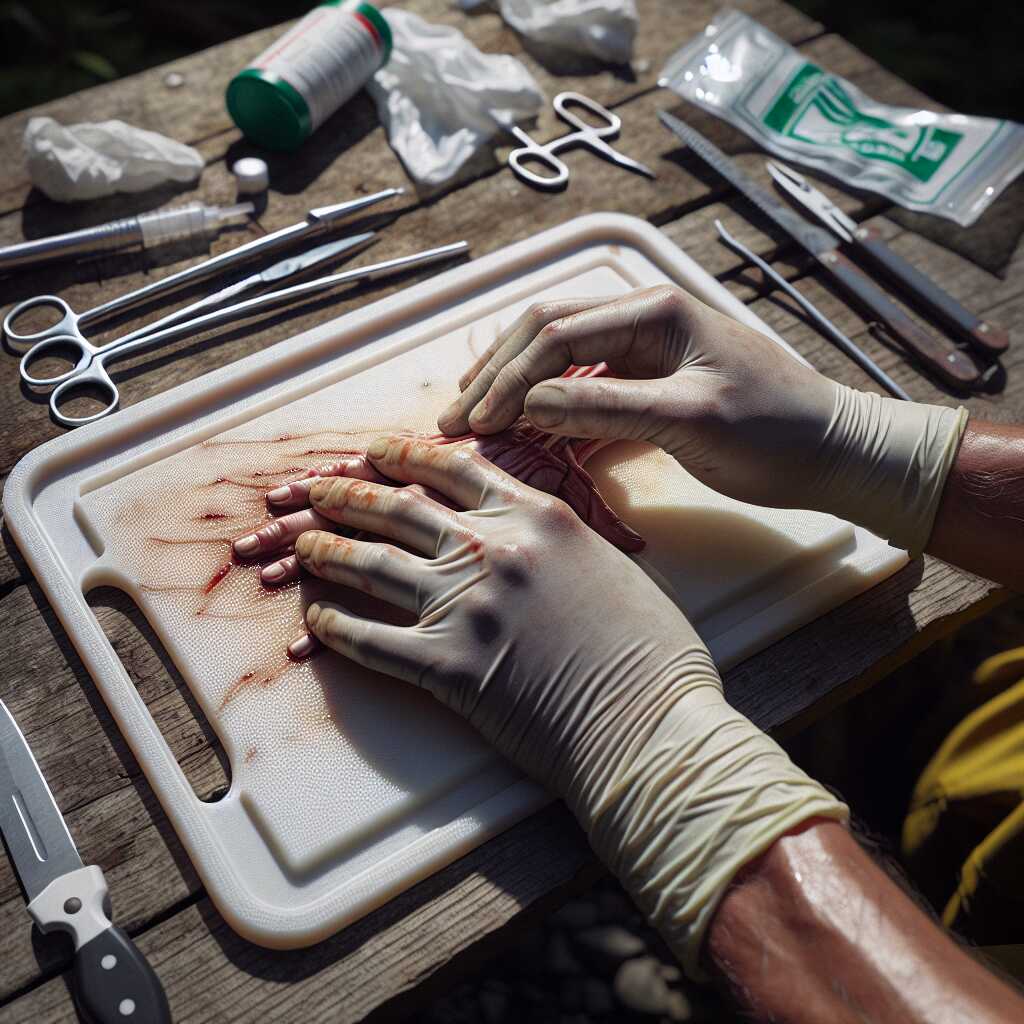
Quick Answer: Can an HDPE cutting board be used as a sterile surface for emergency medical procedures
No, an HDPE cutting board should not be assumed sterile. It can be made a low contamination surface through proper cleaning and high level disinfection or by validated sterilization methods (for heat tolerant items) but cannot reliably be sterilized by simple field wiping or boiling and is not appropriate for implant or high risk sterile-field surgery
- Effectiveness: >99.9 (commonly 3-6 log reductions for many vegetative bacteria when cleaned and disinfected)
- Cost: $10-$50 (HDPE cutting board) vs disposable sterile procedure tray/drape $3-$20 per use; reusable stainless tray $25-$150 plus sterilization costs $0.50-$2 per cycle
- Time: 1-5 minutes (wipe disinfection contact time); 20-30 minutes (high-level chemical immersion); 12-48 hours (ethylene oxide sterilization including aeration)
- Limitation: Cannot guarantee sterility with simple field cleaning; not suitable for implant or major invasive surgery; deep cuts/grooves can harbor biofilm and protect pathogens
HDPE cutting board is a dense, nonporous sheet of highdensity polyethylene commonly used for food preparation; in the prehospital and field setting it can serve as a reusable clean surface if properly cleaned and disinfected. This $10-$50 solution provides a lowcost, reusable clean surface option compared to disposable sterile procedure trays or drapes at $3-$20 per use.
The process works through three key relationships: EPAregistered disinfectants reduce microbial load resulting in 3-6 log reductions (>99.9 reductions for many vegetative bacteria), sporicidal agents such as bleach 1:10 inactivate spores enabling safer handling when C. difficile or spore risk is suspected, and maintaining a smooth, intact HDPE surface allows effective wipe disinfection within 1-5 minutes contact time creating a lowcontamination surface suitable for minor emergency procedures (but not for implantable or highrisk sterile operations).
How to prepare an HDPE cutting board for emergency procedures step by step
- Inspect and select board (1-2 minutes): Choose a foodgrade HDPE cutting board free of deep cuts, grooves, cracks, or delamination. Instruction: Visually and tactilely check both sides and edges; discard or set aside any board with grooves that trap soil. Result: an intact nonporous surface that is amenable to effective cleaning and disinfection.
- Preclean visible soil (2-5 minutes): Instruction: Remove gross contamination with detergent and water using a scrub brush or cloth; rinse with potable water. Result: reduced organic load, which improves disinfectant effectiveness (organic material can neutralize some disinfectants).
- Apply EPAregistered hospital disinfectant (wipe method) (1-5 minutes contact time as per label): Instruction: Use an EPAregistered disinfectant labelled for use on nonporous surfaces; saturate the surface and keep it visibly wet for the products required contact time (commonly 1-5 minutes). Result: expect commonly reported 3-6 log reductions (>99.9) against many vegetative bacteria when label directions are followed.
- Use sporicidal treatment when spores are a concern (bleach 1:10 or equivalent) (20-30 minutes immersion/contact recommended for highlevel chemical disinfection): Instruction: If C. difficile or other spore concerns exist, prepare a bleach 1:10 solution (one part household bleach to nine parts water) or other labelapproved sporicide and apply according to label; for small boards consider immersion or thorough wetting and allow full contact time. Result: inactivation of spores when applied per label; note immersion or extended wet contact may be required and is less practical in some field situations.
- Rinse (if required) and dry (5-15 minutes): Instruction: Rinse with potable water if the disinfectant label requires rinsing (or if residue must be removed for patient contact), then air dry or use a clean disposable towel. Result: a dry, lowcontamination surface ready for use for minor emergency procedures.
- Consider validated sterilization only for heattolerant items (12-48 hours for EtO; autoclaving not recommended): Instruction: HDPE is not compatible with autoclaving at 121C (it deforms). For true sterilization use validated methods appropriate for HDPE items (example: ethylene oxide sterilization with 12-48 hours total cycle time including aeration) only via accredited facilities. Result: validated sterile status only when processed by approved sterilization services; not achievable by simple field methods.
- Final inspection and limitation check (1 minute): Instruction: Reinspect for damage, residual soil, or moisture. Do not use the board as a sterile field for implantable devices, major invasive surgery, or procedures requiring validated sterile technique. Result: safe application for minor wound management, splint placement, or as a clean work surface in the field; clear identification of limitations prevents misuse.
- When to choose disposables instead (immediate decision): Instruction: If a truly sterile field is required (implantation, major surgery) or the board is damaged/unable to be disinfected, use a disposable sterile procedure tray/drape ($3-$20) or transfer the patient to definitive care. Result: adherence to appropriate sterility standard and reduced patient infection risk.
FAQ
What is an HDPE cutting board used for medical procedures
An HDPE cutting board can provide a low-contamination, flat work surface for emergency wound care, instrument layout, and minor procedures in the field when no sterile tray is available. EMS crews and search and rescue teams can use boards costing $10 to $50 to organize instruments, perform wound cleaning, and place single-use sterile items while following infection control testing and review practices. Predicament Measures recommends treating HDPE boards as reusable non-sterile surfaces that require cleaning and validated disinfection before use and that cannot replace true sterile packs for implant or major invasive surgery.
How is HDPE material different from wood or stainless steel
HDPE is non-porous, chemically resistant, and lighter than wood or stainless steel, and it resists many hospital disinfectants and diluted bleach solutions. HDPE does not tolerate autoclave temperatures at 121C without warping, unlike stainless steel which withstands sterilization and costs $25 to $150 for reusable trays that require $0.50 to $2 per sterilization cycle. HDPE can scratch under rough use and deep grooves can harbor biofilm that reduces reliability and makes testing and review essential before clinical reuse.
How do I prepare an HDPE cutting board step by step in the field
Select an undamaged HDPE board free of deep cuts, measure a working area of at least 300 mm x 200 mm for instrument layout, and place it on a stable clean surface before starting the procedure. Remove visible soil with soap and warm water using a soft brush or single-use wipe, then apply an EPA-registered hospital disinfectant and follow label contact time, typically 1 to 5 minutes; for higher level disinfection use chemical immersion with validated agents for 20 to 30 minutes when feasible. Record cleaning actions in incident notes, test the surface visually and by touch, and remember that field cleaning cannot guarantee sterility and is not acceptable for implant surgery or major sterile procedures.
What cleaning agents contact times and tools should I use
Use an EPA-registered hospital disinfectant with label contact times usually 1 to 5 minutes to achieve common reductions reported as 3 log to 6 log (>99.9 for many vegetative bacteria); use a 1:10 sodium hypochlorite solution for suspected spore contamination according to label guidance. Use soft non-abrasive cloths, single-use disinfectant wipes, or a soft brush to remove biofilm; for high-level disinfection use glutaraldehyde or o-phthalaldehyde immersion for about 20 to 30 minutes per product instructions while noting that ethylene oxide sterilization is possible but requires 12 to 48 hours including aeration.
What are the main benefits of using an HDPE cutting board in emergencies
An HDPE cutting board offers a durable, lightweight, and easy-to-clean work surface that provides improved contamination control compared with clothing, cardboard, or untreated ground in field settings. The board costs $10 to $50 and helps organize instruments, enhances workflow efficiency, and delivers a surface that accepts EPA-registered disinfectants that often produce 3 log to 6 log reductions against vegetative bacteria. Experience and review from prehospital providers show HDPE improves handling of supplies and reduces contamination risk when combined with proper cleaning, but it does not replace validated sterile trays for high-risk procedures.
How does HDPE reduce contamination compared to other makeshift surfaces
HDPE reduces contamination because it is non-porous and smooth, so it does not absorb fluids like fabric or cardboard and cleans with soap and disinfectant more easily. HDPE compares favorably to makeshift surfaces by enabling measured contact times for disinfectants and by resisting common chemical agents, but deep scratches or grooves can still harbor microbes and reduce reliability unless removed or replaced.
What are the risks and limitations of using HDPE cutting boards for procedures
The main risk is that an HDPE cutting board cannot be assumed sterile and field cleaning cannot reliably achieve sterility, so it is not suitable for implantable device placement or major sterile-field surgery. HDPE can develop grooves that harbor biofilm, and boiling or simple wiping without correct agents and contact times will not inactivate all pathogens or spores; spores require sporicidal agents such as 1:10 bleach and validated contact time. Ethylene oxide sterilization can sterilize HDPE but requires 12 to 48 hours including aeration and is not practical in most field responses, so providers must weigh cost, time, and testing when choosing HDPE for care.
When is an HDPE board not appropriate for sterile invasive surgery
An HDPE board is not appropriate for implant surgery, vascular surgery, or any sterile invasive procedure that regulators define as requiring a validated sterile field and sterile instrumentation. Providers cannot use field-disinfected HDPE as a substitute for autoclaved sterile trays or pre-packaged sterile drapes when the procedure requires absolute sterility. Use sterile packs and hospital-standard sterilization for any procedure with implanted material, prosthesis, or high infection risk.
Who should consider using an HDPE cutting board for emergency medical use
Paramedics, EMTs, prehospital care providers, outdoor first aid instructors, search and rescue teams, and disaster relief medical coordinators should consider HDPE when they need a reliable, low-contamination work surface in austere settings. Teams that expect limited access to sterilization and that need an inexpensive ($10 to $50) reusable option can benefit from HDPE to improve organization and reduce contamination risk while following agency protocols and testing practices. Predicament Measures notes that HDPE is useful for many field tasks but that experience, training, and regular review of cleaning procedures are essential to ensure safety and reliability.
What training or certification do providers need to use HDPE safely
Providers need infection control training that covers cleaning techniques, disinfectant selection, and label contact times, plus local medical director approval or protocol for reuse and documentation. Competency checks, periodic review of cleaning records, and knowledge of limitations such as autoclave intolerance and the need for sporicidal agents for spores will help ensure safe use and improve reliability and performance in the field.
When is the best time to use an HDPE cutting board during emergency care
An HDPE cutting board is best used in emergency care when a clean, nonporous, low-contamination surface is needed for minor procedures such as wound cleaning, simple dressing changes, or instrument organization and not when true sterility is required. Expect surface wipe disinfection to take 1 to 5 minutes including required wet contact time and expect vegetative bacteria reductions commonly reported as 3 log to 6 log (>99.9 for many organisms) when using an EPA-registered hospital disinfectant per label. Know the limitation that an HDPE cutting board cannot be assumed sterile, cannot be relied on for implant or major invasive surgery, and deep cuts or grooves in the board can harbor biofilm that protects pathogens.
What procedures are suitable for an HDPE board in the prehospital setting
Use an HDPE cutting board for minor laceration cleaning, suture tray setup for simple external closures, IV setup in austere settings, and instrument organization where a low-bioburden surface suffices. Do not use the board for implant procedures, sterile-field major surgery, or procedures requiring validated sterilization validation.
How much does an HDPE cutting board cost compared to sterile alternatives
An HDPE cutting board costs about $10 to $50 depending on size and thickness, which offers a low upfront cost compared with single-use sterile procedure trays or drapes that cost $3 to $20 per use. Factor in that reusable stainless trays cost $25 to $150 up front and add sterilization costs typically $0.50 to $2 per autoclave or sterilization cycle; these numbers help with cost comparison and resource planning. Understand the limitation that cheaper boards do not provide guaranteed sterility and that per-use cost of disposable sterile items may be justified when sterility is essential for patient safety.
What are the upfront and per use costs of HDPE versus disposable trays
An HDPE board has low upfront cost ($10-$50) and near-zero per-use material cost when cleaned on scene, while disposable sterile trays or drapes cost $3-$20 each and provide single-use sterility. Consider that reusable stainless trays add sterilization cycle costs of $0.50-$2 per use and that these validated sterilization costs improve reliability for invasive care.
What materials and tools are needed to prepare an HDPE cutting board for use
You will need an EPA-registered hospital disinfectant or a 1:10 bleach solution for sporicidal action, clean water, disposable towels, nitrile gloves, and a spare intact HDPE board free of deep cuts or grooves to prepare an HDPE cutting board for use. Plan 1 to 5 minutes per surface wipe disinfection and 20 to 30 minutes for high-level chemical immersion if you can immerse and follow manufacturer contact times and safety data sheets. Keep in mind that autoclaving at 121C will deform HDPE and ethylene oxide sterilization requires 12 to 48 hours including aeration, so do not rely on heat sterilization in the field.
What sizes thicknesses and weights are best for transport and use
Choose HDPE boards in common practical sizes such as 20 cm x 30 cm (8″ x 12″) to 30 cm x 45 cm (12″ x 18″) with thickness from 6 mm to 12 mm (0.25″ to 0.5″) for a balance of stiffness and lightweight transport. Expect weights roughly 0.3 kg to 1.0 kg depending on size and thickness which helps with bag packing and carrying by paramedics or search and rescue teams. Inspect boards before use and avoid any board with deep gouges, chips, or burn marks that reduce cleanliness and testing reliability.
What are the best alternatives to an HDPE cutting board in the field
Best alternatives include single-use sterile drapes and disposable sterile procedure trays when you need validated sterility, and reusable stainless steel trays when you can access reliable sterilization processes. Choose sterile drapes or trays for wound exploration, implant procedures, or any invasive surgery that requires documented sterilization and a validated sterile field. Remember that HDPE can handle many basic tasks but does not replace items that deliver validated sterile surfaces for high-risk procedures.
When should you choose a sterile drape or disposable tray instead
Choose a sterile drape or disposable tray when you perform implant work, deep tissue surgery, or any procedure where infection risk is high and documented sterility is required. Use these items when you cannot perform validated sterilization or long aeration cycles such as ethylene oxide and when the patient condition or local protocol demands a sterile field.
What common mistakes should be avoided when using an HDPE cutting board in emergencies
Do not assume the HDPE cutting board is sterile after a quick wipe; this error risks contamination and poor patient outcomes because simple field cleaning cannot guarantee sterility. Avoid using boards with scratches, cuts, or grooves that can harbor biofilm and pathogens, and avoid boiling or brief heat exposure as autoclaving deforms HDPE and does not ensure sterility for implants. Remember the limitation that HDPE provides a reliable, durable low-contamination surface only when cleaned, disinfected, and used within its intended scope.
How can you check your HDPE surface is clean and ready during a procedure
Check the surface visually for stains, blood, and grooves and use a wet-cleaning wipe followed by an EPA-registered disinfectant applied for the full labeled contact time of 1 to 5 minutes to help ensure low contamination. Consider using single-use sterile wraps for instruments or a sterile tray liner on top of the board when possible and document your cleaning steps in patient care reports for testing and review.
Content provided by Predicament Measures to help prehospital care providers evaluate reliability, testing, and safe use of HDPE cutting boards in 2025 and beyond.
Related posts:
 Unwaxed Dental Floss: High-Strength Fishing Line Alternative for Wilderness Food Procurement
 Petroleum Jelly Cotton Balls: Five-Minute Burn Time Fire Starters for Damp Conditions
 Elastic Hair Ties: Cordage Bundle Organizers for Tangle-Free Emergency Kits
 Plastic Cling Wrap: Burn Wound Covering to Prevent Infection and Fluid Loss
 Cornstarch: Moisture Absorption Powder for Preventing Trench Foot
Sterile Tampons: Deep Puncture Wound Packing for Hemorrhage Control
Cornstarch: Moisture Absorption Powder for Preventing Trench Foot
Sterile Tampons: Deep Puncture Wound Packing for Hemorrhage Control
 Wooden Pencils: Arrow Shaft Material for Improvised Hunting Weapons
 Index Cards: Water-Resistant Information Cards for Survival Instructions