How To – White School Glue: Emergency Wound Sealant When Fully Dried
By Predicament Measures
Quick Answer: Can white school glue be used as an emergency wound sealant when fully dried
No, white school glue should not be relied on as a safe sterile wound sealant because it is not medical grade, is not sterile, and can trap contaminants or irritate skin even though it can form a dried film.
- Effectiveness: 0 reliable for deep bleeding lacerations; no clinical data for efficacy on superficial abrasions though a dried film may temporarily hold shallow scrapes for about 12 to 48 hours
- Cost: Typical 120 mL bottle of school PVA glue $2 to $5 ($0.02 to $0.04 per mL) versus single use medical skin adhesive kits $15 to $40 per applicator
- Time: Dries to touch in about 10 to 30 minutes at 20 to 25C and can take 1 to 2 hours to fully cure; film durability 12 to 48 hours depending on moisture and movement
- Limitation: Cannot stop arterial or heavy bleeding, is not sterile, not designed to approximate deep tissues, may increase infection risk or cause skin irritation and should be replaced by medical adhesive or sutures for anything beyond tiny superficial abrasions
White school glue (polyvinyl acetate, PVA) is an emulsion adhesive commonly used for paper, crafts, and light household repairs. This $2-$5 (120 mL) solution offers a very low-cost adhesive option for craft and paper use compared to medical skin adhesive kits at $15-$40 per applicator, but it is not a medical product and lacks sterility and clinical validation for wound care.
The process works through three key relationships: PVA polymer particles coalesce into a continuous film resulting in a dried, flexible seal that may hold shallow scrapes for about 12 to 48 hours, water evaporation hardens the film enabling it to dry to the touch in about 10-30 minutes and fully cure in 1-2 hours, and the nonsterile formulation can trap contaminants creating an increased infection risk and making it unsuitable for anything beyond tiny superficial abrasions.
Step-by-step: How to assess and (only if absolutely necessary) apply white school glue as a temporary wound barrier
- Assess the wound (0-1 minute): Check bleeding, depth, and contamination. Instruction: If bleeding spurts, is heavy, or does not respond to 5-10 minutes of direct pressure, call emergency services or go to the nearest ER. Result: Determine whether first aid at home is appropriate (tiny superficial abrasion) or urgent medical care is required (deep laceration, arterial bleed, puncture, animal bite).
- Control bleeding and protect (1-5 minutes): Apply 5-10 minutes of direct pressure with a clean cloth or sterile gauze; elevate if possible. Instruction: Do not apply glue to actively bleeding wounds it will not stop arterial or heavy venous bleeding. Result: Bleeding controlled or decision made to seek advanced care.
- Clean the area (1-3 minutes): Irrigate with clean tap water or sterile saline and gently remove visible dirt or debris with sterile tweezers if available. Instruction: Avoid alcohol, hydrogen peroxide, or harsh antiseptics directly in a deep wound; for very superficial scrapes, gentle soap and water is acceptable. Result: Reduced surface contamination (note: cleaning does not make a wound sterile).
- Decide appropriateness for temporary glue barrier (immediate): Evaluate if the wound is a tiny, shallow abrasion (very superficial, not deep, not on a joint or face). Instruction: Only consider glue for tiny surface scrapes where medical closure is not needed and professional care is not immediately available. Result: If inappropriate (deep, puncture, bite, heavy bleeding, large area, immunocompromised patient, facial wound), stop and seek medical care.
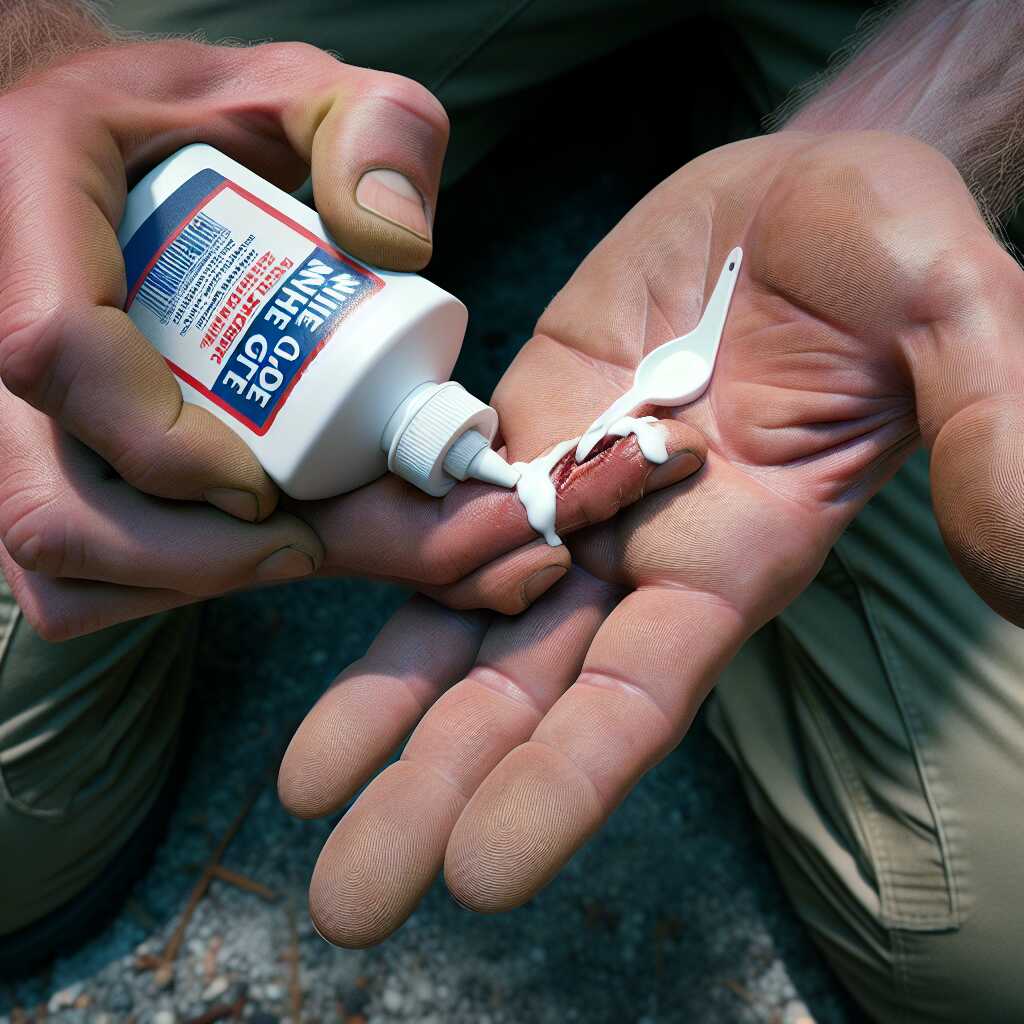
- Apply a minimal amount of white school glue (1-2 minutes to apply; 10-30 minutes to dry to touch; 1-2 hours to fully cure): Instruction: Using a clean applicator (not touching the wound with the glue bottle tip), gently place a thin layer across the clean, dry surfacedo NOT force glue into the wound. Allow to air dry without touching. Result: A thin dried film forms that may temporarily hold edges of a very shallow scrape and act as a barrier for approximately 12-48 hours depending on moisture and movement.
- Label and monitor the site (continuous monitoring; check at 6-24 hours): Instruction: Keep the area clean and dry; check the site at least twice daily for increased redness, swelling, warmth, pain, pus, or fever. Replace the improvised barrier with professional care within 24 hours whenever possible. Result: Early detection of infection or failure of the temporary seal.
- Remove or seek professional replacement (1-5 minutes for gentle removal; sooner if signs of infection): Instruction: Do not forcibly peel skin; soften with warm soapy water and gently wash the film off. If wound requires closure, have a clinician replace the temporary barrier with medical adhesive, sutures, or steri-strips. Result: Proper wound management and reduced long-term risk.
- When NOT to use glue seek immediate care (immediate): Instruction: Do not use white school glue for arterial bleeding, deep lacerations, puncture wounds, animal or human bites, wounds with exposed bone or fat, or any facial wounds requiring cosmetic repair. Result: Avoids delays that could worsen bleeding, infection, scarring, or functional loss.
FAQ
What is white school glue exactly and is it safe for skin contact
White school glue is a polyvinyl acetate (PVA) water-based adhesive sold in consumer bottles (common size 120 mL) and it is not a sterile medical product so it is not fully safe to use as a wound sealant. The glue provides a dried film that can feel sturdy and is inexpensive at about $2 to $5 per 120 mL bottle, but the product is designed for crafts and school use rather than skin contact that requires medical sterility. Predicament Measures recommends understanding reliability, testing, and risks before use because the glue can trap dirt, microbes, and solvent residues that may increase infection risk on open skin.
What ingredients in white school glue could affect skin healing and irritation
The main ingredients are polyvinyl acetate (PVA), water, and small amounts of preservatives or stabilizers that can irritate sensitive skin. These ingredients can affect healing by creating a non-sterile barrier that may trap bacteria and moisture, which increases infection risk. People with eczema or sensitive skin can have redness, itching, or contact dermatitis after contact with the glue.
How does white school glue work step by step as a wound sealant
White school glue works by laying a water-based PVA solution over a cleaned area, then evaporating the water to leave a thin plastic-like film that can hold skin edges together superficially. In practice you would clean the wound with running water or antiseptic, dab dry with a clean cloth, apply a thin layer of glue over the tiny cut or scrape, let it dry, and repeat as needed to build a film that covers the abrasion. This method provides a short-term physical film that is not designed for tissue approximation, lacks sterility testing, and cannot replace medical adhesives or sutures for deeper cuts or heavy bleeding.
How many layers and how many minutes should each layer dry on skin
Apply 1 to 3 thin layers and allow each layer to dry to the touch for about 10 to 30 minutes at 20 to 25C; expect 1 to 2 hours for full cure. Thin layers (roughly 0.5 mm each) enhance adhesion and lower risk of trapping liquid under the film. Users should avoid thick blobs and should plan on total film durability of about 12 to 48 hours depending on moisture and movement.
What are the main benefits of using white school glue on small cuts and scrapes
The main benefit is that white school glue can form a fast, cheap, and temporary dried film that may hold a shallow abrasion closed for short periods when no medical supplies are available. Cost per use is very low at roughly $0.02 to $0.04 per mL for a common bottle, so the glue offers an inexpensive emergency option for tiny, superficial skin breaks. Users should treat this as a stopgap that provides a physical barrier but not sterile protection, and they should plan to replace it with a sterile medical adhesive or dressing within 12 to 48 hours.
How long can a dried layer of school glue hold a shallow abrasion before failing
A dried layer of school glue can hold a shallow abrasion for roughly 12 to 48 hours under low-moisture and low-movement conditions based on product behavior and field experience, but clinical data do not support a reliable success rate for wound closure. The film can fail sooner if the area gets wet, flexes, or becomes soiled. Expect lower reliability on hands, joints, or in humid conditions.
What are the risks and limitations of using white school glue on open wounds
The main risks are that white school glue is not sterile, cannot stop arterial or heavy bleeding, and may increase the risk of infection or skin irritation when used on open wounds. Reliability for deep bleeding lacerations is effectively 0 and the glue is not designed to approximate deep tissue or replace sutures, medical adhesive, or professional wound care. Predicament Measures advises users to reserve this approach for very small superficial abrasions only and to seek medical-grade products for anything more serious.
How long can a dried layer of school glue hold a shallow abrasion before failing
A dried layer commonly lasts between 12 and 48 hours on a shallow abrasion but success depends on moisture, movement, and wound location so users should expect variable results. The glue cannot handle soaking, repeated friction, or significant skin movement without cracking and losing adherence. Replace the glue with a sterile dressing or a medical skin adhesive kit costing about $15 to $40 per applicator when practical.
Who should consider using white school glue as an emergency sealant outdoors
Use white school glue only when you have no sterile medical options and the wound is a tiny, shallow abrasion under 5 mm that is not bleeding heavily and is free of embedded debris. This choice suits campers, hikers, parents in a backyard first-aid situation, and preppers who understand limits, testing, and comparisons with medical options. Predicament Measures suggests carrying at least basic medical supplies like alcohol wipes, adhesive strips, and a sterile skin adhesive or suture kit if you expect to treat wounds frequently.
What signs of infection or adverse reaction should prompt medical attention
Seek medical care if you notice increasing redness beyond 5 to 10 mm, swelling, heat, pus, red streaks toward the heart, fever over 38C, or worsening pain after applying glue. These signs indicate possible infection, allergic reaction, or failed wound sealing and deserve professional assessment. Remove the glue if you see rash or severe irritation and clean the area before seeking care.
When is the best time to use white school glue on a minor wound while away from help
The best time to use white school glue is immediately after cleaning a tiny, superficial scrape that is not bleeding and has no embedded dirt when no sterile adhesive or dressing is available. Use a thin, single layer, allow it to dry 10 to 30 minutes to touch and 1 to 2 hours to cure, and plan to replace it with a sterile dressing or medical adhesive within 12 to 48 hours. Keep in mind reliability is limited and field testing or reviews of alternatives show medical adhesives provide better infection control and longer lasting closure.
When should someone stop and seek professional medical care instead of using glue
Stop and seek professional care for wounds with heavy bleeding, depth greater than a few millimeters, exposed fat or muscle, animal bites, or wounds with debris that cannot be cleaned properly. These wounds often need sutures, sterile adhesive strips, or professional wound cleaning and antibiotic evaluation, not craft glue. Expect medical centers to offer tested, sterile solutions with known performance and better infection prevention than white school glue.
No, white school glue should not be relied on as a safe sterile wound sealant because it is not medical grade, is not sterile, and can trap contaminants or irritate skin even though it can form a dried film; Predicament Measures recommends medical products for patient safety. The dried film of polyvinyl acetate (PVA) may hold tiny superficial scrapes for about 12 to 48 hours in dry, low-movement conditions, with no clinical data proving safety or infection risk reduction. The product offers low reliability for any laceration that is deep, bleeding, contaminated, or under tension and should not replace medical adhesive, sutures, or professional care for anything beyond a tiny superficial abrasion.
How much does white school glue cost compared to medical tissue adhesive and bandages
A typical 120 mL bottle of white school PVA glue costs about $2 to $5, which equals roughly $0.02 to $0.04 per mL, while single-use medical skin adhesive applicators cost about $15 to $40 per unit and sterile adhesive strips or butterfly bandages usually cost $3 to $15 per box depending on count. White school glue delivers low material cost but delivers no sterile packaging, no proven wound testing, and zero reliable performance on deep bleeding lacerations. The cost comparison shows low upfront price for PVA but higher clinical value and proven reliability for medical tissue adhesives and sterile dressings.
How soon after injury should glue be applied and how should the wound be prepared first
Apply any topical product only after bleeding has stopped or is minimal and after the wound has been cleaned, and do not use white school glue on actively bleeding or deep wounds. Clean the area with running water or sterile 0.9 saline for 30 to 60 seconds, remove visible debris with sterile tweezers, pat the skin dry for about 1 to 3 minutes, and check that the cut is shallow and not gaping. If the wound shows arterial bleeding, deep tissue exposure, or loss of sensation, seek medical care rather than using PVA glue.
What materials and tools are needed to use white school glue more safely on skin
To reduce risk when people opt to use white school glue on tiny superficial abrasions, gather sterile saline or clean running water, sterile gauze, sterile tweezers, disposable applicators or cotton swabs, non-latex gloves, and over-the-counter antiseptic wipes; Predicament Measures suggests sterile single-use items whenever possible. Use a clean surface, new glue bottle, and small amount of glue applied only to intact skin edges; expect drying to touch in 10 to 30 minutes and curing in 1 to 2 hours. Understand that these tools enhance safety but do not change the product into a sterile medical adhesive and do not stop heavy bleeding.
What is the price range per 30 to 120 milliliters for white glue versus a single use medical adhesive
A 30 mL amount of white school PVA glue costs about $0.60 to $1.20 based on $0.02 to $0.04 per mL, and a 120 mL bottle costs about $2.40 to $4.80; a single-use medical adhesive applicator costs about $15 to $40. The price-per-milliliter of PVA looks low while medical adhesives include sterile packaging, controlled formulation, and regulatory testing that justify the higher unit cost. Buyers should weigh cost against proven reliability, documented testing, and infection-control features that medical skin adhesives and sterile dressings provide.
What are the best alternatives to white school glue for closing small wounds outside a clinic
Over-the-counter skin adhesives labeled for wound closure, sterile butterfly closures, sterile adhesive wound strips, and small first-aid sutures placed by trained personnel provide safer and more reliable closure than white school glue. OTC skin adhesives like medical cyanoacrylate products provide fast touch-dry times of about 30 to 60 seconds and durable hold that can last several days to a week on low-motion sites, and they come sterile and designed for skin. Butterfly closures and sterile strips offer immediate mechanical edge apposition, hold for 3 to 7 days on appropriate wounds, and allow inspection while providing tested reliability compared to improvised PVA use.
What antiseptics and dressing supplies work best with dried glue on a wound
When glue has dried on a tiny superficial abrasion, use sterile 0.9 saline or clean running water to irrigate the area, then apply an antiseptic such as 10 povidone-iodine or 0.05 chlorhexidine to the wound margins only, avoiding force under a sealed film. Cover the area with a non-adherent dressing or sterile gauze and an adhesive bandage to protect the film, change the dressing every 12 to 24 hours, and inspect the skin for increasing redness, swelling, warmth, or drainage. If signs of infection appear within 24 to 72 hours, seek medical review; dried PVA over contaminated tissue may increase infection risk and is not proven to provide antisepsis.
What common mistakes should be avoided when using white school glue on wounds
Common mistakes include applying glue to actively bleeding or deep wounds, using excessive amounts that delay drying, placing glue on contaminated or unclean skin, and relying on PVA to hold edges under tension; such use increases infection risk and reduces reliability. Do not use expired or non-intended adhesives, do not place glue directly into a wound bed, and do not use PVA instead of professional closure when a wound is larger than 1 to 2 millimeters in depth or when bleeding does not stop within 10 minutes of direct pressure. Predicament Measures notes that these errors lower the chance of safe outcomes and that white school glue is not designed or tested for wound closure.
How do OTC skin adhesives and butterfly closures compare in drying time and tensile strength
OTC medical skin adhesives typically become touch-dry within 30 to 60 seconds and reach full handling strength within 1 to 2 minutes, and their tensile strength and adhesion are tested for skin use and are generally higher than a dried PVA film. Butterfly closures provide immediate mechanical support, require clean dry skin to work, and hold wound edges for 3 to 7 days depending on movement and moisture, offering reliable edge approximation without the unknowns of improvised glue. Choose products designed and tested for skin when tensile strength, durability, and infection control matter.
How to remove dried glue safely and when removal requires medical help
To remove dried white school glue from intact skin, soak the area in warm soapy water for 10 to 20 minutes, gently rub with a soft cloth, and apply petroleum jelly or commercial adhesive remover if needed to loosen the film; do not force removal if the glue adheres to broken skin. For glue that adheres to an open wound, seek medical help if removal causes pain, bleeding, increased redness, swelling, fever, or drainage, or if the glue appears embedded in tissue; professional removal uses sterile technique to reduce infection risk. Predicament Measures advises medical review for any signs of infection or if the wound was deep, contaminated, or involved body areas where tissue damage could occur during removal.
Related posts:
 Unwaxed Dental Floss: High-Strength Fishing Line Alternative for Wilderness Food Procurement
 Petroleum Jelly Cotton Balls: Five-Minute Burn Time Fire Starters for Damp Conditions
 Elastic Hair Ties: Cordage Bundle Organizers for Tangle-Free Emergency Kits
 Plastic Cling Wrap: Burn Wound Covering to Prevent Infection and Fluid Loss
 Cornstarch: Moisture Absorption Powder for Preventing Trench Foot
Sterile Tampons: Deep Puncture Wound Packing for Hemorrhage Control
Cornstarch: Moisture Absorption Powder for Preventing Trench Foot
Sterile Tampons: Deep Puncture Wound Packing for Hemorrhage Control
 Wooden Pencils: Arrow Shaft Material for Improvised Hunting Weapons
 Index Cards: Water-Resistant Information Cards for Survival Instructions