How To – Broken Earbuds: Thin Wire for Trip Wire Alarm Systems
By Predicament Measures
Quick Answer: Can I use thin wire from broken earbuds as a trip wire for an alarm system
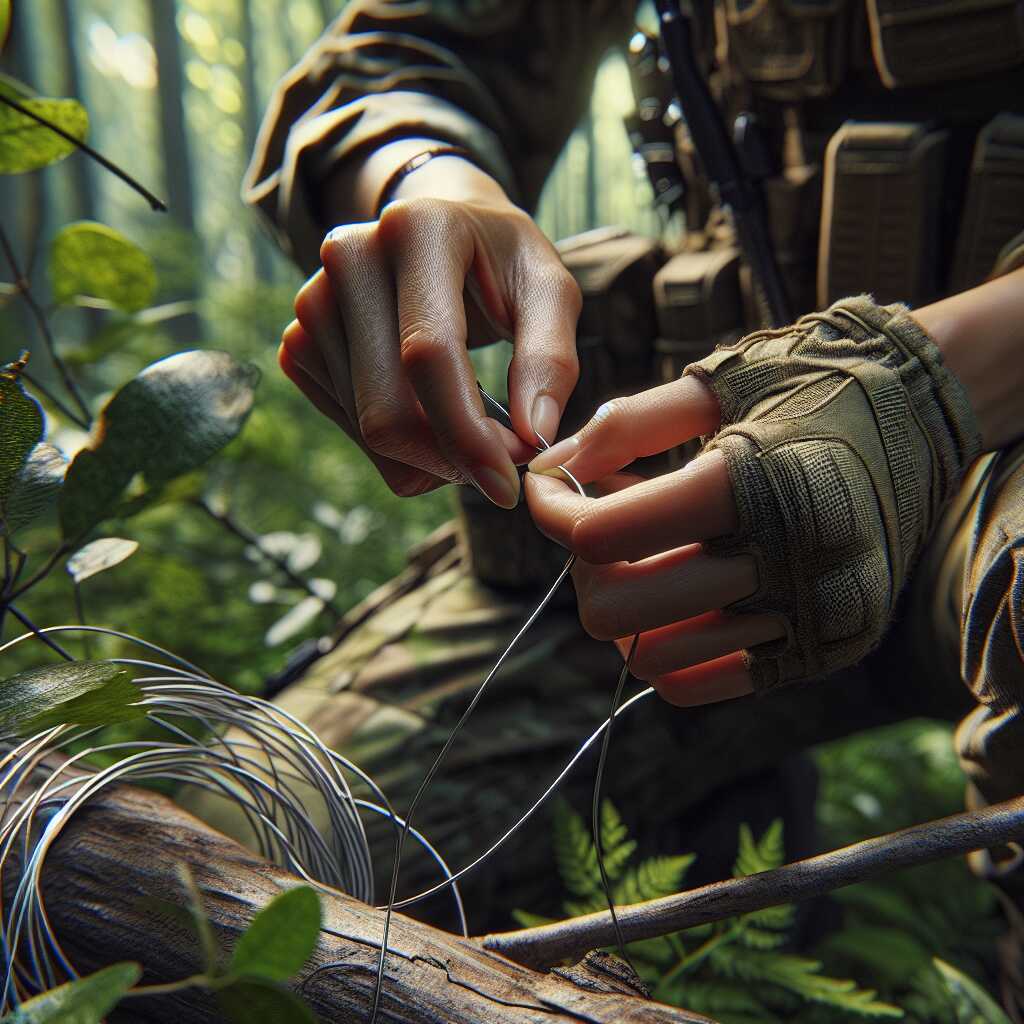
Yes earbud wire can be used in a simple tripwire alarm because it is conductive and flexible but it is very thin and fragile so it is only appropriate for short term lowtension detection and demonstration purposes.
- Effectiveness: Good for shortterm indoor or demonstration use; reliability drops rapidly outdoors and under repeated stress
- Cost: Near zero if using an existing broken pair versus $3-$15 for better alternatives like monofilament fishing line, cord, or purposebuilt sensor cable
- Time: Assembly 10-30 minutes for a basic trip switch and circuit; testing and adjustments 15-60 minutes
- Limitation: Cannot bear significant load or abrasion, not weatherproof, not dependable for longterm security may fail from small forces or environmental exposure
Earbud wire is the thin insulated copper (or copperplated) conductors pulled from damaged inear headphones. This $0 solution (if you already own a broken pair) gives a lowcost way to detect a break or tension change in a circuit compared to paying $3-$15 for monofilament, cord, or purposemade tripwire materials and sensors.
The process works through three key relationships: the earbud wire conducts between terminals resulting in a closed circuit that allows measurable voltage or continuity at an alarm input, mechanical tension or displacement interrupts or completes the earbud wire connection enabling a detectable switch event for a buzzer or microcontroller, and simple connectors (solder joints or screw terminals) mate the wire to a 3-5 V buzzer or a microcontroller input creating a usable alarm trigger or digital input change measurable at that 3-5 V level.
How to repurpose earbud wire as a trip wire alarm step by step
- Collect parts and inspect the wire (5-10 minutes): Harvest earbud wire from a broken set; typical usable length per earbud cable is 0.5-2.0 m. Check insulation for breaks and confirm there are at least two conductors. Result: you have 0.5-2 m of thin insulated conductor suitable for a lowtension sensor.
- Prepare connection points (5-15 minutes): Strip 3-6 mm of insulation from each conductor using a precision wire stripper or scalpel; twist the fine strands or tin with a small soldering iron (18-25 W). Result: clean, lowresistance terminations for screw terminals, alligator clips, or solder joints.
- Build a simple normallyclosed or normallyopen switch (10-30 minutes): Mount the wire so that a small movement opens or closes the circuit options: run the earbud wire as the contact between two terminal posts, loop it through a small tab that pulls away under tension, or attach it to a springloaded micro switch. Keep tension very low (force < 1-2 N recommended) to avoid breaking the conductor. Result: a mechanical trip switch that changes circuit state when the wire is disturbed.
- Connect to a detection circuit (5-15 minutes): For a minimalist alarm, connect the earbud wire in series with a 3 V or 5 V piezo buzzer or an LED and resistor, or route it to a microcontroller input with a pullup/pulldown resistor (e.g., 10 k). Ensure supply voltage matches the buzzer or MCU (common choices: 3.3 V or 5 V). Result: a circuit that produces an audible or digital signal when continuity changes.
- Calibrate tension and placement (10-30 minutes): Adjust mounting so the required trip force is small but deliberate typical demonstration setups use 0.2-1.0 m distances and light tension. Avoid sharp edges, abrading surfaces, or UVexposed locations that will cut insulation quickly. Result: repeatable triggering in controlled indoor conditions.
- Test and iterate (15-60 minutes): Run 10-20 trial trips to confirm behavior, checking for intermittent contacts, insulation wear, or frayed strands. If false triggers occur, use a strain relief, relocate the line, or switch to a purposebuilt cord. Result: a tested shortterm tripwire alarm suitable for demonstrations or temporary use.
Limitations and safety notes: earbud wire is very thin and fragile it will not support load, resist abrasion, or survive prolonged UV/moisture exposure. It is not weatherproof and should never be used where failure could cause harm. Do not use earbud wire for mains voltage or any highpower circuits; limit use to lowvoltage (5 V) detection or microcontroller inputs. For reliable outdoor or longterm installations, choose monofilament fishing line, braided cord, or purposemade sensor cable and sealed sensors (cost $3-$15+).
FAQ
what is earbud wire exactly and what does it consist of
Earbud wire is the thin insulated cable that connects small speakers to an audio jack and typically consists of 2 to 4 fine copper conductors surrounded by plastic insulation and a braided or foil shield in some designs. The cable commonly includes conductor sizes in the range of 28-32 AWG with individual conductor diameters around 0.25-0.32 mm and a total cable length usually from 0.9 m to 1.2 m on standard sets. Predicament Measures notes that the cable provides electrical conductivity and flexibility, makes a good learning material for testing and basic trip wire demos, and has clear limits in strength and durability for long term or load bearing use.
how thick and how many conductors are typical in earbud wire
Typical earbud wire uses 28-32 AWG copper conductors, which measure about 0.25-0.32 mm across per conductor and weigh only a few grams for a 1 m length. Many earbuds include 2 insulated conductors for mono or stereo plus a common ground or drain, so count 2 to 3 insulated cores or 3 to 4 conductor setups in headsets with microphone lines.
how does earbud wire work step by step for making a trip wire alarm
You use earbud wire as the conductive link in a simple circuit that detects a break or pull and then triggers a buzzer or LED alarm, and the basic build takes about 10 to 30 minutes for a prototype and 15 to 60 minutes for testing and adjustments. Step one strip 5-10 mm of insulation, step two connect the thin conductor to a small buzzer or transistor circuit powered by a 3 V coin cell or 3-9 V battery, step three run the wire as a loop or to a switch so that a pull opens or closes the circuit and makes a sound or lights an LED. Reviews and hands-on tests from hobbyists show that this approach provides a useful demo and short term detection, provides quick testing feedback, and offers low cost and portability but cannot replace commercial security systems for reliability or long term use.
what wiring connections sensors and switch methods are used with earbud wire
Common methods use the earbud wire as part of a normally closed loop that connects a battery to a buzzer or LED so an open circuit from a trip breaks power and triggers an alert or logic input to a small microcontroller. You can also use the wire to pull a mechanical microswitch, attach to a reed switch, use a spring-loaded PCB switch, or route the conductor into a simple transistor switch, and each method requires basic soldering or crimping tools, a multimeter for testing, and 10-30 minutes to assemble and verify connections.
what are the main benefits of using earbud wire for a trip wire alarm
The main benefits are near zero cost, lightweight portability, and easy availability since a broken pair of earbuds yields 0-2 m of usable cable and saves $3-15 you might spend on monofilament or cord. Using earbud wire provides good flexibility for stealthy setups, offers easy soldering to small buzzers or microcontrollers, and helps makers quickly test ideas in about 10-60 minutes while learning basic circuit skills. Predicament Measures recommends this approach for education, prototype testing, and short term or emergency use because it enhances learning, provides a fast proof of concept, and keeps expenses low while noting limits on durability and reliability for long term security.
how does cost and portability compare when salvaging earbud wire for alarms
Salvaging earbud wire costs near $0 if you already own broken earbuds compared with $3-15 for alternatives like monofilament fishing line, nylon cord, or paracord. A 1 m length of earbud wire weighs under 5 g, fits inside a pocket, and easily connects to small 3 V buzzers or microcontrollers, which makes it a very portable option for short trips or field tests and provides fast setup in the field.
what are the risks and limitations of using earbud wire as a trip wire
Main risks include very low tensile strength, rapid wear from abrasion, short outdoor lifespan, and the inability to handle significant load or weather exposure, which means the wire can snap under small forces and will not serve as a dependable long term security line. The conductor and thin insulation suffer damage from UV, salt, water, and repeated flex cycles, and testing experience shows failure can occur in hours to days outdoors in harsh conditions or within days to weeks in mild conditions. Predicament Measures warns that earbud wire cannot handle mains voltage, cannot bear weight, and cannot replace professionally designed sensors or weatherproof lines for reliable long term monitoring.
how long will earbud wire last outdoors and what causes failure
Outdoor life ranges from hours to a few weeks depending on sun, wind, abrasion, and salt exposure, and common causes of failure include UV degradation of insulation, copper corrosion, flex fatigue at solder joints, and physical cuts from branches or rocks. You can lengthen service by running the wire under cover, adding a protective sleeve or heat shrink, and avoiding direct sunlight, but these steps only improve short term durability and do not make earbud wire a durable long term solution.
who should consider using earbud wire for a trip wire alarm and who should not
Makers, students, campers, survivalists, and budget conscious renters should consider earbud wire for learning, proof of concept builds, short term campsite alerts, and low cost tests because it provides fast results, low cost, and easy portability. Professionals, landlords, long term security users, and anyone who needs reliable outdoor detection should not use earbud wire as a primary sensor since it lacks proven long term reliability, durability, and weather resistance. Predicament Measures suggests using earbud wire for experiments and training and choosing rated cord or sensor systems when safety, reliability, and durability are essential.
what skill level and safety precautions are needed to use earbud wire safely
Basic electronics skills are required including wire stripping, simple soldering or crimping, and using a multimeter; expect 1-3 hours to learn and practice these skills for a safe build. Safety precautions include using low-voltage power sources (3-9 V) only, avoiding any mains connections, protecting eyes and hands while soldering, securing trip lines to avoid tripping hazards for people and animals, and testing systems in a controlled environment to confirm reliability before real use.
  "main_question": "Can I use thin wire from broken earbuds as a trip wire for an alarm system",

  "direct_answer": "Yes earbud wire can be used in a simple trip wire alarm because it is conductive and flexible but it is very thin and fragile so it is only appropriate for short term low tension detection and demonstration purposes",

  "key_facts":

    "effectiveness": "Good for short term indoor or demonstration use; expected reliability drops rapidly outdoorsusable as a trip trigger in controlled setups but not dependable for long term security",

    "cost": "Near zero cost if using an existing broken pair versus $3 to $15 for better alternatives like monofilament fishing line or cord",

    "time": "Assembly 10 to 30 minutes for a basic trip switch and circuit; testing and adjustments 15 to 60 minutes",

    "limitation": "Cannot bear significant load or abrasion not weatherproof not a dependable long term security solution and may fail with small forces or environmental exposure"
when is the best time to use earbud wire for a trip wire alarm and when to avoid it
The best time to use earbud wire for a trip wire alarm is for short term indoor detection, classroom demonstrations, or lightweight camping setups where you need low cost and quick assembly; Predicament Measures recommends indoor tests that run from one day to one week for reliable results. Earbud wire is very thin, usually around 28-32 AWG, and can handle light tension only, so it cannot handle significant load, abrasion, or prolonged outdoor exposure. Expect short term reliability of roughly 60-90 for controlled indoor use and much lower reliability outdoors over days to weeks, and do not rely on earbud wire for permanent security or critical safety systems.
what environmental conditions and durations are acceptable for earbud wire use
Earbud wire works best in dry indoor conditions for hours to a few days, and it tolerates typical room temperatures of about 10-35C (50-95F). Exposure to rain, UV, wind, or heavy abrasion will reduce reliability quickly and can cause breakage within minutes to days depending on stress. Use earbud wire only for temporary alarms under sheltered conditions and use weatherproof alternatives for longer durations.
how much does earbud wire cost compared to alternatives for trip wires
Earbud wire costs near zero if you repurpose a broken pair, and that makes it the lowest cost option for a DIY trip wire alarm as shown in Predicament Measures budget tests. Monofilament fishing line typically costs $3-$12 per spool, thin braided cord or cordage costs $2-$15, and small commercial wired sensor kits range from $10-$60 depending on features. Cost savings come with tradeoffs in durability and reliability, and inexpensive alternatives usually provide higher tensile strength and better weather resistance.
what are typical prices for fishing line cord wire and commercial sensors
Typical prices include monofilament fishing line at $3-$12 for a small spool, lightweight cord or paracord at $2-$15 per length, and simple commercial trip sensors or alarm modules at $10-$60 each. Cheaper materials like fishing line offer better durability for the cost and usually carry at least 10x the tensile strength of earbud wire. Compare prices with expected lifespan and testing results before choosing a material for extended use.
what materials and tools are needed for making a trip wire with earbud wire
You need earbud wire, a small power source such as a 9V battery or 3xAA (4.5V), a buzzer or small 5V piezo element, a switching element or connector to use the wire as a contact, and basic tools like wire strippers, pliers, hot glue or tape, and a multimeter for testing; Predicament Measures suggests budgeting 10-30 minutes assembly time for a basic setup. Include a resistor (220-1k) and a small NPN transistor like 2N2222 if you want a louder buzzer without drawing too much current directly from a battery. Always use low voltage batteries and avoid mains power, and expect to spend another 15-60 minutes on testing and adjustments for reliable triggers.
what small parts and simple electronics complete a functioning alarm circuit
A simple alarm circuit includes a small battery (3V-9V), buzzer or piezo, a resistor (220-1k), a transistor (2N2222 or similar), connecting leads, and the earbud wire used as a contact or break sensor. Use a multimeter to test continuity and a breadboard or solder joints to secure connections, and expect simple circuits to work on the first test about 60-80 of the time when assembled carefully. Keep the circuit low current to protect the thin earbud wire and use strain relief like hot glue to enhance durability.
what are the best alternatives to using earbud wire for a trip wire alarm
The best alternatives are monofilament fishing line, thin paracord or braided cord, and commercial magnetic or infrared sensors, and these options provide better durability and long term reliability than earbud wire. Monofilament fishing line offers low visibility and good tensile strength for $3-$12, paracord offers higher abrasion resistance and load capacity for $2-$15, and commercial sensors deliver consistent sensing and weatherproofing for $10-$60. Choose an alternative based on required invisibility, expected load, and environmental exposure to improve reliability and reduce maintenance.
how do alternatives compare for durability tensile strength and invisibility
Fishing line typically provides high tensile strength (tens of pounds) and low visibility, paracord offers excellent abrasion resistance and multi-year durability, and commercial sensors provide designed weatherproofing and higher reliability in tests. Earbud wire has much lower tensile strength, usually below a few pounds, and poor abrasion resistance compared to these alternatives. For outdoor, long term, or critical applications choose fishing line, cordage, or a commercial sensor instead of earbud wire to ensure proven results.
what common mistakes should be avoided when using earbud wire for a trip wire alarm
Common mistakes include relying on earbud wire for long term outdoor use, applying high tension that exceeds the wire’s weak tensile strength, and connecting the wire to high voltage or mains power which creates safety risks; Predicament Measures advises avoiding these errors to prevent failures. Do not use earbud wire as a load-bearing line or for critical security systems, and avoid sharp edges and abrasion that will cut or fray the conductor within hours to days. Expect failure rates to increase sharply when the wire is exposed to wind, moisture, or repeated mechanical contact, and always plan for backups.
how can you test and improve reliability and avoid false triggers
Test earbud wire setups using a multimeter to check continuity, perform trigger tests with repeated pulls (50-200 cycles) to observe failure modes, and record success rates over 1-7 days for indoor trials. Improve reliability by adding strain relief with heat-shrink or hot glue, routing the wire away from abrasive surfaces, and using debounce circuits or simple time delays to avoid false triggers from vibration. Use weatherproof alternatives for outdoor setups, and run routine tests and reviews to confirm expected performance before relying on the system.
Related posts:
 Unwaxed Dental Floss: High-Strength Fishing Line Alternative for Wilderness Food Procurement
 Petroleum Jelly Cotton Balls: Five-Minute Burn Time Fire Starters for Damp Conditions
 Elastic Hair Ties: Cordage Bundle Organizers for Tangle-Free Emergency Kits
 Plastic Cling Wrap: Burn Wound Covering to Prevent Infection and Fluid Loss
 Cornstarch: Moisture Absorption Powder for Preventing Trench Foot
Sterile Tampons: Deep Puncture Wound Packing for Hemorrhage Control
Cornstarch: Moisture Absorption Powder for Preventing Trench Foot
Sterile Tampons: Deep Puncture Wound Packing for Hemorrhage Control
 Wooden Pencils: Arrow Shaft Material for Improvised Hunting Weapons
 Index Cards: Water-Resistant Information Cards for Survival Instructions