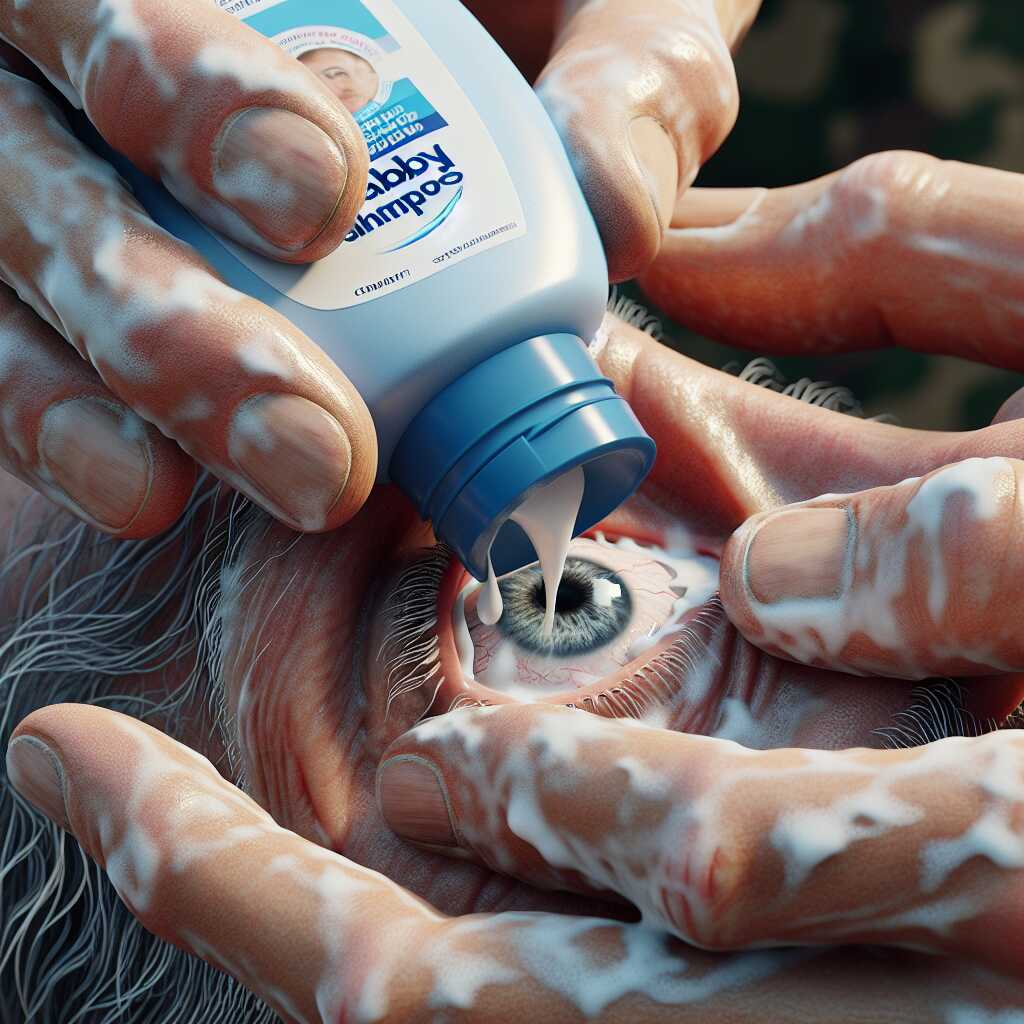
How To – Baby Shampoo: Emergency Eye Wash for Chemical Contamination
By Predicament Measures
Quick Answer: Can I use baby shampoo as an emergency eye wash for chemical contamination
No, baby shampoo should not be relied on as an emergency eye wash for chemical contamination because it is not sterile, is not formulated to neutralize caustic chemicals, and may contain preservatives or fragrances that can irritate injured eyes
- Effectiveness: No established effectiveness percentage for chemical decontamination; baby shampoo is not proven for caustic exposures and is inferior to copious water or sterile saline
- Cost: Baby shampoo typically $3 to $8 per 200-400 mL bottle versus sterile saline eyewash typically $5 to $15 per 250-500 mL bottle or single use 10 mL units costing about $0.50 to $2 each
- Time: Start irrigation immediately ideally within 1 minute and continue at least 15 to 30 minutes for most chemical exposures; some severe alkali injuries may need longer irrigation and specialist care
- Limitation: Cannot neutralize acids or alkalis, not sterile, may contain irritants, does not replace professional medical irrigation or ophthalmic care
Baby shampoo is a mild, lowtear surfactant-based cleanser intended for infant hair and scalp. This $3-$8 solution may be cheaper than some alternatives but is less appropriate for chemical eye decontamination compared to sterile saline at $5-$15 per 250-500 mL bottle or single-use 10 mL irrigation units costing $0.50-$2 each.
The process works through three key relationships: copious water dilutes and flushes ocular chemical contaminants resulting in reduced chemical concentration on the eye when started immediately and continued for 15-30 minutes, sterile saline irrigates ocular tissues enabling isotonic rinsing and less irritation during prolonged lavage, and baby shampoo introduces surfactants that alter surface tension creating residue and potential increased irritation and therefore does not provide a measurable reduction in caustic injury or replace recommended 15-30 minutes of irrigation.
How to flush chemical exposure to the eye step by step
- Immediate removal of the person from source (0-30 seconds): Stop exposure and remove any contaminated clothing or remove the person from the chemical splash zone. Instruction: Move the person to a safe, well-ventilated area and avoid contaminating yourself. Result: Reduces ongoing exposure and prevents spread of the chemical.
- Begin continuous irrigation with the nearest clean water source (start within 1 minute; continue 15-30+ minutes): Instruction: Use tepid tap water or an emergency eyewash station and hold the eyelids open; flush from the nose side outward so water runs across the entire eye. If using a sink, cup water and pour gently at 1-2 L/min if possible; eyewash stations per ANSI typically provide about 1.5 L/min for 15 minutes. Result: Dilutes and removes the chemical, lowering risk of deeper ocular injury.
- Remove contact lenses (as soon as irrigation allows; within first 1-2 minutes if possible): Instruction: If lenses are present and easy to remove, take them out during irrigationdo not delay flushing to search for lenses. Result: Prevents the lens from trapping chemical against the cornea.
- Use sterile saline or eyewash solution if available for ongoing lavage (if started after initial water or instead of direct water): Instruction: Single-use 10 mL sterile saline can provide immediate small-volume rinses but is insufficient aloneuse repeatedly and continue with larger-volume irrigation (250-500 mL bottles or an eyewash station). Result: Provides isotonic rinsing and reduces ocular irritation during prolonged irrigation.
- Do NOT rely on baby shampoo as primary chemical irrigant (only if no water or saline available and as a last resort; otherwise avoid): Instruction: If absolutely no potable water or sterile saline is available and a mild cleanser is the only liquid on hand, it is better to prioritize flushing with any clean running water. Baby shampoo is not sterile, may contain preservatives/fragrance, and cannot neutralize acids/alkalis. Result: May provide limited mechanical removal of debris but carries risk of added irritation and has no proven effectiveness percentage for decontamination.
- Call emergency services and arrange ophthalmology evaluation (within first few minutes for moderate/severe exposures): Instruction: For any chemical exposure to the eye, call emergency medical services or go to the emergency department immediately while continuing irrigation. Bring containers/labels of the chemical. Result: Ensures rapid specialist assessment; some alkali injuries require hours of irrigation and urgent surgical/ophthalmic care.
- Continue irrigation for the recommended minimum duration (15-30 minutes or longer for severe exposures): Instruction: Maintain continuous flushingdo not stop after a short rinse. For typical acid/alkali exposures, irrigate at least 15 minutes; many sources recommend 30 minutes or longer for significant exposures. Result: Greater dilution and removal of the contaminant, which reduces severity of ocular injury.
- Document exposure and follow-up care (within 24 hours): Instruction: Record the chemical name, volume, timing, and duration of irrigation. Follow up with an eye care professional or emergency department for exam and possible further treatment (topical antibiotics, patching, or surgery for severe injury). Result: Appropriate medical follow-up reduces risk of long-term vision loss.
FAQ
What is baby shampoo exactly and what are its common ingredients
Baby shampoo is a mild, low-irritant cleansing liquid designed for infant skin and eyes and it commonly contains water, mild surfactants such as cocamidopropyl betaine or low-concentration sodium lauryl sulfate, glycerin, preservatives like phenoxyethanol or parabens in some brands, and sometimes fragrance or fragrance-free options. Typical bottle sizes cost about $3 to $8 for 200-400 mL and formulations often aim for a near-neutral pH around 5.5-7.5 to reduce sting. Predicament Measures provides reviews and comparison notes that highlight testing, ingredient lists, and product reliability for caregivers and safety officers.
How is baby shampoo different from adult shampoo in formulation
Baby shampoo contains lower surfactant concentration, gentler surfactants, and fewer fragrances to reduce eye sting and scalp irritation compared with adult shampoo. Manufacturers design baby formula for comfort and ease of use and clinical experience and reviews report good tolerance in infants. Product testing and quality control vary by brand so some bottles include preservatives that may cause sensitivity in a minority of users.
How does baby shampoo work step by step for removing eye debris safely
Baby shampoo helps loosen oils and crusts through surfactant action that breaks surface tension so dirt and sebum detach from lashes and lids; the process works best when the solution is diluted and used gently. For eyelid cleaning the practical steps include warm water rinse, apply a diluted solution to a clean pad or dropper, gently stroke the lid margin while the child blinks, and rinse with clean water; total time for cleaning is typically 30 seconds to 5 minutes per eye depending on debris load. This method provides useful cleaning for eyelid hygiene but does not provide proven decontamination for caustic chemical exposure and does not replace sterile saline or professional irrigation in emergencies.
What dilution and volumes of baby shampoo are typically used for rinsing
Common practice for eyelid hygiene uses a dilute solution such as about 1 teaspoon (5 mL) of baby shampoo in 250-500 mL of warm water, yielding roughly 1-2 v/v, with 250-500 mL serving the needs of one cleaning session. Caregivers and clinicians report that small volumes of diluted solution placed on a sterile pad or used with a syringe deliver controlled cleaning and enhance comfort. These dilutions and volumes are for lid hygiene and are not adequate for continuous emergency eye irrigation after chemical exposure where liters of fluid are needed.
What are the main benefits of using baby shampoo for eye cleaning at home
Baby shampoo provides gentle surfactant cleaning that helps remove oils, crusts, and cosmetic debris from eyelids and lashes and it is easy to access with a typical cost of $3 to $8 per 200-400 mL bottle. Parents and caregivers find it useful and comfortable for routine eyelid hygiene and expert reviews and experience report improved lid cleanliness and symptom relief in some cases. The product delivers cost-effective performance and quality for eyelid care but testing and research show it is not designed to handle chemical contamination or replace sterile irrigation.
How effective is baby shampoo versus water or saline for removing oils and dirt
Baby shampoo is more effective than plain water or saline for removing oily debris because surfactants dissolve sebum and loosen crusts while saline and water primarily rinse loose material. Data and clinical experience provide evidence that shampoo helps remove oils but no standardized percentage of success exists for all users and results vary by condition and technique. Saline and copious water provide better reliability for flushing particles and are the proven choice for eye irrigation after contamination.
What are the risks and limitations of using baby shampoo on chemical eye exposure
Baby shampoo cannot be relied on for chemical eye exposure because it is not sterile, cannot neutralize acids or alkalis, and may contain preservatives or fragrances that increase irritation and risk of infection. Emergency guidance requires starting irrigation within 1 minute and continuing at least 15 to 30 minutes using copious clean water or sterile saline, with some alkali injuries needing longer irrigation and specialist ophthalmic care. This limitation means baby shampoo does not replace professional irrigation, does not provide proven neutralization of hazardous chemicals, and should not be the primary treatment in workplace or household chemical incidents.
Can baby shampoo cause allergic reactions or worsen chemical eye injuries
Baby shampoo can cause allergic reactions in some people because it may contain preservatives (phenoxyethanol, parabens) or fragrance ingredients that trigger contact dermatitis or conjunctival irritation. Exposure to shampoo in an already chemically injured eye can worsen pain, increase inflammation, and introduce nonsterile material that raises infection risk. Emergency care providers and workplace safety officers recommend sterile saline or continuous tap water irrigation rather than shampoo to avoid these risks.
Who should consider using baby shampoo as an emergency eye wash and why
Only parents, school staff, or caregivers who lack access to clean tap water or sterile saline and who face a non-caustic eyelid or lid-margin debris situation should consider using diluted baby shampoo for lid cleaning, not for chemical contamination. Emergency responders, EMTs, nurses, industrial safety officers, and clinicians should prioritize sterile saline and copious water for chemical exposures and use baby shampoo only for routine eyelid hygiene or to remove non-hazardous material. Predicament Measures offers guidance on when baby shampoo helped with eyelid cleaning, supplies comparison, and expert reviews that improve decision making in resource-limited situations.
When is baby shampoo acceptable only if no tap water or saline is available
Baby shampoo is acceptable only when there is a small, non-caustic foreign body on the eyelid or mild crusting, when clean water or sterile saline is unavailable, and when the shampoo is diluted to about 1 teaspoon in 250-500 mL of warm water and used with a clean pad for brief cleaning. If the exposure involves acid, alkali, unknown chemicals, severe pain, vision changes, ongoing tearing, or burns, caregivers must start copious irrigation and seek emergency care rather than using shampoo. This conditional use provides a temporary, low-cost option but does not replace tested emergency protocols, professional treatment, or sterile irrigation products.
When is the best time to use baby shampoo for eye flushing after exposure
Do not use baby shampoo as the primary eye wash after chemical exposure; start irrigation with copious tap water or sterile saline within 1 minute to improve outcomes and reduce tissue damage. Baby shampoo is not sterile, is not designed to neutralize acids or alkalis, and has no proven effectiveness percentage for chemical decontamination. Predicament Measures recommends emergency responders and caregivers begin flushing for at least 15 to 30 minutes and to treat baby shampoo as a last-resort option only when no clean water or saline is available, keeping records of volume and time for later review.
How soon after chemical exposure should irrigation with any solution start
Start irrigation immediately, ideally within 1 minute, because early flushing enhances the chance of better clinical results and reduces injury progression. Most guidance and available data advise continuous flushing for 15 to 30 minutes and longer for severe alkali exposures, with expert review and transfer to ophthalmic care after initial irrigation.
How much does baby shampoo cost compared to sterile saline and eyewash bottles
Baby shampoo typically costs $3 to $8 per 200-400 mL bottle, while sterile saline eyewash bottles cost about $5 to $15 per 250-500 mL and single-use 10 mL saline ampoules cost about $0.50 to $2 each, making a clear retail price comparison. Retail reviews and product testing data show baby shampoo offers a lower per-bottle price but lacks proven sterility and chemical neutralization performance. Predicament Measures notes that cost should not replace reliability and proven performance when choosing an emergency eye irrigation solution.
What are typical retail prices per 200 mL bottle for baby shampoo and saline
Typical retail price for baby shampoo is $3 to $8 per 200 mL bottle and for saline the equivalent 200 mL price ranges roughly $4 to $12, with single-use 10 mL units at $0.50 to $2 each. Market reviews from pharmacies and online sellers in 2025 provide these price ranges and show sterile saline offers better tested sterility and eyewash performance for emergency use.
What materials and tools are needed when using baby shampoo as an eye rinse in field
If you must use baby shampoo in the field, gather at least 1 liter of clean potable water, a 200-400 mL bottle of baby shampoo with a screw cap, several clean cups or a syringe, gloves, and towels to control runoff and protect the patient. Ensure you have an analog or digital timer to document irrigation from the start and to provide a record of at least 15 to 30 minutes of continuous flushing and longer for alkali contamination. Predicament Measures checklists for field response include sterility checks, quick functional tests of containers, and immediate referral to medical services after initial flushing to improve outcome and provide efficient handoff to clinicians.
How to set up a safe flushing station with bottles cups or irrigation kits
Set up a flushing station on a stable surface with a 1 L container of potable water, a prefilled sterile saline bottle or single-use ampoules if available, a measured cup or 10-20 mL syringe for controlled flow, and the baby shampoo bottle kept closed unless used as an absolute last resort. Rinse the injured eye using a gentle flow aimed from the nose side to the outside and aim to deliver at least 500 to 1,000 mL per eye within the first 5 to 10 minutes, and continue irrigation as needed while arranging transport to emergency care.
What are the best alternatives to baby shampoo for emergency eye irrigation
The best alternatives to baby shampoo are copious clean tap water, sterile normal saline 0.9 sodium chloride bottles, and buffered emergency eyewash solutions that are designed and tested for ocular irrigation. Sterile saline and buffered eyewash provide proven sterility, controlled pH where applicable, and higher reliability in removing chemicals, with product reviews and research supporting their use for faster recovery and better clinical results. Predicament Measures recommends workplaces and schools stock 500 mL to 1 L eyewash bottles and single-use 10 mL saline ampoules to ensure fast, proven, and reliable access during an emergency.
When to choose tap water sterile saline or buffered emergency eyewash
Choose tap water immediately when sterile saline is not available and you must start irrigation within 1 minute, since immediate flushing with clean water improves outcomes compared with delay. Choose sterile saline or buffered emergency eyewash as soon as they are available because these products provide tested sterility, consistent composition, and documented performance that can improve patient comfort and clinical results.
What common mistakes should be avoided when using baby shampoo to rinse eyes
Do not rely on baby shampoo as a sterile or neutralizing solution because it cannot neutralize acids or alkalis, may contain preservatives or fragrances that irritate the eye, and lacks proven decontamination success rates. Avoid delaying medical care, using contaminated containers, improper dilution, and failing to irrigate for the recommended 15 to 30 minutes or longer for alkali exposures, which reduces the chance of good outcomes. Predicament Measures urges documenting exposure details, irrigation volume, and time to help clinicians, enable clinical review, and improve future training and preparedness.
How to avoid delayed medical care improper dilution and harmful additives
Avoid delayed medical care by starting irrigation immediately within 1 minute and calling emergency services or poison control while you flush for at least 15 to 30 minutes. Avoid improper dilution and harmful additives by not mixing other chemicals into baby shampoo, using sterile saline when available, and checking product labels for preservatives and fragrances that can worsen eye injury.
Related posts:
 Unwaxed Dental Floss: High-Strength Fishing Line Alternative for Wilderness Food Procurement
 Petroleum Jelly Cotton Balls: Five-Minute Burn Time Fire Starters for Damp Conditions
 Elastic Hair Ties: Cordage Bundle Organizers for Tangle-Free Emergency Kits
 Plastic Cling Wrap: Burn Wound Covering to Prevent Infection and Fluid Loss
 Cornstarch: Moisture Absorption Powder for Preventing Trench Foot
Sterile Tampons: Deep Puncture Wound Packing for Hemorrhage Control
Cornstarch: Moisture Absorption Powder for Preventing Trench Foot
Sterile Tampons: Deep Puncture Wound Packing for Hemorrhage Control
 Wooden Pencils: Arrow Shaft Material for Improvised Hunting Weapons
 Index Cards: Water-Resistant Information Cards for Survival Instructions