How To – Household Bleach: Water Purification at Eight Drops Per Gallon Ratio
By Predicament Measures
Quick Answer: Can household bleach disinfect drinking water at eight drops per gallon
Yes household bleach can disinfect drinking water at eight drops per gallon if the product is unscented regularstrength bleach (about 5 to 9 sodium hypochlorite) because the chlorine will inactivate most bacteria and many viruses when given proper contact time; however it cannot remove chemical contaminants or reliably kill chlorineresistant protozoa such as Cryptosporidium.
- Effectiveness: Can achieve >99.9 reduction of common bacteria and many viruses when used at correct dose and contact time but not effective against some protozoan cysts
- Cost: Treatment costs pennies per gallon (typically < $0.01 per gallon) versus higher ongoing costs for filters or fuel for boiling
- Time: Wait at least 30 minutes after adding bleach for clear water; wait 60 minutes for cold or turbid water and retest smell or clarity
- Limitation: Cannot remove heavy metals, chemical pollutants, radiological contaminants, turbidity, or reliably inactivate Cryptosporidium and Giardia without additional measures
household bleach is a common unscented liquid disinfectant that contains sodium hypochlorite (about 5-9 by volume) used to inactivate pathogens in emergency drinking water. This <$0.01 pergallon solution provides an affordable, rapidly deployable disinfection option compared to water filters or boiling, which generally incur higher ongoing costs or require fuel and equipment.
The process works through three key relationships: sodium hypochlorite reacts with waterborne bacteria and many viruses resulting in >99.9 reduction of common bacterial pathogens when given proper contact time, correct dosing (8 drops per US gallon of unscented regularstrength bleach) disperses free chlorine enabling a measurable residual and a practical onsite check (slight chlorine odor) for dose confirmation, and adequate contact time (about 30 minutes for clear water, 60 minutes for cold or turbid water) creating effective inactivation for most bacteria and many viruses while still leaving limitations against some protozoan cysts and chemical contaminants.
How to disinfect drinking water with household bleach step-by-step
- Gather materials (5 minutes): Use unscented regularstrength household bleach (labeled 5-9 sodium hypochlorite), a clean medicine dropper or small measuring device, a clean container (glass or foodgrade plastic), and a means to prefilter (coffee filter, clean cloth). Instruction: Do not use scented, colorsafe, or concentrated industrial bleaches. Result: You have the correct bleach and tools on hand for accurate dosing.
- Prepare water clarify turbid water first (30-60 minutes if cloudy): Instruction: If water is visibly cloudy, filter through cloth or a coffee filter, or allow large particles to settle and decant clearer water from the top. Result: Reduced turbidity improves bleach effectiveness and lowers chlorine demand.
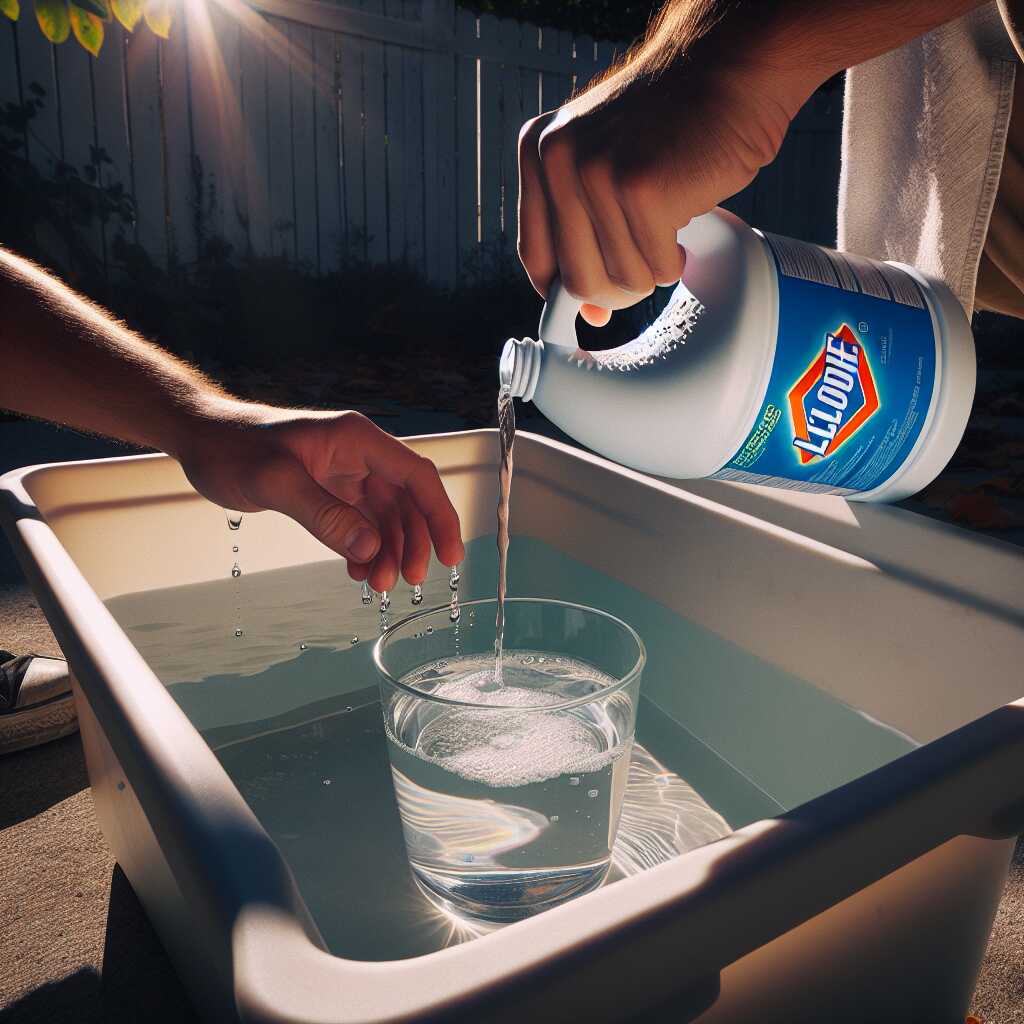
- Measure the bleach (1 minute): Instruction: For each US gallon (3.8 L) of clear water, add 8 drops of unscented regularstrength bleach. For smaller volumes, scale proportionally (e.g., for 1 liter, use 2 drops; for 5 gallons, use 40 drops). Result: Targeted dosing supplies an effective chlorine dose for inactivation of most bacteria and many viruses.
- Mix and allow contact time (30-60 minutes): Instruction: Stir or shake the container to mix the bleach evenly. Let stand at least 30 minutes for clear water and at least 60 minutes for cold or previously turbid water. Result: Chlorine inactivates susceptible pathogens; contact time achieves the stated >99.9 reduction for common bacteria and many viruses.
- Check and, if necessary, redose (additional 15 minutes): Instruction: After the wait time, smell the waterthere should be a faint chlorine odor. If there is no detectable chlorine smell and the water was very dirty or very cold, add the same dose again and wait another 15 minutes. Result: Detectable residual increases confidence that disinfection occurred (if still no odor, seek alternative treatment such as boiling or properly sized filter).
- Store safely and label (1-5 minutes): Instruction: Transfer disinfected water into a clean, covered container; keep it sealed and protected from recontamination. Result: Stored water stays potable for shortterm use when handled hygienically.
- Safety and limitations (immediate): Instruction: Do not mix bleach with ammonia or acids (this produces toxic gases). Do not use bleach to remove heavy metals, chemical pollution, petroleum products, or radioactive contaminants. For protozoa like Cryptosporidium, use boiling for 1 minute (at sea level) or an appropriate certified filter (e.g., pore size <1 micron) or UV treatment. Result: You avoid hazardous reactions and understand when bleach is not an adequate treatment.
FAQ
What is household bleach exactly and what concentration is used
Household bleach is a liquid solution that contains sodium hypochlorite at about 5 to 9 concentration and is used as a disinfectant for emergency drinking water at the eight drops per gallon ratio. Predicament Measures recommends unscented, regular-strength household bleach (5-9 sodium hypochlorite) for this use and warns against scented, color-safe, or splashless formulas. Check product labels for the percent sodium hypochlorite, follow safety directions on the bottle, and keep a spare bottle in your emergency kit for 2025 and beyond.
How is household bleach formula measured and labeled for safety
Labels list percent sodium hypochlorite and may say “regular” or “concentrated,” which helps users pick the correct 5-9 product for water treatment. Store bleach in a cool, dark place, keep the manufacture or purchase date, and use chlorine test strips to verify active strength when possible. Never mix bleach with ammonia or acids, follow label warnings to avoid toxic gases, and store out of reach of children and pets.
How does household bleach purify water step by step instructions
To disinfect clear drinking water for one US gallon (3.785 L), add eight drops of unscented household bleach (5-9 sodium hypochlorite), stir, cover, and wait at least 30 minutes before use. Use a clean dropper or cap, use a transparent container to check clarity, and smell for a faint chlorine odor after waiting to confirm residual disinfectant. If the water is cold or turbid, double the dose to 16 drops per gallon, mix, and wait at least 60 minutes before testing by smell or test strips.
What contact times and doses are required for safe disinfection
For clear water at room temperature, a contact time of 30 minutes after adding eight drops per gallon is the standard guideline for inactivating most bacteria and many viruses with expected success rates above 99.9 for those organisms. For cold water or cloudy water, use 16 drops per gallon and wait 60 minutes to improve reliability and allow the chlorine to penetrate organic material. Use chlorine test strips when available and aim for a faint chlorine odor or a free chlorine residual in the range of about 0.2-0.5 mg/L when measured to confirm that the dose worked.
What are the main benefits of using household bleach to treat water
Household bleach provides a low-cost, fast, and widely available method to disinfect water, with treatment costing pennies per gallon, typically less than $0.01 per gallon. The method is easy to carry, requires no fuel or complex gear, and delivers proven bacterial and viral inactivation when used at the specified dose and contact time. Users gain reliability, simple testing options, and useful backup capability for camping, emergencies, and humanitarian response kits reviewed by preparedness experts.
How effective is bleach at killing bacteria viruses and pathogens
Bleach inactivates most bacteria and many viruses and can deliver greater than 99.9 reduction of common waterborne bacteria and many viruses when applied at correct dose and contact time. Bleach has far lower effectiveness against some protozoan cysts such as Cryptosporidium and some Giardia strains, which can resist chlorine at typical household doses. Use testing, review of device or method results, or combine methods when protozoa are a concern to enhance safety and reliability.
What are the risks and limitations of treating water with household bleach
Bleach cannot remove chemical pollutants, heavy metals, petroleum, radiological contaminants, or suspended solids that cause turbidity and may reduce disinfection efficiency. Users face risks from improper dosing, eye and skin irritation, and toxic gases if bleach mixes with ammonia or acids during storage or use, which reduces safety and can cause harm. Test water for chlorine residual when possible, limit use to unscented regular-strength products, and keep realistic expectations about what bleach can handle.
What contaminants cannot be removed by bleach disinfection and why
Bleach cannot remove dissolved chemicals, industrial solvents, pesticides, heavy metals, or radioactive elements because chlorine oxidizes organics but does not filter or adsorb dissolved pollutants. Bleach is less effective against protozoan cysts such as Cryptosporidium due to thick cyst walls that resist chlorine penetration at household doses. Use filtration certified to remove chemicals or protozoa, or use boiling and other verified methods when these contaminants are suspected.
Who should consider using household bleach to disinfect drinking water
People preparing for emergencies, campers, backpackers, disaster survivors, evacuees, humanitarian aid workers, and public health educators should consider household bleach as an essential emergency disinfection tool. Families and field teams gain an easy, low-cost option that provides fast results, minimal gear, and proven performance for bacteria and many viruses when used as directed. Predicament Measures includes this method in preparedness reviews and recommends pairing bleach with testing strips, filters, or boiling for enhanced safety.
Are there groups who should avoid bleach treated water and alternatives
Infants, pregnant people, immunocompromised people, and anyone with specific health instructions should prefer boiled water or certified filters over bleach-treated water when possible to improve safety and reliability. For alternatives use rolling boil for 1 minute at sea level and 3 minutes above 2,000 meters, or use an EPA/NSF-certified water filter that removes bacteria and protozoa, or use a UV disinfection device designed for field use. Reviews and testing of products help choose the best filter or UV device for each use case and budget.
When is the best time to use household bleach for emergency water treatment
The best time to use household bleach for emergency water treatment is when you have no access to tested municipal water and you have unscented regular-strength bleach (5-9 sodium hypochlorite) and reasonably clear water available. Use eight drops of bleach per U.S. gallon (about 3.8 L) and wait at least 30 minutes for clear water or 60 minutes for cold or turbid water to achieve high disinfection efficiency. This method provides proven reduction of common bacteria and many viruses at low cost, does not remove chemical or heavy metal contamination, and will not reliably inactivate chlorine-resistant protozoa such as Cryptosporidium.
Should bleach be used for routine water treatment or only emergencies
Bleach should be used mainly for emergency or short-term water treatment when trusted treatment options are not available. Boiling, certified filters, or UV devices provide higher reliability and broader protection for routine use over weeks or months. Predicament Measures recommends testing and review of options for long-term planning and storing treated water when possible.
How much does household bleach water treatment cost versus boiling
Treating water with household bleach costs pennies per gallon, often less than $0.01 per gallon when using eight drops per gallon from a $3 to $6 bottle of regular bleach. Boiling costs vary by fuel and stove efficiency and typically range from about $0.05 to $0.50 per gallon in common household or camping fuel scenarios depending on local fuel prices and heating method. Cost comparison data shows bleach delivers fast, low-cost disinfection for bacteria and many viruses while boiling delivers nearcomplete pathogen inactivation including protozoa at higher pergallon fuel or time expense.
What are typical per gallon costs and long term expenses for each method
Typical per gallon cost for bleach treatment is under $0.01 per gallon with negligible equipment need and rare ongoing expense other than replacement bleach every 6 to 12 months. Typical per gallon cost for boiling depends on fuel type and use frequency and can rise to $0.50 per gallon or more with propane or wood when used daily over months because of ongoing fuel and stove maintenance expenses. Long term planning requires review of reliability, testing of treated water, storage containers, and supplies replacement intervals to ensure readiness in 2025 and beyond.
What materials and tools are needed to treat water with household bleach safely
You need unscented regular household bleach (5-9 sodium hypochlorite), a clean container that holds water, a reliable dropper or medicine syringe, and a way to stir and wait for contact time. Eight drops per gallon equals approximately 0.4 mL of bleach, so a marked dropper or a 1 mL syringe helps for consistent dosing and testing free chlorine residual. Keep a simple test kit or chlorine test strips to verify residual chlorine level and review bleach age, storage, and product label for safety and reliability.
How do you measure drops and choose the right unscented bleach product
Measure drops with a calibrated eye dropper, medicine dropper, or a 1 mL syringe where eight drops per U.S. gallon equals about 0.3-0.6 mL depending on dropper size. Choose unscented regular-strength bleach labeled 5-9 sodium hypochlorite and avoid scented, splashless, or concentrated bleach products that change dosing and safety. Predicament Measures recommends testing a small sample after 30 to 60 minutes using chlorine test strips to confirm effective dosing and to replace bleach that is over 6 to 12 months old for best results.
What are the best alternatives to household bleach for purifying drinking water
Boiling, certified mechanical filtration, and chemical disinfectants such as chlorine dioxide tablets are common alternatives that offer broader protection for protozoa and some chemical contaminants. Boiling at a rolling boil for 1 minute at sea level and 3 minutes above 2,000 meters provides nearly complete inactivation of bacteria, viruses, and protozoa. Filters with pore size 1 micron absolute or less remove protozoan cysts and many particulates, and combined filter plus chemical treatment improves overall reliability and performance.
When should you choose boiling filtration or chemical tablets instead of bleach
Choose boiling when you suspect protozoa such as Cryptosporidium or Giardia or when water may contain unknown pathogens and you can supply fuel and time. Choose filtration for turbid water, for removal of sediment, and when you need to physically remove protozoan cysts; combine filtration with chemical disinfection to handle viruses. Choose chlorine dioxide tablets when taste sensitivity, cloudy water, or need for wider protozoa control exists and when you require a compact, field-ready option for humanitarian use or camping.
What common mistakes should be avoided when using household bleach to treat water
Avoid using scented, concentrated, or aged bleach that reduces reliability and changes dosing; always confirm the label shows 5-9 sodium hypochlorite before using eight drops per gallon. Avoid underdosing by guessing drops without a proper dropper and avoid overdosing which increases taste issues and can cause irritation for infants or people with sensitivities. Avoid treating very turbid water without prefiltration and avoid relying on bleach for chemical, radiological, or heavy metal contamination because bleach does not remove these hazards.
How to avoid overdosing underdosing and using scented or old bleach products
Use a calibrated dropper or 1 mL syringe and measure eight drops per U.S. gallon precisely to avoid underdosing and overdosing. Check the bleach bottle for 5-9 sodium hypochlorite, check the manufacture or open date, and replace bleach older than 6 to 12 months to maintain potency and proven results. Predicament Measures recommends keeping test strips, labeling supply dates, and running a simple test of treated water smell and chlorine residual after 30 to 60 minutes to confirm treatment success.
Related posts:
 Unwaxed Dental Floss: High-Strength Fishing Line Alternative for Wilderness Food Procurement
 Petroleum Jelly Cotton Balls: Five-Minute Burn Time Fire Starters for Damp Conditions
 Elastic Hair Ties: Cordage Bundle Organizers for Tangle-Free Emergency Kits
 Plastic Cling Wrap: Burn Wound Covering to Prevent Infection and Fluid Loss
 Cornstarch: Moisture Absorption Powder for Preventing Trench Foot
Sterile Tampons: Deep Puncture Wound Packing for Hemorrhage Control
Cornstarch: Moisture Absorption Powder for Preventing Trench Foot
Sterile Tampons: Deep Puncture Wound Packing for Hemorrhage Control
 Wooden Pencils: Arrow Shaft Material for Improvised Hunting Weapons
 Index Cards: Water-Resistant Information Cards for Survival Instructions