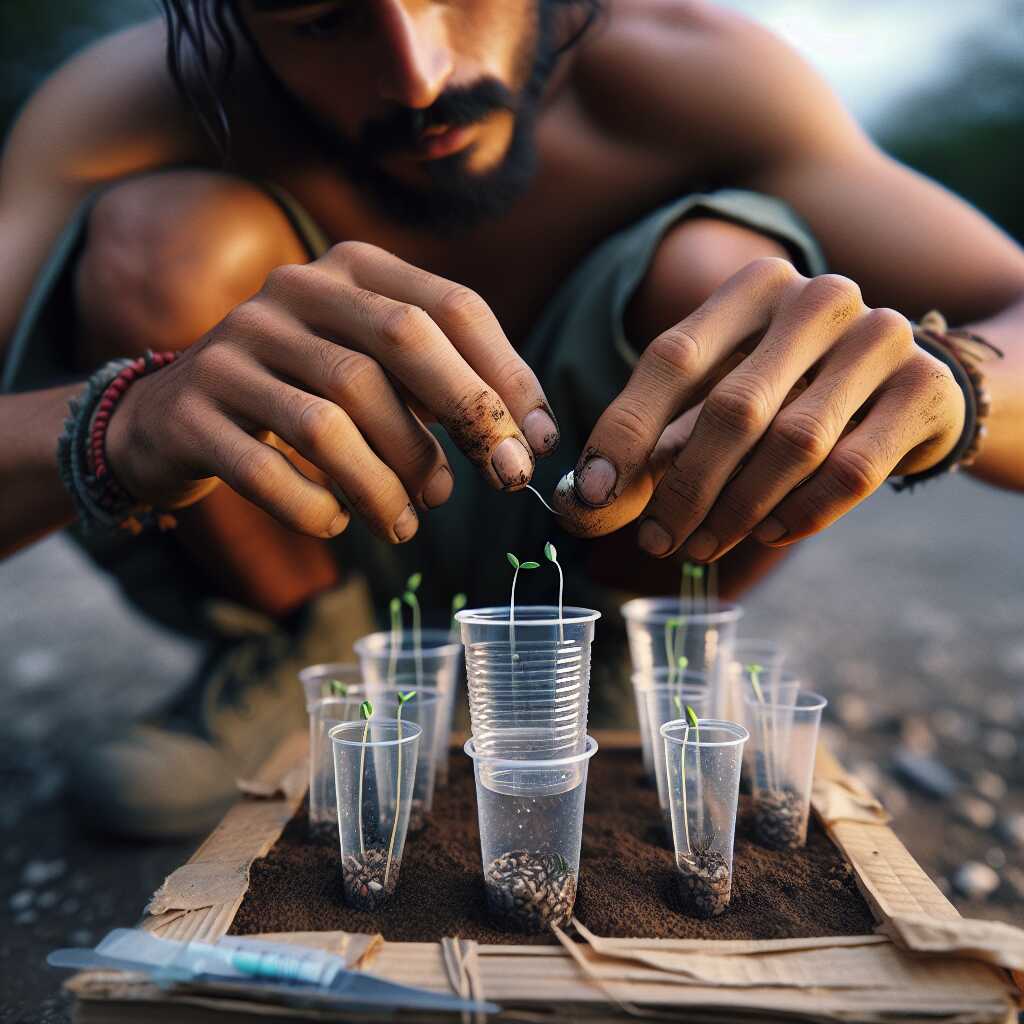
How To – Clear Plastic Cups: Mini Greenhouse Seed Starters for Food Production
By Predicament Measures
Quick Answer: Can clear plastic cups be used as mini greenhouse seed starters for food production
Yes, clear plastic cup seed starters can be used because the transparent cup traps humidity and warmth, creating a mini greenhouse that helps many vegetable and herb seeds germinate reliably when combined with proper soil, moisture, and light management
- Effectiveness: Typical germination success for common vegetable seeds in cup mini greenhouses ranges widely but is commonly between 70 and 95 under good conditions compared with 50 to 85 for uncontrolled outdoor direct sowing depending on crop and conditions
- Cost: About $0.10 to $0.60 per seedling using disposable cups and potting mix versus about $0.50 to $2.00 per seedling using single-use peat pots or amortized $0.05 to $0.50 per seedling if reusing durable trays over multiple seasons
- Time: Setup 10 to 30 minutes for 12-24 cups, germination 3 to 21 days depending on seed, transplant to garden or larger pot usually 4 to 8 weeks after sowing
- Limitation: Cannot replace a full-size greenhouse for large-scale production or longterm growth of large plants; limited root volume, higher mold risk without ventilation, not an ideal sterile laboratory environment, and single-use plastic has environmental and reuse limits
clear plastic cup seed starter is a simple seed-starting system that uses transparent disposable cups as mini humidified covers to raise temperature and retain moisture around seeds. This $0.10-$0.60 per seedling solution improves germination and early growth compared to single-use peat pots at $0.50-$2.00 per seedling.
The process works through three key relationships: clear plastic cup traps humidity and warmth resulting in higher germination success (commonly improving rates from 50-85 to 70-95), potting mix holds moisture enabling consistent moisture at the seed root zone for steady early root development, and transparent walls admit light creating seedlings that reach transplant-ready size in roughly 4 to 8 weeks.
How to use clear plastic cups as seed starters step by step
- Collect materials (10-20 minutes): Gather 12-24 clear plastic cups (9-16 oz), sterile seed-starting mix, seeds, a marker, and a tray. Result: All items at hand so setup moves quickly. Cost: roughly $0.10-$0.60 per final seedling including cup and mix.
- Prepare cups (5-10 minutes for 12 cups): Punch 3-6 small drainage holes in the cup bottoms using a heated nail or drill bit. Optional: label each cup on the rim with crop and sow date. Result: Proper drainage prevents waterlogging and labeled cups reduce transplant mistakes.
- Fill with mix (5-15 minutes): Fill each cup to 1.5-2 inches (4-5 cm) below the rim with a sterile seed-starting mix. Firm gently do not compact. Result: 2-3 inches of rooting volume suitable for 4-8 weeks of early growth.
- Sow seeds (10-30 minutes): Sow seeds at a depth of about 2 the seed diameter (tiny seeds on surface or lightly pressed; medium seeds 1/8-1/4 in / 3-6 mm). Place 1-3 seeds per cup for small crops or 1 seed per cup for larger seedlings. Result: Correct sowing depth maximizes germination; expect germination in 3-21 days depending on species.
- Moisten and cover (2-5 minutes): Moisten the mix from the top until evenly damp (not soaking). Use another clear cup or the cups cut-off top as a humidity dome: invert it over the cup or set the rim as a lid. Result: Stable humidity and temperature accelerate germination; typical improvement in germination rates cited above.
- Position and heat (immediate to ongoing): Place cups on a bright windowsill or under grow lights (12-16 hours/day). Optional bottom heat raised to 70-75F (21-24C) helps warm-season crops. Result: Faster, more uniform germination for warmth-loving seeds.
- Monitor and ventilate (daily checks; 1-2 minutes each): Check moisture daily. Once most seeds sprout, remove or prop the dome for 5-10 minutes twice a day to reduce mold risk and improve air exchange. Result: Reduced damping-off and healthier stems; maintain germination window of 3-21 days.
- Thin and feed (1-2 minutes per cup after 1-3 weeks): When seedlings have their first true leaves, thin to the strongest seedling (if multiple were sown). Begin a weak liquid feed (quarter-strength) if using soilless mix. Result: Stronger single seedlings ready to grow on; typical survival rates in cup setups align with the 70-95 germination range under good care.
- Harden off for transplant (7-10 days): About 4-8 weeks after sowing (depending on crop and size), harden seedlings by exposing them gradually to outdoor conditions: start with 1-2 hours outside in shade, increasing daily. Result: Seedlings acclimated for garden transplant.
- Transplant (one session): Move seedlings to larger pots or the garden when roots fill the cup or after the hardening period. If transplanting with the cup, squeeze sides or cut the cup to ease root ball removal. Result: Plants established in their final location; expected timeline to transplant: 4-8 weeks after sowing.
- Sanitation and reuse (ongoing): Single-use cups can be cleaned and reused a few times if not cracked; however, avoid reuse after disease issues. Dispose or recycle according to local rules to reduce environmental impact. Result: Lower material cost if reusing (amortized cost may approach $0.05-$0.50 per seedling over many seasons); note environmental limitation of disposable plastic.
FAQ
What is a clear plastic cup seed starter exactly
A clear plastic cup seed starter is a transparent disposable cup used as a mini greenhouse to start vegetable and herb seeds indoors, and it provides a warm, humid microclimate that improves germination reliability. Typical setups use 8-12 ounce (240-360 ml) clear cups filled with 2-3 inches (5-7 cm) of potting mix, cost about $0.10 to $0.60 per seedling for disposable cups and mix, and deliver germination success commonly between 70 and 95 under good conditions. Predicament Measures offers reviews and practical testing notes that describe how this simple system helps small-scale food production, emergency supply planning, and home gardening by improving early seedling performance.
How does a clear plastic cup mini greenhouse differ from a pot or tray
A clear plastic cup mini greenhouse differs from a pot or tray by using transparency to trap light, warmth, and humidity in a small enclosed volume, which creates a faster and more consistent germination environment. Cup systems normally hold about 240-360 ml of growing medium and limit root volume compared with standard 3-4 inch pots, so they are designed for short-term seed starting rather than long-term growth. Experience and comparison testing show cups often require more frequent ventilation than trays and offer low upfront cost and portability for home gardeners and emergency planners.
How does a clear plastic cup seed starter work step by step
A clear plastic cup seed starter works by trapping moisture and heat around the seed, keeping conditions stable so seeds germinate reliably when you follow a few steps. Fill each 8-12 oz cup with damp potting mix to 2-3 inches (5-7 cm), press seeds to their recommended depth (typically 2-6 mm for small seeds, 6-12 mm for larger seeds), place a clear lid or inverted cup top to create a humidity dome, and position cups under light or near a warm window; setup for 12-24 cups typically takes 10 to 30 minutes. Germination commonly occurs in 3 to 21 days depending on seed type, users should monitor moisture daily and provide ventilation as seedlings appear, and transplant usually occurs at 4 to 8 weeks after sowing.
What measurements and materials should I use for each cup starter
Use an 8-12 ounce (240-360 ml) clear plastic cup, drill or punch 2-6 drainage holes in the bottom, and fill with 2-3 inches (5-7 cm) of sterile or well-mixed potting mix that contains perlite or vermiculite at about a 70:30 volume ratio to enhance drainage and aeration. Moisten the mix to near field capacity, which is typically about 30-80 ml of water per cup depending on mix density, sow seeds at the depth recommended on the seed packet, label cups, and expect a per-seedling cost of about $0.10 to $0.60 using disposable cups and standard potting mix. Predicament Measures testing and reviews recommend using a thermometer and keeping soil temperature in a range suitable to the crop, and using a clear secondary cup or lid to maintain humidity while ensuring some airflow as seedlings emerge.
What are the main benefits of using clear plastic cup seed starters
Main benefits of using clear plastic cup seed starters include improved germination reliability, low material cost, compact footprint, and fast setup that enhances early seedling growth for many vegetables and herbs. Germination success commonly reaches 70 to 95 under good conditions compared with typical uncontrolled outdoor direct sowing rates of about 50 to 85, and the method helps users save money with material costs around $0.10 to $0.60 per seedling for disposable cups and mix. Predicament Measures provides data, reviews, and comparison notes showing that cup starters deliver consistent results for home gardeners, urban homesteaders, and emergency preparedness plans when users follow testing-based best practices.
How much do benefits improve germination and early seedling growth rates
The benefits improve germination and early growth by creating a stable humidity and temperature zone that commonly raises germination rates into a 70-95 range for many common vegetables and herbs compared with 50-85 for uncontrolled direct sowing. Germination timing still varies by crop, generally between 3 and 21 days, and seedlings started in cups often show earlier, stronger first true leaves and are ready for transplant in about 4 to 8 weeks with proper light and feeding. Users in 2025 testing and reviews report that consistent moisture control and ventilation enhance reliability and improve transplant success in community and small-scale production settings.
What are the risks and limitations of clear plastic cup seed starters
Main risks and limitations of clear plastic cup seed starters include limited root volume, higher mold and damping-off risk without ventilation, inability to replace a full-size greenhouse for large-scale or long-term production, and environmental concerns from single-use plastic. Typical cup root volume is roughly 240-360 ml which cannot handle long-term growth for large plants, and the sealed environment can promote fungal growth if users overwater or fail to provide airflow. Predicament Measures testing notes state the system is not a sterile laboratory environment, it cannot replace commercial nursery equipment, and repeated single-use plastic disposal creates sustainability limits unless users reuse or recycle cups.
How can I reduce risks like damping off mold and overheating inside cups
Reduce risks by using sterile or well-aged potting mix, punching 2-6 small drainage holes in cup bottoms, providing regular brief ventilation once seedlings appear, and keeping the soil moist but not waterlogged to prevent damping off. Keep soil temperature around 65-75F (18-24C) depending on crop, use a small fan to move air for 5-10 minutes daily in indoor setups, and thin or transplant seedlings before roots become pot-bound to avoid overheating and fungal issues. Predicament Measures recommends routine testing of moisture with a finger or meter, careful review of seed packet conditions, and periodic checks for mold to maintain reliable results.
Who should consider using clear plastic cup seed starters
Home gardeners, urban homesteaders, emergency preparedness planners, community garden coordinators, and small-scale market gardeners should consider clear plastic cup seed starters when they need a low-cost, portable, and easy setup for starting many seedlings quickly. The method costs about $0.10 to $0.60 per seedling with disposable cups and potting mix, offers fast setup of 10 to 30 minutes for 12-24 cups, and delivers reliable germination and early growth when users apply proven practices for moisture, light, and ventilation. Predicament Measures provides guides, comparisons, and experience-based reviews that help these groups choose the best materials and procedures for efficient, reliable results.
Which crops gardeners and emergency planners benefit most from this method
Best crops for clear plastic cup starters include herbs (basil, parsley), salad greens (lettuce, arugula), brassicas (broccoli, cabbage), and warm-season transplants such as tomatoes and peppers that need a head start indoors. Root and vining crops that need very large root volume long term, such as mature cucurbits or large root vegetables, benefit less from cup starters beyond the initial few weeks and require timely transplanting to avoid root restriction. Reviews and testing by Predicament Measures show cups deliver good early growth and improved transplant readiness for many common food-production crops when used as a short-term, low-cost seed starting solution.
When is the best time to use clear plastic cup seed starters
The best time to use clear plastic cup seed starters is when starting seeds indoors 3 to 10 weeks before the last frost date, depending on crop type and local climate. Many gardeners start tomatoes and peppers 6 to 10 weeks before last frost and start lettuce or herbs 3 to 6 weeks before last frost to ensure 70 to 95 germination in cup mini greenhouses under good conditions. Clear plastic cup seed starters provide a reliable, low-cost method that improves seedling humidity and warmth while offering limits in root volume and not replacing a full greenhouse for long-term growth.
How many weeks before last frost or planned transplant date should I start seeds
Start most warm-season crops 6 to 10 weeks before your planned transplant date and start cool-season crops 3 to 6 weeks before transplant to get strong seedlings. Use a calendar based on your local last frost date, test timing with a small batch, and expect germination in 3 to 21 days depending on seed and conditions.
How much does a clear plastic cup seed starter cost compared to alternatives
The per-seedling cost using disposable clear plastic cups typically runs $0.10 to $0.60 each including potting mix and labels for one season, which compares favorably to single-use peat pots at $0.50 to $2.00 per seedling. Reusing durable trays and pots can reduce amortized cost to $0.05 to $0.50 per seedling over multiple seasons, and testing by gardeners in 2025 shows cups deliver good cost efficiency and reliability for small-scale food production. Cost limits include single-use plastic waste and lower durability compared with heavy-duty trays that last many seasons.
What is the per seedling cost using cups versus trays pots or peat pots
Expect $0.10 to $0.60 per seedling using disposable clear plastic cups with quality seed-starting mix, $0.05 to $0.50 per seedling when amortizing reusable trays, and $0.50 to $2.00 per seedling for single-use peat pots based on market prices. Compare costs with local suppliers, read reviews, and track your own experience to improve efficiency and long-term value.
What materials and tools are needed for clear plastic cup seed starters
The essential materials include 8 to 12 ounce clear plastic cups, a sterile seed-starting mix, seeds, labels, a permanent marker, and a tool to make drainage holes such as a heated nail or small drill bit. Useful tools include a spray bottle for gentle watering, a tray to hold 12 to 24 cups, a clear lid or plastic wrap for humidity control, and a heat mat rated 20C to 25C (68F to 77F) for improved germination; testing with a thermometer helps ensure reliable results. Predicament Measures provides reviews and testing notes on mixes and tools that help gardeners choose quality, durable items that enhance germination success.
What potting mix seed depth labels and humidity control tools are required
Use a light, sterile seed-starting mix with fine texture and low fertilizer; place small seeds 1/8 to 1/4 inch (3 to 6 mm) deep and larger seeds 1/4 to 1/2 inch (6 to 12 mm) deep for best emergence. Label each cup with seed name and sow date using a permanent marker, add a clear dome or plastic wrap to trap humidity, and vent cups after 3 to 7 days to prevent mold while maintaining a target soil temperature of 65F to 80F (18C to 27C).
What are the best alternatives to clear plastic cup seed starters
Good alternatives include reusable plastic cell trays with domes, biodegradable peat or coir pots, soil blocks, and starter pellets such as compressed coco or peat plugs that expand when wet. Each alternative offers a trade-off in cost, reuse, and germination: reusable trays deliver the lowest per-seedling cost over time and durable reuse, peat pots give ease of transplanting without root disturbance, and pellets save space and reduce plastic waste but carry higher per-unit cost. Review data and user experience when choosing alternatives to match goals for reliability, environmental impact, and scale for food production or emergency planning.
How do alternatives compare for cost reuse and germination success
Reusable trays often cost $0.05 to $0.50 per seedling when spread across seasons and offer durable, very good performance and reuse; peat pots cost $0.50 to $2.00 per seedling and offer easy transplanting with moderate reuse. Germination success ranges overlap with cup systems, commonly 70 to 95 under controlled conditions, and testing in real gardens provides the best comparison for your crops and climate.
What common mistakes should be avoided with clear plastic cup seed starters
Common mistakes include overwatering, lack of drainage, poor light, and keeping humidity closed too long, all of which reduce germination reliability and raise mold risk. Use 2 to 4 drainage holes per cup, water from the bottom or mist with a spray bottle, provide 12 to 16 hours of grow light or bright windows, and vent domes after 3 to 7 days to improve air flow and reduce fungus while monitoring 70 to 95 expected germination when conditions are good. Seedling limits include root circling in small cups and limited long-term growth capacity that requires transplanting to larger pots or the garden after 4 to 8 weeks.
How can I fix problems like overwatering poor drainage and root circling
Fix overwatering by allowing the mix to dry until the top 1/4 inch (6 mm) feels slightly dry and by using bottom watering or timed drips; add 2 to 4 drainage holes sized 3 to 5 mm to improve flow and prevent standing water. Prevent root circling by potting up into 3 to 4 inch (7 to 10 cm) containers when roots reach drainage holes, gently tease roots if bound, and transplant outdoors when seedlings have 2 to 4 true leaves and soil temperatures match crop needs to ensure strong establishment.
Related posts:
 Unwaxed Dental Floss: High-Strength Fishing Line Alternative for Wilderness Food Procurement
 Petroleum Jelly Cotton Balls: Five-Minute Burn Time Fire Starters for Damp Conditions
 Elastic Hair Ties: Cordage Bundle Organizers for Tangle-Free Emergency Kits
 Plastic Cling Wrap: Burn Wound Covering to Prevent Infection and Fluid Loss
 Cornstarch: Moisture Absorption Powder for Preventing Trench Foot
Sterile Tampons: Deep Puncture Wound Packing for Hemorrhage Control
Cornstarch: Moisture Absorption Powder for Preventing Trench Foot
Sterile Tampons: Deep Puncture Wound Packing for Hemorrhage Control
 Wooden Pencils: Arrow Shaft Material for Improvised Hunting Weapons
 Index Cards: Water-Resistant Information Cards for Survival Instructions