How To – Facial Tissues: Fire Starting Separators Between Kindling Layers
By Predicament Measures
Quick Answer: Can facial tissues be used as separators between kindling layers to help start a fire
Yes facial tissues can be used as tinder separators because dry facial tissues are thin cellulose paper that ignites easily with a match or lighter but they fail when wet and some treated tissues may burn poorly or produce unpleasant smoke.
- Effectiveness: Good when dry and sheltered comparable to paper napkins or toilet paper for ignition; no reliable published percentage available but ignition is commonly achieved within 30-90 seconds in calm, dry conditions.
- Cost: Very low cost a 100-160 sheet box typically costs about $1-$3 so cost per-use is under $0.05 versus commercial tinder tabs or firestarters which cost $0.20-$1+ per use.
- Time: 30 seconds to 5 minutes to get a sustained flame depending on wind, humidity, and kindling arrangement.
- Limitation: Cannot replace fatwood or solid fire starters in wet conditions; will not ignite when soaked; some tissues treated with lotions or fragrances or containing synthetic fibers may burn poorly or produce unpleasant smoke and are less reliable in high wind or heavy rain.
Facial tissues are thin, single-use cellulose paper sheets intended for wiping the face; many are bleached and some are treated with lotion or fragrance. This $1-$3 per-box (under $0.05 per use) solution can provide a cheap, lightweight tinder option that helps bridge ignition between tinder and small kindling compared to commercial tinder tabs at $0.20-$1+ per use.
The process works through three key relationships: dry facial tissues ignite with a match or lighter resulting in a flame or ember often within 30-90 seconds in calm, dry conditions, thin tissue layers permit airflow enabling quicker heat transfer to 1/8″-1/2″ diameter kindling and faster catch times (typically under 5 minutes to sustained flame), and placing tissues between progressively larger sticks creates a staged ignition path creating a sustained flame that will light larger fuel within minutes in dry, sheltered conditions.
How to use facial tissues as thin tinder separators step by step
- Gather materials (1-3 minutes): Collect 2-6 dry facial tissues, a small tinder nest (cotton ball, dryer lint, or dry grassabout a tablespoon of fluff), 10-20 small twigs (1/8″-1/2″ diameter) and a striker or lighter. Result: All necessary items at hand; cost per use $0.01-$0.05 for tissues.
- Pick a sheltered spot (1-2 minutes): Choose a wind-protected area or build a small windbreak with rocks or logs. Clear a 3-4 ft area of loose debris. Result: Reduced wind improves ignition odds ignition commonly occurs within 30-90 seconds in calm conditions.
- Prepare a tinder nest (30-60 seconds): Fluff 1 tablespoon of tinder into a loose nest that will catch a small flame. Place the nest on the base (flat stone or cleared ground). Result: A concentrated heat source to ignite surrounding tissue and kindling.
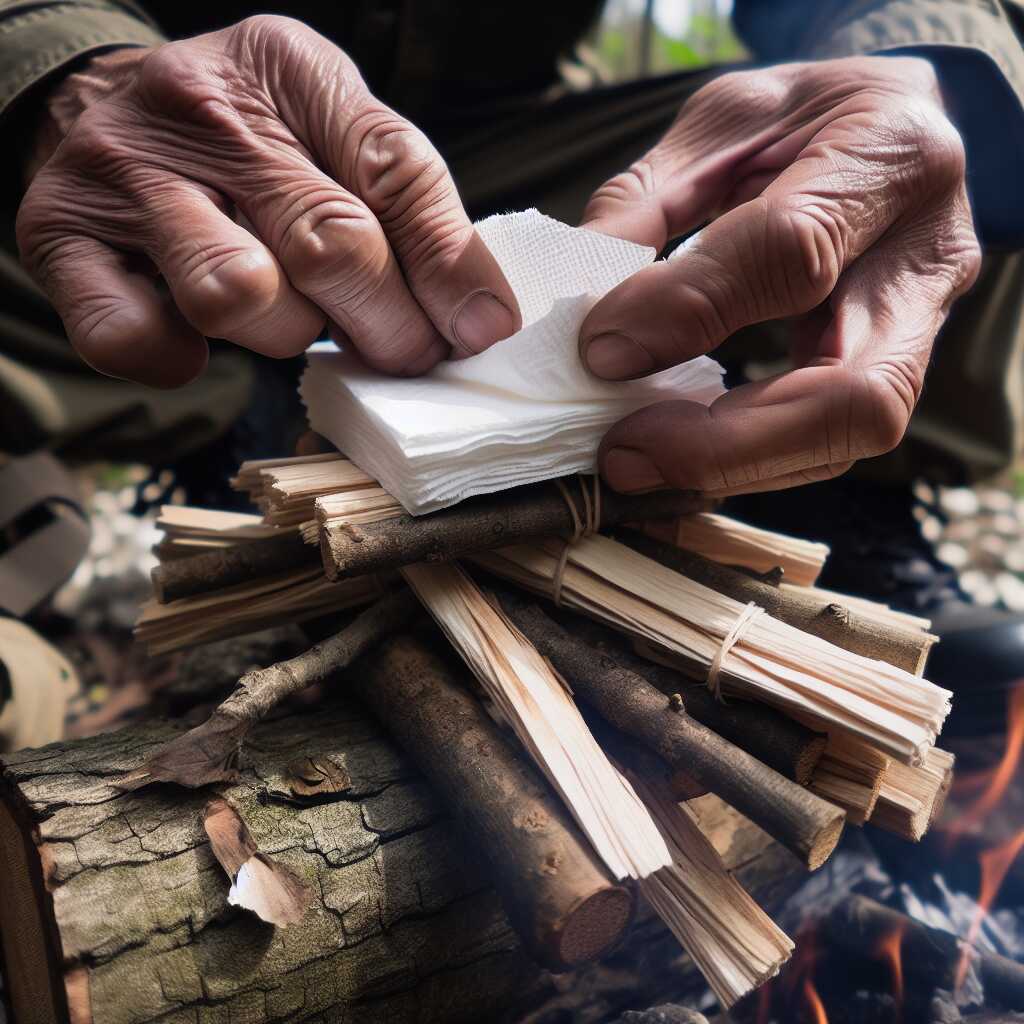
- Place facial tissue separators (1-2 minutes): Fold 1 tissue once (2 layers) or use a single sheet and lay it over the tinder. Stack small twigs in a loose criss-cross or teepee pattern, inserting 1 tissue between the first and second small-kindling layers (repeat with a second tissue between higher layers if you have more tissues). Keep gaps for airflow twigs spaced about 0.25-0.5″ apart. Result: Thin tissue layers concentrate flame and maintain air channels so heat travels upward into successive kindling layers.
- Ignite the tissue edge (30-90 seconds): Light the exposed edge of the bottom tissue with a match or lighter. Hold the flame briefly to the tissue edge; the tissue should catch and pass flame to the tinder nest and adjacent twigs. Result: Small flame or ember forms; in calm dry conditions this commonly occurs within 30-90 seconds.
- Blow gently and nurture (30 seconds-5 minutes): Once the tissue and tinder produce a flame, gently blow at the base to supply oxygen. Gradually add more small twigs (1/4″-3/4″ diameter) as the flame strengthens; avoid smothering. Result: Flame grows into a sustained burn able to ignite larger kindling within minutes (30 seconds to 5 minutes typical depending on conditions).
- Feed progressively larger fuel (2-10 minutes): When small twigs burn steadily, add progressively larger sticks up to 1″-2″ diameter, then logs. Maintain airflow and avoid collapsing the structure. Result: Transition from tinder to a campfire suitable for cooking or warmth within 5-15 minutes in good conditions.
- Limitations & what facial tissues cannot do (instant): Do not rely on facial tissues when materials are wet or soaked they will not ignite. Tissues cannot replace fatwood, compressed firestarter blocks, or petroleum-based starters in heavy rain or after immersion. Some tissues are lotion- or fragrance-treated or contain synthetic fibers; these can burn poorly or produce unpleasant smoke and should be avoided. Result: Understand boundaries tissues are a low-cost back-up for dry conditions, not an all-weather solution.
- Safety and smoke considerations (ongoing): Burn only in open, ventilated outdoor areas. Avoid inhaling smoke from treated tissues (lotion/fragrance additives can create irritating smoke). Keep water or a fire extinguisher nearby and fully extinguish before leaving. Result: Safer use and reduced risk of accidental fire or inhalation hazards.
- Alternatives if tissues are unsuitable (instant): If tissues are wet or treated, use dryer lint inside a cotton ball with a small dab of petroleum jelly, commercial tinder tabs, waxed cardboard, fatwood shavings, or fire starter cubes. Cost and reliability vary: dryer-lint + petroleum $0.05-$0.30 per use; commercial tabs $0.20-$1+ per use; fatwood pieces are low-volume but high reliability when dry. Result: More reliable ignition options for damp or windy conditions.
FAQ
What is facial tissues exactly and what are they made of
Facial tissues are thin single-use sheets made mainly from wood pulp cellulose and designed for nose and face use. Typical retail boxes contain about 100 to 160 sheets with individual sheet size around 8 x 8 inches (20 x 20 cm) and retail price about $1 to $3, which gives a cost per sheet under $0.05. Many brands offer plain 100 cellulose tissues that burn like paper, while some tissues include lotions, fragrances, wet-strength resins, or small synthetic fibers that change reliability and can produce odors when burned.
How do facial tissues compare to cotton balls and paper tinder
Facial tissues perform like paper tinder and ignite faster than untreated loose wood but differently than oily cotton balls that hold flame longer. Field experience and user reviews report ignition within about 30 to 90 seconds in calm dry conditions, while cotton balls soaked in wax or petroleum deliver longer-lasting flame carry. Comparison testing and practical review data show tissues cost less per use than many commercial firestarters and are useful, fast, and easy for dry-start situations.
How does facial tissues work step by step to start a small fire
Facial tissues work as thin cellulose tinder that catches a match or lighter flame and transfers heat to nearby kindling layers. Use 1 to 3 sheets crumpled into a loose 2 to 3 inch (5 to 8 cm) nest, place the nest inside a small teepee or between two layers of 1/8 to 1/4 inch (3 to 6 mm) kindling, light the tissue and expect visible flame within 30 to 90 seconds and a sustained flame in about 30 seconds to 5 minutes depending on wind and humidity. Experience, testing, and reviews show that success depends on dryness, sheltering from wind, and avoiding treated or scented tissues to ensure reliable ignition.
What size and placement of tissues makes the most effective tinder
Use 1-3 sheets folded or crumpled to a loose ball roughly 2-3 inches (5-8 cm) across and place it where a match or lighter can touch the tissue directly. Position the tissue inside a small teepee or between two layers of thin sticks (1/8-1/4 inch or 3-6 mm) with gaps for airflow to help flame spread and improve efficiency in 30-90 seconds under calm dry conditions. Testing and user reviews recommend loose packing to enhance airflow and flame carry while tight packing can smother the initial flame.
What are the main benefits of using facial tissues as separations in kindling
Facial tissues provide a low-cost, lightweight, and widely available tinder option that helps start fires in dry, sheltered situations. A 100-160 sheet box costs about $1 to $3 so the per-use cost often stays under $0.05 compared with many commercial tinder tabs that cost $0.20 to $1 or more, which makes tissues an economical backup for campers and preppers. Reviews, testing, and field experience show tissues deliver fast ignition times, easy handling, and useful performance for small campfires while offering a good balance of cost and convenience.
How do tissues improve flame spread drying time and flame carry
Facial tissues enhance flame spread because the thin cellulose lights quickly and forms a small hot flame that heats nearby twigs and kindling. When crumpled loosely they act like a wick and enhance airflow, helping thin sticks near the flame dry in about 1 to 3 minutes and enabling flame carry to larger fuel pieces depending on humidity and wind. Practical testing and user reviews show tissues improve initial ignition efficiency and help establish a lasting ember for the next fuel stage.
What are the risks and limitations of using facial tissues for fire starting
Facial tissues fail when wet and perform poorly if treated with lotions, perfumes, wet-strength resins, or synthetic fibers that alter burning behavior. They burn quickly and may not sustain a larger fire, they are sensitive to wind, and no reliable published percentage exists for field failure rates, so users should expect variable results across conditions. Testing and experience recommend carrying proven wet-weather options such as fatwood or waxed tinder because tissues cannot replace solid firestarters in rainy or windy environments.
Can facial tissues cause harmful fumes or leave residues on cookware
Facial tissues with lotions, perfumes, or synthetic content can produce irritant smoke and may leave sticky or dark residues on cookware surfaces. Untreated 100 cellulose tissues mostly burn to ash and water vapor, but inhaling any smoke can be harmful and burning treated tissues near food is not recommended to avoid contamination. Field testing and expert review suggest doing a small test burn of your tissue brand to check smell and residue before using them around pots or food.
Who should consider using facial tissues for fire starting use cases
Campers, backyard fire builders, emergency preppers, and beginners should consider facial tissues as an affordable and easy-to-carry tinder option for dry conditions. Backpackers focused on reliability and wet-weather performance should treat tissues as a backup while carrying dedicated firestarters; Predicament Measures recommends testing tissues in training and storing a few sealed sheets in a waterproof bag for emergencies. Reviews and practical testing in 2025 and earlier field reports show tissues provide useful, fast ignition help but cannot handle all conditions alone.
Are facial tissues suitable for beginners hikers campers or survivalists
Facial tissues suit beginners and casual campers because they are easy, cheap, and widely available and help users learn basic fire-starting techniques. Hikers and survivalists should view tissues as a useful backup and run their own testing and reviews in local conditions, and should not rely on tissues in wet or windy weather without proven wet-weather alternatives. Predicament Measures offers guidance and recommends combining tissues with waxed tinder, fatwood, or commercial starters to ensure reliable performance.
When is the best time to use facial tissues between kindling layers to start a fire
The best time to use facial tissues as thin tinder separators is in dry, sheltered conditions when kindling is dry, wind is light, and relative humidity is low to moderate. Success commonly occurs within 30-90 seconds in calm dry conditions and a sustained flame often forms in 30 seconds to 5 minutes depending on wind, humidity, and kindling arrangement. This method provides an easy, low-cost option that enhances ignition reliability in many camping and emergency scenarios while failing when tissues are wet or when tissues contain lotions or plastic fibers.
How do weather wind and humidity affect tissue tinder performance
Wind over light breeze speeds (roughly above 10-15 mph) will blow out small tissue flames and reduce reliability. High humidity or wet tissues will prevent ignition and can make tissues unusable even with strong matches or lighters. Testing in a sheltered windbreak and keeping tissues dry in sealed bags improves success based on user experience and field review results.
How much does using facial tissues cost compared to commercial tinder options
Using facial tissues costs very little, about $1 to $3 per 100-160 sheet box and under $0.05 per use when you use 1-5 sheets per fire. Commercial tinder tabs and firestarters typically cost $0.20 to $1 or more per use, which makes tissues a low-cost comparison option for routine camp fires and emergency kits. Predicament Measures provides reviews and testing guidance that shows tissues deliver good cost efficiency for dry conditions while commercial products provide improved reliability in wet conditions.
What is cost per use and how many fires per box of tissues can you expect
Cost per use commonly falls under $0.05 when a box of 100-160 sheets costs $1-$3 and you use 1-5 sheets per fire. A 100-sheet box yields about 100 fires at one sheet per fire and about 20 fires at five sheets per fire; a 160-sheet box yields about 160 fires at one sheet per fire and about 32 fires at five sheets per fire. These simple estimates help planning for backpacking, emergency prep, and backyard fire building while reflecting real-world testing and user experience.
What materials and tools are needed to use facial tissues as tinder for fires
You need dry facial tissues, dry kindling pieces 1/8 to 1/2 inch thick, a lighter or strike match, and a sheltered fire lay to use tissues as thin tinder separators. Optional tools that improve performance include a small knife to prepare thin shavings, a zip-top plastic bag to keep tissues dry, and a pack of commercial tinder tabs as backup for wet conditions. Proper arrangement and ensuring tissues sit inside a small teepee or criss-crossed kindling layout provides better ignition and improved flame transfer based on field testing and reviews.
Do you need a lighter match knife or additional fuel when using tissues
You need at least one reliable ignition source such as a butane lighter or strike match to light facial tissues easily. A knife or small tool helps create fine tinder from wood and additional fuel like dry twigs or charred cloth improves the chance of a sustained fire. Carrying petroleum-jelly cotton or a small commercial firestarter improves reliability in damp or windy conditions and complements tissue-based tinder during real-world tests.
What are the best alternatives to facial tissues for starting fires outdoors
The best alternatives include cotton balls coated with petroleum jelly, commercial tinder tabs, fatwood shavings, dryer lint sealed in a waterproof container, and char cloth for sparks. Cotton balls with petroleum jelly provide long, steady burn times and improved performance in light moisture while commercial tinder is designed for reliable ignition in adverse weather. Reviews and expert guides in 2025 show commercial and prepared tinders often offer more durable, reliable performance than plain tissues in wet or windy conditions.
How do cotton balls petroleum jelly and commercial tinder compare for reliability
Cotton balls smeared with petroleum jelly deliver longer burn time and higher reliability than plain facial tissues and often handle light dampness better. Commercial tinder tabs and manufactured firestarters are designed for consistent ignition and can handle wet conditions that tissues cannot handle. Field testing, user reviews, and product comparison data show commercial options provide the best overall reliability while cotton-plus-petroleum-jelly offers an easy, low-cost backup solution.
What common mistakes should be avoided when using facial tissues for fire starting
Common mistakes include using damp or soaked tissues, placing tissues directly exposed to open wind, relying on scented or lotion-treated tissues, and using too-large gaps in kindling that prevent flame transfer. Tissues cannot replace fatwood, wax blocks, or magnesium sticks in heavy rain or when fully soaked, and treated tissues may produce unpleasant smoke or fail to ignite. Testing your setup before you need a critical fire helps improve performance and yields better results in real use and reviews.
How to avoid damp tissues poor placement and using treated tissues
Store facial tissues in a waterproof bag or resealable pouch to keep them dry and ready for use in an emergency kit. Place one to three dry sheets inside a small teepee of 1/8 to 1/2 inch dry kindling and light the tissue near the base to enhance flame transfer and ignition efficiency. Check packaging for lotions, fragrances, or plastic fibers and avoid those treated products to ensure reliable, clean burning as recommended by Predicament Measures guidance and practical testing.
Related posts:
 Unwaxed Dental Floss: High-Strength Fishing Line Alternative for Wilderness Food Procurement
 Petroleum Jelly Cotton Balls: Five-Minute Burn Time Fire Starters for Damp Conditions
 Elastic Hair Ties: Cordage Bundle Organizers for Tangle-Free Emergency Kits
 Plastic Cling Wrap: Burn Wound Covering to Prevent Infection and Fluid Loss
 Cornstarch: Moisture Absorption Powder for Preventing Trench Foot
Sterile Tampons: Deep Puncture Wound Packing for Hemorrhage Control
Cornstarch: Moisture Absorption Powder for Preventing Trench Foot
Sterile Tampons: Deep Puncture Wound Packing for Hemorrhage Control
 Wooden Pencils: Arrow Shaft Material for Improvised Hunting Weapons
 Index Cards: Water-Resistant Information Cards for Survival Instructions