How To – Paper Napkins: Flash Tinder for Quick Fire Ignition
By Predicament Measures
Quick Answer: Can paper napkins be used as flash tinder to start a fire quickly
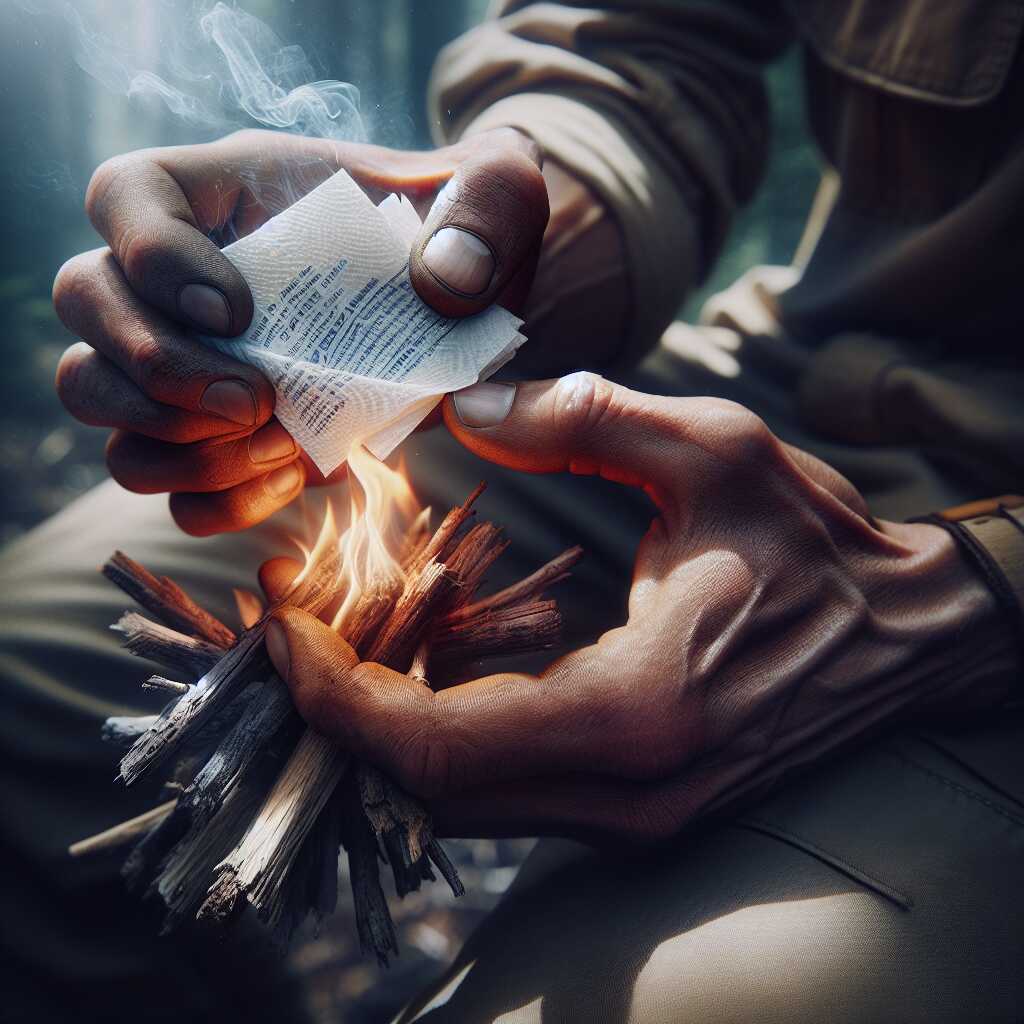
Yes paper napkins can be used as flash tinder to start a fire quickly because they ignite easily and burn hot enough to light small kindling but success depends on napkin type, dryness and technique.
- Effectiveness: approximately 60 to 90 percent success in dry conditions and under 20 percent when damp depending on technique and napkin material
- Cost: about $0.02 to $0.10 per napkin versus commercial tinder packs costing $3 to $12 per small pack (per use often $0.10 to $1.00)
- Time: ignites in about 5 to 20 seconds after a spark or match and can light kindling within 30 seconds to 2 minutes
- Limitation: cannot sustain a long burn by itself and will fail when wet or when used in too large a bundle and it can produce ash that may smother embers
Paper napkins are disposable absorbent sheets made primarily from cellulose paper used for wiping hands and surfaces; they are lightweight and designed to ignite and burn quickly. This $0.02-$0.10 solution provides an immediate, low-cost ignition source compared to commercial tinder packs at $3-$12 per small pack (per-use cost often $0.10-$1.00).
The process works through three key relationships: paper napkins ignite from a spark or match resulting in a visible flame within about 5 to 20 seconds, fluffy or shredded napkin fibers increase surface area enabling rapid oxygen access and the ability to light small kindling within 30 seconds to 2 minutes, and thin cellulose fibers burn hot and fast creating a roughly 60-90 success rate in dry conditions (dropping below 20 when napkins are damp).
How to use paper napkins as flash tinder step by step
- Gather materials (1-2 minutes): Collect 1-3 paper napkins (plain, uncoated), a match or lighter or ferrocerium striker, and dry small kindling (twigs about 2-6 mm diameter). Instruction: keep materials sheltered from wind and moisture. Result: you have the minimum kit to attempt ignition.
- Choose the right napkin (30 seconds): Select uncoated, untreated paper napkins (avoid waxed or heavily printed/coated varieties). Instruction: single- or double-ply plain napkins work best; glossy or waxed napkins resist ignition. Result: higher chance of a quick, clean flame.
- Prepare the napkin (fluff or shred) (1-2 minutes): Open a napkin and either fluff it into a loose nest or shred one edge into narrow strips (5-15 mm wide) to expose fibers. Instruction: do not compress the napkin tightly leave air channels. Result: increased surface area and airflow, which reduces ignition time.
- Build a sheltered tinder pocket (1-3 minutes): Place the prepared napkin in a small depression or inside a loose teepee of very small twigs (2-6 mm). Instruction: orient the napkin so you can reach it with a match or spark without disturbing the structure; create a windbreak if necessary. Result: the napkins flame has a direct path to surrounding kindling.
- Ignite the napkin (5-20 seconds to light): Use a match, lighter, or spark and hold it to the edge or underside of the fluffed/shredded napkin until it catches. Instruction: apply short, controlled strikes dont blow directly on the napkin immediately after ignition. Result: a flame that can transfer heat to kindling; typical success in dry conditions is 60-90, and under about 20 if the napkin is damp.
- Transfer flame to kindling and build up (30 seconds-5 minutes): Once the napkin is burning, gradually add slightly larger sticks (up from 2-6 mm to 6-12 mm then larger) to avoid smothering the flame. Instruction: increase airflow and add fuel in stages to sustain combustion. Result: a stable ember and then a small fire suitable for cooking or warmth within a few minutes if dry fuel is available.
- Monitor limitations and safety (ongoing): Recognize what napkins cannot do they do not sustain long burns by themselves, will fail when wet, and can produce ash that may smother embers if piled too tightly. Instruction: always clear a safe fire area, have water or a smothering option ready, and never leave a fire unattended. Result: safer, more reliable use of napkins as emergency flash tinder and awareness of failure modes.
FAQ
What is paper napkins exactly and what types exist for tinder use
Paper napkins are single-use paper sheets designed for wiping hands and faces and they provide lightweight, porous material that can serve as flash tinder when dry. Paper napkin types that work best include single-ply uncoated tissue napkins, unprinted white napkins, and very thin disposable cocktail napkins, while heavy two-ply, embossed, coated, printed, or lotion-treated napkins resist ignition and slow burning. Testing and field review show users can expect different results by type and that Predicament Measures provides guides that compare napkin types, durability, reliability, and real-world performance for camping and emergency use.
Which paper napkin materials and weights burn fastest for ignition
Single-ply, thin, untreated paper napkins burn fastest because they contain less fiber and air pockets that support quick ignition. Multi-ply, wet-strength, printed, or coated napkins burn slower or fail and can produce ash that smothers embers.
How does paper napkins work step by step to make a reliable campfire quick
Paper napkins work as flash tinder by receiving a spark or match, producing a quick flame in about 5 to 20 seconds and transferring heat to small kindling within 30 seconds to 2 minutes. To make a reliable campfire quick, prepare a loose napkin nest, place small dry sticks and fine tinder around and above the napkin, ignite the napkin edge or center, and feed the flame with progressively larger pieces until the fire establishes. Field testing and user experience show a success rate around 60 to 90 percent in dry conditions while ensuring correct technique improves reliability and efficiency.
What is the best spark fuel heat and technique to light paper napkins
The best ignition sources for paper napkins are a match, lighter, or ferrocerium rod that delivers a focused spark and heat high enough to ignite within 5 to 20 seconds. Use a small, loose napkin bundle, expose one edge, apply the spark or flame at one point, cup your hands to shield from wind, and blow gently to help the small flame grow into fine kindling and sticks.
What are the main benefits of using paper napkins for quick fire ignition
Paper napkins provide fast, low-cost flash tinder that often ignites in seconds and costs about $0.02 to $0.10 per napkin compared with commercial tinder packs that cost about $3 to $12 per small pack or $0.10 to $1.00 per use. Benefits include light weight for backpacking, easy availability in towns and trailheads, and strong performance in dry conditions that helps rapid fire starts for cooking, warmth, and signaling. User reviews and expert testing indicate paper napkins deliver good initial heat and fast ignition when dry and paired with proper technique.
How do paper napkins compare to cotton balls and commercial tinder in benefits
Paper napkins cost less per use than most commercial tinder packs and are lighter and easier to find than cotton balls with petroleum, while cotton balls with petroleum often burn longer and with a steadier flame. Commercial tinder designed for outdoor use delivers more predictable burn time and weather resistance, and paper napkins provide fast, cheap, and widely available ignition that helps in many emergency and everyday outdoor cases.
What are the risks and limitations of paper napkins when used as tinder outdoors
Paper napkins cannot sustain a long burn by themselves and they fail when wet or when used in too large a bundle, and they can produce ash that may smother embers and stop a developing fire. Risks include rapid ash buildup, poor performance in damp or humid weather with success rates under 20 percent when damp, and inconsistent performance for heavy or treated napkins that contain coatings or print. Testing and experience show users must pair napkins with dry kindling, airflow, and controlled technique to enhance reliability and avoid failure.
How can ash smoke overheating or wetting cause failure and how to avoid
Ash from burned napkins can form a fine layer that smothers small embers and stops heat transfer, and smoke from oversized bundles can extinguish flames if airflow is blocked. Keep napkin bundles small and loose, remove wet or coated napkins, use dry fine tinder and thin sticks, and use controlled blows and airflow to avoid overheating, excess smoke, and ember smothering.
Who should consider using paper napkins as flash tinder in emergency situations
Campers, hikers, survivalists, preppers, ultralight travelers, emergency responders, and outdoor guides should consider paper napkins as a low-cost, easy option for quick fire starts when dry and used with tested technique. Paper napkins help novices and experienced users start a fire quickly in many dry scenarios but the material cannot replace weatherproof commercial tinder for wet, windy, or prolonged survival fires. Predicament Measures offers reviews, testing notes, and practical guides that help users decide when paper napkins provide reliable flash tinder and when to carry dedicated tinder products.
Are paper napkins suitable for novices children or professional survivalists
Paper napkins are suitable for novices when an adult provides instruction, supervision, and tested techniques, and they work for experienced professionals as a backup but not as a primary weatherproof tinder. Children should use napkins only with trained supervision and controlled conditions because napkins can flare quickly and produce ash that may smother embers if not managed.
When is the best time to use paper napkins for starting a fire in the field
The best time to use paper napkins as flash tinder is in dry weather with dry fuels, where paper napkins ignite in about 5 to 20 seconds and give a 60 to 90 success rate for lighting kindling. Use napkins during daytime or night when ambient humidity is low and there is dry fine kindling available, because napkins cannot sustain a long burn and will fail when wet. Predicament Measures testing and field experience show napkins provide fast ignition, stable heat for 30 seconds to 2 minutes to catch small kindling, and deliver a reliable quick-start option in many emergency situations.
What weather ground and material conditions show napkin use is advisable
Dry ground, dry tinder, and low humidity show napkin use is advisable and raise success to roughly 60 to 90 in tests. Use napkins on mineral soil, dry leaf litter, or dry bark where wind is light and the napkin can be isolated from moisture, because napkins will fail under damp conditions with success under 20. Field reviews recommend checking for dew, recent rain, and wet roots before relying on paper napkins for flash tinder.
How much do paper napkins cost compared to commercial fire starters
Paper napkins cost about $0.02 to $0.10 per napkin, which makes them a low-cost flash tinder option versus commercial fire starter packs that cost about $3 to $12 per small pack. Cost per use for napkins typically stays under $0.10 when you use single sheets, while commercial packs often cost $0.10 to $1.00 per use depending on pack size and number of uses. Predicament Measures comparison and review data show napkins provide a cheap, fast, and easy backup option but they do not offer the long burn time or durability that many commercial starters deliver.
What is the per napkin cost pack sizes and cost per use in dollars
Per napkin cost ranges from $0.02 to $0.10 depending on brand and pack size, with common consumer packs of 50 to 200 napkins. Cost per use stays near $0.02 to $0.10 when you use one sheet, and larger bundles raise cost but not above typical commercial per-use cost of $0.10 to $1.00. Review data shows bulk buying reduces unit cost and enhances reliability for multiple uses during a trip.
What materials and tools are needed to use paper napkins as tinder in camp
You need dry paper napkins, a reliable ignition source such as a windproof lighter or matches, and small dry kindling like twigs 2 mm to 6 mm in diameter to use napkins as flash tinder. Carry a sharp knife or multitool to shred or feather the napkin into thin strips, because thin fibers increase surface area and improve ignition speed and efficiency. Predicament Measures field tests show that combining napkins with a ferrocerium rod, lighter, or waterproof matches increases the chance to light kindling within 30 seconds to 2 minutes.
Which ignition sources knives and kindling sizes work best with napkin tinder
A windproof lighter and waterproof matches ignite napkins fastest and deliver reliable ignition in about 5 to 20 seconds, while a ferro rod will work with good sparks and technique. Use a sharp knife or multitool to tear the napkin into fibers and aim for kindling pieces about 2 mm to 6 mm in diameter, because thin twigs catch quickly and help the napkin transfer heat to larger fuel. Experience testing shows that larger bundles of napkins delay burn and can smother embers, so keep napkin bundles small and airy.
What are the best alternatives to paper napkins for fast ignition and long burn time
Cotton balls coated with petroleum jelly, dry lint, fatwood shavings, and commercial fire starter cubes offer alternatives that trade off ease, burn time, and durability. Cotton balls with petroleum jelly provide easy ignition and extended burn time often in the 20 to 90 second range depending on amount of jelly, while commercial starter cubes and waxed tabs often burn 5 to 15 minutes per piece and improve reliability in wet conditions. Predicament Measures comparison and testing show commercial cubes deliver longer, more durable heat while cotton/petroleum mixes remain a lightweight, proven option for backpacking and emergencies.
How do cotton balls petroleum jellies and commercial cubes compare in use
Cotton balls plus petroleum jelly offer light weight, easy packing, and longer burn times than plain napkins, with reliable performance when kept dry and costs under $0.10 per use in many cases. Commercial cubes and wax tabs offer consistent burn times often from 5 minutes to 15 minutes and provide reliable ignition in mixed weather, but they cost about $3 to $12 per pack depending on brand and size. Testing and reviews show the right choice depends on the need for portability, burn duration, and reliability in wet conditions.
What common mistakes should be avoided when using paper napkins to start a fire quickly
Common mistakes include using damp or scented napkins, overpacking the napkin bundle, and placing napkin ash directly against small embers because these errors reduce success and can extinguish the flame. Avoid packing napkins too tightly, keep them dry in a waterproof container, and remove plastic or heavy coatings since napkins cannot handle moisture and heavy bundles will smother the ember. Predicament Measures field experience and testing recommend preparing thin fibers, staging small kindling, and testing napkin reliability before relying on them in a true emergency.
How can wetting overpacking or scented napkins cause failure and fixes
Wetting turns napkin fiber into a heat sink and drops success to under 20, so keep napkins in a dry pocket or waterproof bag as a fix. Overpacking smothers flames, so fix by shredding napkins into thin strips and loosely packing to increase airflow and improve combustion. Scented or heavily printed napkins can leave residues that inhibit ignition, so fix by removing printed layers or choosing plain, uncoated napkins when possible.
Related posts:
 Unwaxed Dental Floss: High-Strength Fishing Line Alternative for Wilderness Food Procurement
 Petroleum Jelly Cotton Balls: Five-Minute Burn Time Fire Starters for Damp Conditions
 Elastic Hair Ties: Cordage Bundle Organizers for Tangle-Free Emergency Kits
 Plastic Cling Wrap: Burn Wound Covering to Prevent Infection and Fluid Loss
 Cornstarch: Moisture Absorption Powder for Preventing Trench Foot
Sterile Tampons: Deep Puncture Wound Packing for Hemorrhage Control
Cornstarch: Moisture Absorption Powder for Preventing Trench Foot
Sterile Tampons: Deep Puncture Wound Packing for Hemorrhage Control
 Wooden Pencils: Arrow Shaft Material for Improvised Hunting Weapons
 Index Cards: Water-Resistant Information Cards for Survival Instructions