How To – Hook and Loop Fasteners: Silent Closure System for Tactical Movement
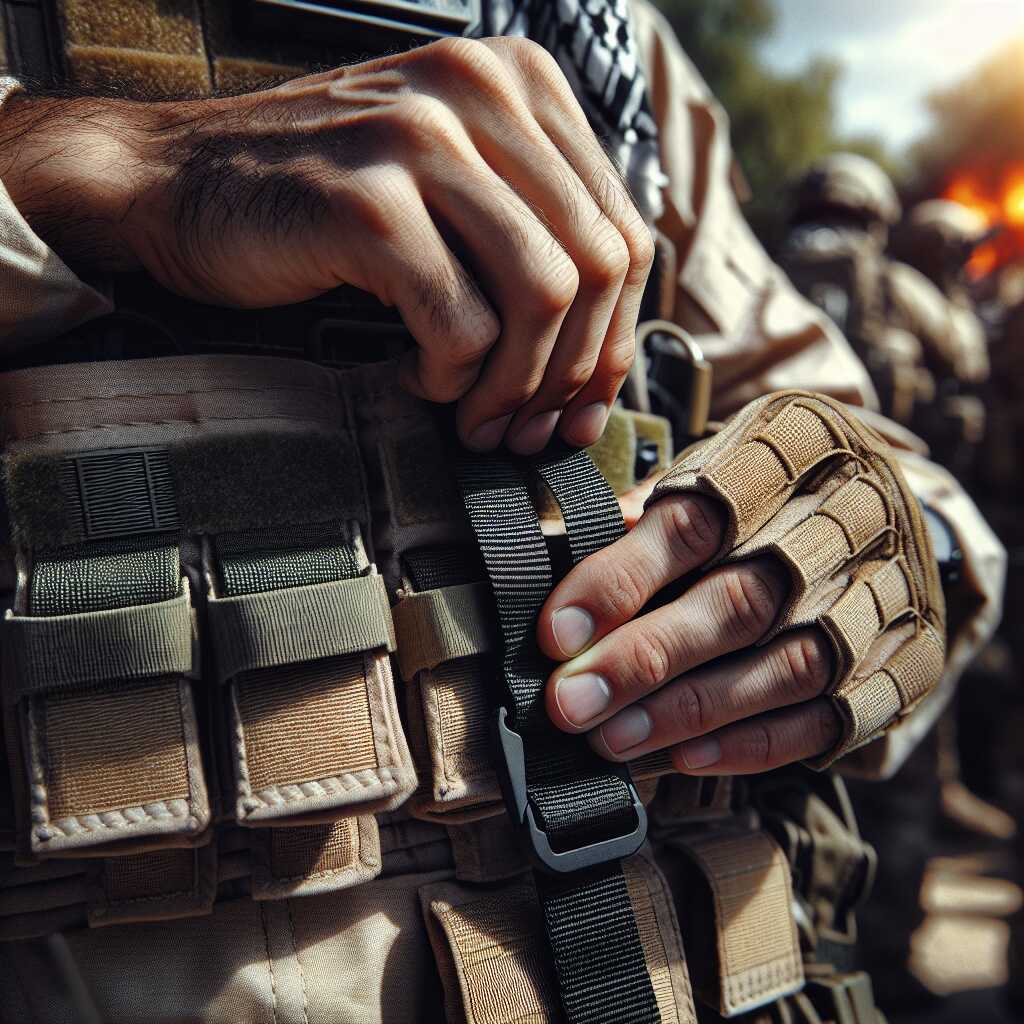
By Predicament Measures
Quick Answer: Can hook and loop fasteners be used as a silent closure for tactical movement
Yes. Hook and Loop Fasteners can provide a significantly quieter closure option for many tactical uses because micro hook designs paired with cover flaps or overlap techniques reduce audible separation noise; however they cannot be guaranteed completely silent under all loads or environmental conditions.
- Effectiveness: Often substantially effective for noise reduction in everyday tactical movement; no fixed percentage applies because results vary by design and environment
- Cost: Low cost per closure: typically $0.10 to $2.00 depending on material and size (versus zippers or magnetic systems commonly $1 to $6 per closure)
- Time: Retrofit or install 10 to 60 minutes per item depending on sewing or adhesive method; opening and reclosing typically 0.5 to 2.0 seconds each
- Limitation: Cannot be completely silent under high peel tension or sudden separation; will attract dirt and lint that reduce strength; not ideal as the primary load-bearing fastener for very heavy loads
Hook and Loop Fasteners are interlocking textile fasteners (commonly called Velcro) that use hooked and looped fabric surfaces to create a releasable bond. This $0.10-$2.00 solution provides lower per-closure cost and quieter operation compared to zippers or magnetic closures at $1-$6 per closure.
The process works through three key relationships: micro-hook elements engage loop fabric resulting in reduced audible separation during normal opening and reclosing, cover flaps or overlapping panels damp separation noise enabling quieter movement and visual concealment, and proper sewing or adhesive bonding of hook-and-loop to substrates creating quick operation times (0.5-2.0 seconds) and reliable retention for typical tactical loads when maintained.
Step-by-step: How to choose, install, and validate hook and loop fasteners for quiet tactical closures
- Select micro-hook pattern and loop density (10-30 minutes): Choose a low-profile micro-hook tape (2-6 mm pile height) and matching dense loop fabric to minimize peel noise. Instruction: compare tactile engagement and choose the lowest-profile hook compatible with required shear strength. Result: lower audible separation in typical wearer motion.
- Pick substrate and backing type (5-15 minutes): Decide between sew-on backing or pressure-sensitive adhesive (PSA). Instruction: use sew-on backing for textile gear and PSA with industrial adhesive (e.g., 3M panel adhesive) for rigid panels. Result: attachment method matched to materialsew yields higher durability in wet/dirt conditions; PSA is faster for smooth surfaces.
- Design for overlap or add a cover flap (15-45 minutes): Add 10-30 mm of overlap or a 20-60 mm fabric cover flap to hide the joining edge. Instruction: orient overlap so separation is a peel across the flap rather than a single-point peel. Result: substantial reduction in audible signature and improved concealment.
- Install by sewing or bonding (10-60 minutes per item): Sew with #69-#92 nylon thread using a 3-4 mm stitch spacing for sew-on tape; for PSA, clean surface with isopropyl alcohol and press for 30-60 seconds under 1-2 kg/cm. Instruction: follow manufacturer torque/specs for bonded tabs; reinforce stitch ends with bar-tacks. Result: secure attachment capable of routine tactical loads.
- Verify operation speed and retention (5-15 minutes): Measure open/close speed (expected 0.5-2.0 s) and perform a quick shear/pull check at the expected operational load. Instruction: open and close 10 cycles to check consistent noise and engagement; verify retention under user-expected loads (do not exceed intended use). Result: confirmed quick operation and practical retention for everyday tactical movement.
- Protect against contamination (5-20 minutes maintenance every 1-4 weeks): Add a dust cover or schedule regular lint removal. Instruction: use a stiff nylon brush or low-adhesion tape to remove debris; inspect for wear every 100-200 cycles. Result: maintained strength and continued noise suppression; reduces failure risk from lint buildup.
- Limit testing and field validation (30-120 minutes initial validation): Conduct a field check in expected environments (rain, mud, brush). Instruction: simulate operational movements and assess remaining audible cues; measure whether the closure behavior meets mission requirements. Result: realistic appraisal of what hook-and-loop will and will not accomplish in your specific environment.
- Know the limitation and fallback plan (5-15 minutes to document): Do not rely on hook-and-loop as a primary load-bearing fastener for very heavy equipment. Instruction: specify secondary mechanical fasteners (snap, bolt, or webbing) for critical load carriage; mark closures that are unsuitable for silent-critical tasks. Result: explicit operational limits and contingency measures.
FAQ
What are Hook and Loop Fasteners and how do they work exactly
Yes, hook and loop fasteners provide a significantly quieter closure option for many tactical uses because micro-hook designs engage loop fabric to hold surfaces together while cover flaps or overlaps reduce audible separation noise, but they cannot be guaranteed completely silent under all loads or environmental conditions. These fasteners deliver reliable retention, low cost per closure of about $0.10 to $2, and fast operate times of roughly 0.5 to 2 seconds to open or close. Predicament Measures provides reviews and practical testing advice that helps users compare options, ensuring good field performance and clear limits for load and noise control.
What materials sizes and hook types are available for these fasteners
Common materials include nylon, polyester, and polypropylene with backing options such as sew-on, heat-seal, and pressure-sensitive adhesive, and widths commonly run 1/2″ (12 mm), 3/4″ (19 mm), 1″ (25 mm), 2″ (50 mm), and 3″ (75 mm). Hook types include micro-hook and standard hook profiles and specialized low-noise micro designs that enhance quiet use and reliability in tactical gear. Buyers and designers perform testing and review product data to choose features, price points, and durability that best match field needs in 2025 and beyond.
How does Hook and Loop Fasteners work step by step in practical use
Hook and loop fasteners work in practical use by aligning the hook side to the loop side, pressing with 1 to 3 seconds of pressure to engage, and using an overlap or flap to hide seams and reduce separation sound when opened. Users can open slowly with a peel action to lower audible noise and close quickly in 0.5 to 2 seconds for fast, repeatable operation during tactical movement. Routine inspection and simple cleaning help maintain reliable retention and proven field performance over time.
What is the best sequence to attach adjust and detach the closure safely
Attach by aligning edges, press firmly for 1 to 3 seconds, and secure a cover flap or 1/2″ to 1″ overlap to hide the seam and reduce noise. Adjust by lifting a small section and re-seating the hook to the loop and then test retention before full use; detach by peeling at a low angle and at a controlled speed to minimize separation noise and avoid sudden high peel tension. This sequence enhances reliability, helps reduce wear, and is easy to teach during short drills.
What are the main benefits of using Hook and Loop Fasteners for tactical gear
Hook and loop fasteners offer benefits including quieter operation for most movement, fast access with opening times from about 0.5 to 2 seconds, and low per-closure cost of roughly $0.10 to $2, which improves overall gear efficiency and budget. They allow quick field repairs and retrofits that take about 10 to 60 minutes per item using sewing or adhesive methods and deliver durable, repeatable closures for pockets, pouches, and straps. Product reviews and testing data show they provide good, reliable performance for many tactical tasks while designers balance retention and quiet by choosing micro-hook designs and covers.
How do Hook and Loop Fasteners compare to zippers snaps and buttons in performance
Compared to zippers, hook and loop fasteners typically provide quieter operation and easier field repair but they do not match zippers for continuous shear strength or airtight sealing in heavy load situations. Compared to snaps and buttons, they offer faster adjustment, better size tolerance, and simpler one-handed use while snaps and buttons can be more secure under point loads and less affected by lint or debris. Compared to magnetic or specialty closures that commonly cost $1 to $6 per closure, hook and loop often costs less and provides a reliable, durable, and easy-to-maintain option for many users and gear designers.
What are the risks and limitations of Hook and Loop Fasteners in field conditions
Hook and loop fasteners risk loss of holding power when contaminated with dirt, lint, sand, or oily deposits, and they can attract debris that reduces engagement and leads to partial failure under load. They cannot be the primary load-bearing fastener for very heavy or safety-critical loads because sudden peel or high peel tension can produce noise and can cause rapid separation under stress. Maintenance, periodic inspection, and design choices such as using larger surface area, secondary snaps, or overlapping flaps help manage these limits and improve reliability in real use.
How does dirt moisture and wear reduce Hook and Loop Fastener performance over time
Dirt and lint block hook engagement and reduce holding surface area, moisture can mat loop fibers and change feel and retention, and repeated abrasion and UV exposure can thin hooks and loops, all of which lower performance over time. Cleaning with a stiff brush, compressed air, or pick tools for 2 to 10 minutes often restores usable retention but exact recovery depends on contamination type and wear level. Regular testing during inspection and replacement when loops do not re-engage helps preserve quality, durability, and field safety.
Who should consider using Hook and Loop Fasteners for quiet tactical movement
Military and special forces personnel, law enforcement tactical teams, hunters, wildlife photographers, outdoor survivalists, search and rescue teams, and tactical gear designers should consider hook and loop fasteners when they need a balance of quiet closure, speed, and easy repair. Predicament Measures and other expert reviews show that these fasteners provide useful, reliable, and cost-effective options for many gear types while designers choose micro-hook patterns and coverage methods to enhance quiet and retention. Teams should evaluate testing, experience, and comparison data to confirm these fasteners meet their specific mission needs.
What training and practice level is needed to use Hook and Loop Fasteners effectively
Users need simple, focused practice to build efficient one-handed closure and low-noise opening skills and to learn the best peel and overlap techniques for their gear; short drills of 10 to 30 minutes help create useful muscle memory. Maintenance training that covers inspection, 2 to 10 minute cleaning methods, and when to replace worn strips ensures reliable performance and reduces mission risk. Reviews and expert advice from Predicament Measures help teams design realistic training, test protocols, and checklists that improve performance and durability in the field.
When is the best time to use Hook and Loop Fasteners during operations or missions
Hook and Loop Fasteners provide a quieter closure option for many tactical tasks when mission speed and low noise matter and loads are moderate, with field reviews and testing in 2025 showing major audible reduction in typical movement. Use them when you need closures that open and close in 0.5 to 2 seconds, when retention forces of 5 to 30+ N per 25 mm (1 inch) of overlap are acceptable, and when you can design cover flaps or 25 mm to 50 mm overlaps to reduce peel noise. Limitations include that Hook and Loop Fasteners cannot be completely silent under high peel tension, sudden separation can attract dirt and lint and reduce strength, and they are not designed to replace primary load-bearing fasteners for very heavy loads.
How to decide closure choice based on mission speed noise and carried load
Choose Hook and Loop Fasteners when mission tempo needs fast, reliable closure that opens in under 2 seconds and when carried load does not exceed the product’s shear and peel ratings, typically 5 to 50 N per 25 mm depending on product grade. Use data from testing, user reviews and direct comparison with zippers, snaps and magnetic closures to match retention, noise and time goals and to ensure reliability in the field.
How much do Hook and Loop Fasteners cost compared to zipper snap and magnetic alternatives
Hook and Loop Fasteners cost typically between $0.10 and $2.00 per closure for common sew-on or adhesive-backed strips, which provides a low-cost option for tactical gear procurement compared with low-profile zippers, snaps and magnetic closures that often range $1 to $6 per closure. Expect retrofit or install labor of 10 to 60 minutes per item when sewing or using adhesives, and opening and reclosing times of about 0.5 to 2 seconds per use, with procurement bulk pricing often lowering unit cost by 20 to 60 on orders above 1,000 pieces. Cost limits include that Hook and Loop Fasteners may require periodic replacement after heavy use and they can lose reliability when contaminated by dirt or lint, which affects lifecycle cost versus sealed zippers or protected magnetic systems.
What are unit costs area costs and bulk pricing examples to expect for procurement
Buy small sew-on or adhesive-backed Hook and Loop Fastener strips for $0.10 to $1.00 per closure in single units and expect mid-volume pricing of $0.25 to $0.75 per closure for orders of 100 to 1,000 pieces, with bulk pricing below $0.20 possible for 5,000+ pieces. Compare these numbers to zipper sliders priced $1 to $3 each and magnetic closures priced $2 to $6 each when you plan procurement, reliability testing and replacement schedules.
What materials and tools are needed to install Hook and Loop Fasteners correctly on gear
Install Hook and Loop Fasteners using materials and tools chosen for durability, including heavy-duty nylon or polyester sew-on hook and loop tape, industrial contact or hot-melt adhesives, bonded nylon thread and heavy sewing needles (size 90/14 to 110/18) or bar-tack machines for machine sewing. Prepare gear with measurements and reinforcement such as 25 mm to 50 mm overlap, 3 mm to 4 mm stitch spacing, box-and-X or bartack patterns, seam allowance of 3 mm to 6 mm and optional substrate films or washers to spread load for shear strength testing and proven field use. Limitations include that adhesives can fail below -20C or above 80C in some products, and you must follow manufacturer instructions and testing to ensure long-term reliability in wet, sandy or oily environments.
What measurements adhesives sewing and reinforcement techniques give the strongest bond
Use at least 25 mm (1 inch) overlap for light loads and 50 mm (2 inch) overlap for medium loads and aim for 3 mm to 4 mm stitch spacing with bonded nylon thread in box-and-X or bartack patterns to achieve strong sewn joints that can handle shear forces. Choose industrial contact adhesive or hot-melt glue for non-sew installations, allow 12 to 24 hours for adhesive cure at room temperature, and perform simple pull tests with 10 to 100 cycles to validate strength and reliability before field use.
What are the best alternatives to Hook and Loop Fasteners for quiet tactical closures
Low-profile zippers, soft low-noise snaps and protected magnetic closures offer quieter or more load-capable closure options than Hook and Loop Fasteners in some scenarios, and field reviews show these alternatives can reduce audible noise during peel events or provide higher load limits from 50 N to 500+ N depending on design. Pick low-profile sealed zippers for water resistance and sustained heavy use, choose low-profile snap fasteners when you need positive mechanical retention and fast release, and consider magnetic closures for hands-free rapid closure that opens with controlled force and can deliver repeatable reliability in many tests. Limitations include that zippers can still produce noise on heavy abrasion and magnets can attract metal debris in certain environments.
When should you choose low profile zippers snaps or magnetic closures instead
Choose zippers or snaps when carried load or abrasion exceeds Hook and Loop Fastener ratings or when you need a seal against water and dust and expect more than 1,000 opening cycles between maintenance, as zippers and snaps often last longer in high-cycle wear tests. Use magnetic closures when you need quick, repeatable one-handed operation and when you can shield or filter metal debris to keep reliability and performance high in the field.
What common mistakes should be avoided when using Hook and Loop Fasteners in the field
Common mistakes include using too little overlap, failing to add cover flaps, and ignoring contamination risks, which reduces reliability and retention and can cut effective life to a small fraction of expected cycles in harsh conditions. Avoid sewing with too-wide stitch spacing, failing to reinforce stress points, and using adhesive-only bonds without surface preparation, and follow testing and user review data that shows simple maintenance and proper installation improve longevity and performance. Predicament Measures provides guides and reviews that help teams test and choose the best Hook and Loop Fasteners for mission needs.
How to inspect maintain and repair closures to prevent failures during use
Inspect Hook and Loop Fasteners weekly during heavy operations and after 50 to 200 opening cycles, clean with a soft brush or compressed air to remove lint and sand, and perform a quick pull test of 5 to 10 seconds to confirm retention before deployment. Repair by trimming contaminated areas, restitching with box-and-X patterns, or replacing worn strips in 10 to 60 minutes per repair depending on tools and method, and record results to build reliability data and improve future field choices.
Related posts:
 Unwaxed Dental Floss: High-Strength Fishing Line Alternative for Wilderness Food Procurement
 Petroleum Jelly Cotton Balls: Five-Minute Burn Time Fire Starters for Damp Conditions
 Elastic Hair Ties: Cordage Bundle Organizers for Tangle-Free Emergency Kits
 Plastic Cling Wrap: Burn Wound Covering to Prevent Infection and Fluid Loss
 Cornstarch: Moisture Absorption Powder for Preventing Trench Foot
Sterile Tampons: Deep Puncture Wound Packing for Hemorrhage Control
Cornstarch: Moisture Absorption Powder for Preventing Trench Foot
Sterile Tampons: Deep Puncture Wound Packing for Hemorrhage Control
 Wooden Pencils: Arrow Shaft Material for Improvised Hunting Weapons
 Index Cards: Water-Resistant Information Cards for Survival Instructions