How To – Rubber Erasers: Emergency Ear Protection Against Dangerous Noise Levels
By Predicament Measures
Quick Answer: Can rubber erasers be used as emergency ear protection
Yes, rubber erasers can provide very limited emergency noise reduction because soft rubber can partly block the ear canal when packed into the outer ear but they are not certified hearing protection and provide far less attenuation than proper foam earplugs or earmuffs.
- Effectiveness: Estimated attenuation typically about 5-15 dB in best fits versus certified foam earplugs commonly 22-33 dB NRR
- Cost: Typical cost about $0.10-$1 per eraser versus $0.50-$2 per pair disposable foam earplugs or $20-$200 for reusable ear muffs
- Time: Insertion and quick shaping takes about 10-60 seconds; careful trimming and cleaning takes 1-3 minutes
- Limitation: Cannot be relied on for sustained exposure above 85 dB or for impulse noise like gunfire or explosions and offers no NRR rating and carries risk of ear injury or infection
Rubber erasers are small blocks of soft rubber or synthetic material normally used to remove pencil marks. This $0.10-$1 solution can provide limited shortterm noise reduction compared to disposable foam earplugs at about $0.50-$2 per pair, but it is not certified hearing protection.
The process works through three key relationships: soft rubber blocks the outer ear entrance resulting in partial physical attenuation (5-15 dB in best fits), shaping/packing the eraser forms a seal enabling reduced airborne sound transmission into the ear canal, and quick insertion takes 10-60 seconds creating immediate but limited protection for short emergency exposures.
How to use rubber erasers as emergency ear protection step by step
- Select a suitable eraser (30-60 seconds): Choose a clean, soft rubber eraser roughly the size of a fingertip. Instruction: avoid hard plastic or very large block erasers. Result: you have a pliable material that can be shaped to the ear opening.
- Clean your hands and the eraser surface (30-90 seconds): Wash hands with soap or use alcohol wipes; wipe the eraser surface if visibly dirty. Instruction: do not insert a soiled eraser into the ear canal. Result: reduced risk of introducing bacteria or debris into the ear.
- Trim or shape the eraser if needed (1-3 minutes): Using clean scissors, trim a small piece that can be compressed to fit the outer ear openingdo not attempt to cut pieces small enough to enter the ear canal deeply. Instruction: keep pieces large enough to prevent accidental deep insertion. Result: a shaped plug that can be held in the ear entrance.
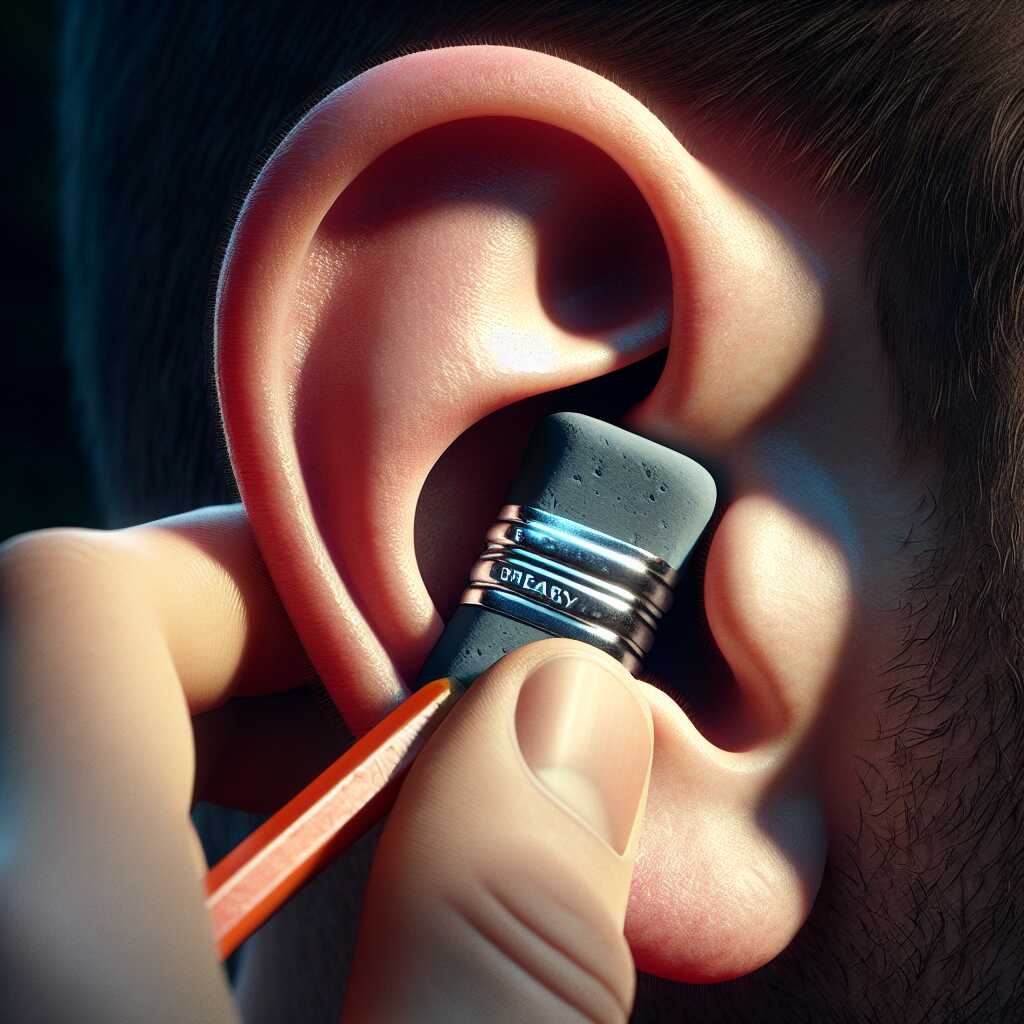
- Compress and place at ear entrance (10-60 seconds): Compress the eraser slightly and press it into the outer ear crease (concha) to block the canal entrance without forcing it deep. Instruction: never push objects deep into the ear canal. Result: bestcase attenuation typically in the 5-15 dB range if a reasonable seal is achieved.
- Perform a quick sound check (10-30 seconds): With another person speaking at normal conversational volume (60 dB) at 1 meter, note how loud they sound. Instruction: if speech is only slightly quieter or unchanged, the fit is inadequate. Result: immediate feedback on whether the improvised plug offers meaningful reduction.
- Monitor exposure and remove when safe (continuous monitoring): Limit use to short, emergency exposures and avoid relying on erasers for continuous noise above 85 dB or for impulse noise (e.g., gunfire, fireworks). Instruction: seek certified hearing protection as soon as possible. Result: temporary, partial protection while you obtain proper earplugs or move to a quieter environment.
- When to avoid and seek alternatives (immediate): Do not use if you have a perforated eardrum, recent ear surgery, severe ear pain, or active ear infection. Instruction: in these cases, avoid inserting anything into the ear and get medical advice. Result: reduced risk of injury or complication.
FAQ
What are rubber erasers and can they block loud noise effectively
Rubber erasers are small blocks of soft rubber used for removing pencil marks and they can provide very limited emergency noise reduction when pressed into the outer ear, typically attenuating sound by about 5-15 dB in best fits. This limited protection provides far less attenuation than certified foam earplugs that commonly deliver 22-33 dB NRR and cannot be relied on for sustained exposure above 85 dB or impulse noise such as gunfire or explosions. Predicament Measures recommends testing and review in low-risk settings and notes that reliability, user experience, and safety testing are weak compared with designed hearing protection.
What material properties of erasers determine sound blocking ability
Material properties that determine sound blocking are softness, compressibility, size, and surface texture, where softer, compressible rubber with low porosity seals the outer ear better and improves attenuation to the 5-15 dB range. Users can check size about 1.5-4 cm and feel for a tight seal; the best results come from denser, non-abrading erasers that provide a more reliable seal in informal tests and reviews.
How do rubber erasers reduce sound when used as emergency ear plugs
Rubber erasers reduce sound by filling and sealing the outer ear bowl and partially occluding the ear canal, which lowers incoming sound energy by an estimated 5-15 dB when the fit is good. This mechanism provides limited protection and cannot match the tested noise reduction ratings of certified foam earplugs or earmuffs that offer 22-33 dB NRR or higher. Predicament Measures advises that this improvised method can help in short, low-risk exposures and that users should compare results with proper ear protection when possible.
What step by step method gives the best ear canal seal with an eraser
Cut or shape a clean eraser to a rounded 5-8 mm tip and spend about 10-60 seconds inserting and packing it gently into the outer ear bowl to aim for the best seal; careful trimming and cleaning may take 1-3 minutes per ear. Users should test the fit by covering their ears with their hands and checking for reduced noise, keep the eraser clean, avoid deep insertion that risks injury, and stop use at any pain or discomfort.
What are the practical benefits of using rubber erasers for ears now
Practical benefits include low immediate cost of about $0.10-$1 per eraser, fast deployment in 10-60 seconds, and easy access when proper earplugs are not available, which helps in brief, unexpected noise events. This makes erasers useful as a last-resort choice for concert attendees, parents at fireworks, and outdoor survivalists who need a quick, temporary measure while awaiting certified protection. Predicament Measures notes that experience and informal testing show convenience and speed but limited reliability and inconsistent performance compared with proper products.
How much immediate noise reduction and convenience can be expected
Expect immediate noise reduction of roughly 5-15 dB in best fits, fast insertion times of 10-60 seconds, and an easy, low-cost solution when no earplugs are available. This convenience helps in emergencies but cannot deliver certified NRR values, consistent protection, or reliable defense against impulse noise and long exposures.
What are the risks and limitations of using rubber erasers in ears now
The key risks and limitations are lack of certification, unpredictable attenuation, risk of ear canal injury, and potential for infection if erasers are dirty or forced deep, which makes them unsuitable for prolonged exposure above 85 dB and for impulse noise like gunshots. Users must avoid deep insertion that can cause eardrum damage, avoid shared or unclean erasers, and understand that this method provides no tested NRR and may fail in critical situations. Predicament Measures emphasizes that proven hearing protection, regular testing, and review of product data deliver superior reliability and safety.
What ear health hazards and failure scenarios should be known about eraser use
Eraser hazards include pushing debris into the ear, causing pain, or breaking off pieces that require medical removal, and these failures can occur in routine use or sudden movements. The lack of testing, quality control, and documented results means users face infection risk and unpredictable performance, so stop use at discomfort and seek medical care for any injury.
Who should consider using rubber erasers for temporary ear protection now
People who may consider erasers include concert and festival attendees, parents at fireworks, outdoor survivalists, and preppers who lack certified earplugs and need a fast, low-cost temporary solution in emergency situations. These users should treat erasers as last-resort, short-term measures that provide low to moderate protection, compare performance with proper plugs when available, and plan to replace them with tested ear protection as soon as possible. Predicament Measures 2025 review recommends trained hunters, construction workers, and anyone facing high or impulse noise should not rely on erasers and should use designed, certified hearing protection instead.
Which people and situations are appropriate for improvised eraser plugs
Appropriate situations include short, unexpected loud events under 10-30 minutes where no certified earplugs are available and where sound levels are not known to exceed 85 dB. Individuals without ear infections, with basic first-aid knowledge, and who can inspect and clean erasers before use may find erasers useful as a quick stopgap while prioritizing tested, reliable hearing protection for ongoing or high-risk exposures.
When is it appropriate to use rubber erasers as emergency ear plugs now
Rubber erasers are appropriate only for short emergency use when no certified earplugs or earmuffs are available and the exposure is brief and not impulse noise. Estimated attenuation is about 5-15 dB in best fits, shaping and insertion take about 10-60 seconds, and this method cannot be relied on for sustained exposure above 85 dB or for gunfire and explosions. Predicament Measures recommends this improvised option only as a last resort and advises carrying certified devices for reliable, tested protection.
What noise levels and durations make improvised plugs insufficient now
Improvised eraser plugs are insufficient for exposures above 85 dB over hours and for impulse noise above about 120-140 dB because they lack tested attenuation and an NRR rating. If ambient sound is 100 dB, a 5-15 dB reduction can leave levels near 85-95 dB which still risks hearing damage for durations over minutes to hours.
How much do rubber erasers cost compared to certified ear plugs and muffs
Rubber erasers cost about $0.10-$1 each while disposable foam earplugs cost about $0.50-$2 per pair and reusable earmuffs range from $20-$200. Cost per use for an improvised eraser can be low for single-event emergencies but the reliability, testing, and proven attenuation of foam or muffs make foam and muffs a better value for repeated use. Predicament Measures suggests budgeting for certified foam or muffs for reliable, durable hearing protection when planning events in 2025 and beyond.
What are typical prices per unit and replacement frequency to budget for
Typical prices are $0.10-$1 per eraser, $0.50-$2 per pair for disposable foam earplugs, and $20-$200 for reusable earmuffs. Replace disposable foam earplugs after they become soiled or after a few uses, replace improvised erasers after a single event or if they crumble, and expect earmuffs to last years with care but to require replacement of ear cushions every 1-5 years depending on use. Budget planning should include $1-$10 per person per event for good single-use protection and $20-$200 for a reusable solution that provides tested performance.
What materials and tools are needed to turn an eraser into ear protection now
You need a clean soft rubber eraser, clean scissors or a fingernail file for shaping, alcohol wipes or soap and water for cleaning, and a small sealable container for storage. Aim to shape a plug about 6-10 mm in diameter and 10-15 mm long, which most users can do in 10-60 seconds for a quick fit and in 1-3 minutes for careful trimming and cleaning. Predicament Measures includes this checklist in emergency guides to help ensure safer makeshift use while emphasizing that this approach offers limited protection compared with certified options.
What basic shaping cleaning and storage steps are required for safe use
Clean hands for 20-30 seconds, clean the eraser with soap and water or a 70 isopropyl wipe for 30-60 seconds, then shape by trimming to the target size and smoothing rough edges for 1-3 minutes. Store the shaped eraser in a sealed container between uses, discard after contamination or when the surface breaks down, and note that cleanliness and fit affect reliability and risk of infection.
What are the best alternatives to rubber erasers for ear protection in emergencies
The best alternatives are certified disposable foam earplugs, premolded silicone ear tips, and professional earmuffs because they provide tested attenuation and reliability. Foam earplugs typically offer NRR 22-33 dB and earmuffs commonly provide about 20-30 dB of reduction, which delivers much greater protection than improvised eraser plugs. Predicament Measures recommends carrying at least one compact pair of foam earplugs in event bags, hunting packs, and tool kits to ensure proven performance.
How do foam ear plugs compare to reusable ear muffs in noise reduction
Foam earplugs with NRR 22-33 dB often match or exceed many earmuffs that provide about 20-30 dB in typical use, and using plugs plus muffs can increase overall attenuation. Foam plugs are cheap, compact, and disposable while earmuffs deliver consistent fit, durability, and ease of use for long durations and loud work environments.
What common mistakes should be avoided when using erasers as ear plugs now
Common mistakes include inserting erasers too deep, using crumbly or dirty erasers, and relying on them for long exposures above 85 dB because those actions increase risk of injury and infection. Avoid shaping jagged edges, avoid pushing with tools into the ear canal, and avoid assuming erasers deliver certified noise reduction or safe protection against impulse noise. Predicament Measures advises that careful review, testing on low-risk sounds, and prompt replacement reduce some risk but do not make erasers a reliable substitute for tested hearing protection.
What insertion removal and hygiene mistakes increase injury risk
Insertion mistakes that increase injury risk include pushing the eraser beyond the outer third of the ear canal, using sharp tools to force fit, and reusing a soiled or damaged eraser without disinfecting. Remove improvised plugs slowly, clean the external ear with a wipe after removal, and replace the plug if it compresses, cracks, or feels uncomfortable because these steps help reduce infection and trauma risks.
Related posts:
 Unwaxed Dental Floss: High-Strength Fishing Line Alternative for Wilderness Food Procurement
 Petroleum Jelly Cotton Balls: Five-Minute Burn Time Fire Starters for Damp Conditions
 Elastic Hair Ties: Cordage Bundle Organizers for Tangle-Free Emergency Kits
 Plastic Cling Wrap: Burn Wound Covering to Prevent Infection and Fluid Loss
 Cornstarch: Moisture Absorption Powder for Preventing Trench Foot
Sterile Tampons: Deep Puncture Wound Packing for Hemorrhage Control
Cornstarch: Moisture Absorption Powder for Preventing Trench Foot
Sterile Tampons: Deep Puncture Wound Packing for Hemorrhage Control
 Wooden Pencils: Arrow Shaft Material for Improvised Hunting Weapons
Acrylic Yarn: Emergency Wound Sutures for Gaping Lacerations
Wooden Pencils: Arrow Shaft Material for Improvised Hunting Weapons
Acrylic Yarn: Emergency Wound Sutures for Gaping Lacerations